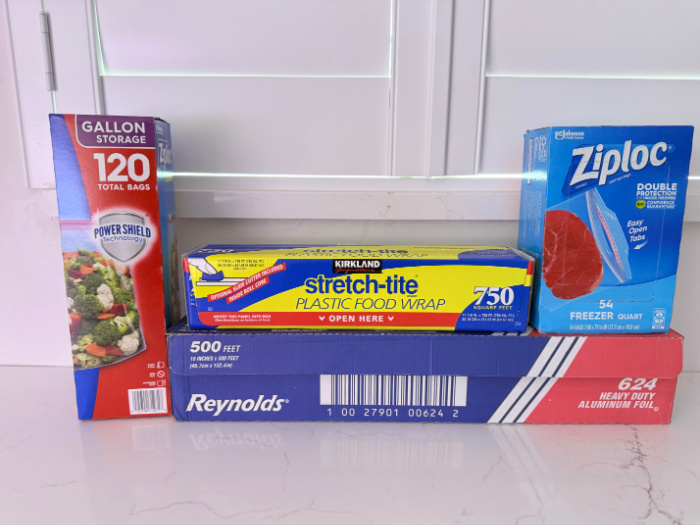
If we have a war: Why Your Family Needs to Stock Bags, Plastic Wrap, and Foil. These humble kitchen staples become some of the most powerful survival tools in your home when a crisis strikes. Here’s why every family should have them stocked and ready. I believe these will be in short supply sooner rather than later. Please stock up now.
When most people think about emergency preparedness, they picture canned food, bottled water, and flashlights. But one category of supplies quietly sits in the kitchen drawer and gets completely overlooked: bags, plastic wrap, and aluminum foil. If war, a natural disaster, or a national emergency ever disrupts your daily life, these three items will prove to be among the most useful things you own.
This post explains exactly why gallon bags, quart bags, freezer bags, aluminum foil, and plastic wrap belong on your emergency stockpile list, and how your family can put each one to work when it matters most.
If We Have A War: Stock Bags, Plastic Wrap, and Foil
Why Ordinary Household Supplies Matter in a Crisis
Emergencies strip life down to basics: food, water, shelter, and safety. The supplies that help you protect, preserve, and organize those basics become invaluable. Bags, foil, and plastic wrap are lightweight, inexpensive, and incredibly versatile. They take up almost no space but cover dozens of survival needs.
When stores close, supply chains break down, or you’re sheltering in place for days at a time, you’ll reach for these items again and again. Stocking them before a crisis is far easier than trying to find them during one.
Gallon Zip-Lock Bags: Your All-Purpose Survival Tool
Gallon-sized zip-lock bags are among the most versatile items in any emergency kit. They’re large enough to hold a meaningful amount of food, documents, clothing, or supplies, yet small enough to be carried easily. Their waterproof seal protects contents from moisture, contamination, and pests.
In a war or extended emergency, the ability to seal and protect things quickly is critical. Gallon bags give you that ability on demand.
How Your Family Uses Them
- Store and preserve leftover cooked food when refrigeration is unavailable or unreliable.
- Protect important documents like birth certificates, insurance papers, medical records, and passports from water damage.
- Pack individual daily rations for each family member to keep supplies organized and portioned.
- Keep dry goods like crackers, rice, sugar, and powdered milk sealed and pest-free once the original packaging is opened.
- Store small first aid supplies, medications, or bandages in a waterproof pouch inside a larger kit.
- Use as a waterproof container for a cell phone or radio during rain or flooding.
- Fill with water in an emergency and use it as a makeshift ice pack if you still have access to freezing temperatures.
- Label each bag with a marker before stocking. Knowing what’s inside at a glance saves time and reduces stress during high-pressure moments.
Quart Zip-Lock Bags: Precision and Portability
Quart bags are the smaller, more precise companion to gallon bags. They excel at organizing, portioning, and protecting smaller items. In an emergency, chaos is the enemy. Quart bags help you stay organized and in control.
- Pre-portion dry ingredients like oatmeal, powdered milk, or spices into single-meal servings so cooking in a crisis is fast and measured.
- Store daily medication doses for each family member, clearly labeled with the person’s name and dosage instructions.
- Pack small personal hygiene items, a toothbrush, travel soap, and hair ties for each child or adult in your household.
- Organize small tools, batteries, matches, or fire-starting materials.
- Store seeds if your family plans to grow food during a prolonged crisis.
- Keep cash, coins, or small valuables protected and dry in a go-bag or emergency kit.
- Use for sorting and storing small hardware, safety pins, needles, or sewing supplies for clothing repair.
Freezer Bags: Long-Term Food Protection When the Power Is Gone
Freezer bags are a thicker, more durable version of standard zip-lock bags, specifically designed to protect food in extreme cold or other extreme conditions. Their heavier plastic resists punctures, blocks air, and protects food from freezer burn. In an emergency, their durability makes them the right choice for storing bulkier food items and supplies.
If you lose power and your freezer starts to thaw, freezer bags give you the best chance to preserve as much food as possible for as long as possible. They also hold up better if you’re storing food in a cooler, a root cellar, or burying supplies.
- Transfer thawed meat, poultry, and fish into freezer bags, then move them to a cooler with ice to extend their shelf life when the power goes out.
- Store bulk dry goods, flour, rice, oats, beans, pasta, sealed tightly to keep moisture and pests out for months.
- Portion and freeze large batches of cooked meals, so you have ready-to-eat food during the first days of an emergency when cooking may be difficult.
- Use them to carry water if conventional water containers are unavailable.
- Store and transport soil, seeds, or small plants if your family needs to relocate and wants to establish a garden.
- Keep clothing or bedding protected against moisture if you’re sheltering in a basement, garage, or outdoors.
Aluminum Foil: Heat, Protection, and Utility in Every Sheet
Aluminum foil is one of the most underrated emergency supplies. It’s heat-resistant, reflective, waterproof, moldable, and reusable. A family with several rolls of heavy-duty foil has a cooking tool, a shelter material, a signaling device, and a food-preservation tool all in one.
In a prolonged crisis without electricity or conventional cooking appliances, foil becomes indispensable for cooking over open flames or outdoor heat sources.
- Wrap food tightly for cooking over an open fire, on an outdoor grill, or on a camp stove. Foil packets are one of the safest and simplest ways to cook full meals without a kitchen.
- Wrap and seal cooked food to retain heat and prevent contamination when you can’t refrigerate it immediately.
- Line cooking surfaces or improvised pots and pans to avoid contamination from unknown containers or materials.
- Use reflective foil to signal for help. It catches sunlight and can be seen from long distances.
- Insulate windows, walls, or shelters by layering foil to reflect heat inward during cold weather or outward during extreme heat.
- Create a makeshift funnel, bowl, or cup when proper containers aren’t available.
- Wrap electronic devices in multiple layers of heavy-duty foil to create a basic protective shield against certain electrical disruptions.
- Line the inside of shoes or boots with foil to add a layer of insulation against the cold.
- Stock heavy-duty aluminum foil rather than standard household foil. The thicker gauge is far more durable for cooking, insulation, and any heavy-use purpose your family may encounter in an emergency.
Plastic Wrap: Sealing, Protecting, and Improvising
Plastic wrap, the kind you use to cover leftovers in the kitchen, becomes a powerful, multi-purpose material in an emergency. Its ability to cling to almost any surface and create a tight, flexible seal makes it useful far beyond the dinner table.
It is lightweight and compact, so storing several rolls takes almost no space. Yet the number of survival uses for plastic wrap is surprisingly long.
- Cover and seal pots, bowls, and containers of food to protect them from insects, dust, and contamination when you lack proper lids.
- Wrap injuries or bandages to keep them clean and dry, especially for wounds on hands, feet, or legs.
- Seal windows and door frames to block out dust, smoke, or airborne contaminants if you’re sheltering in place.
- Protect electronics, important documents, or valuables from moisture by wrapping them tightly.
- Cover water collection buckets or containers to reduce evaporation and keep collected rainwater clean.
- Wrap around broken tools, handles, or equipment to temporarily hold pieces together.
- Use to wrap feet or hands inside boots and gloves to add a moisture barrier in wet conditions.
- Stretch across gaps in walls, windows, or vehicle openings to create a temporary weatherproof barrier.
How Much Should Your Family Stock?
A general rule of thumb for a family of four is to stock a minimum supply that can last 90 days. For bags, foil, and plastic wrap, consider the following as a starting point:
- Gallon zip-lock bags: at least four to six boxes, each containing 30 to 50 bags.
- Quart zip-lock bags: three to four boxes of 50 bags each.
- Freezer bags in gallon size: three to four boxes of 30 bags each.
- Heavy-duty aluminum foil: four to six rolls of 75 to 150 square feet each.
- Plastic wrap: three to four large rolls of 200 to 500 square feet each.
These supplies are inexpensive, have long shelf lives, and store easily in a closet, pantry, or storage container. Rotate older supplies into regular kitchen use and replace them with new stock to keep your supply fresh. Please note, I typically buy freezer bags; it’s a personal preference. Mark and I were organizing the baggie cupboard, and dang it, I bought the wrong ones. Such is life.
Storing Your Emergency Supply of Bags, Foil, and Plastic Wrap
Keep these supplies in a cool, dry location away from direct sunlight. A dedicated storage bin or box, clearly labeled, makes it easy to find quickly. Keep a smaller working supply in your go-bag or evacuation kit in case you need to leave home in a hurry.
Teach every member of your family, including children old enough to understand, where these supplies are kept and how to use them. In a real emergency, anyone in the household may need to access and use them independently.
Final Word
The time to stock these supplies is before an emergency, not during one. When a crisis is unfolding, store shelves empty quickly. Prices rise. Supplies disappear. The families who prepared beforehand are the ones who stay calm, fed, organized, and safe.
Gallon bags, quart bags, freezer bags, aluminum foil, and plastic wrap may not feel like dramatic survival gear. They won’t make the evening news. But when life is disrupted, and you need to protect food, treat a wound, seal a window, cook a meal over a fire, or keep your family’s most important documents dry, you’ll be glad every single box and roll is sitting in your storage room ready to go. May God bless this world, Linda
The post If We Have A War: Stock Bags, Plastic Wrap, and Foil appeared first on Food Storage Moms.
from Food Storage Moms
No comments:
Post a Comment