Here are 25 items you may need to replace or add to your home. Whether you’re doing a seasonal refresh, stocking up for emergencies, or simply realizing your household basics have seen better days, certain items deserve a closer look. From the bathroom to the kitchen to the garage, here’s a practical guide to 25 items you may need to replace or add to keep your home running smoothly.
Why Regularly Auditing Your Household Items Matters
Most people wait until something completely falls apart before replacing it. But worn-out tools, expired supplies, and missing essentials can quietly make daily life harder than it needs to be. A periodic review of your home inventory helps you stay prepared, safe, and efficient. This list covers the essentials across personal care, kitchen tools, baby supplies, emergency preparedness, and general household needs based on my own personal experience.
Personal Care and Bathroom Essentials
1. Tweezers
Tweezers seem simple, but a pair with dull or misaligned tips is nearly useless. If yours no longer grips well, it’s time for a replacement. Quality stainless steel tweezers with a pointed or slant tip make a noticeable difference in splinter removal, grooming, and fine-detail work. Tweezers
2. Toothbrushes
Dental professionals recommend replacing your toothbrush every three to four months, or sooner if the bristles are visibly frayed. Old bristles are less effective at removing plaque and can harbor bacteria. If you can’t remember the last time you replaced yours, that’s your answer. While you’re at it, you may want to consider an electric toothbrush. Our dentist indicated he felt they did a better job at cleaning the teeth and massaging the gums to keep them healthy.
3. Pillows
Pillows lose their supportive structure over time, which can lead to neck pain and poor sleep quality. A general rule is to replace pillows every one to two years. If your pillow folds in half without springing back, it has reached the end of its useful life.
Bedroom and Linen Closet Basics
4. Sheets
Bed sheets wear thin with repeated washing and use. Pilling, thinning fabric, and persistent staining are all signs that it’s time to invest in a fresh set. Quality sheets also significantly improve sleep comfort. I’m concerned about cotton fields, and the prices just keep going up. I just bought a new set of sheets since ours were sure showing signs of age and use.
5. Pillowcases
Even if your sheets are holding up, pillowcases take a beating from nightly use and frequent washing. They can harbor oils, skin cells, and allergens over time. Rotating multiple sets and replacing worn ones as needed is a simple step toward better sleep hygiene.
6. Bath Towels
Towels that no longer absorb water efficiently or have developed a persistent musty smell have outlived their usefulness. Most bath towels last two to five years with regular use. If yours are scratchy, thin, or smell sour even after washing, it’s time for new ones.
7. Wash Cloths
Wash cloths wear out faster than bath towels due to the friction of daily use. They are also affordable and easy to replace in bulk. Check yours for worn patches, thinning fabric, or lingering odors.
Kitchen Tools and Cookware
8. Kitchen Towels
Kitchen towels that are stained beyond cleaning, frayed at the edges, or no longer absorbent are both ineffective and unsanitary. Keep several clean sets on rotation and replace old ones regularly.
9. Hot Pads and Oven Mitts
A hot pad with worn insulation is a burn waiting to happen. If your oven mitts have thin spots, holes, or have lost their heat resistance, replace them before using them near high heat again. These are the ones I LOVE: Long Silicone Hot Gloves
10. Pancake Griddles
A quality griddle can last for years, but non-stick coatings eventually scratch and degrade. Once the surface is flaking or food consistently sticks to it, it’s safer and more practical to replace it. Cast iron griddles are a long-lasting alternative. Cast Iron Griddle
11. Pancake Turners (Spatulas)
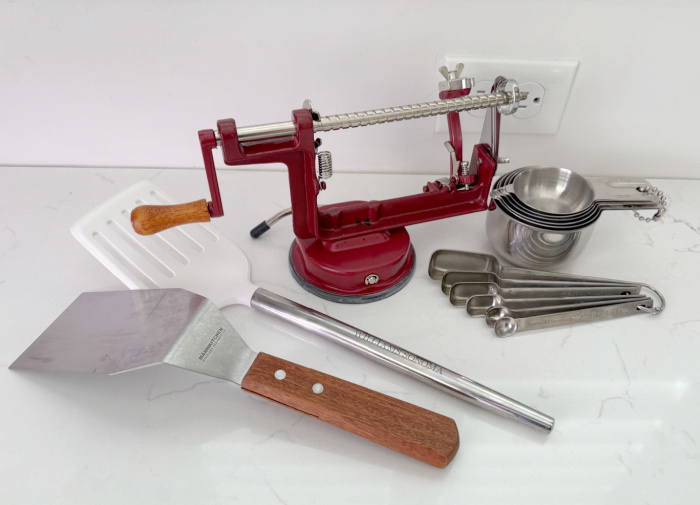
Spatulas take a lot of daily abuse. Melted tips, cracks, or worn edges on plastic spatulas can introduce unwanted materials into food. Metal spatulas can scratch non-stick surfaces. Replacing them periodically ensures you’re cooking safely and effectively.
12. Cutting Boards
Cutting boards can develop deep grooves over time that trap bacteria even after washing. Warping is another sign that a board needs to go. Wooden boards can be sanded and re-oiled to extend their life, but plastic boards with deep scoring should be replaced. We use silicone gel cutting boards a lot, especially when cutting meat. They don’t scratch or show much wear, and they clean up very easily.
13. Measuring Cups
Faded measurement markings make accurate cooking nearly impossible. If your measuring cups are cracked, stained, or illegible, treat yourself to a new set. A reliable set of dry and liquid measuring cups is foundational to consistent cooking and baking. Measuring Cups
14. Measuring Spoons
Measuring spoons get bent, fall off their rings, or simply get lost over time. Like measuring cups, faded markings reduce accuracy. A complete, clearly labeled set makes recipe following far more reliable. Measuring Spoons Fit In Spice Jars
15. Apple Peeler
If you do any volume of cooking that involves apples, potatoes, or other peelable produce, a quality apple peeler is a game-changer. Hand-crank models that clamp to a countertop peel, core, and slice in one motion. If yours is dull or rusted, a replacement will save considerable time and effort. Apple Peeler
Baby and Family Supplies
16. Cloth Diapers
Families who use cloth diapers know they’re an investment that pays off over time, but they do eventually wear out. Look for thinning fabric, elastic that has lost its stretch, or waterproof layers that are no longer effective. Replacing worn diapers helps prevent leaks and discomfort. Cloth/Burp Diapers
17. Diaper Pins
Diaper pins that are bent, dull, or have stiff clasps can be difficult and even dangerous to use. Sharp, smoothly locking pins make cloth diapering much easier and safer. Keep a fresh supply on hand. I forgot to add a hot water bottle, so here it is: Hot Water Bottle
Emergency Preparedness and Utility Supplies
18. Batteries
Old batteries can leak and corrode the devices they power. Check your supply regularly for expiration dates and signs of leakage. Stock a variety of sizes, including AA, AAA, C, D, and 9-volt, to cover flashlights, remotes, smoke detectors, and other essential devices.
19. Flashlights
A flashlight that doesn’t work in a power outage is just a plastic tube. Test yours regularly and replace units with corroded battery compartments, cracked lenses, or unreliable switches. LED flashlights are far more energy-efficient and longer-lasting than older incandescent models. We have a bunch of solar-powered units we love. We keep them on our window sills so they stay charged.
20. Propane Tanks With Fuel
For grilling, camping, or backup heating, propane tanks need to be checked for fuel level and expiration dates on the tank itself. Propane tanks have a manufacturer’s date stamped on the collar and are generally certified for 12 years. Old or empty tanks should be exchanged or properly disposed of. If you see rusty or cracked tank valves, replace the tanks now.
21. Charcoal Briquettes
Charcoal that’s absorbed moisture lights poorly and burns unevenly. Store briquettes in a sealed container in a dry location. If yours are clumped, crumbling, or difficult to light, replace them before your next cookout to save frustration. The best way to store them is in airtight containers without the starter fluid added to the briquettes.
Household Tools and Repairs
22. Gorilla Tape or Duct Tape
A roll of heavy-duty tape is one of the most versatile tools in any home. But tape dries out, loses its adhesive strength, and can become brittle over time. Keep a fresh roll of quality duct tape or Gorilla tape in your supply kit for patching, bundling, and quick repairs.
23. Scissors
Dull scissors make cutting fabric, paper, and packaging a chore. Most household scissors can be sharpened, but heavily damaged blades or loose pivot points are signs that it’s time for a new pair. Having dedicated scissors for kitchen use, crafting, and general household tasks helps them stay sharp longer.
24. Sewing Supplies
A well-stocked sewing kit handles everything from a missing button to a torn seam. If your thread is old and brittle, your needles are dull, or you’re missing basic colors, it’s worth refreshing your sewing supplies. A small investment in a complete kit saves money by extending the life of clothing and household textiles.
25. Multi-Functional Knives
A quality multi-tool knife is one of the most useful items you can have on hand. Whether it’s a Swiss Army-style knife, a Leatherman, or a similar multi-functional tool, it combines a blade, screwdriver, bottle opener, and more into a single compact package. If yours is rusted, has broken tools, or has a blade that won’t lock properly, replace it with a reliable model.
How To Prioritize What You Replace First
Start by walking through each room in your home and noting items that are broken, worn, or missing entirely. Then group your needs by urgency. Safety items like batteries, flashlights, and properly functioning kitchen tools should come first. Personal care and hygiene items are next. Finally, round out your kitchen, utility, and preparedness supplies at a pace that fits your budget.
Replacing these 25 items on a regular cycle keeps your household functioning efficiently, reduces waste from items that have failed, and gives you peace of mind knowing your home is stocked and ready for daily life and unexpected situations alike.
How To Maintain Your Home Or Rental
Duct Tape: Why You Need to Store It
Final Word
Home maintenance isn’t just about the walls and roof. It’s about the dozens of small items that make daily life comfortable, safe, and functional. Taking the time to evaluate and refresh these 25 household staples is one of the most practical investments you can make. A little attention now saves a lot of frustration later. May God bless this world, Linda
The post 25 Items You May Need To Replace Or Add To Your Home appeared first on Food Storage Moms.
from Food Storage Moms
No comments:
Post a Comment