August changes the way I want to cook. The garden is producing. Tomatoes, peppers, cucumbers, beans, corn, and fruit all seem to arrive at once. That should be good news, but preserving a harvest means boiling water, simmering sauces, processing jars, and running the stove for hours. Doing all of that inside can turn the […]
from Survivopedia
Monday, August 17, 2026
Seasonal Get Home Bag: Why Most Are Packed for the Wrong Weather
Most people build a get home bag exactly once. They spend a weekend watching videos, buy a decent pack, fill it with the gear everyone says you need, and slide it behind the driver’s seat with a quiet sense of accomplishment. Three years later that same bag is still riding around back there, still holding ... Read more...
from Prepper's Will
from Prepper's Will
Sunday, August 16, 2026
50 SHTF Scenarios You Never Thought Of (But You Should!)
Everybody I know in the prepper community has got a plan for the nuke, the EMP, or the blackout that turns the lights off coast to coast. Ask around any prepper forum, and you’ll hear the same five scenarios recycled until the words lose all meaning.
Meanwhile, the stuff that’s actually going to blindside people runs on systems they’ve never heard of, depends on supply chains they can’t trace, and breaks in ways that don’t make good TV. Fifty real vulnerabilities, real failure points, real scenarios that almost nobody has on their radar.
Some of them have already started.
50. A World Without Bees
If bees disappeared, the world could face a serious food crisis. Bees pollinate many fruits, vegetables, nuts, and other crops. Without them, harvests would shrink, food prices would rise, and farmers would struggle to replace natural pollination.
Over time, the situation could become much worse. Poorer people would be hit especially hard, while the government might limit food distribution. Wildlife would also suffer because many plants depend on bees to reproduce.
49. Contaminated Tap Water
If contaminated water reaches homes, you could get sick simply from drinking, cooking, or brushing your teeth.
Hospitals could quickly fill with patients suffering from severe diarrhea, fever, vomiting, and dehydration. Bottled water would disappear from stores, restaurants could close, and authorities might issue boil-water notices across entire neighborhoods.
The most dangerous part is that the water may look, smell, and taste completely normal. By the time you realize something is wrong, it might be too late.
You can get ahead of this by keeping your own backups ready long before the taps ever run dirty. Without clean drinking water, you have about three days before the body starts shutting down, so a solid water stockpile matters more than almost anything else on your shelves.
A complete setup covers a few key pieces:
- Stockpile a Ton of Water for 365 Days
- Water filter and purification tablets
- Purification strategies for snow and for contaminated water.
- An AWG device for unlimited water.
48. Nationwide 911 System Crash
A single software glitch in 2014 knocked out 911 service across 11 states for six hours. The routing system is centralized and old, and a cyberattack or a botched update could leave entire regions unable to call for help without anyone realizing it until they actually tried to dial.
But what happens when the hospitals are full and nobody’s coming for you? You fall back on whatever you learned beforehand. I put off the medical side for years, figuring I’d sort it out when the time came, until a bad cut and a long night set me straight.
So, what would you do when hospitals are no longer available? You could start by learning a few remedies right now. Enroll in the Lost Remedies Academy and learn from Dr. Nicole Apelian how to make simple but effective natural remedies for different ailments. It also helps to keep a book on your nightstand about how to treat medical problems and give easy first aid. A recipe remedy book is a must too, and I recommend Forgotten Home Apothecary. I tried at least a dozen recipes in there, and I must say there’s nothing like this online.
47. Atomic Clock Desynchronization
Banks, power grids, cell towers, stock exchanges, and air traffic control all rely on time synchronization accurate to the nanosecond, kept in step by atomic clocks aboard GPS satellites. Knock that timing layer out and you wouldn’t see a fireball.
You’d see transactions failing, grid relays misfiring, and planes being ordered to land because safe spacing can’t be guaranteed. The scariest part is that most operators wouldn’t understand what was happening for hours.
46. DNS Corruption Takes the Internet Offline
Every website has a numerical address, but instead of memorizing numbers like 172.217.14.206, we use DNS – the internet’s phone book. You type a website name, DNS finds its address, and your device connects.
If DNS is overwhelmed or corrupted, the internet can still be physically running, but almost nothing works because devices can’t find the servers they need. This happened in 2016 when the Mirai botnet attacked DNS provider Dyn, making services like PayPal temporarily unreachable.
Now imagine it lasting weeks. Card payments could fail, pharmacies might struggle to verify insurance, hospitals could lose access to cloud records and grocery stores might have trouble reordering supplies.
45. Diesel Exhaust Fluid Disappears
DEF is a chemical that every modern diesel engine requires to run, and the word “requires” is doing heavy lifting here because the engine literally shuts itself down without it.
 How to Make Biodiesel from Used Cooking Oil
Production is concentrated in a handful of plants, and the main ingredient is urea, heavily imported. Cut that supply and your local supermarket will be out of stock in a matter of days.
44. Mississippi River Barge Traffic Shutdown
A staggering percentage of American grain, coal, petroleum, and chemical products move by barge on the Mississippi. Low water levels in 2022 already grounded hundreds of barges and caused massive backups.
A sustained drought, a bridge collapse at a chokepoint, or a major chemical spill that closes the channel would strangle commodity flow for the entire interior of the country, and our country is not ready for such a collapse.
43. Chlorine Supply Dries Up
A single factory fire in 2020 nearly caused a nationwide shortage.
Without chlorine, water treatment plants can’t operate, disease vectors multiply in standing water everywhere, and waterborne illnesses make a comeback that the current healthcare system is not staffed to handle.
42. Sewage Comes Back Up
America’s aging sewage infrastructure is a major weak point. Heavy rain already overwhelms some city systems, and a larger disaster could shut down pumps and treatment plants completely.
Then toilets stop draining, sewage backs up into homes and streets, and contaminated water spreads through neighborhoods. Within days, disease risk rises, clean water becomes harder to protect, and cities can start looking like disaster zones.
41. A Heat Wave That Doesn’t Break at Night
Chicago, July 1995. Over five days the death toll hit 739, and most of them were elderly people who died alone, behind locked doors and sealed windows. That’s three times the combined death toll of Superstorm Sandy and Hurricane Harvey.
Beat the Next Deadly Heatwave!
These 10 Things Will Help You Survive It
What makes a heat wave uniquely dangerous is that the moment everyone cranks the AC is when the grid is most likely to buckle. From there it cascades. Insulin warmed in the fridge, ERs was overwhelmed, and by day three Chicago had run out of ambulances and started sending fire trucks instead. The morgue filled to capacity not long after.
40. The Dental Supply Chain Goes Dark
No anesthetics, no filling materials, no extraction tools, no antibiotics prescribed through dental offices. An untreated tooth abscess becomes sepsis, and before modern dentistry, tooth infections were a routine killer.
39. Bacteria That Antibiotics Can’t Kill
The WHO already calls antimicrobial resistance one of the top global health threats and almost nobody is paying attention. A widespread resistant bacterial strain would turn routine surgeries lethal, make a scraped knee a potential death sentence, and overwhelm hospitals that are already running on fumes. Even a minor wound infection could turn fatal because there’s nothing left in the pharmacy to throw at it.
38. MRI Machines Go Dark
MRI machines need liquid helium to cool their superconducting magnets, and there is no substitute. The global supply is already tight and sourced from a handful of extraction points. A supply disruption would shut down diagnostic imaging at hospitals nationwide, which means tumors go undetected, strokes get misdiagnosed, and internal injuries get missed entirely.
37. Millions of Medical Devices Fail at Once
CPAP machines, insulin pumps, home oxygen concentrators. Millions of Americans stay alive because a device runs 24/7 beside their bed. Philips already recalled millions of CPAP units in 2021 over a foam degradation issue. A firmware vulnerability or parts shortage hitting multiple device types simultaneously would put millions of lives at immediate risk with no manual workaround.
36. Counterfeit Medications Are Already in the Supply Chain
The WHO figures counterfeit drugs make up about 10% of global pharmaceutical commerce, which works out to a $21 billion business. The FDA puts it closer to home: nearly 15% of imported pharmaceuticals contain unapproved substances. And since roughly 80% of the active ingredients in American meds come from overseas, that’s the pipeline feeding your pharmacy shelf.
35. 80% of Your Medication Comes from Two Countries
China and India manufacture the vast majority of active pharmaceutical ingredients that go into American prescriptions. We’re talking blood pressure meds, antibiotics, antidepressants, insulin precursors.
A trade war, a factory disaster, or a regional conflict in the right province cuts supply for months, and the 40+ million Americans on daily prescriptions start rationing or going cold turkey with no timeline for resupply.
Now, answer this honestly – are you ready for a scenario where our country won’t have medicine because we import most of it? It doesn’t matter your age, a simple untreated cut can kill you faster than the crisis itself. So make sure your first aid kit contains these 21 essential medicines. But the worst part is that medicine expires.
What doesn’t expire is your medicinal garden in your backyard. But how would you use it in a crisis if you’re not familiar with some of the best remedies humans ever tried and survived on for thousands of years?
HERE you can find 35+ life-saving recipes that will soothe your life now and will save your life in a crisis. These pages hold real value and they should have a place in your stockpile. What I enjoyed most about these remedies is that they’re easy to follow, there’s a picture for each ingredient, and they’re also easy to find in the book thanks to the beautiful page cards.
Click below for a preview:

34. Prion Disease Enters the Beef Supply
Chronic wasting disease is already spreading through U.S. deer herds, and if a prion variant jumped to cattle, the entire beef industry would shut down that same week. There’s no cure, no vaccine in development, and no reliable way to test live animals. Prions survive cooking, freezing, and bleach, which means there’s no way to make contaminated meat safe regardless of how you process it.
33. Someone Hacks SWIFT
SWIFT is the messaging system banks use to tell each other that money moved, and roughly 11,000 institutions in over 200 countries run on it. Knock it offline and the money doesn’t vanish, but nobody can prove where it’s supposed to go, so banks stop releasing funds, importers can’t pay suppliers, cargo sits at port, and cross-border payroll stalls out.
Hackers already proved it’s reachable when they pulled $81 million out of Bangladesh’s central bank in 2016 using fake SWIFT messages that looked completely legitimate. They were going for nearly a billion and got stopped by a typo.
32. The Card Networks Go Down
Visa and Mastercard handle the vast majority of American purchases, and an extended outage would slam the economy into cash-only mode overnight. ATMs would drain in hours. Businesses without physical cash reserves would lock their doors. The majority of the population doesn’t carry paper money anymore and would simply have no way to buy anything.
31. EBT Cards Stop Working
About 42 million Americans rely on EBT cards for food. The system crashed across multiple states in 2013 and caused immediate panic buying and physical altercations in stores. A prolonged failure from a cyberattack or technical meltdown would cut food access for tens of millions overnight.
30. No Access to Your Bank Account
Cyprus froze every bank account in the country in 2013 and later seized a percentage of deposits above a threshold. A severe U.S. banking crisis could trigger the same kind of “holiday” where your balance is just a number you can look at but not move.
29. The CO2 Supply Chain Breaks
Industrial carbon dioxide is used in food packaging, water treatment, carbonated beverages, medical procedures, and fire suppression systems. A shortage in 2022 already threatened meat processing because CO2 is used to stun animals before slaughter.
28. Pension Funds Go Insolvent
Public pension funds are underfunded by trillions of dollars, and one bad market year or a cascade of municipal bankruptcies could push several over the edge at once. That’s how millions of retirees could lose their income with no ability to re-enter the workforce and no Plan B.
27. Insurers Leave and Don’t Come Back
This is already unfolding in real time across Florida, California, and Louisiana. When insurance companies pull out of a region, property values collapse, mortgages become impossible to get, and businesses can’t operate. People won’t abandon their homes because of a hurricane. They’ll leave because they can’t insure them, can’t sell them, and can’t afford to stay.
26. Looting Goes Corporate-Scale
Organized retail theft has evolved into encrypted, app-coordinated operations hitting multiple locations at once. San Francisco already lived the aftermath. Walgreens shut over 20 stores there, saying theft at its city locations ran five times the chain average, and one store was bleeding $1,000 a day.
A supervisor called the closure of a Mission Street location devastating because it had been a staple for seniors and families for decades. The real damage was never the merchandise. It was the neighborhoods that lost their only pharmacy and never got another one.
25. Teachers Quit and Schools Go Dark
The teacher pipeline was already collapsing before 2020. A mass resignation wave would close schools in districts that can’t fill positions, and when schools close, parents can’t work. When parents can’t work, the economy contracts. The cascading effect would pull millions of working adults out of the labor force entirely just to stay home with their kids.
24. Police Walk Off the Job in a Major Metro
It’s already happened at smaller scale in departments across the country. In a big city, a mass walkout creates a power vacuum that gets filled immediately by whoever is willing to fill it.
23. Multiple Cities Go Bankrupt at Once
Detroit’s bankruptcy meant 58-minute average 911 response times and a fire department literally held together with duct tape. Now picture that hitting five or six cities during a recession. No trash collection, no road maintenance, emergency services that exist on paper and nowhere else.
22. The President Dies in Office
A sitting president goes down from a heart attack or a stroke, and the 25th Amendment handles the succession cleanly on paper. What it can’t handle is the country’s reaction. Markets free-fall within minutes, and conspiracy theories flood every platform before the body reaches the hospital.
Depending on the political climate, a huge chunk of the country won’t accept the official explanation no matter what it says or who says it. Meanwhile, foreign adversaries start probing military and diplomatic responses within hours, testing how distracted the command structure really is during the handoff.
21. Nobody Left to Fix the Trucks
The numbers on this one are ugly. Tech Force Foundation’s 2026 report counts 241,842 annual technician openings against 101,743 graduates coming out of schools, so the pipeline is filling about 42% of demand. Diesel specifically was projected to need 55,000 new techs in 2022-2023 and added 8,600. Push that gap a little further and broken-down rigs sit on highway shoulders for weeks waiting on a shop that’s booked through next quarter.
20. The Nursing Shortage Crosses the Line
It’s already the worst staffing crisis in modern healthcare, and it’s accelerating. Hospitals in rural areas are closing entire wings. ERs in mid-size cities are diverting patients because there aren’t enough nurses to staff the beds.
Push this trend another few years and treatable conditions become fatal simply because there’s nobody available to provide the care. You survive the heart attack, but the ER you arrive at has a six-hour wait and two nurses covering a floor that needs twelve.
19. Phosphorus Runs Out
Modern agriculture depends on phosphorus-based fertilizers, and there is no synthetic alternative. Global reserves are concentrated in a handful of countries, primarily Morocco. A supply disruption or export restriction would crash crop yields worldwide within one growing season. Almost nobody is tracking this one, and unlike oil or water, no alternative source or synthetic substitute is waiting in the wings.
Speaking of fertilizer, the best natural option for your crop isn’t the one sold in bags. It’s THIS ONE.
18. The Ogallala Aquifer Crosses the Line
Eight states depend on it for roughly 30% of all U.S. crop irrigation, and it’s draining far faster than it recharges. Wells are already going dry in parts of Kansas and Texas, and farmers are walking away from fields. When it crosses the threshold, the American breadbasket contracts permanently.
17. The Great Lakes Turn Toxic
They hold 21% of the world’s surface fresh water and supply drinking water to over 30 million people. Toxic algae blooms fed by agricultural runoff and warming temperatures have already forced water advisories in Toledo. A simultaneous bloom across multiple lakes during peak summer demand could leave tens of millions without safe drinking water.
Have You Ever Tried This?
The “Sock Method” That Produces Water While You Sleep
16. California’s Central Valley Goes Underwater
The USGS modeled an atmospheric river event called ARkStorm that would cause over $1 trillion in damage, submerge the state’s primary agricultural region for months, and displace millions. Geological records confirm this has happened roughly every 100-200 years. The last one was in 1862.
15. Zebra Mussels Choke Off City Water
These invasive mollusks coat the insides of water intake pipes until flow slows to a trickle, and they’ve already colonized waterways across the eastern U.S. A bad spawning year or a warm winter could overwhelm intake systems faster than treatment plants can respond, cutting water supply to cities that don’t have a backup source and can’t build one quickly.
14. The Permafrost Belches
The Arctic permafrost holds an estimated 1.5 trillion tons of carbon, roughly twice what’s currently in the entire atmosphere. As it thaws, it releases methane, which traps heat far more aggressively than CO2. A rapid thaw event could trigger a feedback loop that accelerates warming beyond anything in the models. This wouldn’t be a single disaster on its own. It would be the background condition that makes every other disaster on this list worse.

There’s a bitter irony here. The Svalbard Global Seed Vault, our backup for the world’s food crops, was dug into Arctic permafrost because that ground was supposed to stay frozen with no power. In 2017 the thaw sent meltwater into the entrance tunnel, so even the vault built to outlast everything was already feeling the heat.
13. The New Madrid Fault Wakes Up
In 1811, earthquakes along the New Madrid fault were so powerful they made the Mississippi River flow backward. The fault is still active, and today it sits under Memphis, St. Louis, and heavily populated Midwest corridors where almost nothing is built to seismic code.
Do you know how to survive an earthquake?
Click here to find out!
A major quake here would cause more destruction than anything California has ever experienced, because nothing in the region was designed to survive one.
12. Space Junk Triggers a Chain Reaction
One satellite collision creates debris that shreds another satellite, which creates more debris, which shreds more satellites. This cascade, called Kessler syndrome, could wipe out GPS, weather forecasting, and satellite communications within days.
11. H5N1 Bird Flu Goes Human-to-Human
Avian influenza has already jumped into U.S. dairy herds and infected farmworkers. The known mortality rate in confirmed human cases historically sits above 50%. Right now it transmits poorly between people.
But influenza mutates constantly, and every new mammalian host gives it another chance to figure out efficient human spread. If it cracks that code, you’re looking at a pandemic that would make COVID look like a rehearsal, with a death toll that would reshape the country in a single season.
Meanwhile, keep your chickens and other livestock clean and get them tested regularly. It’s also worth building an easy-to-clean coop by using this unhinged method.
10. GPS Tells Everyone They’re Somewhere They’re Not
GPS spoofing broadcasts fake location signals, and it’s already being used in overseas conflict zones. Applied over U.S. territory, it would misdirect ambulances, scramble shipping routes, and turn every autonomous vehicle on the road into a rolling liability. Your phone would confidently show you three miles from where you’re actually standing, and every system that trusts GPS would act on the lie.
9. A Fake Emergency Alert Triggers a Real Stampede
The Emergency Alert System reaches every phone in the country. A convincing fake pushed through compromised channels could trigger mass evacuation in minutes. Even debunked within an hour, the stampede, the gridlock, the bank runs, and the cleared-out stores cause real damage that takes weeks to recover from.
8. 90,000 Aging Dams
The U.S. has over 90,000 dams, most built in the 1950s and 60s for a 50-year lifespan, and thousands are rated “high hazard,” meaning people die if they break. A lot of them were built to hold back ponds above empty fields that are now packed with subdivisions.
When the Buffalo Creek dam failed in West Virginia in 1972, it killed 125 people with almost no warning.
Look up your address on the National Inventory of Dams, because if there’s a high-hazard structure upstream, you need a specific escape route picked out now.
7. Hackers Weaponize Your Smart Thermostat
Millions of American homes now run smart thermostats, connected water heaters, and app-controlled appliances. A botnet that turns every heater on during a summer grid peak or kills every furnace during a January freeze doesn’t need to hack the power grid itself. It just needs to overwhelm it from the demand side, using the devices people installed voluntarily to save a few bucks on their electric bill.
Get rid of the grid and learn about these 7 forgotten home heating alternatives that we need to bring back today.
6. A Virus Wipes Out the Pollinators
Colony collapse disorder has been a slow bleed for years, but a fast-moving viral pathogen that tears through honeybee and wild pollinator populations in a single season would be a different order of catastrophe. One-third of the American food supply depends directly on pollination. Fruit, vegetable, and nut production would crater almost immediately, and hand-pollinating at any meaningful scale is physically impossible for a country of 330 million people.
If you’re wondering how to avoid this grid situation, then you need to learn how to make your own biofuel. All it takes is a device called a biogas digester. The good part is that you can find the blueprint online for a decent price and build it yourself.
So yes, it needs fuel, just not the kind you’re worried about. Kitchen scraps, yard clippings, and animal manure are the entire input list. If you keep chickens or rabbits, you already have the best feedstock for it. This is the build plan, and it comes with a video too.
5. The Strait of Hormuz Gets Blocked
Roughly 20% of the world’s oil supply passes through a waterway narrow enough to see both shores. Iran has threatened to close it multiple times, and any armed conflict, mining operation, or even a large-scale tanker accident in the strait would spike global oil prices overnight. Heating oil, diesel, jet fuel, and every petroleum-derived product from plastic packaging to fertilizer would follow.
4. China Cuts Off Rare Earth Minerals
China controls roughly 60% of rare earth mining and 90% of processing capacity. These minerals go into every phone, every EV battery, every piece of military hardware, and most medical imaging equipment. An export ban would halt electronics manufacturing and ground military programs overnight.
3. The Oil Is Gone
Every well on earth has run dry, so there’s nothing left to ration, price, or wait for, and the next tanker is simply never coming.
American agriculture collapses first, because tractors run on diesel and fertilizer is made from natural gas, so the harvest doesn’t shrink, it ends. Then, grocery shelves empty within a week and stay that way, since every truck that used to restock them is parked for good with no substitute anywhere.
Your job, the hospital, the store all sit hopelessly out of reach. What should you do in this situation? Well, if you learn how to make biodiesel from used oil, you will be one step ahead of everyone else.
2. A Hostile Nation Buys the Farmland
Foreign entities linked to adversarial governments have been purchasing American agricultural land, and it’s all perfectly legal. The USDA and the Farm Bureau track holdings tied to the countries the government labels foreign adversaries: China, Cuba, Iran, North Korea, Russia, and Venezuela.
Their combined footprint is still small today, but if enough acreage gets pulled from production during a food crisis, you get a domestic famine engineered through real estate transactions.
So far, the political will to act has been… exactly zero.
1. Something Falls Out of the Sky
The list ends with the one thing you can’t prevent, can’t prep around, and probably won’t see coming, and it comes from space.
A rock just 160 feet across flattened 800 square miles of Siberian forest in 1908, and had it arrived a few hours later over a city, that city would be gone. Nobody saw it coming, and astronomers admit they’ve catalogued only a fraction of the objects big enough to wipe out a region. Scale it up to a mile wide and the dust alone blocks the sun for months, killing harvests worldwide in one season, which is the same thing that finished the dinosaurs.
The latest book from historian and survivalist Claude Davis is here, and it was written to help you survive any crisis on this list.
I’m telling you, this is the book that will help you in your day-to-day life and in all 50 of these scenarios.

The best part is that as an AAP reader, you can get the book at a special early bird price, available for 24 hours.
You don’t have to decide right now. But if you’re curious, you can see a preview of the book here.
You may also like:
 The Secret Chinese Farms on US Soil
Why THIS SURVIVAL SALVE Must Be Added to Your Stockpile ASAP
Gas Prices Are Just the Beginning! Here’s What’s Skyrocketing Next
6 Low-Budget Projects You Should Make This Winter
The WAR Is Here! Split-Second Actions You Have to Make
The post 50 SHTF Scenarios You Never Thought Of (But You Should!) appeared first on Ask a Prepper.
from Ask a Prepper https://ift.tt/PxMdZCR
The Best Slow Cooker Apple Butter Ever

This is the best slow cooker apple butter you’ll ever make, I promise. It’s really hard to find really good apple butter at our local grocery stores. This recipe can be made with or without the cinnamon red hots.
Apples are being picked and delivered to grocery stores in my area at this time. In my humble opinion, the best ones come from Washington State. But maybe that’s because I live in Utah, and those are the best-tasting ones we can buy here.
I remember growing up and making apple butter with my mother from the surplus apples we were given. Of course, back then we didn’t have a slow cooker, but the results are the same. It’s just easier to make it in a slow cooker now because you can prep the ingredients, set it, and forget it. I have this one: a 3-1/2-quart slow cooker.
The house smells heavenly, by the way, with those apples simmering in the slow cooker. I remember making apple pie filling with my daughters, and I can’t find that recipe. The house would smell so good with apples and cinnamon cooking on the stove.
The Best Slow Cooker Apple Butter Ever

Step One
The first step is to grab your slow cooker. You can peel, core, and slice or chop your apples as needed. I like to use an apple peeler. Of course, you can use a good knife to prep the apples as well.
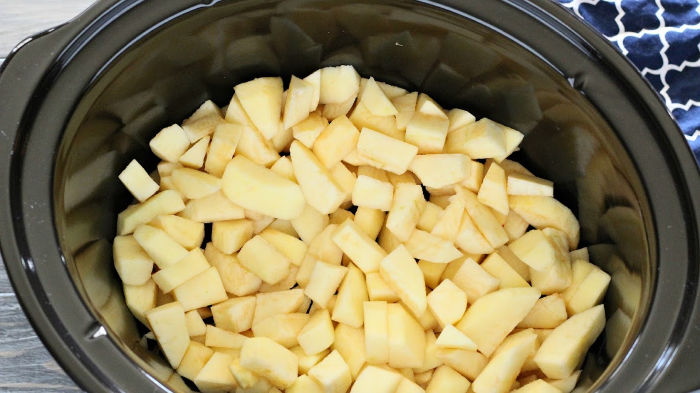
Step Two
Now you cover the apples in sugar, cinnamon, cloves, salt, and red hots. The red hots are optional, but they add a little twist to the apple butter. The finished product looks beautiful in jars, making it an ideal gift.

Step Three
Cover and cook on high for one hour.

Step Four
Continue cooking on low for three to four hours. Your house will smell amazing!
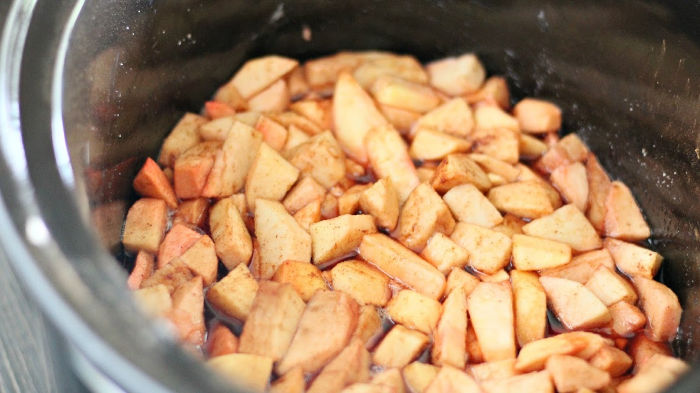
Step Five
Cool slightly, and run the apples through a blender until smooth. Now, place the mixture back into the slow cooker and continue cooking throughout the day. You want it to cook down and thicken up.

Step Six
Remove the excess liquid and place the remaining apple butter in mason jars. This batch will make about 6-8 pints, depending on how many apples you start with.

When cool, place the jars in the refrigerator.

Is your mouth watering yet? Oh my goodness, this is incredibly easy to make, and your neighbors will love it! I say bring on the apples, now.

It’s perfect to spread on your freshly toasted bread.

Slow Cooker Apple Butter Recipe

Apple Butter in a Slow Cooker
Servings 4 pints
Ingredients
- 12 cored, peeled, and chopped apples (fill the slow cooker)
- 4 cups sugar
- 4 teaspoons cinnamon
- 1/2 teaspoon cloves
- 1/4 teaspoon salt
- 1/4 cup cinnamon red hots (optional)
Instructions
- Start by filling your slow cooker with your apples.
- Wash, remove stems and cores. Chop or slice apples.
- Cover in sugar, cinnamon, cloves, salt, and red hots. Cook on high for 1 hour.
- Lower the heat and continue cooking for an additional 3 to 4 hours. Run through a blender until smooth.
- Place back in the slow cooker and cook for the remainder of the day (total cooking time about 9 hours).
- In the evening, fill the mason jars and seal. Keep in mind it will thicken as it cools. It will last for about two weeks in the refrigerator.
Which Apples Make The Best Apple Butter?
- Jonathan
- Winesap
- Stayman
- Golden Delicious
- Macintosh
- Gala
- Or any other tasty soft apple. The softer the apple, the quicker it will cook down to make apple butter
Where Did Apple Butter Originate?
Apple butter has been around for a very long time, long before it ever became a favorite in America. Its story begins in the Middle Ages in a region of Europe called Limburg, which today spans parts of Belgium, the Netherlands, and Germany. Monks in that region had large apple orchards, and they discovered that slow-cooking apples into a thick, dark spread was a wonderful way to preserve the harvest. Almost every village in that area ended up with its own apple butter makers.
The tradition made its way to America with settlers, especially the Pennsylvania Dutch, who brought their apple butter recipes with them to the colonies. It quickly became an important part of American homesteading, especially throughout the 1800s, since it gave families a simple and practical way to use up a large apple harvest and store it for the months ahead.
What made apple butter so special in those early days wasn’t just the taste, but the sense of community that came with making it. Old recipes called for boiling cider down by half, then adding bushels of peeled and cored apples, with family members taking turns stirring the pot for many hours at a time. Because it took so much work, families and neighbors often gathered together for the occasion, cooking the apples down in big kettles outside and passing the time with conversation while they took turns at the stirring paddle. It became a beloved fall tradition tied to harvest time, bringing families and communities together.
Apple butter also found commercial success over the years. One well-known food company got its start making apple butter from an old family recipe in the late 1800s, and it became so popular that it helped build the company into the household name it is today.
Yes, that’s Smucker’s. Jerome Smucker started making apple butter from an old family recipe in Orrville, Ohio, in the late 1800s, and it became the company’s first and most popular product, eventually growing into the J.M. Smucker Company known today.
Even though the old-fashioned tradition of standing over a big kettle all day has faded for most home cooks, apple butter has never gone out of style. Today, it’s most loved in the fall, though many families enjoy it year-round. The slow cooker has helped bring this old tradition back into modern kitchens, letting you get that same deep, slow-cooked flavor without standing and stirring for hours.
In many ways, apple butter has stayed popular for hundreds of years, traveling from monastery orchards in Europe to colonial kitchens to modern slow cookers, always cherished as a simple way to turn a big apple harvest into something warm, spiced, and delicious that lasts.
Is This Recipe Safe To Can?
No, it’s not. I’m a Master Canner and Preserver, and I know this recipe isn’t safe to can. If you want to bottle some jars, please look at the recipe in the USDA Complete Guide to Home Canning or the Ball Canning Guide.
What’s The Difference Between Apple Butter and Applesauce?
Apple butter and applesauce both start with cooked apples, but they end up quite different from one another. Applesauce is made by cooking apples until they’re soft, then mashing or blending them into a smooth or slightly chunky mixture. It’s usually cooked for a shorter time, which means it retains a lighter color and a milder, more straightforward apple flavor. Applesauce also tends to be thinner and looser in texture, almost like a puree.
Apple butter, on the other hand, takes things much further. It starts out much like applesauce, but it’s cooked low and slow for many hours, whether in a big kettle the old-fashioned way or in a slow cooker today. That long cooking time allows the natural sugars in the apples to caramelize, which gives apple butter its deep brown color and rich, concentrated flavor. The extended cooking also cooks off much of the extra liquid, so apple butter ends up thick and smooth, almost like a spreadable jam, rather than loose like applesauce.
Another difference is in the seasoning. Applesauce is often left plain or lightly sweetened, while apple butter is almost always flavored with warm spices such as cinnamon, cloves, and allspice, which give it that cozy, fall-inspired taste people love.
So while applesauce is light, mild, and great for a quick side dish or snack, apple butter is rich, spiced, and thick enough to spread on toast, biscuits, or even use as a filling in baked goods. Both come from the same humble apple, but the extra time and care that go into apple butter are really what set it apart.
Does Apple Butter Contain Butter?
No, it doesn’t. It’s like Peanut Butter; it doesn’t have butter, either. The term butter refers to the thick, spreadable mixture. It’s as simple as that.
Apples: Everything You Need To Know
Final Word
I really hope you try making this slow cooker apple butter. Here’s the deal: we need to prep, but we need to try new recipes whenever we can. Let me know if you’ve made homemade apple butter. I love to hear from you. We need to store water, food, emergency supplies, and know how to cook from scratch.
I’m sure most of you know how to cook from scratch, but many people don’t. We need to teach others. Please keep prepping; we must. May God bless this world, Linda
The post The Best Slow Cooker Apple Butter Ever appeared first on Food Storage Moms.
from Food Storage Moms
How to Download Wikipedia Onto a Portable Drive
Estimated reading time: 8 minutes
Imagine the grid going down for weeks or even months. No cell service, no internet, no quick lookup when you need to know how to treat a serious wound, preserve food without power, or fix a broken tool. In a long-term disaster, knowledge is just as valuable as anything in your survival kit.
Wikipedia is one of the largest collections of practical information ever assembled. It covers medicine and first aid, water treatment, gardening, food preservation, mechanics, chemistry, history, and nearly every other subject you can think of. The problem is that it normally lives online. If the internet goes down, so does your access to all it, unless you keep a copy stored locally.
Here's the good part. You can carry the entire English version of Wikipedia, photos and all, on a device that fits in the palm of your hand and runs off a small battery or even a solar charger. All it takes is a tiny computer called a Raspberry Pi, a memory card, and about an hour of setup. When power and the Internet are gone, you still have a searchable library of human knowledge sitting right in front of you.
We came across this project on the YouTube channel, Joshua Hunt's World, where he walks through the whole build and proves that you don't need to be a tech expert to pull it off. You can watch the video and view the step by step instructions below.
Want to save this post for later? Click Here to Pin It On Pinterest!
What You Need
Three things are essential for this project:
- A Raspberry Pi. Either the Raspberry Pi 4 or the newer Raspberry Pi 5 works. The Pi 5 is faster for only a few dollars more, so go with it if you are buying new. If you already have a Pi 4 sitting in a drawer, that is fine too.
- A microSD card. This holds the operating system and all your files. A 256GB card is recommended. The full version of Wikipedia with pictures is close to 102GB, and a larger card leaves room for extra content like a library of books. You can get by with a smaller card if you use the text-only version of Wikipedia, which runs around 53GB.
- A power supply. The Pi 4 runs on 5V at 3 amps. The Pi 5 needs a slightly stronger 5V at 5 amps.
There are also Raspberry Pi Starter Kits that come with all of these.
You will also need a few common items to get set up: an HDMI cable, a screen or monitor, and a USB keyboard.
Step 1: Get Your Raspberry Pi and SD Card
Go to raspberrypi.com and open the Hardware page. Order either the Raspberry Pi 4 or Pi 5. Then pick up a microSD card. A 256GB card gives you plenty of space for Wikipedia with images plus room to grow.
Step 2: Download the Raspberry Pi Imager
The Imager is a free piece of software that loads the operating system onto your SD card. You cannot simply drag the files over, so this tool does the work for you.
On the same site, open the software page and download the Raspberry Pi Imager to your computer. Run the installer, choose your language, accept the license agreement, allow it to create a desktop shortcut, and let it finish. It only takes a minute.
Step 3: Write the Operating System to the SD Card
Insert your microSD card into your computer, then open the Raspberry Pi Imager and work through these choices:
- Choose Device. Select your model, either Raspberry Pi 4 or Raspberry Pi 5.
- Choose Operating System. Select the recommended Raspberry Pi OS. This gives you a full desktop, which is what you want so that anyone can use the device.
- Choose Storage. Select your SD card. If several drives appear and you are unsure which one is the card, remove it and watch which option disappears, then plug it back in and select that one. Be careful here, because this step erases the card completely.
- Start the process and let it write. When it finishes, remove the SD card from your computer.
Step 4: Boot Up the Raspberry Pi
Slide the SD card into the slot on the Raspberry Pi. Connect the HDMI cable to a screen, plug in your keyboard, and connect the power. The Pi will run through its startup sequence and walk you through first-time setup:
- Choose your country, language, and time zone.
- Set a keyboard layout.
- Create a username. Something simple like “library” works well since this is a shared device.
- Set a simple password that everyone in your household or group can remember.
- Connect to your Wi-Fi so the Pi can download the content later.
- Pick a default browser and let the system install its updates.
The update can take five to ten minutes. If it seems to slow down or pause, be patient and let it finish. When it is done, restart the Pi.
Step 5: Adjust the Screen and Update the System
Once you are on the desktop, make things easier to read by lowering the resolution. Open Preferences, then Screen Configuration, and set it to 1080p.
Next, open the Terminal (the black command window) and run this command to make sure everything is current:
sudo apt updateStep 6: Install Kiwix
Kiwix is the program that lets you download and read Wikipedia and other content offline. In the Terminal, type:
sudo apt install kiwix -yLet it install.
Step 7 (Optional): Install a Word Processor
If you want to take notes on what you read, install LibreOffice Writer. It is handy for keeping information you know you will need to reference again. In the Terminal, type:
sudo apt install libreoffice-writer -yStep 8: Download Wikipedia
Open Kiwix. At first it shows your local files, which will be empty. Switch the view from local files to all files so you can see everything available to download.
Browse by category and find Wikipedia. You will see two main options: the full version at around 102GB that includes pictures, and a smaller text-only version around 53GB. Choose the full version, go to the right side of the listing, and start the download.
While you are here, you can add other useful content too. The catalog includes emergency preparedness guides, medical references, repair manuals, and the Project Gutenberg Library, which holds thousands of classic books in the public domain. Add whatever fits on your card and suits your needs.
Step 9: Use Your Offline Library
Once your downloads finish, open any item in Kiwix and start reading. Search Wikipedia the same way you would online. Look up water purification, first aid, food preservation, or anything else, and browse the linked articles and diagrams, all with no internet connection required. When you are done with an article, go back or close it to return to your library.
That is the whole project. In under an hour of hands-on work, you have a searchable copy of Wikipedia and an entire book library that keeps working when the network does not.
Making It Portable and Off-Grid
The real payoff for preppers is that this setup does not need wall power to run. A Raspberry Pi draws very little energy, so it can run off a portable power bank. Look for a battery rated at 10,000mAh or higher with USB ports that output 5V at 3 amps for a Pi 4, or 5V at 5 amps for a Pi 5.
Paired with a small screen, a battery like this can power the whole unit for several hours on a single charge. Because the Pi charges at low voltage, even a modest solar panel can keep it running, something you cannot say for most laptops. That makes it a genuine grid-down knowledge source rather than just a fun gadget.
One word of caution if you build a portable screen setup: screens often need a specific voltage, and some builders use a boost converter to step USB power up to what the screen requires. Always match the exact voltage your screen is rated for and confirm the cable polarity is correct. Supplying too much voltage can permanently destroy your equipment, so research your specific screen before wiring anything.
Final Thoughts
Most preppers stock food, water, and gear, but knowledge is the one resource that never runs out once you have it stored. A Raspberry Pi loaded with Wikipedia and a library of books gives you a self-contained reference you can power off a battery or the sun, ready for whenever you need it. It is affordable, it is simple enough for anyone in your group to use, and it turns a device the size of a deck of cards into a survival library.
Like this post? Don't Forget to Pin It On Pinterest!
You May Also Like:
The post How to Download Wikipedia Onto a Portable Drive appeared first on Urban Survival Site.
from Urban Survival Site
How Many Fires Has the US Had In 2026?
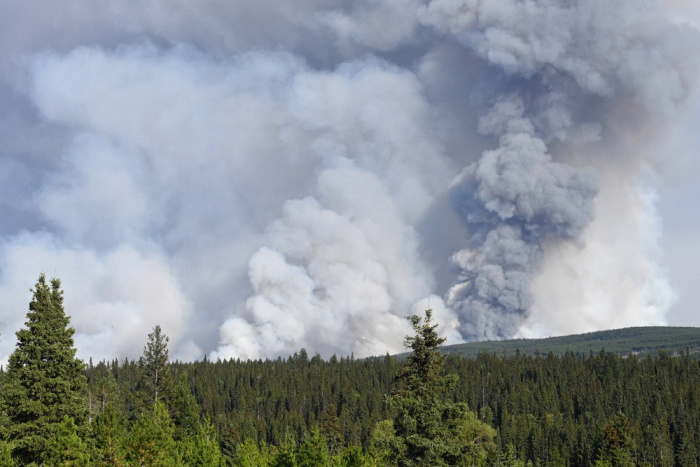
How many fires has the US had in 2026? A family guide to this year’s wildfires. If you’ve been watching the news this summer, you already know 2026 has been a rough year for wildfires. As of the middle of August, the National Interagency Fire Center reports that firefighters across the country have responded to more than 46,600 wildfires that have burned over 6.4 million acres. That is about 154 percent of the 10-year average for acres burned at this point in the year, and the country is at National Preparedness Level 5, the highest level. More than 29,000 firefighters and support personnel are currently assigned to these fires nationwide.
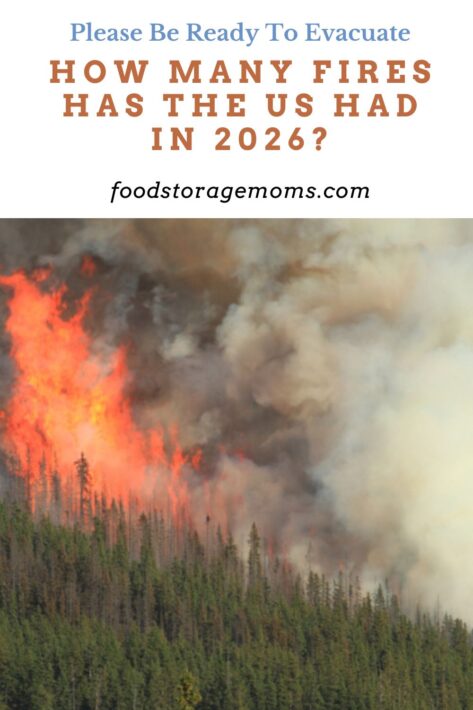
How many fires has the US had in 2026?
Where the Fires Are Burning
The Pacific Northwest is the hardest-hit region right now, with dozens of large, uncontained fires burning across Washington and Oregon. Here are some of the bigger ones as of mid-August.
In Washington, the Sinlahekin Fire near Tonasket in Okanogan County has burned about 151,850 acres and is 42 percent contained. The Ptarmigan Fire, burning in the Pasayten Wilderness north of the Methow Valley, has burned about 24,500 acres and is 13 percent contained. The Little Giant Fire, spreading across Chelan and Okanogan counties near Lake Chelan, has burned about 128,000 acres and is only 7 percent contained. The good news is the Modrite Fire, at almost 57,700 acres, is 80 percent contained, and the Autumn Lane Fire, at about 5,764 acres, is 97 percent contained.
Oregon: The Wrights Spring Fire near Altamont has burned over 33,000 acres and remains in the very early stages of containment.
Nevada: The Bug and Stallion Fire complex near Cold Springs has burned about 122,000 acres and is 15 percent contained.
Montana: Several fires are burning across the western and central part of the state. The Sand Creek Fire in Beaverhead County is the largest, at about 27,700 acres, and remains at 0 percent contained. The Bobcat Lakes Fire, also in Beaverhead County, has burned about 9,680 acres and is 6 percent contained.
In Utah, the Widemouth 2 Fire near Fillmore has burned nearly 118,000 acres and is 50 percent contained.
In Florida, the South Canal Fire has been one of the more active incidents in the Southeast this year, with wind-driven fire runs threatening nearby communities.
California has had a comparatively quieter year so far, with about 1,720 fires burning roughly 54,000 acres statewide, including the Springs Fire in Riverside County, which forced evacuations near Moreno Valley.
Are These Fires Started by Storms or by People?
Both. Nationally, fire officials estimate that about 85 percent of wildfires in the United States are started by people, whether through unattended campfires, dragging trailer chains that throw sparks, downed power lines, equipment use, or debris burning. That’s why fire officials keep reminding everyone to check trailer chains, follow local burn restrictions, and fully extinguish campfires.
That said, many of the largest and most remote fires this year, especially the huge ones burning in the wilderness areas of Washington, Nevada, and Montana, were sparked by lightning during dry summer thunderstorms. Lightning-caused fires tend to start in hard-to-reach terrain, which is part of why some of the fires above have such low containment numbers even after burning for a couple of weeks.
How Much Water Does It Take to Fight These Fires?
This is a question I get asked a lot, and I want to be honest with you. There is no single published number that tells us exactly how many gallons of water have been used to fight all of the fires burning across the country this year. Water use isn’t tracked and added up nationally the way acreage and fire counts are.
What we do know is that water use varies enormously depending on the fire. A single air tanker drop can release several thousand gallons at once. A wildland water tender, the specialized trucks that haul water to the fire line, typically carries between 1,000 and 4,000 gallons per trip, and larger municipal tenders can carry 8,000 gallons or more. On a big fire with helicopters doing repeated bucket drops all day, the water used can add up to hundreds of thousands of gallons in a single day, and that’s before you count the engines and hose lines on the ground.
If you want to follow water use and firefighting resources for a specific fire near you, the best places to look are the National Interagency Fire Center’s InciWeb incident pages and your state forestry or fire agency’s dashboard. These sites post daily updates on personnel, aircraft, and containment, though they still don’t typically report an exact gallon count.
What This Means for Families in a Drought
This is the part that concerns me most as a mom who thinks about preparedness. The U.S. Drought Monitor has been tracking expanding dry conditions through the spring and summer of 2026, especially across the Southern Plains and parts of the interior West. When our lakes and reservoirs are already low, every gallon pulled for firefighting is a gallon that matters. Fire agencies do prioritize water for firefighting when it’s needed, but a drought year like this one is a good reminder for all of us to think about our own household water storage and our family’s wildfire evacuation plan, not just for fire season but for any emergency that strains local water supplies.
A few simple things you can do right now include keeping a defensible space around your home if you live near wildland areas, having a go bag ready with essentials, knowing two ways out of your neighborhood, and signing up for your county’s emergency alert system so you get evacuation notices the moment they’re issued.
How to Put Together Your Family’s Evacuation Grab and Go Kit
When an evacuation order comes, whether it’s for a wildfire, a flood, or any other emergency, you won’t have time to think. You’ll only have time to act. That’s why the best time to put together your grab-and-go kit is right now, while everything is calm and you can think clearly about what your family actually needs.
Start With a Container Everyone Can Carry
Choose a sturdy backpack or a duffel bag for each family member who is old enough to carry one. Keep everything packed and ready near your front door or in your vehicle, not scattered around the house where you’d have to hunt for it under pressure. If you have little ones, pack their items in your own bag or in a smaller bag they can help carry themselves so they feel included in the plan.
The Documents and Money You Can’t Replace Available on the Way Out
Keep copies of important documents in a waterproof pouch or a small, easy-to-grab fireproof lockbox. This includes identification for every family member, insurance policies, birth certificates, the deed or lease to your home, medical records, and a list of prescriptions with dosages. Add a small amount of cash in small bills, since power outages can mean card readers and ATMs aren’t working. It’s also smart to keep digital copies of these documents saved somewhere you can access from your phone.
Water and Food for the First Three Days
Pack at least 1 gallon of water per person per day for 3 days, along with easy-to-eat, shelf-stable food that doesn’t require cooking, such as protein bars, canned goods with pull-tab lids, peanut butter, and crackers. Don’t forget a manual can opener and enough food and water for any pets in your household. Yes, I still prefer 4 gallons per person per day. You decide how much you can deal with effectively.
A Basic First Aid and Health Kit
Include a first-aid kit, any regular medications your family takes, a spare pair of glasses or contacts (if needed), hand sanitizer, and a small supply of basic over-the-counter medicines for pain, allergies, and upset stomachs.
Clothing and Comfort Items
Pack a change of clothes for each person, sturdy closed-toe shoes, a warm layer, and a rain jacket, since you don’t know what weather you’ll be facing once you leave. For children, tuck in a small comfort item like a stuffed animal or a favorite small toy. It makes a real difference for a child’s sense of calm during a scary and confusing time.
Tools and Communication
Include a flashlight with extra batteries, a battery-powered or hand-crank radio, a portable phone charger, a whistle to signal for help, and a paper map of your area in case cell service goes down. Write out a family communication plan with an out-of-town contact everyone can check in with, and make sure every family member, including kids, knows the plan.
Don’t Forget Your Pets
Pack a leash, a carrier if needed, food, water, any medications, and a copy of vaccination records for each pet. If you have larger animals like horses or livestock, plan your evacuation route and destination well before fire season starts, since those decisions take longer to arrange under pressure.
Keep the Kit Fresh
Set a reminder every six months to check your kit. Rotate out food and water before they expire, update clothing sizes for growing kids, refresh any medications nearing their expiration dates, and make sure batteries and phone chargers still work.
Practice the Plan
A grab-and-go kit only helps if your family knows where it is and how to use it. Walk through your evacuation plan together once or twice a year, including two different routes out of your neighborhood in case one is blocked. Practicing takes the panic out of the moment if the day ever comes when you actually need to use it.
Drought: How Will It Affect Our Food Prices?
Final Word
As mentioned, an evacuation order is one of those moments when there’s no time to think, only time to act. The families who get through those moments with the least stress are almost always the ones who think ahead. Building this kit this weekend, even a little at a time, is one of the most loving things you can do for the people who depend on you. Wildfire season in 2026 has been one for the record books, and while most of the news is about acreage and containment percentages, the real story is about the families near these fires and the crews working to protect them. Whether a fire starts with a lightning strike or a spark from a trailer chain, the response is the same: it takes water, personnel, and preparation to bring it under control. Please take this as a gentle nudge to check your family’s food and water storage and evacuation plan this week, whether there is a drought or not. May God bless this world, Linda
Copyright Images: Wildfire Smoke from a wildfire rises in the sky above the forest Depositphotos_676867234_S, Huge flames burning coniferous trees in the forests of the Rocky Mountains Depositphotos_340088138_S,
The post How Many Fires Has the US Had In 2026? appeared first on Food Storage Moms.
from Food Storage Moms
Subscribe to:
Posts (Atom)