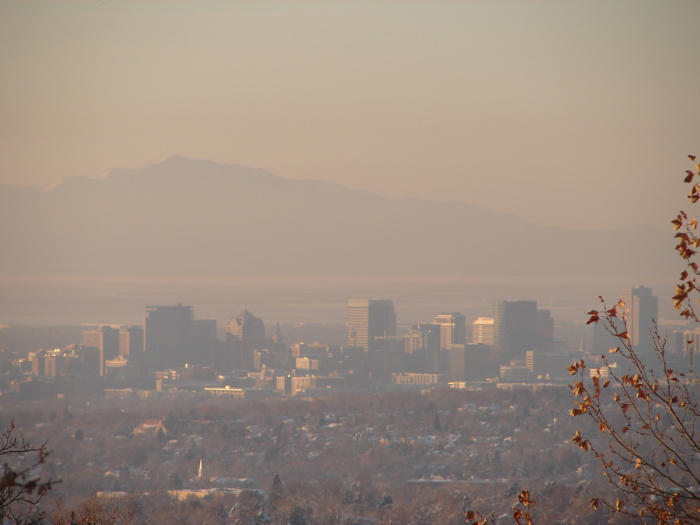
State of Utah: What are we breathing? What is the truth about Great Salt Lake dust and your family’s air quality? If you live along Utah’s Wasatch Front, you’ve probably noticed those hazy, brownish clouds that roll through in the spring and fall. What most people don’t realize is that some of what we are breathing may be coming directly from the drying lakebed of the Great Salt Lake. This post breaks down what’s in that dust, where it comes from, who’s most at risk, and how you can check the air quality in your own state.
Why Am I Writing About This
My friend, Harry from Texas, who’s in our forum, sent me a link about the dangers of the Great Salt Lake. I had no idea. We had already moved up North, closer to the Great Salt Lake, and our house was soon under construction. We were locked in. No way to stop once you start to build. I know we worry about what we eat and drink, but please think about the air you breathe. It’s not fun being tied to an oxygen tube 24/7. It’s emotionally draining. I never smoked or vaped, just giving you a heads up. Looking back, I think I needed oxygen in Southern Utah. I thought I couldn’t walk ten feet because I needed to lose weight. Now I believe I was breathing the exhaust from trucks and cars in our backyard near the freeway that scarred my lungs. We’ll never know the full cause. We had a neighbor in Southern Utah who also lived near the freeway, and she died from Pulmonary Fibrosis (same as my lung disease) last year; is that a coincidence? I think not.
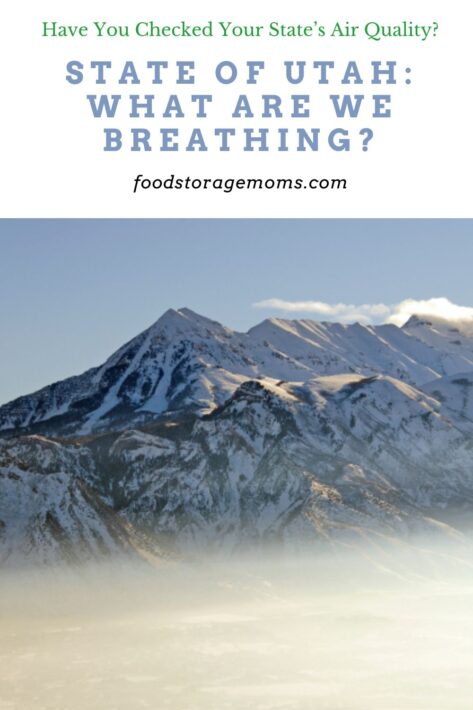
Where Is the Great Salt Lake?
The Great Salt Lake is located in northern Utah at approximately 41 degrees North latitude and 112 degrees West longitude. At a healthy water level, it covers around 1,700 square miles and stretches up to 75 miles long and 28 miles wide, making it the largest saltwater lake in the Western Hemisphere. Salt Lake City, Ogden, Bountiful, Provo, and dozens of other communities sit just to the east along the base of the Wasatch Mountains, a region commonly called the Wasatch Front.
The lake has no outlet. Water leaves only through evaporation, so any minerals, salts, or contaminants that flow in over time remain and concentrate in the lakebed sediments.
The Lake Is Shrinking Fast
Here is where the air quality story begins. At its historic peak in 1987, the lake covered roughly 3,300 square miles. By late 2025, the surface of the lake’s south arm had dropped to an elevation of 4,191.1 feet, the third-lowest recorded level in more than 120 years of recordkeeping. As the water recedes, it exposes dry lakebed sediment to the open air and the wind.
According to researchers at the University of Utah, the shrinking lake is now exposing over 750 square miles of lakebed. That is more than 750 square miles of bare, dry sediment sitting in the desert, available to be picked up by the wind and carried directly into the neighborhoods where hundreds of thousands of people live and breathe.
What Is Actually in Great Salt Lake Dust?
This is the part that matters most for families. Great Salt Lake dust isn’t just ordinary dirt. It’s a mixture of airborne particulate matter from surrounding desert soils and, depending on wind direction, dried sediment from the lakebed itself.
Scientists at the Utah Department of Environmental Quality explain that the exposed lakebed sediments contain heavy metals that accumulated over the past century from both human industrial activity and natural geological processes. Studies have detected elevated levels of copper, cadmium, and lead in dust collected in Salt Lake City and Provo compared to upwind, cleaner areas. A 2026 study published in Atmospheric Environment found that leafy vegetables exposed to Great Salt Lake dust contained elevated levels of arsenic and uranium even after thorough washing, suggesting the dust may pose a dietary risk in addition to an airborne one.
The dust particles fall into two categories that health officials track closely:
PM10: larger particles up to 10 micrometers in diameter, which can be inhaled into the nose, throat, and upper airways.
PM2.5: fine particles 2.5 micrometers or smaller, which travel deep into the lungs and may enter the bloodstream.
The EPA’s current health standard for PM10 is 150 micrograms per cubic meter of air, measured over a 24-hour period. Between 2023 and 2025, monitoring stations near the Great Salt Lake recorded exceedances of that standard at Hawthorne, Prison, and Tech monitoring stations in the Salt Lake area.
How Dust Storms Form
Great Salt Lake dust events don’t happen randomly. They have a pattern that families can learn to anticipate. The peak season runs from March through May, when cold fronts push strong winds across the dry lakebed, carrying sediment plumes toward Wasatch Front communities. Dust events can also occur in summer when thunderstorms generate sudden gusts. These events are typically short, sometimes lasting only a few hours, but the spike in particulate matter during that window can be significant.
Farmington Bay, located on the southeastern edge of the lake near the cities of Farmington and Bountiful, has emerged as a particularly active area. As water levels in Farmington Bay dropped, more than 120 square miles in that area became exposed, creating concentrated dust hotspots that scientists have been mapping and monitoring.
What Does This Dust Do to Your Body?
Researchers at the University of Utah’s Department of Pharmacology and Toxicology published a study in early 2026 that provided a clearer picture of what happens inside the lungs when Great Salt Lake dust is inhaled. The team found that the dust triggers inflammation by activating Transient Receptor Potential channels, proteins in airway cells that normally respond to stimuli such as capsaicin in chili peppers or the cooling sensation of mint. When these receptors are activated by dust particles, they can damage airway tissue and set off an inflammatory response.
Lead researcher Dr. Christopher Reilly noted that Great Salt Lake dust produced stronger effects in the lungs at lower doses than other particle pollutants his team had studied, including coal fly ash, wood smoke, cigarette smoke, and diesel exhaust. Chronic low-level exposure, not just during visible dust storms, is also a concern because it can produce asthma-like changes in the lungs over time.
Roughly 10 percent of Utah’s population has asthma, and health officials say that people with existing respiratory conditions, children, older individuals, and those who are outdoors frequently face the greatest risk.
Who Is Monitoring the Air?
Utah has been expanding its air quality monitoring network in response to growing dust concerns. The Utah Division of Air Quality now operates a 20-station network called UDORN across the Wasatch Front that tracks dust sources, heavy metal composition, and public health risks. In late 2023, four new PM10 filter monitors were added at stations near the lake, including Lake Park, Prison, Brigham City, and Bountiful Viewmont, increasing sampling from every six days to daily.
The University of Utah is also conducting an active research study through December 2026, funded by the state’s Science for Solutions grant program, to better quantify how much Great Salt Lake dust reaches communities and to determine its full composition.
Governor Spencer Cox requested $650,000 in ongoing funding for expanded dust monitoring in 2025, though the legislature ultimately passed $150,000 for the network. Researchers say Utah is still under-monitored compared to similarly situated saline lakes in California.
What Families Can Do Right Now
You don’t have to wait for policy changes to protect your household. Here are practical steps based on guidance from University of Utah researchers and public health officials:
On days when visible dust is present or high-wind warnings are issued, keep windows closed and limit time outdoors.
Refrain from exercising outside during dust storms. Physical activity increases how deeply and frequently you breathe, which increases the amount of particles that reach your lungs.
Consider wearing an N95 or KN95 mask if you must be outside during a dust event. These are the same masks recommended during wildfire smoke events.
Check the air quality before outdoor activities. The website AirNow.gov, operated by the EPA, shows real-time air quality data for locations across the United States using the Air Quality Index, or AQI. You can enter any ZIP code to see current PM2.5 and PM10 levels.
If anyone in your household has asthma, keep rescue inhalers readily accessible and follow your doctor’s guidance on air-quality thresholds.
How to Check Air Quality in Your Own State
The Great Salt Lake isn’t the only drying lake creating dust hazards in the United States. California’s Owens Lake and the Salton Sea have faced similar challenges, and researchers say lake desiccation is a growing global problem tied to both climate change and increased human and industrial water use. Here is how anyone in any state can stay informed:
AirNow.gov is the most comprehensive free resource. It’s run by the EPA and shows current AQI levels for particulate matter, ozone, and other pollutants. You can also sign up for air quality alerts by email or text for your ZIP code.
PurpleAir.com provides a live map of community air quality sensors from low-cost monitors installed by individuals and organizations across the country. It offers a more granular, neighborhood-level view.
Your state’s environmental agency likely has its own monitoring network. In Utah, the Utah Division of Air Quality at deq.utah.gov/air-quality provides information specific to local conditions, including Great Salt Lake dust data.
The EPA’s outdoor air quality data portal at epa.gov/outdoor-air-quality-data lets you search historical air quality records by location, helping you understand patterns in your area over time.
If you live near a large body of water, a dry lakebed, or a region with heavy agricultural dust, it’s worth checking whether your state has specific monitoring programs. Many states post air quality data through their departments of environmental quality or environmental protection.
The Bigger Picture
The Great Salt Lake’s water level tells a story that goes beyond recreation or scenery. At its current trajectory, scientists at Brigham Young University have warned that without significant policy intervention, the lake could continue to shrink to the point where dust becomes a near-constant threat rather than a seasonal one. Researchers project that PM2.5 dust exposure levels in communities along the Wasatch Front could climb from around 24 micrograms per cubic meter to 32 micrograms per cubic meter if the lake continues to fall.
A 2026 study examining dust control options concluded that the most cost-effective long-term solution is restoring the lake’s water levels. In the short term, the study identified 12 potential dust control approaches, ranging from shallow flooding of exposed areas to gravel cover and engineered surface treatments. The study stressed that expanded monitoring must come first so that policymakers have the data needed to trigger interventions before federal air quality mandates force their hand.
Restoring the lake is estimated to require about 800,000 additional acre-feet of water annually. Utah is currently exploring options, including purchasing water rights from agricultural users and studying the feasibility of diverting water from the Newfoundland Water Basin into the lake, which would be extremely expensive.
Utah State University: Utah State TODAY
How to Preserve Water During a Drought
Final Word
The air in Utah belongs to all of us, and what’s happening at the Great Salt Lake isn’t just an environmental story. It’s a family health story. The good news is that awareness is growing, monitoring is improving, and solutions are being studied seriously. In the meantime, checking AirNow.gov before a morning run, keeping N95 masks in the car during the spring dust season, and staying informed through the Utah Division of Air Quality are simple, effective ways to protect your household.
And if you’re outside the state, remember that your state may have its own version of this story. Look up your nearest large body of water, check whether its levels are declining, and explore your state’s air quality monitoring data. The information is publicly available and free to access. What you don’t know about what you’re breathing could matter more than you think. May God bless this world, Linda
Copyright Images: Pollution In Salt Lake City AdobeStock_5567, Smog in the Valley Below Mt. Timpanogos UtahAdobeStock_247860706 By Patrick
Sources and Further Reading: Utah Division of Air Quality: deq.utah.gov/air-quality/great-salt-lake-dust Utah Division of Water Resources: water.utah.gov EPA AirNow: airnow.gov University of Utah College of Pharmacy Research on GSL Dust: pharmacy.utah.edu Grow the Flow Utah: growtheflowutah.org U.S. Geological Survey Great Salt Lake: usgs.gov/centers/utah-water-science-center
The post State Of Utah: What Are We Breathing? appeared first on Food Storage Moms.
from Food Storage Moms
No comments:
Post a Comment