I want to talk about the emergency items you need after a disaster. Natural disasters and unexpected emergencies can strike with little warning, including storms, earthquakes, wildfires, power outages, and extended supply chain disruptions. When the immediate danger passes, the real challenges begin: staying safe, fed, hydrated, warm, and informed in the days that follow.
Having the right emergency items after a disaster can make the difference between chaos and calm. This post walks you through the most important post-disaster essentials every household should have on hand, why they matter, and how to use them effectively.
Why Post-Disaster Preparedness Matters
After a disaster, help may not arrive right away. Roads may be blocked, utilities may be down, stores may be closed, and emergency services may be overwhelmed. Most government agencies recommend being able to self-sustain for at least 72 hours, but experienced preparedness experts often aim for 7–14 days.
Preparedness isn’t panic, it’s peace of mind.
Water: Your Top Priority After Any Disaster
Emergency Drinking Water
Water is non-negotiable. Dehydration can happen quickly, especially in hot or stressful conditions.
What you need:
- 1 gallon of water per person per day (minimum)
- I recommend 4 gallons of water per person per day (hydration, cooking, personal hygiene, and limited laundry tasks)
- Extra for pets
- Store enough for 3–7 days per person
Water Purification Supplies
If stored water runs out or becomes contaminated:
- Water purification tablets
- Portable water filters (gravity, pump, or straw-style), I like Big Berkey and PortaWell products.
- Unscented household bleach (for emergency disinfection)
Why it matters: Clean water prevents illness when medical care may be unavailable.
Emergency Food Supplies That Don’t Require Power
Shelf-Stable, No-Cook Foods
After a disaster, you may have no electricity or gas.
Best options include:
- Canned meats, beans, and soups
- Peanut butter and nut butters
- Crackers, granola bars, trail mix
- Freeze-dried or dehydrated meals
- Shelf-stable milk or protein drinks
Manual Food Prep Tools
- Manual can opener
- Disposable plates and utensils
- Paper towels and wipes
Tip: Choose foods your family already eats; when under stress is not the time to experiment.
First Aid and Medical Essentials
Basic First Aid Kit
Every emergency kit should include:
- Bandages, gauze, tape
- Antiseptic wipes and antibiotic ointment
- Pain relievers
- Tweezers and scissors
- Sanitary gloves
Prescription and Medical Needs
- At least a 7-day supply of medications you need to take consistently
- Copies of prescriptions
- Medical devices (inhalers, glucose monitors)
- Important medical history information – include medical provider information
Why it matters: Pharmacies may be closed or inaccessible.
Lighting and Power Sources
Emergency Lighting
When the power goes out:
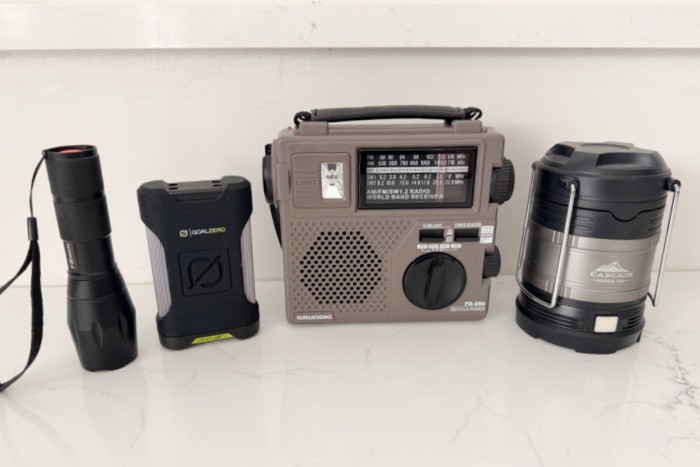
- LED flashlights
- Headlamps (hands-free is huge)
- Battery-powered or crank lanterns
- Solar-powered flashlights – I have mine charging in my window sills at all times
Backup Power
- Extra batteries (stored separately)
- Power banks for phones
- Solar chargers or hand-crank chargers
Avoid candles unless absolutely necessary; fire risk increases after disasters.
Communication and Information Tools
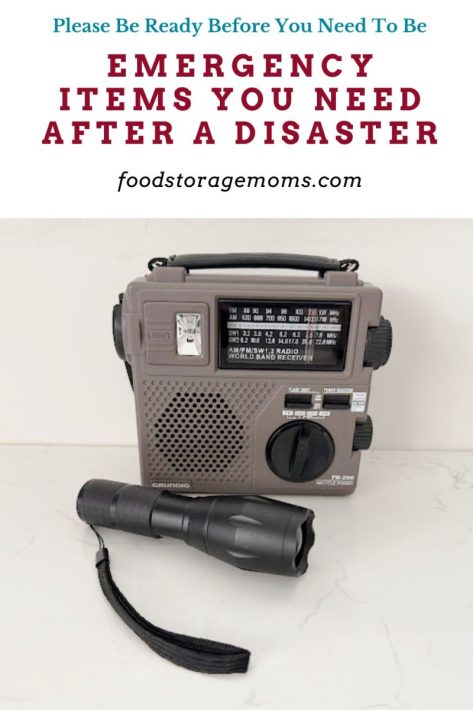
Emergency Radio
A NOAA weather radio or hand-crank radio allows you to:
- Receive emergency alerts
- Get updates when the internet and cell service are down
Important Documents
Store waterproof copies of:
- IDs
- Insurance policies
- Medical information
- Emergency contacts
Hygiene and Sanitation Supplies
Personal Hygiene Items
- Toilet paper
- Feminine hygiene products
- Diapers and wipes
- Soap, hand sanitizer
- Toothbrushes and toothpaste
- Vision care – eye drops, contact lenses and cleaners, and sunglasses
Sanitation Solutions
- Heavy-duty trash bags
- Disinfecting wipes
- Portable toilet or bucket with liners (for extended outages)
- Shovel in case you need to bury items
Cleanliness prevents illness when water and sewage systems are compromised.
Clothing, Warmth, and Shelter
Emergency Clothing
- Weather-appropriate clothing
- Sturdy shoes
- Hats, gloves, rain gear
Warmth and Shelter Items
- Blankets or sleeping bags
- Emergency thermal blankets
- Tarps and duct tape (temporary repairs and/or shelters)
Even in warm climates, nights can get cold after storms. Food Storage Matters-We Must Be Self-Reliant
Tools and Safety Equipment
Basic Emergency Tools
- Multi-tool or basic tool kit
- Work gloves
- Whistle (for signaling help)
- Rope or paracord
- Tool kit with hammer, screwdrivers, pliers, and other handyman items
Fire Safety
- Fire extinguisher
- Matches or lighters (stored safely)
Cash and Bartering Items
After a disaster, ATMs and credit card systems may not work.
Keep on hand:
- Small bills
- Coins
- Items useful for trade (batteries, hygiene items)
Comfort and Mental Health Items
Disasters are stressful, especially for children.
Helpful comfort items:
- Books, games, puzzles
- Favorite snacks
- Stuffed animals or comfort items for kids
- Notepad and pen (communication, planning)
- 10 Hygiene and Sanitation Tips for a Disaster
Preparedness isn’t just physical, it’s emotional, too.
Emergency Items for Pets
Don’t forget furry family members:
- Pet food and water with easy-to-dispense dishes
- Leashes and carriers
- Medications
- Vaccination records
- Pet beds with blankets
How to Store and Maintain Your Emergency Supplies
- Store items in labeled bins
- Keep kits in multiple locations (home, car)
- Rotate food and water every 6–12 months
- Review supplies twice a year
Final Word
You don’t need to be extreme or fearful to be prepared. Having emergency items ready after a disaster allows you to focus on what matters most, keeping your family safe, calm, and cared for while the world resets. Be properly prepared based on your family’s size and ages. Preparedness is an act of love. May God bless this world, Linda
The post Emergency Items You Need After a Disaster appeared first on Food Storage Moms.
from Food Storage Moms
No comments:
Post a Comment