Friday, June 23, 2023
Saturday, April 22, 2023
Wednesday, February 1, 2023
Sunday, January 29, 2023
Friday, January 27, 2023
Saturday, July 16, 2022
56 Ways To Reduce Your Trash
If you are looking for ways to reduce your trash, you are not alone! People around the world are looking to create a positive impact on the planet by reducing their waste that ends up in landfills, oceans, etc.
According to the EPA, of the over 290 million tons of solid waste produced in 2018, only 32.1% of that was either recycled or composted. That’s a lot of leftover garbage that gets to the dump and stays there!
So, here is a list of # ways to reduce your trash in change your footprint on the world for the better! There are 4 categories of waste that we will cover in this article.
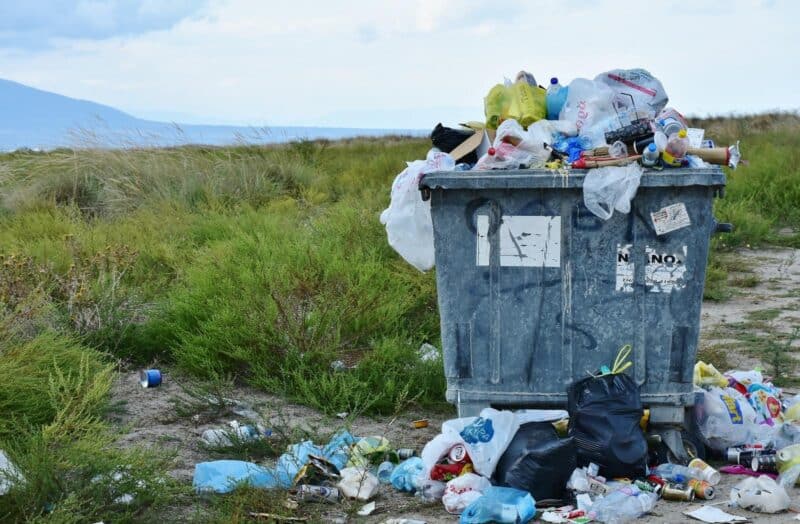
Table of Contents:
Reducing Household Trash
In the household waste category, we are going to look at the main products that are used in most homes that can be switched for zero-waste options.
One thing that many people think is that environmentally friendly products are more expensive, but that doesn’t have to be the case at all. Just check out our list of ways to reduce household waste and you’ll see for yourself!
1. Shop for zero-waste alternatives to all household items.
The simplest way to do this is when you run out of a product (laundry detergent, shampoo, etc), shop for a zero-waste product instead of purchasing the same product again.
2. Reuse food-grade plastics.
Many foods that come in plastic containers are great for reuse since the plastic is food-grade. Yogurt containers are great for planting seedlings.
Vitamin & supplement containers are great for storing dried herbs and seasonings. The possibilities are only limited by your imagination and ingenuity.
3. Shop for plastic-free alternatives.
Many products come in plastics and other materials. One of the easiest switches is to stop buying products that come in plastics and opt for a better option, like compostable or more universally recycled materials.
Choose the eggs the come in paperboard rather than styrofoam. If you are buying jam, ensure you buy the one that comes in a glass jar instead of a plastic jar.
4. Invest in a water filter.
Don’t go buying your water by the bottle or jug. While plastic water bottles are recycled better than most other plastics, many still end up in the landfill and/or oceans.
For example, Zero Water offers water filters that are easy to recycle but also have the even better option of sending them back to the company to rejuvenate to be sold again!
5. Adopt Minimalism.
While this isn’t a clear-cut tip to reduce waste, the less you consume and the less materialistic products you buy, the less waste you will produce over time. There are many benefits to Minimalism beyond reducing waste as well.
6. Wear sustainable clothing.
Clothes made from natural materials (cotton, hemp, etc.) can be composted, and don’t need to be sent to a landfill when they break down. Clothes made from polyester and other synthetic materials don’t break down, and end up in the landfill for up to 200 years!
7. Second-Hand Shopping
If you want to create an even more sustainable closet, shop second-hand when you can. The fast fashion industry creates tons of trash every year.
Opting for used clothing means no new trash was created for that article of clothing to reach your closet. The same can’t be said for new clothing, even with the best sustainable brands.
8. Implement greywater systems.
While water going down the drain may not seem like trash, it is wastewater that isn’t reused with treatment or the natural process of cycling through the earth back into the groundwater.
Implementing greywater can reduce your wastewater output and reduce irrigation needs for ornamentals or food-producing plants and trees if that’s where you route the water, creating a win-win!
9. Turn some household products into DIYs.
You can make your soaps, lotions, shampoos, and many other consumable products at home with simple ingredients. These products tend to be healthier for you and the environment while producing less trash in the process. You can see a soap-making experiment right here!
10. Recycle better.
Programs like TerraCycle allow you to recycle products that your local municipality won’t recycle themselves.
Many people think that if they throw something in the recycle bin, it’s going to automatically be recycled. This couldn’t be further from the truth. Using TerraCycle will drastically improve the chances of your trash being recycled.
11. Compost the carbons.
All homesteaders know they need a good source of carbon for the compost pile. Things like paper towels, tissues, and junk mail can be shredded and put into the compost pile instead of the garbage can. Recycling is only an option for those pieces that aren’t overly soiled.
12. Opting out of paper mail.
While composting that mail is an option, signing up for digital mail over paper mail is a good way to reduce this waste altogether. You can do this for your bills and even things like credit card offers.
13. No more disposables.
Plates, knives, forks, spoons, and the like shouldn’t be disposable. Invest in a well-made set of permanent dishes and cutlery and stop throwing away countless disposable items.
14. Refill household items.
There are specialty stores that offer bulk items like shampoo, soap, etc for your refillable containers. Many of the so-called single-use containers that household items come in can be rinsed, washed, and put to another use by refilling it and these bulk supply stores.
Reducing Food Waste
Food waste is a huge problem around the world. So much food is thrown away that could be put to better use. Otherwise, it gets sent to the landfill and ends up producing the greenhouse gas methane along with the rest of the trash.
15. Invest in a chest freezer.
The more freezer space you have, the more you can store. The fridge is great but it doesn’t stand up to the preservation of freezing foods!
16. Shop for only what you need.
Don’t buy for a family of 10 when you are only in a family of 3. Buying too much food will typically result in a lot of that fresh food spoiling before you get a chance to use it.
17. Raise an omnivore.
Chickens and pigs are awesome because they can eat a ton of different foods. This means that anything you and the family don’t finish can go to the omnivore on the homestead. Chickens and pigs love snacks whenever they get the opportunity!
18. Compost what you can.
If you can’t raise an omnivore or you have certain foods that aren’t good for your livestock, you can usually compost it.
19. Make broth with leftovers.
Vegetables are typically trimmed, cut, or peeled before use. All of that vegetable waste can be frozen until you have enough to put in a pressure cooker to make a veggie broth. The same goes for meat and bones to make a hearty bone broth.
20. Don’t cook too much.
Just like you shouldn’t overshop, you shouldn’t overcook. Plan your meals ahead of time and adjust the recipe for the number of servings you need to feed the family. A few servings of leftovers are fine but those quickly add up if you continually cook too much day after day.
21. Learn preservation techniques.
Freezing, canning, and fermenting are all awesome ways to preserve your food longer to reduce your food trash output. Learn each and find out what ingredients work best for each technique.
22. Freeze leftovers.
The fridge is nice for leftovers if you plan on eating them within the next day or two. But, if you have the freezer space you can easily store them in the freezer instead and have them last months instead of days!
23. Shop for package-free.
Some grocery stores offer bulk items that you can fill your own containers with. Instead of throwing away a bunch of plastic from the food you buy you can fill it into your reusable containers and avoid that waste altogether.
24. Grow your own food.
Growing your own food reduces the trash used in transport to the grocery store and the trash used in packaging. Plus, fresh food from the garden is so much better!
25. Raise the meat you intend to eat.
The meat industry creates a lot of trash. Think about all of the meat at the grocery store. It is lined with styrofoam and plastic everywhere.
If you raise your livestock for meat and butcher it yourself, you can package it in compostable packaging instead. Alternatively, you can work with a butcher who will do the same for you.
26. Use fewer ingredients.
You don’t need 20+ ingredients in every dish. Plenty of dishes taste amazing using a few simple ingredients. The fewer ingredients used per meal, the less you buy. This means a smaller chance of throwing a bunch of food out.
27. Create a meal plan using the same ingredients.
With the idea of using fewer ingredients per dish, plan ahead with recipes that use the same ingredients over the course of the week.
That way, when you go grocery shopping, you know you are buying an ingredient that has multiple purposes and won’t go to waste after being used in one meal.
28. Never shop without a list.
Simple, yet effective. Shop for your groceries with a preplanned list so you don’t purchase things you don’t need that could end up in the trash can.
Reducing Homestead Trash
While reducing household and food waste is great for the average family, those of us who homestead have another waste stream that has to be dealt with if we want a more sustainable homestead!
29. Choose your livestock food wisely.
Livestock food tends to come in plastic or paper bags. Opt for paper bags whenever possible.
30. Invest in sustainable livestock materials.
Don’t go out and buy a bunch of flimsy plastic stuff for your livestock. A plastic chicken waterer and feeder will break and will end up in your garbage can.
Invest in sturdier material like metal instead. It may cost a bit more at first but it will last much longer.
31. Use natural fertilizers.
Fertilizers always come in plastic packaging with fancy logos to prove they will boost your yields by 10,000% (or whatever nonsense they claim).
If you already have livestock on the homestead you have a free source of renewable fertilizer in the form of manure. It’s always plastic-free!
32. Save garden seeds.
It’s fun to buy garden seeds and plant starts at the nursery. But, much of those packages and pots are loaded with plastics that end up in the landfill. Make your garden more sustainable by saving seeds from your crops to grow in the following years.
33. Grow livestock fodder.
The less livestock food you have to bring in, the less trash you bring in as well. Growing livestock fodder can reduce your feed bill and your trash load. Fodder is awesome for pigs, chickens, rabbits, and plenty of other livestock.
34. Don’t use plastic weed block.
It leaches chemicals over time, and will eventually end up in your garbage can. Instead, use natural mulches or something like kraft paper rolls as an alternative to plastic weed barriers.
35. Don’t buy plastic tools.
Plastic tools always seem to break, no matter how good you take care of them. Spend a little more money on metal tools and you won’t be throwing plastic tools in the garbage can.
36. Think twice about a greenhouse.
Greenhouse plastic degrades over time and can rip, eventually finding its way to the landfill. So, do you really need a greenhouse?
Grow cool-season crops when you should and warm-season crops when you should. A greenhouse is only necessary if you don’t have a growing season!
37. Build sustainably.
Livestock shelters, barns, sheds, and the like are all common on a homestead. Build them out of sustainable materials that can be repurposed if damaged. Otherwise, this stuff might end up in the landfill as well!
38. No plastic bird netting.
Use bird netting made from sustainable materials, like jute. Plastic bird netting is a mess, and ends up being thrown away all the time.
39. No plastic trellising.
Just like bird netting, plastic trellises are made from weak plastic that breaks and ends up in the trash can. There are biodegradable options on the market as a better alternative.
40. Buy bulk bedding.
Farm stores sell bedding like pine shavings in large plastic bags. While this could be an option if you can’t find anything else, try and get bulk bedding without the packaging. For example, many landscaping businesses sell bulk wood chips that will get the job done.
41. Use local food waste.
This is a bonus tip because it doesn’t directly reduce your farm waste and may actually add to your garbage can. However, this waste was already going to your local landfill and you upcycling it reduces the local trash load tremendously.
Food banks, bakeries, and dairies near you throw away tons of food every year. That stale bread, damaged produce, and expired dairy can be fed to livestock on your homestead!
You might be throwing away a lot of plastic bread bags milk jugs, but these were already on the way to the dump. You removed the food and caused less methane production from the landfill!
42. Hand power is just fine.
Plastic oil containers, gas cans, and other fluids required for motorized tools are avoidable by opting for hand-powered tools where possible. You can also choose electric-powered tools if hand power isn’t sufficient.
Reducing Waste On The Go
We all go on vacation, whether it be on week-long trips or a simple night out on the town. Reducing waste outside of the house is just as important as reducing trash output at home for living sustainably!
43. Refuse plastic grocery bags.
Bring reusable bags to the grocery store. Those plastic grocery bags are quite hard to recycle, so avoid them at all costs.
44. Bring reusable cutlery.
When you go to birthday parties, bring your reusable cutlery. Some people may give you funny looks, but it’s not worth breaking your commitment towards sustainable living!
45. Go to environmentally friendly restaurants.
Some restaurants choose to be more eco-friendly than others. Find those in your area and support them by choosing them over the less sustainable restaurants in the neighborhood.
46. Fast food isn’t your friend.
Fast food produces a lot of garbage. Each item comes in its own container that is usually soiled with grease and oils, making recycling nearly impossible. For example, the pizza box made of cardboard isn’t recyclable if pizza grease is on it!
47. Avoid gas-station snacks.
They are typically packed in non-recyclable plastics. Find an alternative or a gas station that sells snacks with biodegradable packaging.
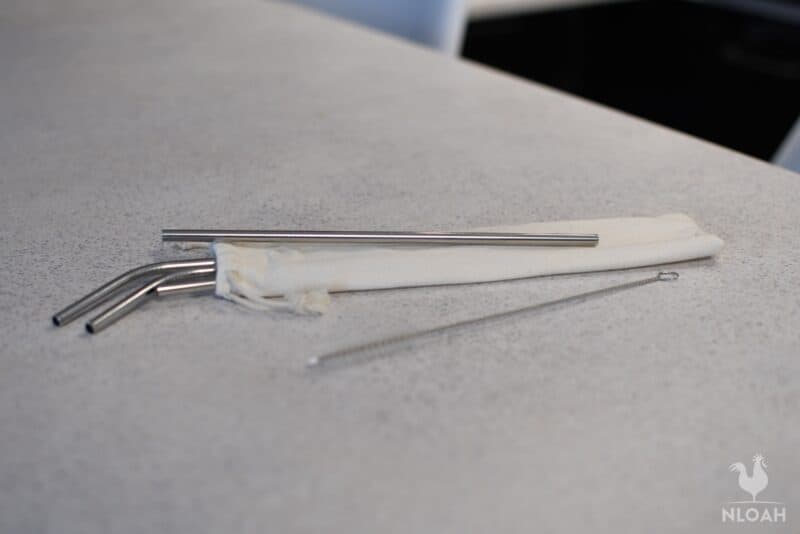
48. No more plastic straws.
This has been a huge topic over the last few years. They are almost impossible to recycle and end up polluting our waterways and killing wildlife.
49. Aluminum over plastic.
Want to buy a tea at the convenience store? Opt for the one in an aluminum can instead of a plastic bottle.
50. Stay in environmentally-friendly hotels.
Check out this list from Business Insider if you want the best of the best! There are obviously others but if you want to travel to many places, these hotels are your best option towards sustainable lodging.
51. Go to eco-friendly destinations.
Just like hotels can be eco-friendly, entire destinations can be eco-friendly. The Travel Channel offers some good ideas for eco-friendly destinations for your next vacation.
52. Spend more time in nature.
Take yourself, some water, and a few snacks and you can spend hours enjoying nature without producing any garbage at all! This is a great alternative to many commercial destinations.
53. Pack an essentials bag.
Keep a packed bag in your vehicle with water, food, first aid supplies, and anything else you could need that could lead to you buying trash-producing goods on the road.
54. Camping is fun.
Go camping and bring all of your sustainably packaged food and drinks. You can spend a few nights in nature, and produce zero trash and enjoy how life was lived for the majority of human history for the most part.
55. Bring your own snacks.
Many places don’t serve sustainable options for snacks. If you can sneak your eco-friendly snacks in the movie theater you won’t be throwing away the popcorn bucket and drink cup like the other movie-goers.
56. Pick up others’ trash.
If you want to leave a positive impact when traveling, dedicate some time to picking up trash. Many people do this at the beach. It can influence others to join in as well!
How Can You Reduce Your Trash Output?
Do you have any other ideas on how to reduce waste? Let us know in the comments and if they are working great for you, we may add them to the article and give you the credit!
Hopefully, you can take a few of these trash-reducing tips and implement them in your daily life. It will help the world around you, and might just improve the quality of your own life as well!
Thursday, July 7, 2022
Saturday, June 4, 2022
Waste Disposal Methods After SHTF

By Bob Rodgers
In the old days, waste disposal was a matter of life and death, and it seems we have forgotten that learning to deal with human waste was actually the thing that saved the most lives throughout history, and it contributed to longer life expectancy in the 20th century.
Human waste and garbage are a dangerous mix of deadly bacteria, viruses, and poisonous chemicals. Most people carry, inside their gastrointestinal tracts, many deadly “bugs,” which are, fortunately, kept in check by the body’s defenses.
When these bacteria get out of the human body, they can multiply freely in human waste. Sometimes, when this waste is introduced into water supplies, the high concentration of bacteria and viruses will cause sickness and even death.
Human waste is an excellent medium in which bacteria and viruses thrive, and the bad news is that it will often attract various parasites that can carry the disease to other humans. Files, cockroaches, and rats are known to carry diseases such as dysentery, cholera, typhoid, paratyphoid, and the plague.
Monday, April 4, 2022
Thursday, September 9, 2021
DIY Portable Toilet (Emergency Use Bucket Toilet)
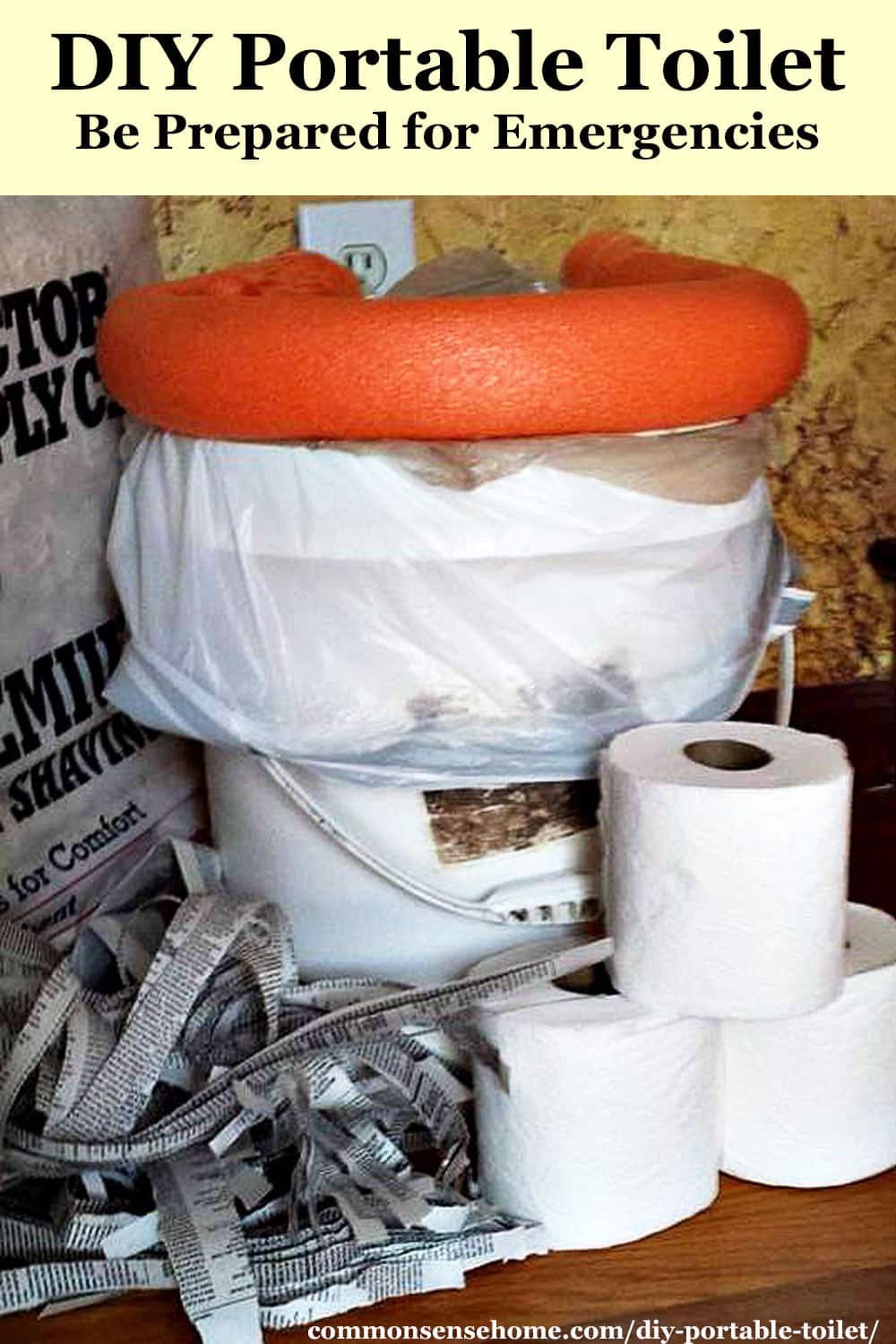
I wish our first experience with a DIY portable toilet had been somewhere fun like a camping trip, but unfortunately when we needed an “Emergency Relief System” (ERS), it really was an emergency. Our toilet would not flush and there was nowhere else to go.
I'll share how to build a simple DIY portable toilet, plus tips to get rid of the smell.
With very little notice, we received almost 2 feet of rain in less than 48 hours. To add insult to injury, we were already flooded from the recent Super Harvest Blood Moon.
Tuesday, August 24, 2021

Monday, January 17, 2011
Sanitation....yes the stinky issue.

I thought I would start the new year off with something usually overlooked....sanitiation during times of disaster. Many stock up on loads of TP and then really don't think about the issue after that. So what to do when the water stops running and the TP runs out? This is a subject many don't like to breach, but it a daily issue that must be addressed.
Sanitation after a disaster is a huge issue. The potential for disease outbreak is massive...the present situation in Haiti is a great example.
Bugging In:
People on sewer systems, especially low lying coastal areas face a serious issue. Though toilets can be flushed by pouring water into the tanks, when flushed it goes no further than your area lift station holding tank. With the power off these lift stations stop working and the holding tanks fill up. Either the waste will begin to flood the streets or it will back up into your house. Neither is a good option. Those on septic systems can continue to flush...though this is a huge waste of water.
If it is a short term disaster solutions are easy...probably the simplest is the 5 gal toilet. Available for purchase from several suppliers or you can make your own. This is also a good option for those bugging out via BOV.

A longer term solution is a 55 gal drum that can be constructed into a composting toilet if you are feeling really adventurous. Additionally a small septic system can easily be constructed.
Popout
A great book for waste composting...-The Humanure Handbook: A Guide to Composting Human Manure
 , Third Edition - Joseph C. Jenkins .
Bugging out:
Ok so you have to bug out. If going BOV, most think heck I'll just pull over and go (which is exactly what the masses will do). This again sets up the potential for disease spread as well as water contamination. With the BOV you can carry a 5 gal bucket...but I suggest you have one with the bottom cut out...dig a hole and presto..mini loo. But is is good to be responsible..a great book that addresses going in the wild and applies to any mode of bugging out.
-How to Shit in the Woods, Second Edition: An Environmentally Sound Approach to a Lost Art
 - Kathleen Meyer
Holy Smokes I'm out of TP?!...now what?
Fortunately, someone has already done a study. Though a bit on the 'bold' side, they try several different substitutes...I'll let you read and decide for yourself.
Have a great new year everyone!
------------------------------------------
Join the APN Forum at www.AmericanPreppersNetwork.net
Visit the Florida Forum at www.FloridaPreppersNetwork.net

Wednesday, January 12, 2011
What To Do When the Sanitation Hits The Fan
 Image via Wikipedia
Hundreds Have Died From the Haitian Cholera Epidemic
The Haitian earthquake survivors are not only reconstructing their city and their homes, but are dealing with a cholera epidemic due to unsanitary conditions after the earthquake occurred. As of November 2010, 4,764 Haitians have contracted cholera, and 337 have died as a result (Source). In fact, news sources have reported this epidemic outbreak to be the worst they have seen in 20 years. This epidemic broke out due to people being uneducated on how to properly dispose of waste. In all honesty, most everyone is uneducated on this subject, because our town’s and city’s waste management teams do the job for us. But if an emergency arises and the water and sewage systems are corrupted, then your waste becomes your responsibility.In an article regarding this subject, emergency preparedness author, Kellene Bishop of Preparedness Pro has this to say, “If you don’t take emergency sanitation seriously, then the consequences can be extremely dire – even up a 50 mile radius. Preventing waste from contaminating the soil is just as important as preventing the spread of any other disease as it contaminates crops, water, and air. Additionally, as water will be scarce in a time of emergency, ensuring that it does not get contaminated with improper sanitation habits is critical.Diseases such as cholera , are contracted through contaminated water and food, and often as a result of poor hygiene and sanitation practices. It causes acute diarrhea and vomiting. If left untreated, it can quickly lead to serious dehydration and death. Women and children are usually the most effected, and become dehydrated more quickly. In fact, UNICEF reports that “poor hygiene, and unsafe drinking water claim the lives of 1.5 million children under the age of five every year.”
Add a Sanitation Kit to Disaster Supplies
Having a sanitation kit that is ready in times of disaster is essential to keeping your family and neighbors healthy. These kits can fit comfortably into a bucket, are affordable, and will not take up much space. Additionally, being educated on how to properly dispose of waste is a key factor in keeping everyone healthy during a disaster.Some suggested sanitation supplies to add to any short or long term emergency kits are:
- Disposable bucket or luggable loo
- Toilet paper
- Rubber gloves
- Garbage bags with twist ties ( for liners of toilets or luggable loo)
- Bathroom cleaner
- Cat Litter or absorbent material such as saw dust or dirt
- Baby wipe
- Baking soda can be used to help eliminate odors
- Vinegar
- Shovel
Disposal of Waste
Properly disposing of waste products keeps water sources clean and cuts down on illness and disease. If city water is still available, flush conservatively. Grey water such as used dish water, bath water or water for cooking can be used to flush the toilet. If water lines are damaged, or if damage is suspected, do not flush the toilet.In a short term emergency situation
If water services are interrupted, an easy way to utilize the toilet and keep it clean is to:- Clean and empty the water of the toilet bowl out.
- Line the bowl with a heavy-duty plastic bag.
- Once the bag has waste inside, add a small amount of deodorant such as cat litter, as well as disinfectant and securely tie the bag for disposal.
- A large plastic trash can (lined with a heavy duty bag) can be used to store the bags of waste.
- Once trash services begin, the city will come and collect these.
Officials say to avoid burying your waste, but sometimes it is necessary. However, if waste is not properly taken care of, pollution of water sources will lead to illness and disease. It also attracts flies and insects which will spread the disease further. Understand that burying feces takes up to a year to decompose. Therefore, finding the right spot to bury your feces is crucial. There are biodegradable bags that a person can put their waste into. These can usually be found in the camping department of outdoor stores, or on the Internet. The bags assist the waste in decomposing faster and assists in preventing the waste from hitting major water sources. If a person does not have one of these handy bags available, the feces should be buried in “catholes” far away from water sources, campsites and communal spot where there are a lot of humans.
According to Leave No Trace, there are some considerations when choosing a site to bury waste.
- Select a cathole site far from water sources, 200 feet (approximately 70 adult paces) is the recommended range.
- Select an inconspicuous site untraveled by people. Examples of cathole sites include thick undergrowth, near downed timber, or on gentle hillsides.
- If camping with a group or if camping in the same place for more than one night, disperse the catholes over a wide area; don’t go to the same place twice.
- Try to find a site with deep organic soil. This organic material contains organisms which will help decompose the feces. (organic soil is usually dark and rich in color.) Refer to the jars used to demonstrate decomposition. The desert does not have as much organic soil as a forested area.
- If possible, locate our cathole where it will receive maximum sunlight. The heat from the sun will aid the decomposition.
- Choose an elevated site where water would not normally runoff during rain storms. The idea here is to keep the feces out of water. Overtime, the decomposing feces will percolate into the soil before reaching water sources.
Disposal of Feminine Napkins
It is important to properly dispose of sanitary napkins, as they contain bodily fluid that could pose a health hazard to others. Methods of disposal may differ according to where you are are and what you have available. However, tampons and feminine napkins do not decompose quickly. Therefore, the best way to dispose of used feminine napkins tampons is to burn them. The fire must be very hot in order to thoroughly destroy the used items.In a long term emergency situation
Sanitation in a long term disaster will require the same type of sanitation supplies in a short term disaster, however, a more permanent stucture needs to be in place for long term use. Below is a video of an example of a long term latrine. In fact, this is a compostable latrine. One that can be made for any household and utilized in such a way that can be beneficial to the environment.In Summation
Sanitation is a dirty subject that no one really wants to talk about. But it is an often overlooked aspect of emergency preparedness. When a disaster creates a situation where the water sources are compromised, the lack of sanitation in the given disaster area will be a disaster in itself. A 50 mile radius of individuals could be affected by illness and disease. Prepare appropriately for this aspect of disasters in order to prevent the spread of communicable diseases.Additional Reading:
WHO Handout on Emergency Sanitation
National Terror Alert Information on Sanitiation in an Emergency
Emergency Sanitation Manual – e-book

Saturday, November 28, 2009
Dealing with Waste During an Emergency Part 2
Composting Toilet
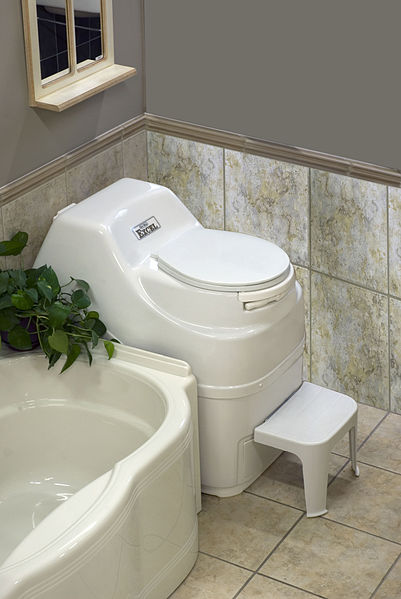
Composting toilets are often used as an alternative to central wastewater treatment plants (sewers) or septic systems. Typically they are chosen (1) to alleviate the need for water to flush toilets, (2) to avoid discharging nutrients and/or potential pathogens into environmentally sensitive areas, or (3) to capture nutrients in human excreta. Several manufactured composting toilet models are on the market, and construct-it-yourself systems are also popular.
These should not be confused with pit latrines, all of which are forms of less controlled decomposition, and may not protect ground water from nutrient or pathogen contamination or provide optimal nutrient recycling.
Types
Manufactured composting toilet systems

Self-contained composting toilets are slightly larger than a flush toilet, but use roughly the same floor space. Some units use fans for aeration, and optionally, heating elements to maintain optimum temperatures to hasten the composting process and to evaporate urine and other moisture. Operators of composting toilets commonly add a small amount of absorbent carbon material (such as untreated sawdust, coconut coir, peat moss) after each use to create air pockets for better aerobic processing, to absorb liquid, and to create an odor barrier. This additive is sometimes referred to as bulking agent. Some owner-operators use microbial starter cultures to ensure composting bacteria are in the process, although this is not critical.
Remote, central, and under-floor models each feature a chamber below the toilet stool (such as in a basement or outside) where composting takes place. These are typically used for high-volume and year-round applications as well as to serve multiple toilet stools. Several systems are available as well as many build-it-yourself options. (See Youtube Video Below)
Build-it-yourself, site-built, and owner-built design
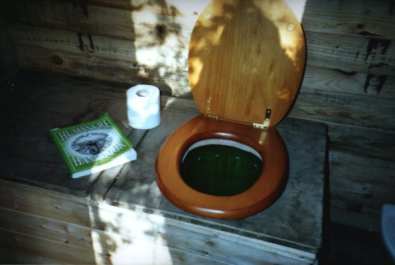
These are not to be confused with direct outdoor composting, which typically uses a collector bucket, where each deposit is covered with sawdust or other dry organic material, with the collector periodically being hand transported to an outdoor composting bin, where it may be added to yard waste or other organic material being composted.
Operating Process
Although there are many designs, the process factors at work are the same. Rapid aerobic composting will be thermophilic decomposition in which bacteria that thrive at high temperatures (104-140 °F) oxidizes (breaks down) the waste into its components, some of which are consumed in the process, reducing volume, and eliminating potential pathogens.
Drainage of excess liquid or leachate via a separate drain at the bottom of the composter is featured in some manufactured units, as the aerobic composting process requires moisture levels to be controlled (ideally 50%): too dry, and the mass decomposes slowly or not at all; too wet and anaerobic organisms thrive, creating undesirable odors. This separated liquid may be diverted to a graywater system or collected for other uses.

Urine can contain up to 90 percent of the nitrogen, up to 50 percent of the phosphorus and up to 70 percent of the potassium present in human excreta. In healthy individuals it is usually pathogen free, although undiluted it may contain levels of inorganic salts and organic compounds at levels toxic to plants.
The other requirement critical for microbial action (as well as drying) is oxygen. Commercial systems provide methods of ventilation that move air from the room, through the waste container, and out a vertical pipe, venting above the enclosure roof. This air movement (via convection or fan forced) will vent carbon dioxide and odors.
Most units require manual methods for periodic aeration of the solid mass such as rotating a drum inside the unit or working an "aerator rake" through the mass. Composting toilet brands have different provisions for emptying the finished product, and supply a range of capacities based on volume of use. Frequency of emptying will depend on the speed of the decomposition process and capacity, from a few months (active hot composting) to years (passive, cold composting). With a properly sized and managed unit, a very small volume (about 10% of inputs) of a humus-like material results, which can be suitable as soil amendment for agriculture, depending on local public health regulations.


Dealing with Waste in an Emergency
This is something that homeowners should be concerned with. How are you going to get rid of your waste without being able to flush the toilet? Probably the best option for homesteaders and preppers alike is building a working outhouse. People used outhouses for years. They could be a good thing if the grid ever went down. To build an outhouse you first want to choose a location that is 50 - 150 ft. from your home. This is to keep the smell at a minimum. A hole should be dug around 5 ft. deep and up to 3 ft. in diameter. A small building should be constructed on top of the the hole. Vent pipes should be ran from the pit to on top of the roof to vent the methane gas that would build up.
It might seem pretty primitive but if the grid went down it's going to be one of your only options to get rid of your waste. A well built outhouse would last years and with a 5 ft. deep pit your going to always be in a constant cycle of decomposition which shouldn't ever fill up. The outhouse would need to be well built and sealed up good around the pit itself. Outhouse specific toilet seats can be purchased to seal the pit and keep bugs and the smell down as much as possible. When people used outhouses they would sprinkle lime into the pit to aid in decomposition along with keeping the smell down. If you are a homesteader, you might want to look into building one of these if you expect the grid to go down for any length of time. Below is a diagram of an outhouse to give you an idea of how to build one.

