Submissions     Contact     Advertise     Donate     BlogRoll     Subscribe                         

Monday, November 9, 2026

This Crop is WAY Better Than Potatoes, And No One Grows It

Estimated reading time: 8 minutes

This Crop is WAY Better Than Potatoes, And No One Grows It

Imagine a vegetable that produces a ridiculous amount of food in a tiny patch of ground, shrugs off pests and diseases, and grows back year after year with almost no effort on your part. Now imagine you don’t even have to harvest it all at once or find a spot to store it, because it’ll happily wait in the ground all winter until you’re ready to dig some up for dinner.

On top of all that, it’s tasty, it’s good for your gut, and it’ll reward you with tall stalks of cheerful yellow flowers that the bees absolutely love. It’ll grow in poor soil, it handles cold winters like a champ, and it’s often called one of the best crops you could grow if things ever really fell apart. So why isn’t everyone growing it?

The plant I’m talking about is the Jerusalem artichoke, also known as the sunchoke. I recently came across a great video about it on the YouTube channel, GrowVeg, and they make a really good case for growing this crop, maybe even instead of potatoes. Below you can watch their video and read a summary of what they covered.

Want to save this post for later? Click Here to Pin It On Pinterest!

Why Jerusalem Artichokes Are Worth Growing

They’re Incredibly Productive

The biggest selling point of Jerusalem artichokes is just how much food they produce. In the video, he digs up a single bed planted from about 10 small tubers the year before. That bed held roughly 10 to 12 plants in a space only about 3 feet by 3 feet, and it produced over 20 pounds of tubers.

When it comes to yield for the amount of space they take up, Jerusalem artichokes are right up there with the most productive plants you can grow. It’s easy to see why so many people call them the ideal crop for an apocalypse.

They Store Themselves in the Ground

Unlike potatoes, Jerusalem artichokes don’t need to be dug up all at once and stored somewhere cool and dark. The tubers can stay right where they are all winter long, and you can just dig up what you need when you need it.

The one exception is if your ground freezes solid in winter. In that case, dig them up before the hard freeze and store them in boxes of damp sand or potting mix.

They’re Tough as Nails

Jerusalem artichokes grow well anywhere from zone 3 to zone 9, so they can handle a wide range of climates. They rarely suffer from diseases like blight, and they don’t attract many pests either. You won’t be fighting off potato beetles, for example.

They Keep Coming Back

Once you’ve got a patch established, you can keep it producing in the same spot year after year just by replanting some of the tubers you harvest. That makes them act a lot like a perennial crop, giving you food every year with very little work.

A Little Background on Sunchokes

Despite the name, Jerusalem artichokes don’t come from Jerusalem, and they aren’t related to globe artichokes (which are actually a type of thistle). They’re much more closely related to sunflowers, which makes sense when you see how tall they grow and how much their bright yellow flowers resemble sunflowers. That’s likely where the name “sunchoke” comes from.

The “Jerusalem” part is probably a mix-up of the Italian word for sunflower, girasole, which means “turning to the sun.” The “artichoke” part likely comes from the fact that they taste a lot like globe artichokes.

The tubers themselves are knobbly and humble-looking, but they’re very nutritious. They have a slightly sweet, slightly nutty flavor with a rich, savory depth to it.

Choosing a Spot

Jerusalem artichokes will grow in partial shade, but you’ll get more tubers if you plant them in full sun. The patch in the video grew in a somewhat shady spot surrounded by shrubs and still produced a great harvest.

Keep in mind that these plants can reach 10 feet tall or more. The host found that his plants grew so tall they flopped over onto his other crops, so he decided to move them. For that reason, it’s a good idea to give them their own dedicated bed away from your other vegetables, or even grow them in a large container to keep them contained.

They’ll grow just fine in poor soil, but if you can improve it, you’ll get even more tubers. In the video, the host worked a couple of wheelbarrow loads of well-rotted manure into the new bed, which had relatively well-drained soil.

How to Plant Jerusalem Artichokes

Plant them toward the end of winter. Here’s how the host did it:

  1. Choose good tubers. Pick out smooth tubers with plenty of buds on them.
  2. Space them out. Lay them about 18 inches apart in every direction. You can go a little closer, or spread them out to about 2 feet apart if you have a large area to fill.
  3. Plant them. Dig a hole about 6 inches deep for each tuber, drop it in, and cover it with soil.

If your soil is especially sandy and drains fast, toss a handful of compost into the bottom of each hole, along with a sprinkle of something like chicken manure pellets. If your soil is already rich, you can skip this step.

Caring for Your Plants

Once they’re in the ground, Jerusalem artichokes need very little attention. The foliage is sensitive to frost, but the plants come up on their own schedule, so there’s not much risk of them getting hit by a late cold snap.

They start off slowly, but once they get going, they shoot up incredibly fast. According to the host, they grow even faster than corn.

As they take off, you can spread a mulch of organic matter like grass clippings around the young shoots. If your soil drains quickly and tends to dry out, make sure to water them so they can keep up that rapid growth.

The host likes to plant nasturtiums at the base of his Jerusalem artichokes as a living mulch. Nasturtiums have shallow roots, so they don’t compete with the artichokes, and they add a nice splash of color along with edible, peppery leaves.

Other Perks of Growing Them

  • They make a great screen. Since they grow so tall, they work well as a temporary privacy screen or a windbreak for more delicate plants.
  • The flowers are beautiful. They bloom heavily in late summer, making them a decorative plant in their own right.
  • Bees love them. Like sunflowers, the blooms are excellent for pollinators.
  • You can cut the flowers. Bringing them inside for a bouquet won’t hurt the tubers growing underground.

Harvesting

Toward the end of the season, the foliage will start to die back. When that happens, cut the stems down close to the ground, but leave a small stump so you can find the plants later. Then just dig up the tubers whenever you need them.

The One Downside (And How to Deal With It)

There’s probably one big reason Jerusalem artichokes aren’t more popular: they can make some people a bit gassy. In fact, they’ve earned the unfortunate nickname “fartichokes.”

This comes from a type of fiber in the tubers called inulin. While it can cause some wind, it’s actually great for your gut bacteria and can improve your digestive health. So even with the side effect, they’re very good for you.

There are a couple of ways to reduce the problem. First, try harvesting the tubers after several hard frosts, which can help lessen the effect. Second, try fermenting them, which cuts it down even further.

How to Eat Jerusalem Artichokes

There are lots of ways to enjoy them:

  • Roasted: One of the host’s favorite ways to eat them.
  • In soups: His absolute favorite, since they add a rich, deep flavor when blended into soup.
  • Raw: Grate or cube them and toss them into salads.
  • Fermented: A great option if you want to reduce their gassy side effects.

How to Ferment Jerusalem Artichokes

The host showed a simple ferment that’s similar to kimchi or sauerkraut:

  1. Scrub the tubers clean and slice them fairly thin.
  2. Mix the slices with some chopped green onion, garlic, ginger, salt, and chili flakes if you like a little heat.
  3. Pack the mixture into a jar and press it down so it’s nice and compact.
  4. Add just enough water to cover everything.
  5. Set the jar indoors at room temperature somewhere dark so it can ferment.
  6. “Burp” the jar every so often by opening it to release built-up gas so it doesn’t burst.
  7. Once you stop seeing bubbles along the sides of the jar, fermentation has slowed down and you can move it to the fridge.

Stored in the fridge, it should keep for at least a couple of months.

Final Thoughts

If you’re looking for a crop that’s easy to grow, produces a huge harvest in a small space, and keeps coming back year after year, Jerusalem artichokes are hard to beat. They don’t need special storage, they rarely have pest or disease problems, and they give you beautiful flowers as a bonus. Potatoes may get all the attention, but sunchokes might just deserve a spot in your garden too.

Like this post? Don't Forget to Pin It On Pinterest!

You May Also Like:

The post This Crop is WAY Better Than Potatoes, And No One Grows It appeared first on Homestead Survival Site.


from Homestead Survival Site https://ift.tt/j7hlAiN
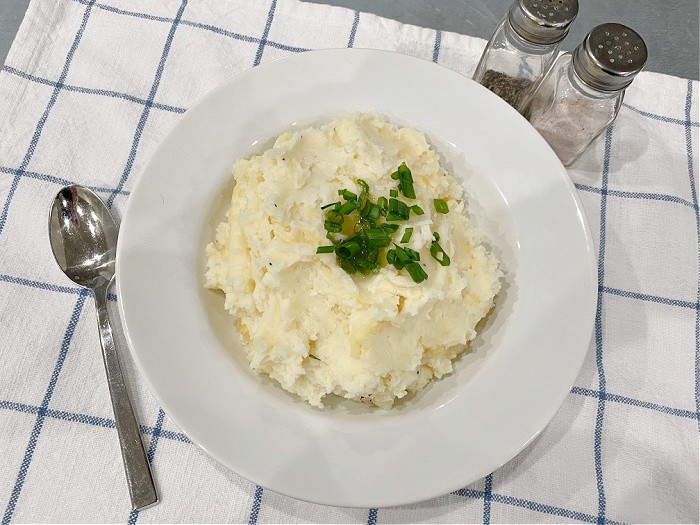
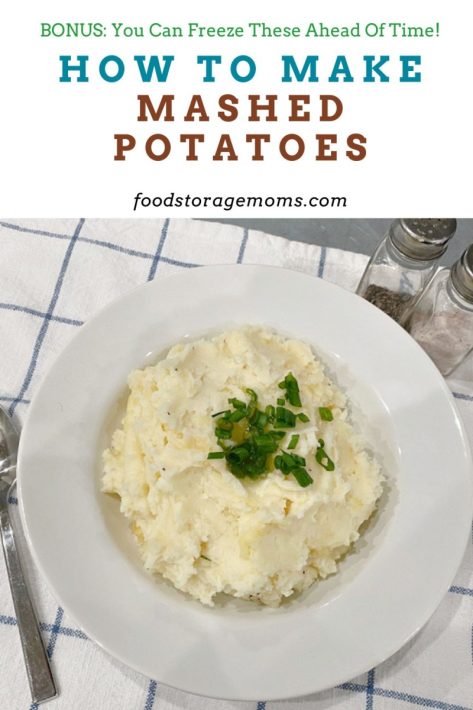
How To Make Mashed Potatoes

How To Make Mashed Potatoes

How to make mashed potatoes. Paula, one of my readers from Kansas, shared this recipe and detailed how to make and freeze mashed potatoes! This is the best idea ever- one less thing to do on a Sunday, Thanksgiving, or any other holiday. You can make these creamy, fluffy mashed potatoes ahead of time and freeze the casserole dish. I’m updating this post from November 13, 2022, from a comment. It’s worth repeating: it’s a winner. Thank you again, Paula!

A day or two before you want to bake them for your family, place the baking dish in the refrigerator to thaw. Then, bake as directed in the recipe card.

Ingredients – Mashed Potatoes

  • Potatoes (medium-sized): Potatoes are a nightshade vegetable grown for their starchy edible tubers.
  • Butter: Helps keep the potatoes from crumbling and prevents water from evaporating, creating moist, soft, and fluffy mashed potatoes.
  • Water: Water is used to wash the potatoes before cooking to remove any dirt from their surfaces; it is also used to cook them.
  • Cream Cheese: Soft, creamy, mild-tasting cheese made with milk and cream. The perfect cheese for mashed potatoes!
  • Sour Cream: Used to add more flavor to the mashed potatoes. It has a 20% fat content. The cream is mixed with lactic acid bacteria, creating that sour taste we love! It also helps to thicken the cream.
  • Seasoned Salt (Lawry’s): A tasty and unique blend of salt, spices, and herbs.
  • Salt and Black Pepper to taste: Both spices enhance flavor and help bring everything together.
How To Make Mashed Potatoes

Items You May Need In The Kitchen:

How To Make Mashed Potatoes

Instructions

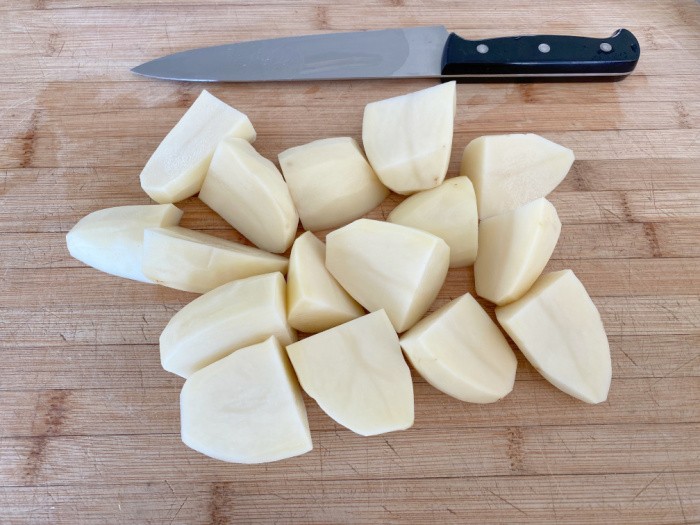
Step One: Gather Ingredients – Wash and Peel Potatoes – Cut into Chunks

Gather all of your ingredients. Wash and peel the potatoes and cut them into chunks. Preheat oven to 350°F (176°C).

Ingredients

Peel and chop the potatoes. If you cut the potatoes too small, the mashed potatoes may become too mushy.

Cut Potatoes into Chunks

Step Two: Boil Potato Chunks – Drain

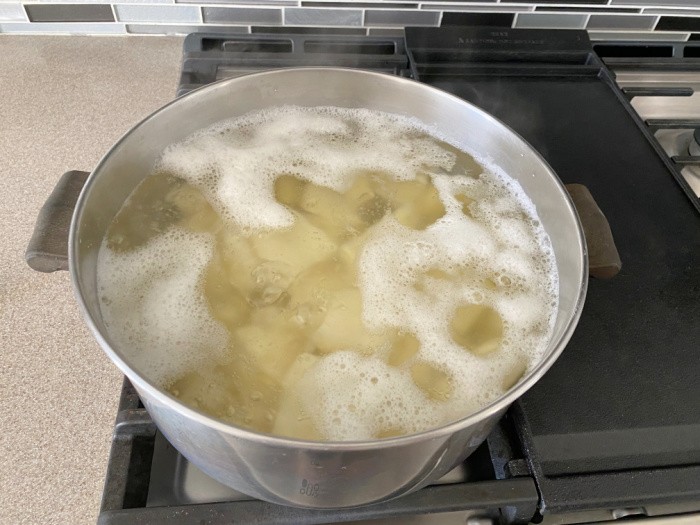
On medium-high heat, boil the potato chunks in a large pot until tender. Test with a fork for tenderness.

Boiling the Potatoes

Drain the potatoes.

Drain the Potatoes

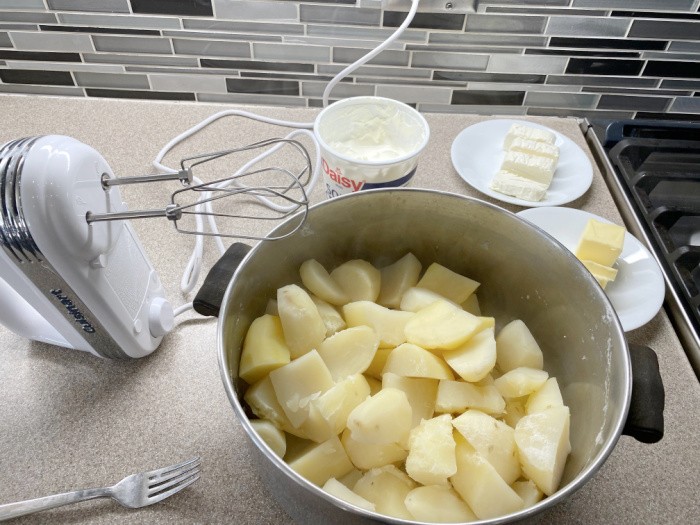
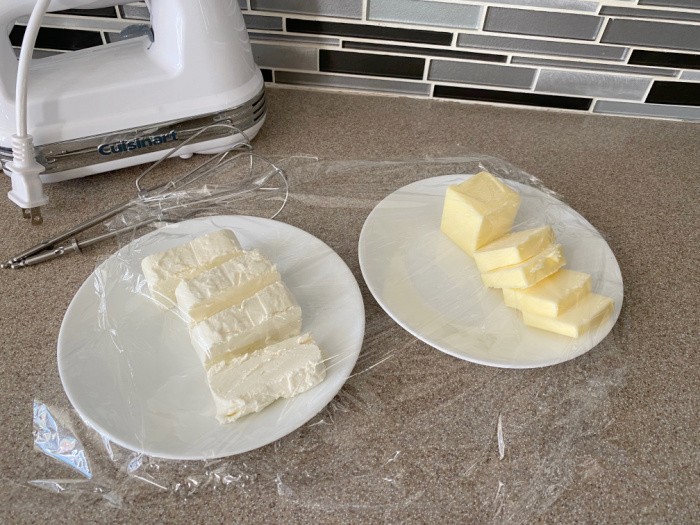
Slice the butter and cream cheese.

Butter and Cream Cheese

Step Three: Add Butter, Cream Cheese, Sour Cream, Salt, and Pepper

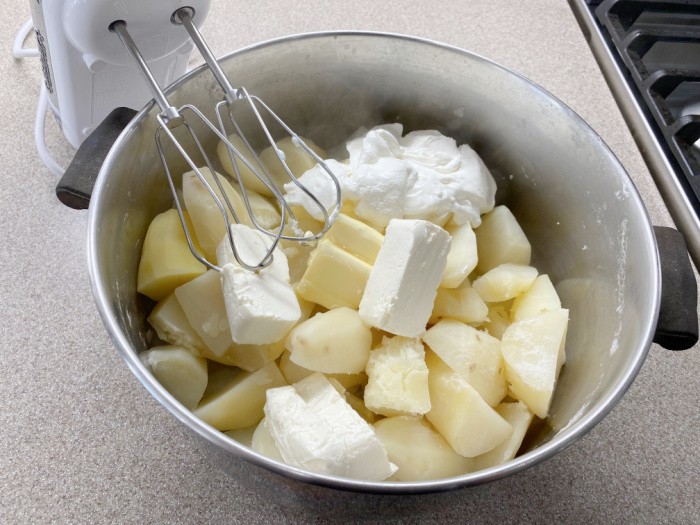
Add Butter, Cream Cheese, and Sour Cream

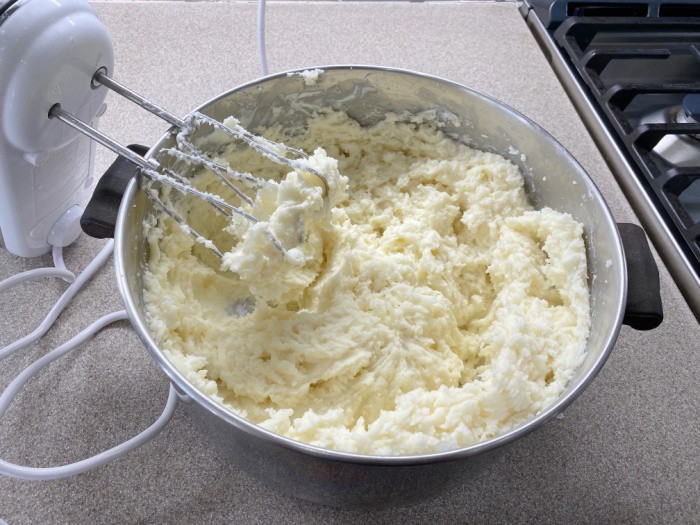
Add the butter, cream cheese, sour cream, and salt and pepper into a large mixing bowl, or use the saucepan they were cooked in. Beat with an electric mixer until smooth.

You can also use a potato masher to mash the potato chunks if you would like; it just takes longer. Depending on what works best for you, you could also use a food processor or blender to achieve the desired texture.

Fully Mashed

*Please note: Consider the size of your potatoes when adding the cream cheese and sour cream; you may need more or less. This recipe can be doubled or tripled for bigger crowds!

Step Four: Grease Dish – Scoop Potato Mixture into Pan

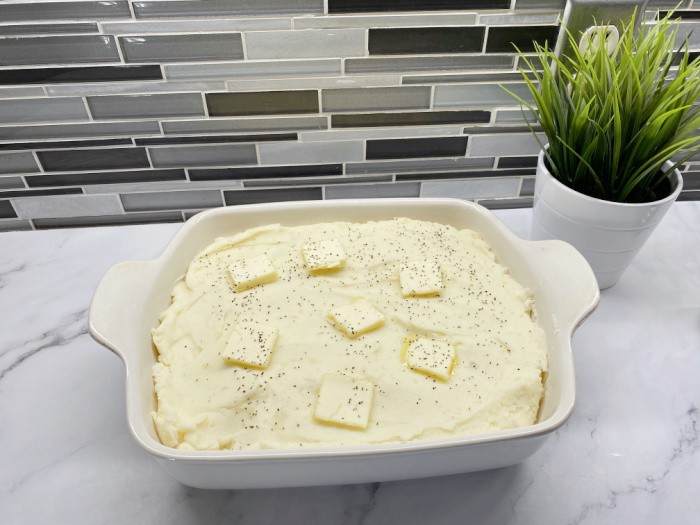
Grease a casserole dish, then scoop the mixture into it. Dab Potatoes with Butter and Seasoned Salt. Bake covered at 350°F (176°C) for 45-60 Minutes.

Ready To Bake

Finished Product

How To Make Mashed Potatoes

How To Freeze The Mashed Potatoes

  1. If you would like to freeze the mashed potatoes for later, cover them with foil and place them in your freezer.
  2. When ready to serve the frozen mashed potatoes, remove them from your freezer 2-3 days before and let them thaw in your refrigerator.
  3. Bake covered in a preheated oven at 350°F (176°C) for 45-60 minutes or until heated.
How To Make Mashed Potatoes
Print

Paula’s Mashed Potatoes (you can freeze these)

Course Side Dish
Cuisine American
Prep Time 30 minutes
Cook Time 1 hour
Total Time 1 hour 30 minutes
Servings 6 people
Author Linda Loosli

Ingredients

  • 6-7 Medium potatoes were washed, peeled, cut into cubes, and cooked until tender.
  • 1/4 cup butter
  • 3 ounce package of cream cheese
  • 1/2-1 cup of sour cream
  • Seasoned salt (Lawry's)
  • Salt and pepper to taste

Instructions

  • Gather all of your ingredients. Wash and peel the potatoes and cut them into cubes. Preheat oven to 350°F (176°C).
  • Boil the potato cubes until tender, as tested with a fork. Drain.
  • Add the butter, cream cheese, sour cream, and salt and pepper. Beat with a hand mixer until smooth.
    *Please note: Consider the size of your potatoes when adding the cream cheese and sour cream; you may need more or less. This recipe can be doubled or tripled for bigger crowds!
  • Grease a casserole dish with cooking spray. Scoop the potato mixture into the dish.
  • Dab the potatoes with more butter and some seasoned salt. Bake covered in a preheated oven at 350°F (176°C) for 45-60 minutes.

Instructions – Freezing Mashed Potatoes

  • If you would like to freeze the mashed potatoes for later, cover them with foil and place them in your freezer.
  • When ready to serve the frozen mashed potatoes, remove them from your freezer 2-3 days before and let them thaw in your refrigerator.
  • Bake covered in a preheated oven at 350°F (176°C) for 45-60 minutes.

What potatoes are best to use when making mashed potatoes?

I have tried a variety of potatoes over the years. It depends on the texture and taste you want when making your mashed potatoes. Here is a list of other potatoes you can use and the outcomes you could expect.

  • Yukon Gold potatoes: A classic delicious potato. Known for its yellow flesh. When cooked, it has a creamy texture and rich, buttery flavor.
  • Russet potatoes: A potato commonly used in cooking. It has light brownish skin. When cooked, the flesh is fluffy, moist, and light.
  • Red potatoes: A medium-sized, beautifully red potato with smooth, thin skin. It has a very flavorful flesh.
  • Fingerling potatoes: Small potatoes shaped like fingers. They have fragile and tender skin. When cooked, they have a very buttery, rich flavor.

Are there any additional ingredients I could add to these mashed potatoes?

I love the flavor of these mashed potatoes! The combination of butter, cream cheese, sour cream, and salt and pepper is perfect.

If you are interested in adding additional ingredients or substitutes, I recommend adding a little garlic or fresh herbs. You could also add a little heavy cream. It would also be fun to garnish the mashed potatoes with green onions! This recipe is pretty versatile!

What pairs well with mashed potatoes?

How long can washed, peeled, and cut potatoes last in water before cooking?

Once the potatoes are ready to cook, I wouldn’t recommend soaking them in water for long. No longer than 2-4 hours. The potatoes will begin to absorb the water as they sit.

This can cause the potatoes to absorb excess moisture, resulting in a mushy texture when cooked. If you decide to allow them to sit in water for an extended period, you can limit water absorption by using ice-cold water and refraining from adding salt.

There’s something so comforting about a big bowl of mashed potatoes on the table. They’re one of those simple dishes that bring the whole family running, whether it’s a busy weeknight supper or a holiday feast. I’ve shared my mashed potato recipe before, but several of you have asked if there’s a way to make them creamy without cream cheese. The answer is yes!

Sometimes we don’t have cream cheese in the fridge, sometimes it’s not in the budget that week, and sometimes we simply want that old-fashioned flavor Grandma used to make. This classic version uses just butter and warm milk, and it turns out rich, smooth, and absolutely delicious. Even better, you can make it with evaporated milk or powdered milk from your food storage, so you’ll always be able to whip up a batch with what’s on your pantry shelves. Let’s get those potatoes boiling!

How To Make Mashed Potatoes
Print

Classic Butter and Milk Mashed Potatoes

Course Side Dish
Cuisine American
Prep Time 30 minutes
Cook Time 1 hour
Total Time 1 hour 30 minutes
Servings 6 people
Author Linda Loosli

Ingredients

  • 3 pounds Yukon Gold or Russet potatoes peeled and cut into 2-inch chunks
  • 1 tablespoon salt for the cooking water
  • 1/2 cup 1 stick butter
  • 1 cup whole milk or half and half warmed
  • 1 teaspoon salt or to taste
  • 1/2 teaspoon black pepper
  • Optional: 2 cloves garlic minced or fresh chives for garnish

Instructions

  • Place the potatoes in a large pot and cover with cold water by about an inch. Add a tablespoon of salt.
  • Bring to a boil over high heat, then reduce to a steady simmer. Cook for 15 to 20 minutes, until a fork slides easily into the potatoes.
  • While the potatoes cook, warm the milk and butter together in a small saucepan or in the microwave until the butter melts. If using garlic, add it to the butter and let it gently cook for a minute first.
  • Drain the potatoes well and return them to the warm pot. Let them sit for a minute or two so the extra moisture steams off.
  • Mash the potatoes with a potato masher or ricer.
  • Pour in the warm butter-and-milk mixture a little at a time, stirring until the potatoes are smooth and creamy.
  • Season with salt and pepper, taste, and adjust as needed. Top with chives or an extra pat of butter before serving.

Tips for Success

Warm your milk and butter before adding them. Cold dairy cools the potatoes and makes them gluey.

Avoid using a blender or food processor, which overworks the starch and turns potatoes gummy.

Yukon Golds give a naturally buttery, creamy texture, while Russets turn out lighter and fluffier.

Pantry Friendly Swaps

For a food-storage version, you can replace fresh milk with evaporated milk or reconstituted powdered milk. Evaporated milk makes them especially rich. Sour cream or plain Greek yogurt also add a nice tang if you have them on hand, and chicken broth works well for a lighter, dairy-reduced option.

Final Word

Please let me know if you decide to make this homemade mashed potatoes recipe! There is nothing like sinking your teeth into creamy and smooth, delicious classic homemade mashed potatoes! I believe the secret ingredient is cream cheese. It adds such a velvety texture, and the taste is unbelievable!

What I love about this recipe is how easy it is to make the best mashed potatoes. I can’t tell you how many parties or family gatherings I have taken these to. They are always a hit!

They go perfectly with a Thanksgiving turkey or a Christmas prime rib dinner! Be ready to hand out the recipe. Thank you, Paula! I hope you and your family enjoy this delicious, easy mashed potato recipe! Everything tastes better when it’s homemade, right? May God Bless this World, Linda.

The post How To Make Mashed Potatoes appeared first on Food Storage Moms.


from Food Storage Moms

Pentagon Leadership Under Fire as America’s Iran War Faces New Political Battle

The fight over the Iran war has moved from the battlefield to the House floor. On Sunday, House Democratic leader Hakeem Jeffries said he is a “hard yes” on impeaching Defense Secretary Pete Hegseth, putting his party behind an effort that a Republican congressman launched back in September.

A vote could come as soon as this week. Win or lose, the clash will shape how much say Congress has over a war that has already pushed up prices for American families.

What Happened

Speaking on ABC’s This Week, Jeffries accused Hegseth of abusing his power, undermining national security and steering the country into a costly war of choice in Iran. He said House Democrats would discuss the resolution when they meet on Tuesday and predicted “incredibly strong support” within his caucus.

The resolution itself belongs to Rep. Thomas Massie, a Kentucky Republican who lost his primary to a Trump-backed challenger and leaves Congress in January. Massie has said the only thing that would stop him from reintroducing it is Hegseth’s resignation.

In September, Massie read his draft resolution on the House floor, but the chamber adjourned for the pre-election recess before a vote. Massie blamed Speaker Mike Johnson for sending members home early, a claim Johnson denied, so the measure has to be filed again.

What the Impeachment Articles Allege

The resolution contains eight articles. According to Roll Call’s reporting, they accuse Hegseth of violating the 1973 War Powers Resolution in his handling of the Iran war and of acting illegally in military operations in Venezuela, Yemen, the Caribbean Sea and the eastern Pacific.

Other articles charge him with disregarding the protection of civilians in wartime and with retaliating against a sitting U.S. senator for protected speech. The core argument is that only Congress can start a war, and that U.S. forces were sent into hostilities without a declaration of war or specific authorization.

Congress has pushed back on the war before. In June, the House passed a war powers resolution 215 to 208, with four Republicans joining Democrats to try to limit military action Congress had not approved.

Hegseth and the White House Push Back

Hegseth rejects the charges. In a video posted last week, he called Massie a disgruntled, defeated congressman and dismissed the articles as a sham, comparing the effort to the two impeachments of President Trump.

A Pentagon spokesman said the department has followed the law and that Hegseth will not be deterred by what he called partisan point-scoring. President Trump has also stood by his defense secretary, saying he is not planning to replace him and that Hegseth is doing a very good job.

Supporters of the administration argue that the president has the authority to protect U.S. interests abroad and that Democrats are using impeachment to fight policy battles they lost elsewhere. Critics counter that Congress cannot hold the executive branch accountable if it never enforces its war powers.

How a Vote Would Work

Massie plans to bring the resolution up as a privileged question, which means House leaders would have up to two legislative days to schedule action. The House could vote on the articles directly or vote to table them.

Under the Constitution, the House holds the sole power to impeach, while the Senate decides whether to convict and remove. Impeachment needs only a simple House majority, but conviction requires two-thirds of the senators present.

Timing matters here. The new Democratic majorities aren’t sworn in until January, so any vote this month happens under the current, narrow Republican majority and would depend on GOP defections. Only two Cabinet members have ever been impeached by the House, Secretary of War William Belknap in 1876 and Homeland Security Secretary Alejandro Mayorkas in 2024, and neither was removed by the Senate.

Why This Matters for Preppers

Whatever you think of Hegseth, this fight goes well beyond one man’s job. It is a test of who controls the decision to wage war, and that decision affects fuel, food and supply chains in every American town.

Some Republicans have pointed to the Iran war and the higher gas prices tied to it as a major reason for their midterm losses. When Democrats take control in January, Jeffries has said they could also push a war powers resolution to try to force an end to the conflict, which would set up a direct showdown with the White House.

That kind of standoff can spill over into budgets and war funding. We’ve already covered why another government shutdown looms after the election shakeup, and an impeachment battle stacked on top of a spending fight could leave Washington tied up for months.

What to Do Now

Political fights don’t change your day-to-day plans, but uncertainty is a good reason to tighten them up. Keep your pantry stocked so a jump in grocery prices doesn’t catch you short, and keep some cash on hand in case of disruptions.

Fuel is the item most directly tied to the war. If you store gasoline for a generator or vehicle, treat it with a stabilizer like STA-BIL, rotate it every few months, and keep it in approved containers such as Scepter SmartControl gas cans, away from your living space.

Finally, follow the vote yourself from more than one source rather than relying on headlines. For a broader look at how the new Congress could affect you, see our breakdown of what the midterm shake-up could change for American preppers.


You may also like:

Lost skills of independence banner How to use plastic bottles to heat your home - Watch Now button49,000 Americans Were Left Without Power and AI Is to Blame

Why Your Backup Generator Will Fail You When SHTF (VIDEO)

What They’re Not Telling You About Wildfires


The post Pentagon Leadership Under Fire as America’s Iran War Faces New Political Battle appeared first on Ask a Prepper.


from Ask a Prepper https://ift.tt/KZbYgCm

Moving A Household: What Each Culture Packed And What They Abandoned

There is an exercise I think every prepper should try once. Stand in the middle of your house and imagine leaving it, not for a weekend but for good, with a hard limit on what can come along. Maybe everything has to fit in one vehicle, or a wagon, or onto your own back. The […]

from Survivopedia

What Ukraine’s Massive Blackouts Reveal About America’s Power Grid

Early on November 9, repair crews in eastern Ukraine were working through shelling to restore electricity to about 600,000 people after Russian strikes hit the power system in the Dnipropetrovsk region. Hospitals switched to diesel generators, and the electric trams and trolleybuses in the city of Dnipro simply stopped.

In the Zhytomyr region, a single strike left 140 apartment buildings without heat. Drones also hit electricity distribution centers around Odesa, and the Zaporizhzhia nuclear plant spent part of the previous day cut off from the grid entirely.

None of this is new for Ukraine, which has lived under a deliberate campaign against its grid since 2022. What makes this weekend worth studying is how clearly it shows the chain reaction that follows when the power goes down. Many of the same weak points exist right here at home.

What Happened This Weekend

Russia has a pattern of stepping up attacks on energy targets as the weather turns cold, and this fall has followed it. Ukraine’s energy minister said on October 30 that Russia had carried out more than 350 attacks on energy infrastructure since September, damaging more than 800 pieces of equipment. On November 3, Russia launched its largest strike on the country’s energy system this year, hitting substations, transmission lines and power plants.

Kyiv and the surrounding region now face daily, prolonged outages of both power and water. The latest wave came just ahead of US-mediated peace talks in Abu Dhabi, and President Zelenskyy accused Moscow of trying to plunge the whole country into a blackout beforehand.

A Nuclear Plant Running on Diesel

On November 8, the Zaporizhzhia Nuclear Power Plant lost its only remaining 330 kV outside power line. According to the International Atomic Energy Agency, the plant ran on emergency diesel generators for cooling and safety systems for about 10 hours before power came back.

The IAEA said it was the 27th time the plant has lost all outside power since the war began. Ukraine’s nuclear operator, Energoatom, counted it as the 16th complete loss of external power in 2026 alone and warned that the danger remains as long as the plant stays under Russian occupation.

Here’s the part most people miss. The plant no longer produces electricity, but its nuclear fuel still has to be cooled around the clock, and that takes power. When the grid fails, the last line of defense is a set of diesel engines and whatever fuel happens to be on site.

It’s the most extreme version of a problem every hospital, water plant and cell tower shares. The backup is only as good as the fuel supply behind it.

The Cascade: How One Grid Hit Takes Down Everything Else

Preppers often talk about a blackout as a single problem. Ukraine shows it’s really five or six problems arriving at once, each one feeding the next.

Heat Goes First

Many Ukrainian apartment blocks get their heat from district systems that pump hot water through the building. No electricity means no pumps, which is why one strike in Zhytomyr left 140 buildings cold.

American homes aren’t immune just because they burn gas or oil. Most modern furnaces and boilers need electricity to run the igniter, the controls and the blower fan. In a blackout, a gas furnace sits just as dead as an electric heat pump.

Then the Water Stops

Water utilities depend on electric pumps to treat water and push it through the mains. The EPA’s Power Resilience Guide for water utilities warns that when pumps go down, falling pressure can let contaminants seep into drinking water pipes from the surrounding soil. Failed sewage pumps can also send raw sewage backing up into homes.

Kyiv is already facing exactly that threat. Reporting from the capital this week described a growing risk of a sewage crisis this winter because of the power shortages.

Hospitals and Transit Run on Borrowed Time

Dnipro’s hospitals were running on diesel within hours of the strikes, and its electric public transport ground to a halt. Generators buy time, but every one of them needs fuel deliveries, and fuel trucks need working roads, pumps and payment systems.

Phones and Internet Fade Out

Cell towers and internet hubs carry backup batteries and sometimes generators, but those only last so long. The same EPA guidance notes that telecommunications can start failing as batteries drain and generator fuel runs low during a long outage. That’s usually when people realize they have no way to get news or call for help.

And Then People Start Making Fatal Mistakes

On November 8, three people, including a child, died of carbon monoxide poisoning in the village of Chupyra, just south of Kyiv. Ukraine’s State Emergency Service said the family had been running a generator in the basement instead of outside, and a second child was hospitalized.

This is the hidden death toll of every long blackout. People get cold and desperate, and they bring generators, grills and camp stoves indoors.

Could It Happen Here?

America isn’t at war, and nobody is firing cruise missiles at our substations. But our grid has the same basic weak spots Russia is exploiting in Ukraine, and some of them have already been tested.

The Transformer Problem

The heart of the grid is the large power transformer, a house-sized piece of equipment that steps voltage up and down. The Government Accountability Office found that these units can cost as much as $10 million each, plus hundreds of thousands of dollars just to move. That cost is a big reason many utilities don’t keep spares.

Utilities told GAO their most pressing challenge was the supply chain, with long and growing manufacturing waits and limited factory capacity. Industry estimates now put delivery times for the biggest units at roughly two to four years. A coordinated attack on a handful of key substations could leave a region limping for a very long time.

Moore County Already Showed Us

On December 3, 2022, someone opened fire on two substations in Moore County, North Carolina. About 45,000 homes and businesses lost power, some for as long as four days, as overnight temperatures dropped toward freezing.

The county declared a state of emergency and set a curfew. To this day, no one has been arrested. We looked at how this incident fits into the bigger picture in our piece on proof that WW3 has already started.

Hackers Are Already Inside

In February 2024, CISA, the NSA and the FBI jointly warned that a Chinese state-sponsored group called Volt Typhoon had broken into the networks of critical infrastructure operators. The victims were mainly in communications, energy, transportation and water, and in some cases the hackers had kept their access for at least five years.

The agencies said this wasn’t ordinary spying. In their assessment, the group was positioning itself to disrupt or destroy critical services if tensions with the United States ever turned into open conflict.

A Grid Already Stretched Thin

Even without an enemy, the grid is running closer to the edge. In its January 2026 Long-Term Reliability Assessment, the North American Electric Reliability Corporation found that 13 of 23 regions face resource adequacy challenges over the next decade.

NERC flagged winter as a growing danger and listed both PJM, which serves much of the Mid-Atlantic and Midwest, and Texas’s ERCOT as elevated risk starting this year. Demand from data centers and other big users is climbing faster than new power plants are coming online, while older plants that keep fuel on site continue to retire.

Lessons From Ukraine for Your Own Home

Ukrainians have spent four winters learning what actually matters when the grid goes dark. Here’s how to put those lessons to work before you need them.

Plan for Heat That Doesn’t Need the Grid

Pick one room to heat, ideally an interior room with few windows, and hang blankets over the doorways to trap the warmth. A wood stove is the gold standard if you have one. If you don’t, an indoor-rated propane heater like the Mr. Heater Portable Buddy can keep a small room livable, as long as you crack a window for fresh air and never leave it running while everyone sleeps.

Stock a warm sleeping bag for every family member, too. A 0°F-rated sleeping bag will keep a person safe in an unheated house on the nights when fuel runs short.

Put a Battery CO Alarm on Every Level

The family in Chupyra is a warning to all of us. Keep any generator outside and at least 20 feet from windows, doors and vents, and run a long, heavy-duty extension cord to bring the power inside.

Install battery-powered carbon monoxide alarms on every level of your home, because plug-in units die when the power does. A basic First Alert battery-operated CO alarm costs less than a tank of gas.

Store Water Before the Pumps Stop

The moment the power goes out, fill your bathtubs and every clean container you have while there’s still pressure in the lines. A WaterBOB bathtub storage bladder keeps that water clean and drinkable, and stackable jugs like the Reliance Aqua-Tainer 7-gallon container make a solid long-term reserve.

Once service comes back, watch for boil-water notices. A pressure drop can let contaminants into the mains, so treat the first water out of the tap with suspicion.

Assume Your Phone Will Go Quiet

Keep a hand-crank NOAA weather radio so you can still get emergency broadcasts when cell service fails. Keep your power banks charged, and check our guide to portable phone chargers that still work when the grid goes down before you buy another one.

For talking with family and neighbors, license-free radios are worth a look. Our breakdown of MURS, the license-free VHF radio most preppers overlook, explains why.

Protect Your Food and Your Backup Power

Your refrigerator is a food cache that starts spoiling within hours. We covered how to keep it working through a blackout last week, along with six less-known household power sources you can use in an outage.

Above all, keep extra fuel for whatever backup you rely on, rotated and stored safely. Zaporizhzhia’s diesel tanks are a reminder that any backup system is only as good as the fuel behind it.

The Bottom Line

Ukraine is showing the world, in real time, what happens when a grid becomes a target. Heat, water, hospitals, phones and even nuclear safety all hang on the same wires.

America’s grid has the same weak points, from scarce transformers to hackers already inside the networks. The good news is that every lesson Ukrainians paid for this winter is one you can act on today, while the lights are still on.


You may also like:

Lost skills of independence banner How to use plastic bottles to heat your home - Watch Now button49,000 Americans Were Left Without Power and AI Is to Blame

Why Your Backup Generator Will Fail You When SHTF (VIDEO)

What They’re Not Telling You About Wildfires


The post What Ukraine’s Massive Blackouts Reveal About America’s Power Grid appeared first on Ask a Prepper.


from Ask a Prepper https://ift.tt/raPCFVb