Submissions     Contact     Advertise     Donate     BlogRoll     Subscribe                         

Tuesday, December 18, 2012

How to Make an Emergency Lamp from Common Household Items

Original Article


I followed instructions given in the CD I recently reviewed, Lanterns, Lamps & Candles by Ron Brown, on how to make this vegetable oil lamp.  What got me interested in trying this out was, all the materials are items most people have readily available at home.
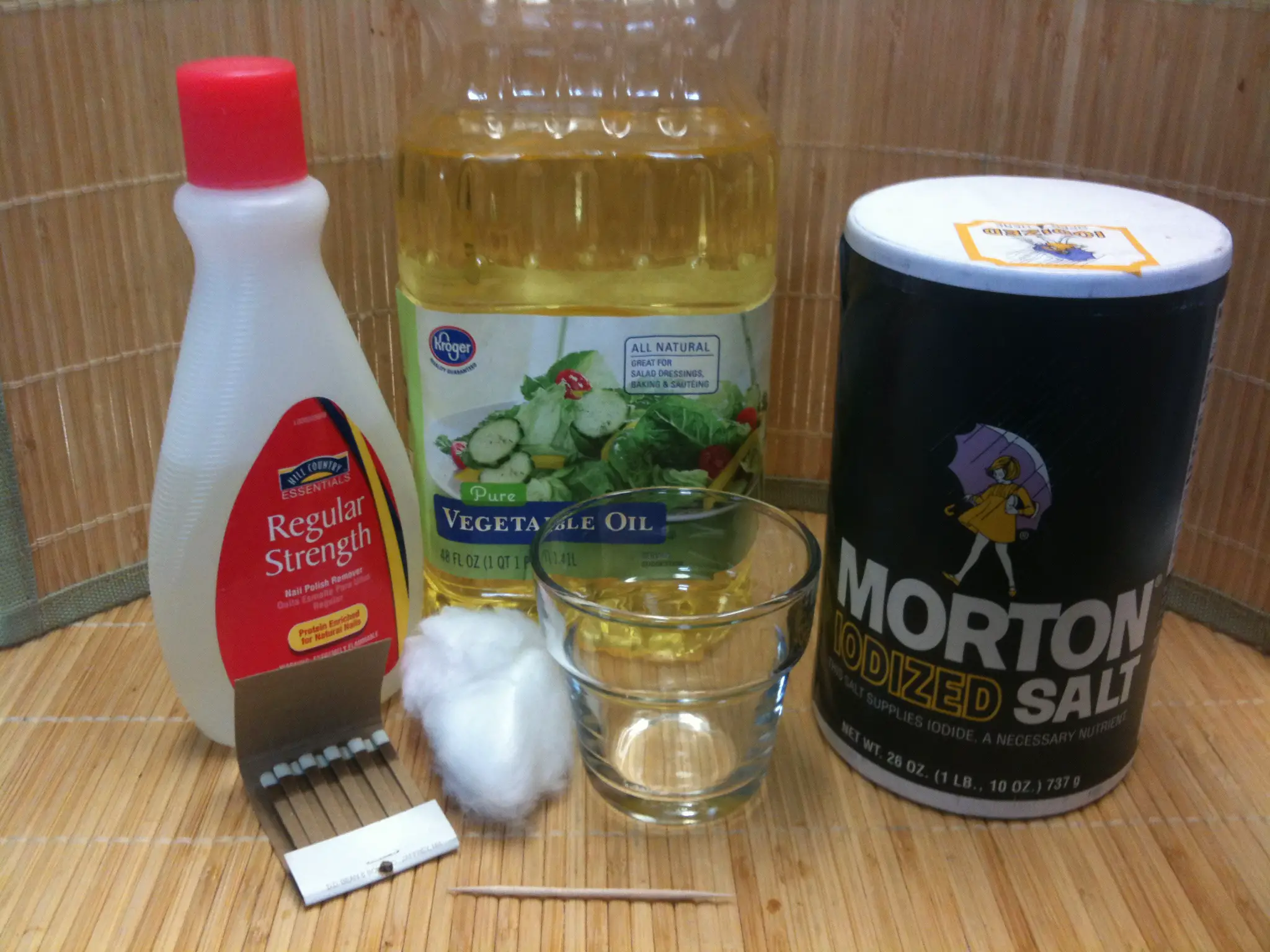
Materials:
Vegetable oil
Baby food jar or votive candle jar (I got mine from Goodwill)
Table salt
wooden toothpick
cotton (must be 100% cotton, not a blend)
nail polish remover
matches
Directions:
1.  Fill the jar with table salt.
2.  Add vegetable oil and mix well with the salt.  Let it settle down.
3.  Add a bit more vegetable oil after it settles.
4.  Wrap a wooden toothpick with the cotton from end to end.  Do not skimp on cotton but don’t make it too thick either.
5.  Stick the cotton wrapped toothpick in the vegetable oil/sand mixture.  If it is too tall for the jar, snip the end until the tip is level with the mouth of the jar.
6.  Drop a tiny amount of nail polish remover on the tip of the cotton wrapped toothpick.  Take care not to spill into the vegetable oil.
7.  Light the tip.
You’re done!  This homemade lamp will burn for about two hours.
Trouble shooting tips
When I first made the lamp, the flame kept sputtering and burned out quickly.  I contacted the author of  Lanterns, Lamps & Candles, Ron Brown to inquire about what I might be doing wrong.  He suggested the following:
  • The toothpick must be well wrapped with cotton
  • Use only 100% cotton.
On my first attempt I had used  recycled cotton from a pill bottle which may not have been 100% cotton.  The next time, I made sure it was 100% cotton.  I also had not wrapped the toothpick well enough and had a few gaps that weren’t covered with cotton.  This time around, I wrapped the toothpick until it was completely covered with cotton, but not overly thick.  Sure enough, it worked very well.
This experience showed me that even though you have instructions on how to do something, there are unforeseen variables that may hamper your success.  You need to test your knowledge and practice your preparedness skills.  The time to practice new skills is now –  not when an emergency is in full swing and the power is already out.
(Note:  Apartment Prepper is not affiliated with Lanterns Lamps and Candles – I reviewed the CD recently and found it to be a great resource.  My thanks to author Ron Brown for taking the time to suggest some fixes with my experiment.)

Monday, December 17, 2012

Ham Radio for the Apartment Prepper

Original Article

I received an email from a reader who was wondering whether he could get involved with ham radio while living in an apartment.  Not knowing much about ham radio myself, I did a bit of research on my own, and contacted Mike Fletcher of the Tampa Amateur Radio Club, and was a guest at Family Survival Show not too long ago.  He graciously agreed to answer a few questions.
What is the quickest way for a beginner to learn the basics and how much does it cost?
There are License classes given by many Ham Radio Clubs, by CERT or Red Cross groups and some local government preparedness programs. These classes are usually done over several short sessions or two or three weekend sessions.  Classes usually run from 10 to 20 hours and are often scheduled to end with an exam session where the students take the actual FCC exams for their Technician Class Amateur Radio License. The Test is $15 (+/-) and includes the FCC processing and license fees. Classes may be offered for free or there may be a small charge. The purchase of a book ($15 to $28) may be required but you keep that as a reference book for the future.
–What equipment  would you recommend for people that don’t have a lot of space and have no room for large antennas and such?  What is the ideal location within the home?
The Technician Class license gives you some operating privileges on most of the ham radio frequency bands and full privileges on the 2 meter (VHF) and 70cm (UHF) bands where most of the emergency communication for a local area will take place. The radios for these bands are mobiles mounted in your vehicle with a small (18 inch or so ) antenna on your vehicle as well as base mounted units for your desk with a small 3 to 6 foot fiberglass antenna outside a window. While these base units may not fit well in an apartment community many city bound hams primarily use a handheld walkie-talkie radio for these local channels. The radios range in cost from $100 to several hundred dollars depending on the list of features and accessories you desire.
How do these small radios cover any distance?
While ham radio can support emergency communications without infrastructure and we pride ourselves on that ability, it does not mean that we do not have infrastructure. Most areas have ham radio “Repeaters” which are installed by individual hams or clubs on building tops or towers in the community. Similar to a cell tower, these repeaters on high places receive the signal from your hand held radio and retransmit them from the high tower to other hams that you may want to talk to and then their signal is relayed back to you when they talk..
Ham radio also has a large presence in the “Short Wave” bands where we can talk to other hams around the world by bouncing a signal off of the upper layers of our atmosphere and back to earth thousands of miles away. The technician License includes a very small allocation for this world wide communication but it is there. If talking to other countries is what excites you then an upgrade to the General Class ham license would be the next step. It involves more radio theory but can usually be mastered in classes similar to those we have described.
How does someone find a school?
The best source for Amateur (Ham) Radio training and information is the local Radio Club. Search for Ham Radio in your city, call your emergency management office for CERT and Red Cross related groups, some Radio stores may have info on Ham Clubs in the area or check with www.arrl.org for an ARRL affiliated club in your town.
Our thanks for Mike Fletcher for answering the questions above.
Before you Buy Equipment
Before even considering equipment, the first step to get started is to join your local ham radio club.   They would have equipment that you can get familiar and practice on, under the supervision of a licensed operator.
If you find that you like to get more involved with ham radio, you will also be more likely to find contacts for used ham radio equipment and help you set up your own.
A few more resources:
World Radio TV Handbook 2012
Ham Radio for Dummies
Equipment Reviews from eHam.net
In Conclusion…
I used to think ham radio would be too complicated and out of reach for apartment preppers.  After learning more about it, I now think it is very doable.  And, if you try out equipment with experienced operators before you buy, there is no risk of wasted time and money if you find out it’s not for you.  On the upside, if you find it interesting, you will have an additional mode of communication in the event phones and cell phones don’t work during a disaster.

Sunday, December 16, 2012

10 Lessons from Hurricane Sandy

Original Article

Here's a quick wrap-up of lessons learned from Hurricane Sandy:

  1. Disasters can happen anytime, anywhere.  You would have expected a hurricane to demolish part of Florida, not part of New York, but it happened.
  2. When told to evacuate, evacuate.  Attempting to "ride out" a disaster because you are prepared and tough enough to do so is dumb when you are given enough notice to evacuate and ensure you and your family's safety.
  3. Some people who were killed during Hurricane Sandy died from trees falling on them.  During a disaster, it may not be the actual disaster (hurricane) that can kill you but the side affects of the disaster (falling trees and debris, downed power lines, etc).
  4. Some people decided not to evacuate thinking that they could survive a hurricane.  What they didn't count on was the fires and gas leaks that came afterwards.
  5. The things that will be missing/hard to find/impossible to get after a disaster: electricity (8 million + people were without electricity after the storm), clean water (wells and municiple water systems were impacted by the flooding), food (most stores are closed or damaged beyond repair in some neighborhoods), gasoline (lines for gas are extensive today), transportation (it will take a while for the subway system to start working again and yesterday the roads were in gridlock).
  6. Sometimes your best preparations,  like back-up generators, won't work and then you have a crisis (two hospitals had to be evacuated during and after the storm because their back-up generators failed).
  7. Don't underestimate the power of water.  A mother was carrying her two children through a flooded area when they were washed right out of her arms by a wave of water.  Rushing water that is more than ankle deep can carry you away in a heartbeat.
  8. Use common sense.  A boat captain decided to head straight into the storm (two people ended up dead, 14 others needed to be rescued), a father and son were killed in their flooding basement (if you are inland during a hurricane the basement may be the safest place to be, if you are in a flood-prone area you should seek shelter in an interior room on your main or second floor).
  9. The technology we have come to depend on may be wiped out during a disaster.
  10. As in many disasters, people do tend to come together to help each other out afterwards.

Saturday, December 15, 2012

Human Zombies Unaware Of The Real World

Original Article

A Zombie texting while crossing the street with a baby stroller
How often have you seen this… head down – in their smartphone – texting – while crossing the street – driving their car – at the dinner table – in a meeting – in the bathroom… ? An apparent human Zombie.
Survival preparedness stems from a combination of risk awareness and a desire to be less reliant on external systems while being more self sufficient. It is a way of life. The lifestyle can easily fit within the modern world while we carry out our business. However, there is something that I’ve noticed for quite some time that I believe is a hindrance to real world awareness. Something that has created a human sub species of Zombies. The following excerpt from a recent ZDNET article spells it out clearly…

You’ve seen these poor, lifeless beings everywhere. People… if you can still call them that… with pallid, emotionless faces, staring down at small screens while they walk direction-less down the street, completely unaware of their surroundings.
Yet these poor souls actually believe they are more “connected” to the outside world and more people than ever.
Sometimes they return to real life, and have real interactions with living human beings, but then this horrible urge kicks in which compels them to pull out their iPhone, their iPad or their Android device. Their PRECIOUS.
They’ll pull it out in the middle of a business meeting while someone else is talking, and they’ll fiddle with it in the bathroom stall at work (or, good heavens, take calls on it and seal deals while on the can).
They’ll pull it out in the middle of dinner with family. They’ll mess with it while everyone is cuddling on the couch, watching TV. And even after satisfying the most basic of human requirements, it still won’t go away. “Oh was it good for you, honey? Great, you nap, I’m gonna play Scramble with Friends.”
If they can think of any inappropriate, awkward time to stare at their little screen and tap on their little itty, bitty keys, they will. Because their PRECIOUS compels them.
And the longer they have their favorite toy turned off or not being used, the greater the urge is to pull it out and use it, as if it has some evil spell cast on them. They must Tweet. They must Status Update. They must Check In. They must Text. They must check for emails. They must. MUST!!!!! EVERY. SINGLE. MINUTE.
They’ve become the 21st-century equivalent of Smeagol. Once, they were human beings. But now they’re Smartphone and Tablet Zombies. They may think they’re connected to more and more people and information than ever, but for these poor creatures, life is just an illusion.

Shut if off. Take some time to discover the REAL WORLD that you actually live in. When TSHTF, your little electronic device is not going to help you. Just a thought…

Appreciate topics of survival, emergency preparedness – or planning for disaster?
Read our current articles on Modern Survival Blog
twitter: MSurvivalBlog
Facebook
Similar Articles You Might Enjoy:

Friday, December 14, 2012

Beyond the Basics - The Dedicated First Aid Kit

Original Article

Each and every day we are all at serious risk of being injured in an accident or developing some form of incapacitating illness. Whether you are traveling in your car, relaxing at home or busy at work, there is always the distinct possibility that you, a member of your family or a friend will require some form of first aid. One of the ways you can prepare for this eventuality is to have a dedicated first aid kit.
Having a home first aid kit is an essential part of being prepared for those small emergencies that can happen everyday. Having a dedicated first aid kit can help you be even better prepared. It is also important to remember that first aid is exactly what it says. It is the first aid an individual receives when sick or injured and prior to receiving proper medical treatment by a qualified professional. It is emergency care that is in the best interest of the sick or injured person that is applied using common sense decisions based on your level of first aid training.
Having a dedicated first aid kit is a fairly simple goal to accomplish. Most everyone has a home first aid kit which usually manages to stay right where you put it. This is a good thing because everyone in the family should know exactly where it’s at all times so that it can be accessed quickly when needed. This is why having a dedicated first aid kit is so important because it will save you time in an emergency. Having dedicated first aid kits in certain designated areas can make the difference in preventing a minor emergency from becoming an event that could be life threatening. 
Do you have a first aid kit in your garage or workshop? They have first aid kits in most workplaces and your garage at home shouldn’t be the exception. Most commercial vehicles are required to carry a first aid kit. Do you keep one in your vehicle? If you are traveling on the open road and find yourself in the middle of nowhere, you don’t want to find yourself suddenly in need of a good first aid kit.

Do you have specialized first aid kits available? One that everyone should consider is a good first aid kit that is dedicated to the treatment of burns. Burns are one of the more common injuries that can happen at home. Having extra first aid kits that are kept in designated areas can help you respond more efficiently to a person’s needs when first aid is required.
Proper first aid management requires you not only have good first aid kits but the proper training as well. Having the right tools and equipment won’t help you if don’t know how to utilize them properly and efficiently. In fact, the lack of proper training could create a situation where your help may actually be detrimental to the efforts of those persons attempting to render first aid in an emergency.
Sometimes you need more than a band-aid.


Staying above the water line!
Riverwalker