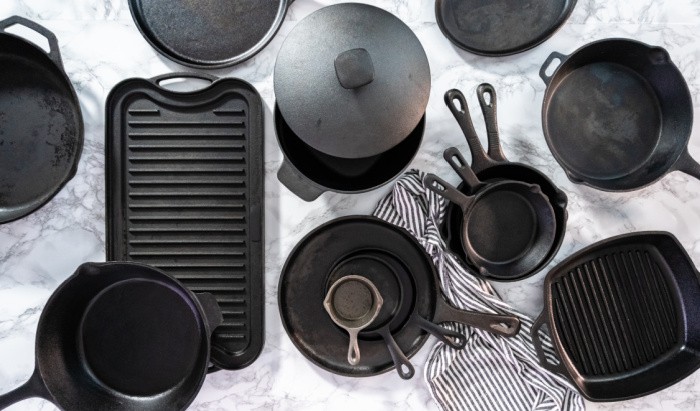
Have you wondered how to clean and restore cast-iron pans? If so, I have you covered today. This post is a few years old, but we can always use a reminder about how to care for cast-iron pans, right? I’m updating this post from 2019 because I feel strongly that people should invest in cast-iron cookware if they haven’t already, particularly if they plan to do some camping, but also to help them be better prepared.
Please remember that those beautiful enameled cast-iron Dutch Ovens are designed for cooking on the stovetop or in your oven, not for outdoor use. The enamel products are more “touchy” and could get damaged with outside use. I have a beautiful red one that I use for Sourdough Bread, soup, and chili. Red Dutch Oven
Mark and I were at a friend’s home the other day, and she said she was giving an old rusty Dutch oven to the thrift store in town. Then I said, “You’ll be sorry if you do!”
I explained to her how awesome it is if you have one Dutch oven that’s cleaned and ready to go. It’s one of the best emergency items to store for cooking or boiling water. Then we talked about storing charcoal briquettes in airtight containers for use when she puts that Dutch oven to work. Just think, when it comes to cooking, she will be set for almost any disaster. Of course, you’ll need some matches.
Scrub With Soapy Water
Here’s the deal: you can scrub them with warm or soapy hot water using dish soap, rinse, then pat them dry, and season them before “baking” them. If there is a thin layer of “crud” to get clean, a scrub brush or small scrubber may do the trick. When there are layers of residue or rust, you may need to use fine steel wool to smooth them out, or what I like to call getting down to the raw cast iron. They will look like new, I promise. Consider using rubber gloves during these steps to protect your hands and possibly that last manicure.
I bought some used units, including a rusty cast-iron skillet. They were so rusty, but with some elbow grease, they were ready to be restored to like-new condition. The ones I purchased looked like they had been left in the sink to soak. That’s not a good thing to do. Yes, they will rust if you do that, and I mean big-time rust.
Some Cast Iron Cookware Needs Special Cleaning
Please be aware that you may find some that will need to be sand-blasted. You may want to compare the price of that to buying brand-new ones or rusty ones at a garage sale or thrift store. It was luck that I found some really bad rusty ones, but they were not flaked. I guess that’s how I would describe it. So, what I’m saying is don’t be afraid of the rust; it’s fixable in most cases.
I remember when I was a little girl, my mom always had a cast-iron pan on the stove for scrambled eggs and bacon. Oh yes, we saved that bacon grease in the refrigerator, too! I’ve been on the lookout for additional used cast-iron pans, Dutch ovens, griddles, etc., for a few years. They are getting harder and harder to find at thrift stores. I enjoy sharing them with family and friends, and cleaning them brings me joy!
Fire Pit
We have slowly been buying a few pieces of cast iron here and there. My goal is to build a fire pit when it gets warmer, right here in northern Utah near my new home. I have a Lodge tripod to hold a cooking pot over the fire. Can you just picture that, or is it just me? I can hardly wait to build my fire pit.
Oh, I want it for roasted marshmallows, but I really want to be able to cook outside over a fire. Yes, my family will smell like we have been camping. I suppose you could call it wishful thinking on my end.
I love having some cast iron to cook with, especially outside, because I don’t want to drag my other pans outside. A few years ago, I was out in Hurricane, Utah, at one of my favorite antique stores, looking at treasures. The store has some great finds because, at one time, all those items were a treasure to someone.
They told me one lady came in and bought all the cast-iron pots and Dutch ovens in the store a few days before I came to visit them. We are talking about filling the back of her car. Then I asked the owner whether it was Lodge or another American-made cast-iron brand. He said he had some made in China, but this lady only wanted American-made cast iron pieces. That’s all I want in my cast-iron pans or pots as well.
How To Restore Cast Iron Pans:
Lightly sand the cast iron with fine steel wool, as explained above, if needed.
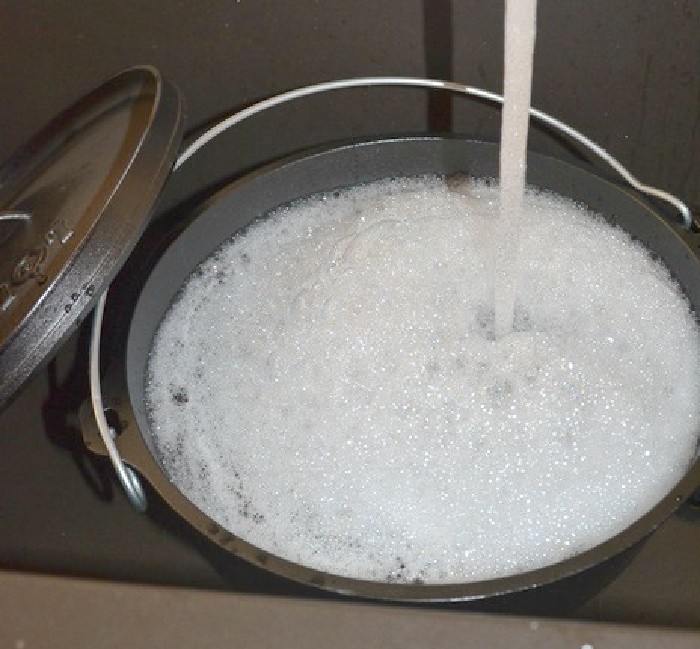
Wash the cast-iron pans in warm, soapy water
The second thing you will do with your cast iron is to wash it in warm, soapy water. You’ll need to dry it before we do the next step. The towel I used to dry the cast-iron pieces had some residue after wiping down the cast-iron lid. So I re-washed the lid a little more. It had some black residue that was wiped off. I washed it until it no longer left that little black stuff on the towel.
Some people like to use a white vinegar solution to help clean their cast iron. Vinegar is a safe cleaning solution and is not harmful to humans in small amounts. Others have tried to use oven cleaners like Easy Off or a lye bath. I worry about the environmental effects of these approaches on me and my family, so I haven’t taken either of those approaches.
Don’t ever put your cast iron cookware in your dishwasher. The chemicals in the dishwasher soaps and cleaners can do harm to the surface.
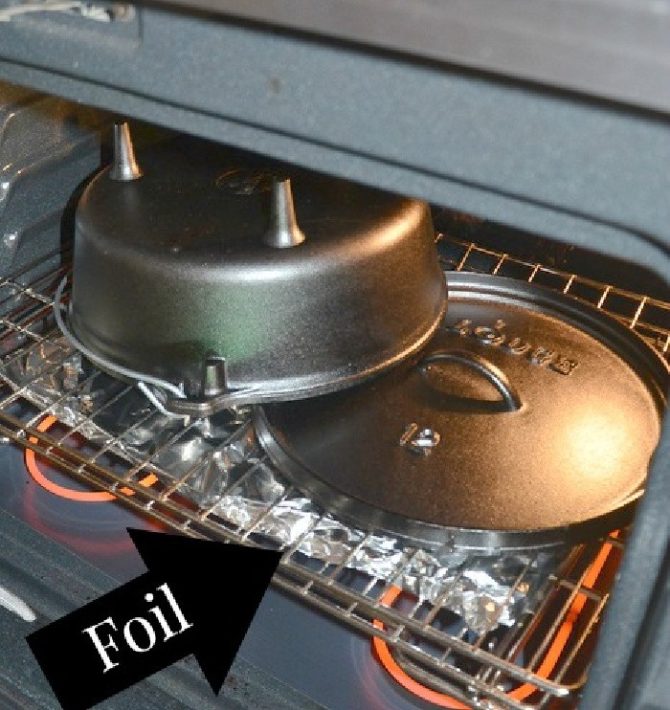
Foil on the bottom oven rack
Next, take all the racks out of your oven but the two bottom ones. Lay a large piece of aluminum foil on the bottom rack. It will catch the drips, if any, from the vegetable oil if it happens to drip down from the seasoning step. Preheat your oven to 350 degrees.
Spray or wipe the cast iron pans with vegetable oil
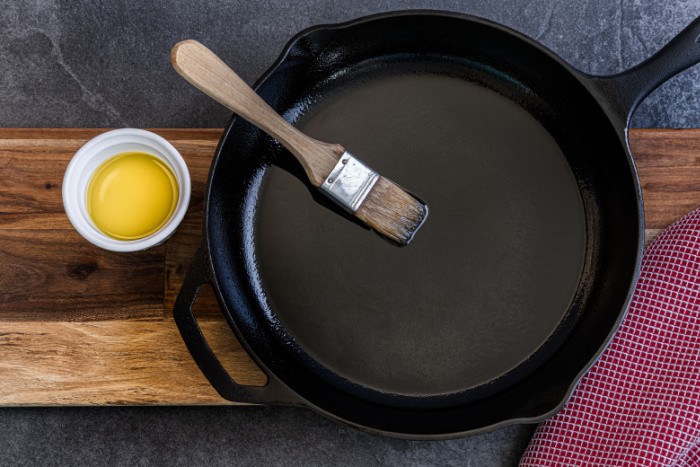
Now you can wipe with vegetable oil, or as in my case, I used a vegetable spray. The Lodge book showed using some type of spray product, so that’s how I seasoned mine. Make sure you spread the oil all over the pan, including the legs, lid handle, and pan handle. The next step is to place the cast iron items with the vegetable spray side down.
You can use other oil-based products for this step, like Crisco, shortening, cooking oil, or even pure butter. If you do use butter, remember it has a lower smoke point than most cooking oils. It’s suggested you use low heat to season with butter and wait until the butter has disappeared. You can use a small brush or even a sponge for this step.
Although I sprayed the inside and outside and on every crevice, I still turned the pan upside down. This is where the foil is needed on the lower shelf of the oven to catch any drips.
Bake the cast iron pans at (350°F) = (176°C) degrees
Bake the cast iron for 60 minutes, turn off the oven, and let them cool down overnight. Be careful when handling those hot pans as they come out of the oven. After this initial seasoning, you should be able to take these camping or use them outside and wipe out the residue from your meal while the pan is hot and it is good to go until the next time you use it. They almost act like they have a non-stick cooking surface when properly seasoned.
Paper Towels
I did learn a few things we need to do to keep our cast iron looking good and keep it from rusting. Place a few sheets of paper towels between the lid and the pan when storing them. Add a few sheets of paper towels in the bottom of the pan as well. I bought covers for all of my Dutch ovens, or at least the ones I use most often. Those Dutch ovens I store in the garage ready to grab and take anywhere to go camping or use at parties.
Easy Peasy Steps
- wash with warm soapy water if the food sticks (hopefully, you won’t have to do this if you keep the cast iron seasoned)
- pat dry
- oil them
- bake them
- store them
They will last a lifetime if you take proper care of them. I only buy Lodge cast iron products. That may sound snotty, but they’re made in the USA! May God bless you for being better prepared. I also try to shy away from using too many acidic foods like tomatoes when cooking in my cast iron products. The acid can deteriorate the pan’s seasoning, adding to my cleanup efforts.
Final Word
There is something awesome about having cast iron pans, skillets, Dutch ovens, and griddles. They will last a lifetime, if you take proper care of them. If you can restore cast iron pans back to near their original state, why not do it? You’ll have pans you can use inside and outside your home. It’s all about being prepared for the unexpected. May God bless this world, Linda
Copyright Images: Cast Iron Frying Pans Depositphotos_285747808_S, Large Black Cast Iron Pan Depositphotos_560369894_S, Cast Iron Set, Cast Iron Being Oiled AdobeStock_340763380 By Bruce Peter MorinAdobeStock_315635036 By arinahabich
Readers comments:
Janet: I use kosher salt and a fresh potato to get mine clean. I always have salt and a potato, I don’t always have steel wool. I then season them with coconut oil and put them in the oven. I also use coconut oil, to keep my cutting boards from cracking after I wash them.
Beth: Linda, you’re apparently in love with Lodge. But don’t pass up Griswold, if you run across some in a thrift or antique shop. They are older than the Lodge brand but stopped production before or around the time of World War II. I still have and use Mother’s. It’s like the Fire King items, the original is better.
The post How To Clean And Restore Cast-Iron Pans appeared first on Food Storage Moms.
from Food Storage Moms
No comments:
Post a Comment