
Cooking from scratch can sometimes be overwhelming for those learning to cook. There’s more to cooking from scratch than grilling a hamburger on the grill. It can be using a recipe, following what your mom or dad taught you, or just cooking the way that comes naturally, based on your diet and what’s in your pantry. I remember watching my mom cook some of her recipes without a cookbook. It’s because she made that particular recipe just about every week or two.
When I was growing up, my family didn’t eat gourmet meals, but we learned to cook from scratch using basic ingredients from our well-stocked pantry, refrigerator, and freezer. Oh my goodness, I’m so glad my mom taught me to cook from scratch when I was just a kid! I know I’ve saved thousands of dollars throughout my life simply because I know how to prepare real food from the items I store at home. I wanted to update this blog post to share my ideas with many of my new readers who wish to learn how to cook from scratch.
In case you missed this post, 10 Rules for Organizing Your Pantry
Why Cooking From Scratch Matters for Your Family’s Preparedness
When you know how to cook from scratch, you’re no longer dependent on a box, a bag, or a store shelf. This is one of the most practical skills you can build for your family’s food storage plan. If the grocery store shelves are ever empty, or if you simply want to save money and eat healthier, knowing how to turn basic pantry staples like flour, salt, sugar, oil, and dry beans into real meals is priceless.
Scratch cooking doesn’t have to be complicated. It starts with a few basic skills you can practice one at a time.
Learn to make a basic loaf of bread using just flour, water, salt, and yeast. Once you can do this, you’ll never worry about running out of bread again.
Learn to cook dry beans and rice from scratch. These two ingredients alone can form the base of hundreds of meals and store for years when stored properly.
Learn to make your own broth from bones or vegetable scraps. This is a wonderful way to stretch your food budget and add flavor and nutrition to soups and stews.
Learn to make a basic white sauce (or roux) using flour, butter, and milk. Once you know this one recipe, you can make gravies, casseroles, and creamy soups.
Learn to bake with your food storage staples. Practice using powdered milk, dehydrated eggs, and shelf-stable fats in your favorite recipes so you’re comfortable using them if fresh ingredients aren’t available.
The best part about scratch cooking is that it builds confidence. Once you know you can make a meal out of what you already have on hand, you worry less about supply chain problems or empty shelves. You become the kind of family that’s ready for whatever comes.
I’m not a professional chef or a nutritionist; I’m just a woman who loves to cook and share what I’ve learned over the years. Please use your own judgment and consult a professional if you have specific dietary or health needs.
Cooking From Scratch Storage Items:
These are a few essentials I must have in my home at all times. Please keep in mind that when something I use frequently goes on sale, I stock up my freezer, fridge, and pantry.
Also, today’s post isn’t about any particular diet, such as the Keto Diet, Atkins, Veganism, The China Study, or any other popular approach to eating. Today is about saving money and knowing that cooking from scratch is beneficial for your health. In other words, good wholesome food is what I strive for when scratch cooking.
Many of the items listed below I would consider staples since we should all have them on hand for our homemade meals. Another benefit of cooking from scratch is that you can use substitutes in a recipe based on what’s available in the fridge or pantry.
The Freezer:
- Butter: In quarters, I only buy salted butter; that’s how I roll.
- Bacon: thick, center-cut bacon.
- Frozen peas, chopped onions, and bell peppers: I never throw out veggies from the fridge anymore because I monitor what’s in my veggie drawer, use them for other purposes while they are still decent, use leftovers, or freeze them before they go bad.
- Meat: I buy discounted meat in the meat section every six months. I stock up BIG time. On Monday morning, grocery stores typically put out fresh meat and unload the meat that didn’t sell over the weekend. If you time it just right, the butcher brings out rack after rack. If the price is right, grab a basket and start throwing them in. I also enjoy the rotisserie chicken from Costco, available either as a whole chicken or cut up.
- Flour tortillas: I buy them from Costco and divide them into six in each bag (gallon bags). They freeze well for future meals. Be sure to take them out in time to thaw for use at the planned mealtime.
- Corn tortillas: They freeze well. Divide them into bags based on how many tortillas you’ll use for a casserole or just for tacos. I freeze 12 in each quart-size bag.
- Broccoli: I make chicken and broccoli a couple of times a month, so I like to keep a few large bags in the freezer for casseroles or salads. Again, take them out in time for meal prep.
- SAF Yeast, Dough Enhancer, and Wheat Gluten: I purchase enough for a couple of years and store them in the freezer. I need these to make my bread, dinner rolls, cinnamon rolls, and French Bread several times a month. They come in pretty small packages, so the storage space isn’t an issue.
Stocking The Pantry:
- White bread flour or all-purpose white flour
- White sugar, brown sugar, and powdered sugar
- Honey
- Lemon juice
- Salt
- Oil: vegetable oil, olive oil, and coconut oil
- Baking Soda
- Baking Powder
- Oatmeal
- Mayonnaise and Miracle Whip
- Mustard, Barbecue sauce, and Ketchup
- Beans
- Unsweetened cocoa
- Popcorn
- Vanilla
- Spices and herbs such as chili pepper, Cayenne pepper, sage, and sweet basil. We all have our favorites.
- Canned chicken
- Canned tuna
- Maple Syrup
- Peanut butter
- Jam
- Salsa
- Spaghetti sauce
- Tomato sauce
- Tomato paste
- Diced tomatoes
- Chicken and beef bouillon (Better Than Bouillon brand)
- Cream of chicken soup
- Cream of tomato soup
- Chicken noodle soup (just enough for emergencies)
- White rice
- Pasta
- Gelatin
- Canned fruits
- Canned vegetables
- Corn syrup and Sweetened Condensed Milk (to make caramel corn)
- Vinegar: white, apple cider, and Balsamic
- Potatoes
- Broth
In case you missed this post, 33 Essential Spices I Recommend Stocking Up On.
The Refrigerator – Dairy and Other Items:
- Eggs
- Milk
- Butter
- Cream, sour cream, cottage cheese, and cream cheese
- Cheese: blocks of cheddar, shredded cheddar, and shredded Mozzarella
- Fresh fruits and vegetables, when in season
- Celery Stalks
Kitchen Tools We All Should Have:
- Bosch Bread Mixer, KitchenAid 6-Quart Mixer, or Zojirushi Bread Maker
- Whisks
- Spatulas
- Griddles, waffle maker
- Pressure cooker – Instant Pot
- Soup Pot
- Frying Pans
- Dutch Ovens
- Cookie Sheets
- Muffin Tins
- Food Processor
- Slow Cooker – Crock Pot
- Can Openers – more than one, just in case. Always have at least one manual can opener in case the power goes out.
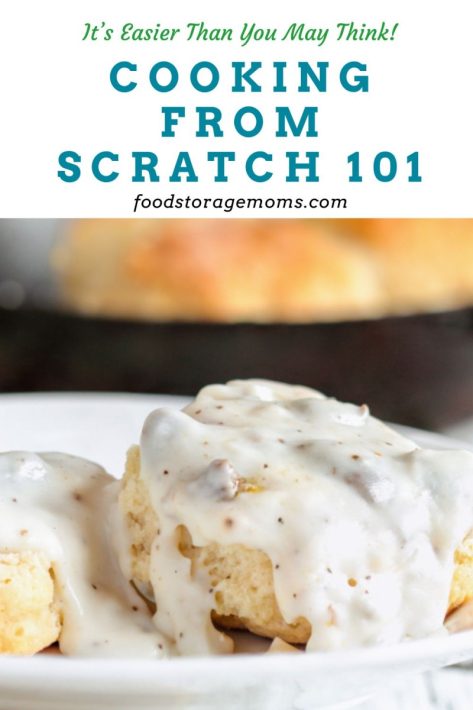
I’m always on the lookout for new recipes that allow me to prepare meals from scratch. Consider making this white sauce; you’ll love it.
Cooking From Scratch Recipes

White Sauce
Ingredients
- 1 cup butter
- 1 cup flour
- 1/2 gallon of milk
- Salt and Pepper to taste
- Sugar optional
Instructions
- Melt the butter, add the flour, and quickly start whisking it. This makes a roux.
- Once it's smooth and thoroughly mixed, add the milk and keep on whisking until smooth.
- This is good for making mac and cheese, Cream Chipped Beef and even gravy.
Some Meals You Should Try With My White Sauce:
- Mac and cheese: add about 2 cups of grated cheese, then stir until it’s melted and creamy. Add some cooked and drained macaroni, and stir until smooth.
- Creamed Tuna on Toast or Biscuits: Add a can of tuna (drained) to the white sauce. Serve with peas.
- Chicken à la King: Add some leftover chopped chicken (2 cups) to the white sauce, 4 ounces of chopped pimentos, and some mushrooms. Serve over cooked rice.
- Creamed Chipped Beef on toast or biscuits: Add two 4.5-ounce jars of rinsed, chopped dried beef to the white sauce. Add a little sugar (optional), salt, and pepper to taste.
- Mushroom soup: Add sliced mushrooms to the white sauce, thinning it with milk if it becomes too thick—season with salt and pepper to taste.
- Cream of potato soup: Add cubed cooked potatoes to make it creamy. Thin the soup with a bit of milk if it’s too thick.
- Sausage gravy:
Fry and crumble a small package of sausage, then drain it and add it to the white sauce. Serve over hot biscuits.
Yes, we can make fabulous meals at home with these delicious recipes. When cooking from scratch, you can batch cook based on the number of people being served. Menus can be adjusted pretty easily, and I shop each week based on my menu planning. There’s something special about making our own meals and not just serving packaged foods from the store. If you like shrimp, give this shrimp cocktail sauce a try the next time you entertain.
Shrimp Cocktail Sauce

Shrimp Cocktail Sauce
Ingredients
- 1-1/2-2 cups Ketchup
- 3 tablespoons brown sugar
- 1 teaspoon dry mustard
Instructions
- Combine the ingredients and mix until creamy. Refrigerate after mixing. Serve with shrimp and celery sticks.
Tartar Sauce
Tartar Sauce
Ingredients
- 1/2 cup mayonnaise
- 1 tablespoon lemon juice
- 2 tablespoons dill pickle relish
- 1 tablespoon minced onion
- 1 tablespoon parsley
- Dash of Worcestershire Sauce
Instructions
- Combine the ingredients together and mix until smooth. Serve with fish sticks or grilled fish of your choice.
Caramel Sauce

Caramel Sauce
Ingredients
- 2 cups brown sugar
- 1 cup butter
- 1/2 cup corn syrup
- 1/2 cup water
Instructions
- Combine the ingredients in a saucepan and bring to a boil. Simmer about 2 minutes. Pour over cakes, banana bread, and puddings.
How To Make Gravy

Linda’s Homemade Gravy
Ingredients
- 1 cup Turkey, Chicken, or Beef Drippings
- 1-2 cups of Flour
- 1 quart Water or Milk (I use water more than milk)
- Salt & pepper
- Sugar
Instructions
- I use the pan in which the turkey, chicken, or beef was baked, along with the "drippings," and bring the liquid to a boil. If you have very little juice or drippings, add some water in small amounts.
- Now, I cannot provide exact measurements because they depend on the size of the turkey, chicken, or roast you purchased and the amount of drippings available. Over time, with experience, you'll learn.
- I take about 1-2 cups of flour put it in a quart jar with cold water and shake it like crazy.
- I slowly add this mixture to the hot boiling turkey, chicken, or beef drippings. Use a whisk and stir constantly.
- I have a quart pitcher with cold water to add to this pan as the gravy thickens. I add water until it's the consistency I prefer. Not too runny, but not too thick.
- I add salt, pepper, and sugar to taste. Yep, it's the sugar that brings out the best flavor. Of course, it's optional.
- If you have some lumps, no worries, bring out the hand mixer. The flavor is fabulous and so easy to make.
Final Word
Cooking from scratch is a skill that pays off every single day, not just in an emergency. Start small, practice often, and before long, you’ll feel confident making meals from the ground up. Your family will taste the difference, and you’ll feel the peace of mind that comes from knowing you can always put a good meal on the table.
I hope my post today helps someone learn the joy of cooking from scratch. A real effort has been made to document everything that I could visualize in my freezer, pantry, and refrigerator. I may have forgotten an item or two, but I’ll add them as I recall them.
Let’s teach the world to eat at home again. Teaching people to cook, set the table, learn table manners, and clean up as a family can’t be done through a fast-food drive-thru. Part of the fun and challenge is creating a menu plan and using a list when grocery shopping.
It saves you money and prompts you to look ahead at the week’s meals and how best to prepare them. Please let me know if there are any items you use that I may have missed, and I’ll add them to
It’s about teaching the next generation the skills we learned as children. Thanks for being prepared for the unexpected. No one can take care of your family as well as you can. May God bless this world, Linda
Copyright Images: AdobeStock_199304079by Magdal3na, Biscuits and Gravy AdobeStock_287776384 by Stephanie Frey,Shrimp Cocktail Depositphotos_5462656_S by Kisbear,Tartar Sauce in a Bowl Depositphotos_72119495_S by MovingMoment,Caramel Sauce Depositphotos_43225117_S by Koss13, Sliced Meat with Gravy Depositphotos_13419958_S by Rjlerich
The post Cooking From Scratch 101 appeared first on Food Storage Moms.
from Food Storage Moms
No comments:
Post a Comment