Estimated reading time: 10 minutes
Disclaimer: I am not a medical doctor and nothing in this article should be taken as medical advice. Please talk to your doctor before using any of the herbs and/or remedies mentioned in this article.
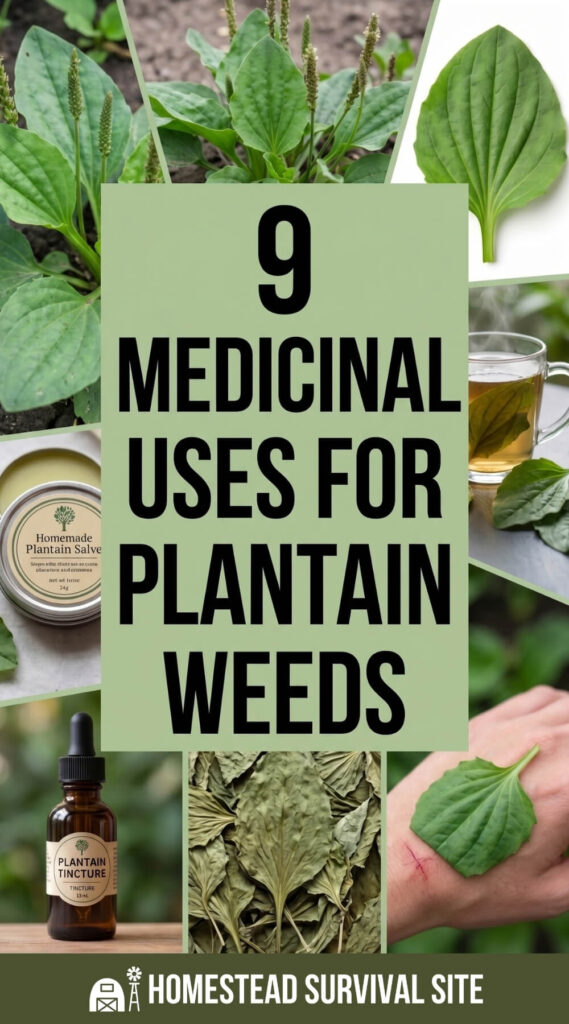
Plantain is an herb that I love, and it grows right in my backyard without me having to do anything. We use it fresh throughout the summer and dry it for the wintertime.
Plantain is a cure for rashes, burns, bug bites, and so much more. So many people have no idea that a miracle weed is growing in their backyard.
Plantain, Plantago Major, is an herb, but it’s most commonly viewed as a weed. It’s native to Europe and parts of Asia, and settlers who came over from Europe introduced it to North America. The Saxons considered plantain one of their nine sacred herbs. Who knew?
The leaves of the plantain weed are edible and taste like a bitter version of lettuce. In some areas of the world, plantain is used in salads and other culinary dishes. You might toss it in a frittata for some extra punch of flavor.
Want to save this post for later? Click Here to Pin It On Pinterest!
How to Identify Plantain
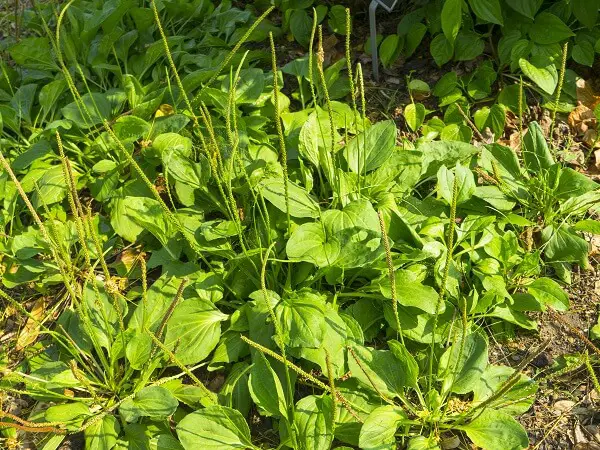
Plantain is perennial, and it’ll come up in your backyard every year, which is why everyone considers it a weed. It’s a hardy plant that is resistant to most weed control methods. Plantain is a low-growing, ground-hugging plant with short, thick stems.
The leaves are green and oval or egg-shaped, around six inches long and four inches wide. You can find short, spiky clusters of tiny green flowers rising up from the middle of the plant. Plantain tends to grow in clusters.
One thing worth knowing is that you'll likely run into two different kinds of plantain, and the good news is that both are useful in all the same ways. The one I described above is broadleaf plantain (Plantago major), with those wide, oval leaves hugging the ground.
The other common type is narrowleaf plantain (Plantago lanceolata), sometimes called ribwort. Instead of broad leaves, it has long, slender, lance-shaped leaves with deep parallel ribs running down them. Its flower stalks tend to grow taller too, topped with a small, compact seed head that almost looks like a tiny bullet or cattail.
If you spot that skinny-leaved version in your yard, don't pass it by. You can harvest and use it just like the broadleaf kind.
Harvesting and Storing Plantain
Since plantain comes back year after year, you'll have a steady supply all season long. I like to pick the young, tender leaves in the morning once the dew has dried. The younger ones are less bitter and easier to work with, though the older leaves are still perfectly good for salves and tinctures.
Only harvest from spots you know haven't been sprayed, and stay away from the edge of the road or anywhere pets do their business. Give the leaves a good rinse and pat them dry.
To save plantain for winter, spread the leaves in a single layer on a screen or hang them in small bundles somewhere warm and out of direct sunlight. A dehydrator on a low setting works too. Once they're completely dry and crumbly, store them in an airtight jar away from the light. They'll keep for about a year, so you'll have plantain on hand long after the snow flies.
The Medicinal Benefits of Plantain
Plantain is a versatile weed that can be used as a cure for many ailments. When in a tea or tincture form, you can use it for indigestion, ulcers, or heartburn.
Externally, a poultice can be used for insects and snake bites. I use plantain as a remedy for rashes and cuts when I make a homemade salve. We use this salve like a natural antibiotic cream due to plantain’s naturally antibacterial and anti-inflammatory properties.
Plantain is high in vitamins A and C, along with calcium. A few other medicinal benefits of plantain include:
- To manage cholesterol levels.
- For hemorrhoid relief.
- To relieve irritable bowel syndrome.
- To calm the bowels during constipation or diarrhea.
- Aid with bladder infections and UTIs.
- For indigestion and ulcers.
- Heals psoriasis and eczema.
9 Ways to Use Plantain
Before you use the plantain in your yard, make sure it hasn’t been sprayed with any pesticides or herbicides. Those are poison, and you don’t want to put that in your body. If it has been sprayed, you can purchase plantain in bulk dried forms from popular herbal stores online.
Assuming the plantain is safe in your backyard, here are some ways to use it.
1. Plantain Salve
Making salves is easy! It’s a blend of oil, beeswax, and plantain leaves. You can also add essential oils. A plantain salve can help to speed the healing of wounds. We use our healing plantain salve in replace for antibiotic cream. Here's how to make it.
Ingredients:
- 6 TBS dried & crushed plantain leaves
- 1 cup of olive oil (or another carrier oil)
- 3 TBS beeswax pellets
- 1/2 tsp essential oil (optional)
Directions:
- Place the leaves in a pint-size mason jar and cover with carrier oil, completely covering the leaves. Cover the jar with a lid.
- Place a small towel at the bottom of a crockpot, then place the jar inside.
- Add enough water to cover the jar about halfway up. Set your crockpot to the “keep warm” setting.
- Let the oil to infuse for 2-6 hours. You can shake the jar occasionally to help it infuse faster.
- Remove the jar from the crockpot and strain the oil through cheesecloth or a fine mesh sieve. Squeeze the cheesecloth get as much oil out as possible.
- Let the oil sit for several hours.
- If water accumulates at the bottom, use a turkey baster to remove most of the oil and put it in another jar, leaving the water behind.
- Heat the beeswax in a double boiler until it has melted.
- Add the oil to the beeswax and stir until fully blended. (If using essential oils, let it cool a bit, then stir them in.)
- Pour your plantain salve into a dry container and allow it to cool.
2. Plantain Tea
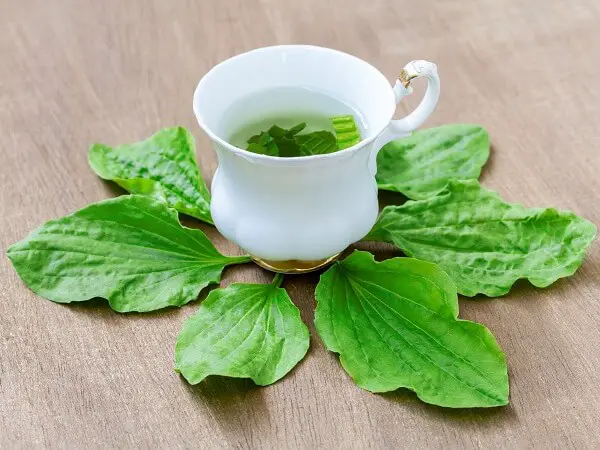
You can make a strong tea or infusion from fresh or dried leaves. All you have to do is pour boiling water over the leaves and let it steep for 10 to 15 minutes.
Plantain tea can be used in several ways, such as:
- Sprayed on a sunburn to cool the burn and relieve the pain.
- Mixed with apple cider vinegar to soothe itching and burning skin.
- Soothe indigestion, heartburn or IBS.
- Help to relieve UTIs, bladder infections, or kidney infections.
To make an easy plantain tea, all you need is:
- 1 cup of fresh plantain leaves
- 2 cups boiling water
- Heat-proof bowl with lid
3. Plantain Tincture or Infused Oils
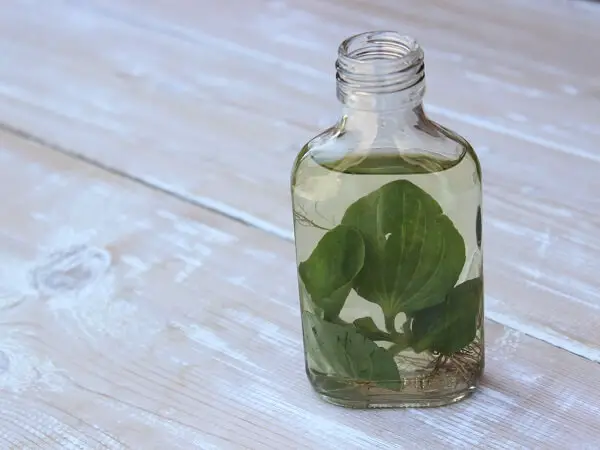
Making a plantain tincture requires dried herbs. You can dry plantain in a dehydrator or just hang it to dry. Then, put the herbs in a glass jar and cover with vodka. You can also make an infused oil the same way by using olive oil instead of vodka.
Put the tincture or infused oil away for several weeks in a cool, dark place. This soaking process takes weeks, but it's worth it. Later, you can use the infused oil as a massage oil over your body when you have bug bites or stings.
To make a plantain tincture, you need:
- 1 cup of washed and dried plantain leaves
- 1 pint of 100 proof vodka or brandy
- Glass jar with a tight-fitting lid
If you properly make a tincture from plantain leaves in alcohol, it will last for two to three years without its potency being affected.
If you want your plantain infused oil sooner rather than later, all you have to do is put the uncovered jar full of oil and herb into a saucepan full of water. Heat over a low burner for a few hours, making sure the water doesn’t evaporate. Then, remove and strain. That’s all you have to do!
4. Chapped Lips
If you have an infused oil, you can make a plantain chapstick to help repair your damaged lips. All you need is:
- Plantain infused oil
- Olive oil
- Shea butter
- Beeswax
- Tins to hold the lip balm
5. Facial Toner
Plantain has astringent properties, so when you mix plantain with raw apple cider vinegar, you make a great facial toner that can restore your skin’s natural pH levels.
All you have to do is soak clean plantain leaves in a glass jar full of apple cider vinegar for 4-6 weeks. Then, dilute with 2-4 parts water, depending on your skin’s sensitivity level, and put into a spray bottle. You can apply with a cotton ball or the spray bottle, just be sure to watch your eyes.
6. Mouthwash
Due to its ability to stop the spread of infections, you can use plantain tea as a mouthwash. Make a strong infusion as you would when you create a tea. Swish it around in your mouth 3-4 times a day. It also helps with mouth ulcers, curing them quickly.
To make a mouthwash, you need:
- 80-100 proof vodka
- Plantain herb
- Glass jar with lid
Let the plantain soak in the vodka for 4-6 weeks. Strain and put into a dropper bottle. Put 30 drops into a glass of water and swish for 30 seconds.
7. Stop the Pain of Stings and Bites
To cure stings and bites, you need to make a poultice out of fresh plantain leaf and bentonite clay with water. Mix together in equal parts to create a paste. Place over top of the bite or sting, and you’ll notice the relief right away.
If you don’t have bentonite clay nearby, try chewing the plantain leaf and putting your spit on the bite. It sounds weird, but it does close to the same thing.
8. Gargling for Throat Pain
Here is another great use for plantain tea. Take the plantain tea or tincture, and gargle it. If you use the tincture, you will need to dilute it in water to be able to gargle. The other choice is to put 5-10 drops under your tongue and ingest slowly to stop the throat pain or cure a throat infection.
9. Get Rid OF Dandruff
No one likes dandruff. To help cure your scalp problems, apply a liberal amount of plantain infused oil. Leave it on the area, letting it soak into your skin, and rinse off after an hour.
Plantain Precautions
In general, plantain is considered safe. It’s a great choice for injuries because it has coagulating properties, but if you have a blood disorder or are prone to blood clots, Plantain wouldn't be a safe choice for you. Always speak to your health care provider if you’re unsure about its safety for you.
Like this post? Don't Forget to Pin It On Pinterest!
You May Also Like:
The post 9 Medicinal Uses for Plantain Weeds appeared first on Homestead Survival Site.
from Homestead Survival Site https://ift.tt/HhqBdyN
No comments:
Post a Comment