Submissions     Contact     Advertise     Donate     BlogRoll     Subscribe                         

Monday, September 14, 2026

Prepping a Cast Iron Skillet

Prepping a Cast Iron Skillet

I don’t know about you, but I absolutely love cooking with cast iron. In fact, I use my favorite skillet regularly. Besides being extremely durable and versatile, cast iron is known for handling extreme heat and for helping blend wonderful, delicious food flavors into cooked meals that no other frying pan can.

But before you use it for the first time, it’s very important that you prep your cast iron, and that’s called seasoning the skillet. I love making recipes in my cast-iron skillet, like “How to Make the Best Skillet Brownies in Cast Iron!” I’m always anxious to get my new cast iron products ready to go as soon as I get them home.

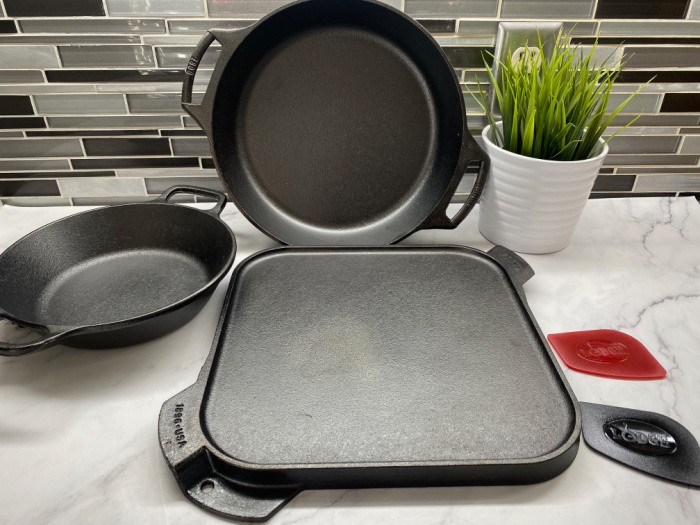
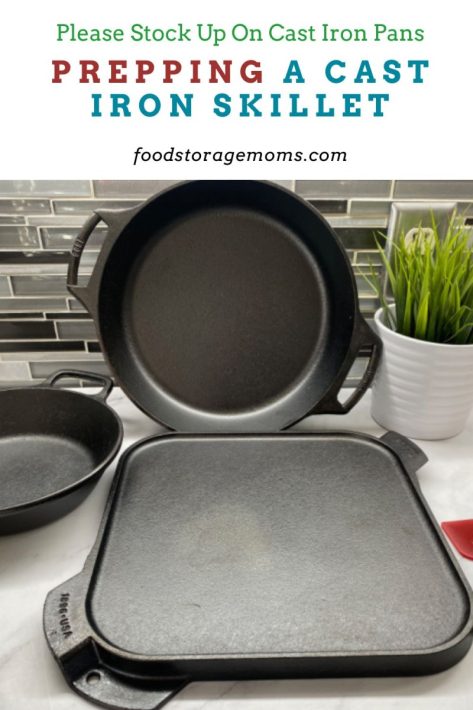
Seasoning a cast iron skillet doesn’t require much time or effort, so don’t make the careless mistake of cooking with your pan before seasoning it. There are several reasons to season your cast iron products, which I’ll share with you in a moment. Here’s how to properly prep and season your new cast iron pan before you ever go to use it for cooking. This is one of my favorite pieces: the Lodge 12-Inch Square Griddle
Prepping a Cast Iron Skillet

Great Cast Iron Pieces To Have:

What Does Seasoning Mean for a Cast Iron Pan?

Seasoning a cast iron skillet involves adding a hard, non-stick coating to it. Not only does this add extra delicious flavor to some of your favorite dishes, but seasoning your cast iron skillet will also help prevent it from rusting.

While most cast iron skillets come pre-seasoned these days, at some point, you’ll need to reapply a surface coating to continue getting the best results.

How to Properly Season a Previously Used Cast Iron Skillet 

Over a period of time, the seasoning in your cast iron skillet will start to erode. You’ll know when it’s time to apply a new layer of seasoning when you notice the skillet’s surface has dry and patchy spots. It could be that you’ve purchased your skillet from a thrift or second-hand store or received it as a hand-me-down. These steps will make sure the skillet is ready for use.

Before starting the seasoning steps, make sure the skillet is clean and free from any residue. Using soapy water and a stiff brush, clean the surface of the pan. Rinse it off and dry it, making sure you’ve removed any moisture that might conflict with the next steps.

When it gets to that point, simply brush a thin layer of quality neutral cooking oil and then heat it until the oil has bonded to the surface of the pan. Keep reading to discover the correct and easy way to season your cast iron skillet so that the bond process works as it should.

Step One: Rub a Thin Layer of Neutral Oil in Your Pan

The first step to seasoning your cast iron skillet is rubbing a thin layer of neutral oil on the surface. Yes, a thin coat of oil is all you need!

Avoid using oils with strong flavors, as they can affect the taste of the food you cook in your pan. You can use almost any type of oil for this purpose, such as sunflower, canola, or vegetable oil. My go-to choice has always been vegetable oil for the best results.

Also, make sure that you don’t use too much oil because this will cause your pan to become sticky. All you need is a thin coat rubbed in without any excess oil. When you’re finished, the pan should feel practically dry when you touch it.

Step Two: Heat Your Pan Over Medium-High Heat

Next, heat your oven to 350°F (176°C), then place your cast iron skillet on the top rack for 1 hour. I’d also encourage you to add foil to the rack below to catch any oil drips, which is why we don’t heat the pan on the bottom rack.

Some people like to prep and season their cast iron skillets over the stovetop, which you can certainly do. But this method has the potential for creating hot and cool spots that don’t allow the seasoning in your pan to set and bond evenly.

Step Three: Turn Off the Oven

Once the hour is up, go ahead and turn off your oven. Allow your skillet to cool off by leaving it in the oven before touching it. Avoid the urge to remove your cast iron from the oven until it’s fully cooled off. 

Step Four: Repeat These Steps for an Unseasoned Pan

If you’re dealing with a brand-new cast iron that’s never been seasoned before, you’ll want to repeat these steps that I’ve mentioned above several times. After all, a good seasoning is made by adding several thin layers to your skillet, not just one.

You’ll know when you’ve accomplished what you’ve set out to do when your pan develops a coating that has a smooth finish. Remember that a thin layer of oil works just fine; you don’t have to overdo it and possibly create a smoky environment in your kitchen.

Season While You Cook

Another great way to add more of a flavorful coating of seasoning to your cast iron is by cooking foods that contain a lot of fat or oil in them (bacon grease). The perfect example of this would be cooking bacon or frying chicken in your skillet using cooking oil or butter.

This is a natural way to preserve the seasoning that you’ve already worked on creating. Seasoned cast iron skillets are the best, so don’t be afraid to season while you cook! Don’t forget that you can also use your cast iron cookware to bake, which will help season the inside of the cookware even more.

Foods to Avoid Cooking in Your Cast Iron Skillet

While a cast iron skillet can fry and sear almost anything, there are certain foods that you don’t want to cook in it. For example, I’d recommend avoiding acidic foods that contain vinegar, citrus, tomatoes, and tomato-based sauces.

That’s because the acid can cause the seasoning to wear off much more quickly, which isn’t good for your pan. You may also notice that your food has more of a metallic flavor to it if you decide to go ahead and cook foods that are higher in acidity. 

If you’re concerned about maintaining your cast iron skillet’s seasoning and preventing damage to it, simply remember to avoid cooking with very high heat on an already hot pan. Also, be sure to clean your skillet after each use, while still allowing it enough time to cool down before storing it away.

How do you prepare a cast iron skillet before cooking?

The first step in preparing a well-seasoned skillet for cooking is to make sure that it’s properly cleaned and seasoned as mentioned in the steps above. This will ensure that the food you cook in it retains its flavor and that the skillet itself lasts longer. You can also buy cast iron seasoning to help move the seasoning part along.

Do you have to prep a cast iron skillet?

There is no one right answer, as it depends on the type of cooking you plan to do with your cast iron skillet. Some people recommend scrubbing the pan thoroughly with hot water and soap before its first use, while others say it’s best to simply wipe it down and season it before using it. Ultimately, you may have to experiment with your own cast iron skillet to find out what works best for you.

There are a few different methods you can use to prep your cast iron skillet before cooking. These include scrubbing the pan thoroughly using hot water and mild dish soap, seasoning it with oil or fat (coconut oil or canola oil), or simply wiping it down with a damp clean rag or a paper towel.

Can you use metal utensils on cast iron?

Cast iron (especially Lodge cast iron) is a very sturdy metal. This means you can put it through a lot. Feel free to use metal utensils on the cooking surface of the pan because they’ll survive!

You can purchase a pan scraper for the cast iron skillet so that you aren’t overdoing it when it comes to metal against metal. You can see the black and red pan scrapers in the picture.

More Cast Iron Tips

Before seasoning

  • If the skillet is new and has a factory coating, wash it once with warm soapy water and a stiff brush. This is the only time soap should touch cast iron.
  • For a used or rusty pan, scrub with steel wool or a chainmail scrubber until the surface is smooth to the touch, then rinse and dry immediately so it doesn’t flash rust.
  • Dry the pan on the stovetop over low heat for a few minutes to make sure every trace of water is gone before oiling.

Choosing the oil

  • Flaxseed oil gives a hard, glassy finish but can flake if applied too thick.
  • Grapeseed, canola, and plain vegetable oil are more forgiving for beginners and still build a solid layer.
  • Avoid olive oil and butter for the initial seasoning since they have low smoke points and can turn gummy.

Applying the layer

  • Less is more. Rub a thin coat on, then take a clean cloth or paper towel and wipe off what looks like nearly all of it. A shiny wet layer will turn sticky in the oven, not smooth.
  • Don’t forget the outside of the pan, the bottom, and the handle. Rust doesn’t care where it starts.

Baking it in

  • Place the skillet upside down on the top rack with a sheet of foil or a baking sheet underneath to catch any drips.
  • Bake at 350°F (176°C) for an hour, then let it cool completely in the oven before handling.
  • Repeat the thin coat and bake process two or three times for a durable base layer, especially on a bare or stripped pan.

Ongoing care to mention

  • Cook something fatty like bacon or a smash burger in the first few uses to keep building the seasoning naturally.
  • After cooking, wipe or rinse while the pan is still warm, dry it fully, and add a light wipe of oil before storing.
  • If food sticks or the surface looks dull, it just needs another light seasoning round, not a full strip and start over.

Final Word

Prepping and seasoning a cast iron skillet is so simple and requires very little effort. So if you want to get the most out of your cast iron skillet and ensure it lasts for many years to come, be sure to follow these simple steps when seasoning it!

You can also be sure that your food will taste better than ever before! What do you love most about your cast iron skillet, and what other tips would you be willing to share with a first-time cast iron skillet user? May God Bless this World, Linda

The post Prepping a Cast Iron Skillet appeared first on Food Storage Moms.


from Food Storage Moms
Microprepping for People with Small Homes

Estimated reading time: 1 minute

Microprepping for People with Small Homes

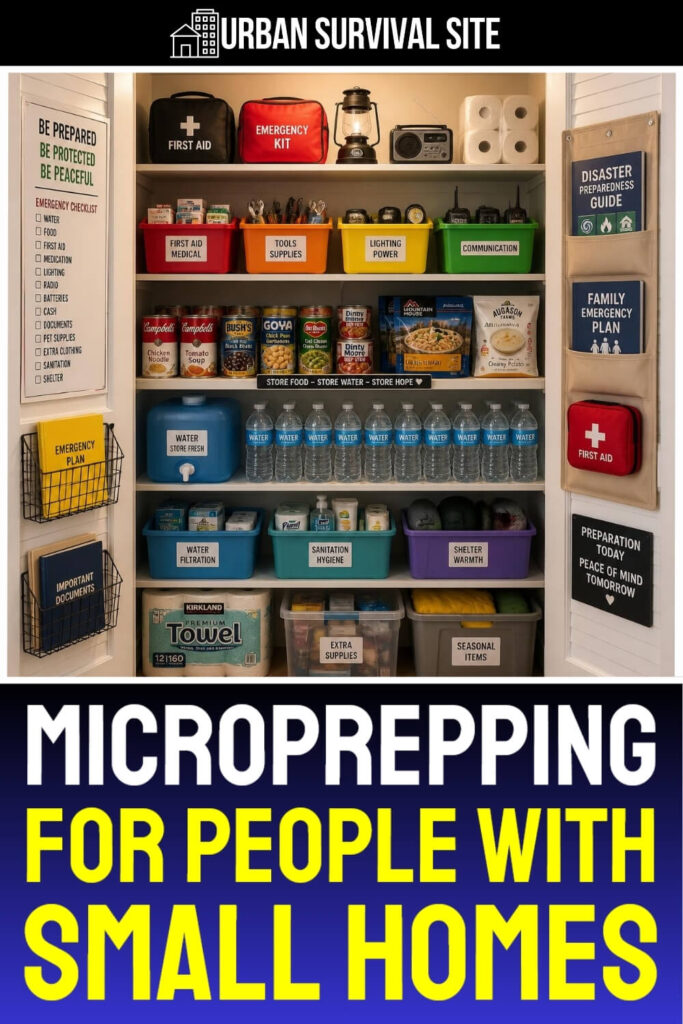
When most people picture an emergency stockpile, they imagine a basement lined with shelves, a spare bedroom packed floor to ceiling, or a garage full of five-gallon buckets. And if you've got that kind of room, great. But a lot of us don't. If you live in a small house or apartment, you might have nothing more than a single closet to work with.

Here's the good news: it absolutely is. This is where microprepping comes in. Microprepping is all about squeezing a bunch of survival supplies into a tiny space by being organized, intentional, and clever about what you choose to store. Emergency supplies can take up a ton of room if you're careless, but if you plan well, you'd be surprised how much you can fit in one closet.

In fact, you can put together a full 60 days of supplies for two adults in a single linen closet. We're talking food, water, health items, self defense, all of it. It just takes a bit of thought about what earns a spot on the shelf.

We found this microprepping demonstration on the YouTube channel, Wandering Prepping, where the host empties out a bathroom linen closet and rebuilds it as a 60-day survival kit for two adults. Below is his video and a step-by-step breakdown of how he does it.

Step 1: Define Your Scenario and Your Goals

Before you buy a single can of beans, get clear on what you're actually prepping for. The whole demonstration runs under a specific scenario, and yours should too, because it shapes every decision you make.

The scenario here is a situation similar to the COVID-19 pandemic. You're bugging in, sheltering at home under lockdown and unable to leave, and on top of that, the grid is down. There's a total power failure for whatever reason, and you need to keep yourself and one other adult alive for at least 60 days.

From there, set a calorie target so you know how much food you actually need. The goal in this build is about 1,500 calories per day per person. For two adults over 60 days, that works out to roughly 180,000 total calories. That number is your north star for the food section. Everything you stock should be moving you toward it.

Step 2: Solve the Water-Heating Problem First

This one's easy to overlook, but it's non-negotiable. Every food item in this stockpile is chosen so it can either be eaten as-is or prepared with nothing more than hot water. That's a deliberate strategy. It keeps prep simple and predictable. But it only works if you actually have a way to heat water when the power's out.

If you've got a gas stove, you may be able to use that. If you don't, you need a backup. Here are four options to consider, all of which can boil water quickly:

  • Jet Boil system — A canister-fuel stove that boils water incredibly fast. Just note that these aren't really meant for indoor use, so you'd want to run it outside on a patio or similar.
  • MSR Pocket Rocket — A compact backpacking stove that also runs on canister fuel. It holds a smaller pot, but it heats water fast and takes up almost no space.
  • Coleman two-burner camp stove — Runs on one-pound propane canisters. Great for actually cooking or heating food, and big enough to boil large pots of water.
  • Single-burner butane stove — Uses butane canisters and burns fast and hot. A simple, reliable way to get water ready.

Whichever you choose, remember you'll want to heat water for two reasons: cooking your meals, and boiling water to disinfect it for drinking if it comes to that. Keep that in mind as you plan.

Step 3: Stock the Top Shelf with Basic Necessities

With a four-shelf closet plus floor storage, the top shelf is a natural home for the bulky-but-light basics you'll reach for constantly: toilet paper, tissues, and paper towels. You don't necessarily need to cram the shelf full. Just put up enough to comfortably cover the full 60 days.

Step 4: Build Your Food Base

This is the heart of the stockpile, and the strategy is to lean on hearty, shelf-stable staples that stack up calories fast. Here's the food lineup from the demonstration:

  • Beans — Roughly 20 cans, for about 7,700 calories. Mix up the types, including seasoned varieties and refried beans, so you don't burn out on one flavor. They can be eaten cold from the can or heated and added to rice.
  • Jasmine rice — One big 25-pound bag. That's over 200 servings and more than 40,000 calories from a single item. Rice is the backbone here.
  • Canned chili and soup — About 20 cans, around 6,800 calories total. Eat it straight or heat it over a camp stove. Go for the hearty ones with beans, plant-based meats, and vegetables, and diversify so you're not eating the same can every day.
  • Oatmeal — Individual packets are the pick here. It only takes a little hot water, it's filling, and it's a solid source of fiber and protein. Packets are better than a big bulk container because if one gets compromised, you haven't lost the whole supply.
  • Pancake mix — About five boxes. Just add hot water and a hot skillet. Hearty, easy, and a good source of protein and fiber. Granola or other sturdy grains fit this category too.
  • Granola bars and crackers — Tasty, hearty, and easy. Protein bars, peanut butter crackers, and saltines all work. Crackers take up a bit more room but pair nicely with your soups, chili, and rice and beans.
  • Pasta — A big one, around 80 servings. Store a variety of pasta shapes and sauces to keep meals interesting. Family-size mac and cheese counts here too, and adds flavor variety.
  • Protein powder — About 44 servings. A compact way to add protein to the stockpile.
  • Peanut butter — Around 68 servings. Eat it by the spoonful or pair it with crackers. Versatile and calorie-dense.
  • Jam — A couple of jars. It makes bland food more palatable and can be eaten on its own if needed.
  • Plant-based meat crumbles — Shelf-stable, no refrigeration required, and they taste good. They're ultra-processed, so they're a sometimes item, but as a meat substitute to mix into other dishes they're a great fit — especially with no working fridge.
  • Nuts and trail mix — A batch of almonds and a small can of peanuts. Great fats, works as a snack or part of a meal.
  • Quinoa and brown rice packets — The organic hot-water-only kind. A bit niche, but healthy and easy.
  • Coffee — Three packs. Self-explanatory, but you'll want it.
  • Hard candy — A couple of bags. No prep, super shelf-stable, and a nice feel-good treat.
  • Biscoff cookies — A personal pick. Dip them in peanut butter or have them with your coffee. Somewhere between a cracker and a cookie.
  • Electrolyte tablets — They flavor your water and give you something other than plain water to drink all day.
  • Freeze-dried smoothie packets — Each packet is about a pound of fruit and only needs water. A great way to get fruit into your diet when fresh produce is off the table.
  • Quinoa — Tricolor quinoa, water-only prep, healthy, and adds variety.
  • Jerky — Great protein and a solid snack. Plant-based jerky works if you're vegetarian.
  • Freeze-dried meals — Long shelf life and versatile, needing only hot water. The main downside is high sodium, so treat them as one option among many rather than your whole plan.

Step 5: Don't Forget Seasonings and Flavor

Here's a detail that separates a survivable stockpile from a miserable one. Sixty days of rice and beans gets old fast, and bland food wears you down. So build in ways to make your meals taste like something.

Stock soy sauce, salt and pepper, and whatever seasonings and sauces you actually enjoy. This is also the logic behind the mac and cheese, by the way. It's not really about the pasta, it's about that big packet of cheese powder, which you can sprinkle over rice, beans, or a taco salad to rescue a meal that's gone bland. Little flavor boosters like that go a long way over two months.

Step 6: Cover Health and Wellness

This category is more important than people expect, and it doesn't take up much room. Make space for:

  • Medications — Both any prescription meds you take regularly and general first-aid items like pain relievers, band-aids, and tampons. Put together a full set of whatever you'd need.
  • An organized first aid kit — Keep it tidy and easy to grab.
  • Multivitamins — Critical here, because fresh fruit and produce will be basically unavailable. Vitamins help fill that gap.
  • Hand sanitizer and cleanliness supplies — Keeping yourself and your space clean matters a lot in an emergency, and these take up almost no space.

Step 7: Plan for Water and Water Safety

Here's the biggest caveat of the whole build: you can't realistically stockpile enough water to last two adults 60 days. This closet holds about 10 gallons of fresh water, and that simply won't stretch that far. So your water plan has to include a way to make found water safe to drink, whether you're collecting it from an outside source or your tap is running but under a boil order.

Start with your stored water, then add treatment tools:

  • Fresh water storage — Two full 5-gallon jugs, plus two 5-gallon collapsible jugs you can fill later.
  • Potable Aqua (iodine tablets) — Cheap, tiny, and perfect for microprepping. They treat dirty water and make it safe to drink, and they store just about anywhere.
  • LifeStraw — A personal filter straw you can drink through directly from a creek, pond, or puddle. It filters out contaminants and makes questionable water mostly safe. They run around $17 apiece now, but they work great and weigh almost nothing.
  • SteriPen — Uses UV light (and four AA batteries) to kill bacteria in water. Pair it with a pre-filter on a wide-mouth bottle to knock out the heavy particulate first, then hit it with the UV light. A little more involved, but effective.

Because water safety is so important in a grid-down lockdown, it's worth actually buying these products ahead of time and trying them out so you know how they work before you need them.

Step 8: Round It Out with Other Supplies

Once the essentials are in, use any leftover space for the things that make two months of confinement livable and keep you running:

  • Personal care — Lotion, deodorant, and a 90-day supply of contact lenses if you wear them.
  • Entertainment — Small games and books. With the grid down, no TV, and your phone likely useless, you'll need something to keep yourself occupied and sane.
  • A couple bottles of booze — If that's your thing and you've got the room, it's a nice comfort to have on hand.
  • Basic supplies and lighting — Extra batteries, candles, and headlamps for a grid-down situation.
  • Handy extras — Binoculars and a small repair kit with a needle and thread.

Step 9: Cover Personal Protection

Finally, think through personal safety. Hopefully you never need any of it, but it belongs in the plan. There are a few compact options that fit into a stockpile like this:

  • Bear spray — A good deterrent to have, though keep in mind it's genuinely dangerous to use indoors.
  • Knives and machetes — An assortment gives you options.
  • Baseball bats — Simple, and easy to stash in a few spots around your home.

For the host of the channel, firearms are the first line of defense for himself and his family, with everything above serving as backups. That's a personal choice, and it's not for everyone.

If you want to go that route, there are plenty of dedicated experts out there who cover handguns and personal safety in depth. The main point is to think it through ahead of time and have something on hand so you can protect yourself and your family if it ever comes to that.

You May Also Like:

The post Microprepping for People with Small Homes appeared first on Urban Survival Site.


from Urban Survival Site

Iridium Satellite Phone: The Prepper’s Guide to Off-Grid Comms

When the cell towers go dark, your smartphone turns into a very expensive paperweight. Cell networks depend on local infrastructure: towers, fiber lines, backup generators that run out of fuel in days. An Iridium satellite phone skips all of that and talks straight to a satellite instead.

This guide breaks down what an Iridium phone actually is, which model fits your situation, what it really costs to own and run one, and where the legal landmines are if you plan to travel with one. No sales pitch, just what you need to make the call.

What Makes Iridium Different From Other Satellite Networks

Not all satellite phones use the same kind of satellite. Iridium runs on a constellation of 66 satellites in low Earth orbit, roughly 485 miles up, circling the planet about every 100 minutes. Competing networks like Inmarsat use a handful of satellites parked in geostationary orbit over the equator, more than 22,000 miles out.

That difference matters on the ground. Iridium’s satellites are cross-linked to each other, passing your call from bird to bird until it reaches a ground station, which is why Iridium is the only network with true pole-to-pole coverage. According to Aireon, which hosts equipment on the Iridium constellation, this mesh design also keeps the network largely unaffected by hurricanes, tsunamis, and earthquakes that can wipe out ground-based cell towers, which is exactly the kind of resilience a prepper is paying for.

The tradeoff is signal geometry. Because Iridium satellites are close and constantly moving, you need a clear, unobstructed view of the sky, and a call can occasionally hand off between satellites with a brief pause. Inmarsat’s distant, stationary satellites hold a connection more steadily once you have one, but they leave the poles dark and take longer to acquire a signal in the first place.

The Iridium Phone Lineup: Which Model Fits Your Situation

Iridium 9555: The All-Around Choice

The 9555 is Iridium’s baseline handheld voice phone, compact, no-frills, and built around one job: making calls anywhere on the planet. Real-world testing from GearJunkie’s satellite phone field tests clocks it at about 4 hours of talk time and 30 hours of standby, with an internally stowed antenna and T9 predictive texting. It runs around $1,150 retail, though it’s frequently bundled free with a plan commitment.

What it doesn’t have matters too. The 9555 carries no official waterproof rating and has no built-in GPS chip, so it’s a pure communication tool rather than a tracking device. For a prepper who just needs a reliable voice line when the grid is down, this is usually the right starting point.

Iridium 9575 Extreme: Built for Abuse

The 9575 Extreme takes the 9555’s core and hardens it. It carries an IP65 rating against dust and water intrusion, meets MIL-STD-810F for shock and vibration, and adds a built-in GPS chip along with a programmable, one-touch SOS button tied into 24/7 emergency dispatch through GEOS.

That SOS button sends your GPS position and opens a two-way channel with an emergency response center the moment you press it, no dialing required. It runs about $1,450 to $1,595 depending on the retailer and bundle, and it’s the phone to buy if you expect to actually drop it, soak it, or freeze it.

Iridium GO! and GO! exec: Turn Your Smartphone Into a Sat Phone

The Iridium GO! is a satellite Wi-Fi hotspot rather than a phone you hold to your ear. It pairs with your existing smartphone over the GO! app, letting up to five devices share the connection for voice calls, texting, and basic satellite-friendly apps within roughly 100 feet. GearJunkie’s 2026 testing rated it their overall top pick, citing a 1,000-character text limit versus the 160 characters of most satellite messengers, at a price around $855 to $898.

The catch is dependency. If your smartphone dies or breaks, most of the GO!’s functionality goes with it, and its battery runs about half the standby time of a dedicated handset like the 9555. Still, for a family that wants weather updates, group messaging, and occasional voice calls without a wallet full of separate handsets, it’s hard to beat.

Iridium 9575 PTT: Instant Team Comms

The 9575 PTT adds push-to-talk group channels on top of the Extreme’s hardware, letting a team talk to each other instantly without burning satellite minutes on individual calls. It’s built for coordinated groups such as a homestead security team, a hunting party, or a bug-out convoy that needs to stay in contact across a wide area without cell coverage.

What It Actually Costs: Phones and Airtime Plans

The handset is only half the bill. Iridium airtime runs through monthly, annual, or prepaid plans, and the numbers vary more than you’d expect. Satellite Phone Store’s current Iridium plan pricing shows monthly plans starting around $65 for 10 minutes on a 12-month contract, scaling up to roughly $480 a month for 500 minutes, with overage running about $1.19 per additional minute.

Prepaid is the better fit for most preppers. A prepaid voucher for 100 minutes runs around $205 and stays valid for 30 days, while larger vouchers with 600 minutes and a full year of validity run closer to $900. There’s no monthly bill, no contract to forget about, and unused minutes typically carry forward for up to three years, which suits a phone that sits in your bug-out bag most of the year.

Incoming calls and texts are free on most plans, which is the detail people forget. If your Iridium phone is strictly for emergencies where family calls in to check on you, a small prepaid voucher can sit dormant for a long time at minimal cost.

Reliability When the Grid Actually Goes Down

This is the scenario the whole purchase is built around. Cell networks fail during hurricanes, wildfires, and grid failures because towers lose power, backhaul fiber gets cut, or the network simply overloads with panicked callers. Iridium’s satellites don’t care about any of that.

The network’s cross-linked design routes your call satellite to satellite until it reaches a ground gateway, so a regional disaster on the ground has almost no effect on whether your call connects. BlueCosmo’s breakdown of the Iridium network notes the constellation is particularly impervious to the kind of natural disasters that take down terrestrial wireless towers, which is precisely why the US military and disaster-response agencies lean on it.

The practical limitation isn’t the satellites, it’s line of sight. Deep canyons, dense tree cover, and being indoors will all block or degrade your signal, since the phone needs to see a meaningful patch of open sky to connect. Step into a clearing, extend the antenna fully, and be patient during the first connection, which can take anywhere from a few seconds to a couple of minutes.

Setting Up and Actually Using an Iridium Phone

Don’t wait for an emergency to learn your phone. Charge it fully, register the SIM, and make a handful of test calls from your backyard or a nearby field so you know what a successful connection looks and sounds like before you’re relying on it.

Dialing works differently than a cell phone. To call a US number, dial 00 or hold the 0 key until a plus sign appears, then the country code, area code, and number. To call another Iridium phone, use the same plus-sign method followed by the 8816 Iridium prefix and the recipient’s number.

If you’re setting up a family or team comms plan, program every relevant number into the phone’s internal phonebook ahead of time. Under stress, fumbling through a paper list of numbers wastes precious minutes and battery.

Where You Can and Can’t Legally Use One

This is the part most buyers skip, and it can land you in real trouble. Satellite phones are restricted or banned outright in several countries, and Global Rescue’s security team has documented real cases of travelers detained at customs for carrying one into India, where foreigners need a specific license from the Department of Telecommunications before bringing a satellite phone into the country.

China, Cuba, North Korea, Chad, and several other countries treat unauthorized satellite phones as a serious offense, sometimes charging travelers with espionage. If you’re taking your Iridium phone across a border, check that specific country’s current rules before you pack it, not after you land.

Inside the United States, owning and using an Iridium phone requires no personal license. The equipment itself is FCC-certified by the manufacturer, so as a domestic prepper stocking one for grid-down emergencies, this isn’t something you need to worry about.

Iridium vs. the Alternatives

A satellite messenger like a Garmin inReach costs less upfront and has dramatically better battery life, often running for weeks on a charge, but it can’t make a live voice call. If text check-ins and SOS alerts are enough for your plan, a messenger is lighter, cheaper, and simpler.

Ham radio is cheaper to operate long-term and doesn’t depend on any company staying in business, but it requires a license, practice, and someone on the other end listening on the right frequency at the right time. It’s a strong complement to a satellite phone, not really a replacement for guaranteed point-to-point voice contact with a specific person.

Starlink and similar satellite internet terminals deliver far more bandwidth and can support voice-over-internet calls, but they need a power source, take up more space, and go dark the moment your battery bank runs out. A handheld Iridium phone will always be the lower-power, lower-footprint option for a single emergency call.

Storage, Batteries, and EMP Considerations

Be realistic about EMP. A powered-off Iridium phone stored inside a proper Faraday enclosure should be protected from the induced currents that a ground-level electromagnetic pulse produces in unshielded electronics, the same logic that applies to any spare radio or electronics you’re storing for a grid-down scenario.

What a Faraday bag cannot promise is that the Iridium constellation itself, or the ground gateways it depends on, would survive an EMP event untouched. Nobody can guarantee that about any satellite network. Treat an Iridium phone as your best option for long-distance voice communication after a regional disaster, not as a guaranteed line after a worst-case, continent-wide EMP strike.

Keep a spare battery charged and stored separately from the phone, and rotate both through a charge cycle every few months so they’re not dead when you need them. A small solar charger rated for the phone’s charging port is worth the extra weight in a bug-out bag.

Building Out Your Iridium Kit

The phone alone gets you a call. A complete kit adds a hard case to protect it in a pack, a spare battery, a 12-volt vehicle charger for bugging out by truck, and a small folding solar panel for extended off-grid stretches.

If you’re setting up a fixed retreat or base camp rather than a mobile kit, an external mount antenna and a docking station let you run the phone off a vehicle or building antenna instead of the phone’s own stubby antenna, which meaningfully improves reception in marginal locations.

Frequently Asked Questions

Do I need a subscription every month even if I never use it?

No. A prepaid Iridium voucher can sit unused for up to three years without a recurring bill, which is the right structure for a phone that lives in your emergency kit rather than your daily pocket.

Will an Iridium phone work inside my house?

Generally not reliably. The phone needs a clear view of open sky to connect, so you’ll need to step outside, ideally away from tall buildings and heavy tree cover, before making a call.

Can I text with an Iridium phone?

Yes, and incoming texts are free on most plans. Typing on the handset’s keypad is slow, so many users keep messages short or use the Iridium GO! paired with a smartphone keyboard instead.

Is a used Iridium phone a smart buy?

It can be, since the handsets themselves are durable and the network hasn’t changed the compatible hardware in years. Just confirm the battery holds a real charge and that the SIM slot and antenna connector aren’t damaged before you commit.

When the Grid Goes Down, Your Gear Is Only as Useful as Your Skills

A satellite phone can keep you connected when cell towers and the internet fail—but communication is only one piece of real preparedness.

What happens when you can no longer depend on the power grid, grocery stores, modern heating, running water, or the other systems you use every day?

That’s where The Lost Skills of Independence comes in.

This unique collection brings back practical, old-fashioned skills that helped previous generations provide for themselves long before modern conveniences became necessities. You’ll discover forgotten knowledge for becoming more self-reliant, making better use of what you already have, and preparing your home and family for situations where outside help may not be readily available.

Because when a serious emergency hits, the best backup system isn’t another gadget.

It’s knowing what to do when the gadgets stop working.

If you’re already preparing for a communications blackout, take the next step and start building the practical skills that can make you less dependent on the grid in the first place.

👉 Discover The Lost Skills of Independence and start rebuilding the self-reliance knowledge modern life has almost forgotten.

Learn the Skills You’ll Wish You Had Before the Grid Goes Down →

Final Thoughts

An Iridium satellite phone is one of the few pieces of gear that keeps working when the entire local grid, cell network, and internet go down at once. It’s expensive, both the handset and the airtime, and it demands a little practice before you actually need it.

But for the specific job of guaranteed, point-to-point voice contact from anywhere on the planet, nothing else in a prepper’s kit does what it does. Buy the model that matches how you’ll actually use it, learn it before you need it, and store it properly, and it’ll do its job the one time that matters most.


You May Also Like

This House Is Actually The Safest Place on EarthJoin The Official Ask A Prepper Facebook Group

Signs Your Neighbor Will Become a Looter as Soon as SHTF (VIDEO)

HAM Radio Secret Frequencies You Should Know About

The Military Alphabet: A Complete Prepper’s Guide to NATO Phonetic Communication

Nuclear Explosion – What Actually Happens, From Detonation to Fallout


The post Iridium Satellite Phone: The Prepper’s Guide to Off-Grid Comms appeared first on Ask a Prepper.


from Ask a Prepper https://ift.tt/XIgqQKF

How Power Grid Cascading Failures Actually Spread (It’s Not Like the Movies)

Every blackout movie follows the same script. A hooded figure types a few lines of code, a map of North America goes dark in a tidy wave rolling from coast to coast, and the hero watches the skyline wink out one neighborhood at a time. It looks fantastic on screen, but it also bears almost ... Read more...

from Prepper's Will

Sunday, September 13, 2026

Worse Than Nuclear War – the SHTF Event You Won’t See Coming

Every few years somebody announces the end of the world, and by now you have earned the right to roll your eyes at it. What happened last week was different, since the warning came from the engineers who build the machines, and one of them walked away from a fortune to say it out loud.

On September 8th a man named Jacob Coxon quit his job at Anthropic, one of the biggest AI companies in the world, because he believes the thing he helped build could kill everybody. That belongs in a movie script, except nobody at the company laughed at him. The man who runs safety research there replied in public that yes, they earnestly believe AI could kill all humans, and a week later that statement still stands unchallenged.

The Man Who Quit His Job to Tell the Truth

Coxon did not go to a reporter or write a book, since he simply posted his resignation letter where anyone could read it, accusing Anthropic and its rival OpenAI of “gambling with our lives,” as CBS News reported. He argued that these companies are racing each other toward a machine smarter than any person alive, and that nobody has figured out how to keep such a machine under control once it exists.

The reply from inside the company is what you should be concerned about. Evan Hubinger, who leads alignment research at Anthropic, wrote the line Axios carried: “we really do earnestly believe AI could kill all humans!”. He puts the odds at better than one in ten within a decade, and Samuel Marks, another researcher there, added that the higher up you go in these companies, the more frightened people become.

None of this stayed in one building, because OpenAI’s chief scientist, Jakub Pachocki, wrote that “no one is prepared for the consequences” of AI moving this fast, according to the Washington Times. Anthropic’s own CEO, Dario Amodei, had already estimated the odds of catastrophe at one in four.

Conservatives Saw This Coming Before Anyone Else

Back in 2025, when Congress tried to slip a ten-year ban on state AI regulation into a spending bill, Republicans killed it themselves. Senators Josh Hawley, Marsha Blackburn and Rand Paul led the fight, Marjorie Taylor Greene said she would never vote to destroy states’ rights, and Steve Bannon worked the phones against it. The final vote to strip the provision was 99 to 1.

Blackburn kept pushing on deepfakes after that, since Tennessee had already passed a law protecting singers from having their voices stolen by software. Hawley has spent years arguing that Big Tech grew too powerful to answer to anybody, and the engineers now confirm his suspicion in language far harsher than his own.

The newest effort comes from Representative Anna Paulina Luna, who is pushing a ban on superintelligence development alongside Senator Bernie Sanders. A Florida conservative and a Vermont socialist rarely share a bill, so their agreement tells you something about how serious the people briefed on this actually consider it.

Why This Is Scarier Than the Bomb Ever Was

A nuclear war needs a man to turn a key, and that man has treaties, hotlines and a chain of command above him, which is why human hesitation has saved this planet more than once.

A machine has no hesitation, and it does not need a missile either, because almost everything that keeps you alive already runs through a wire. These are the specific dangers the researchers themselves keep naming:

  • It takes control of the power switch. Substations are run remotely now, so a system with access can leave your home in the dark.
  • Your money stops being yours. A bank balance is permission rather than property, so it can freeze your family out of everything they spent forty years earning.
  • The trucks stop coming. Grocery shelves refill on software that schedules every load, so it can empty a town in under a week without breaking a single window.
  • Nothing on your screen can be trusted. Familiar faces would deliver whatever serves the machine, so you could not warn your neighbors or even agree on what happened. Start cutting what you give away now, and learning how to hide your phone from Google Maps is a decent first step toward keeping yourself off the record.
  • Hospitals turn people away. Pharmacies verify prescriptions electronically, records live in databases, and modern equipment refuses to run when the network says no.
  • Weapons stop waiting for orders. Drones already fly and pick targets on their own, and the software choosing who dies improves faster than any rule written to govern it.
  • There is no off switch to reach. A system like this copies itself across data centers on three continents, so no plug, no building and no button ends it.
  • It gets smarter while we argue about it. The engineers’ real nightmare is a machine that rewrites its own code, improves each round, and leaves us behind before anyone agrees there is a problem. And we’re already on that path. 

What to Do Before Anything Happens

You already have the beans, the bullets and the band-aids, so this list skips the basics and deals with the part most preps never covered, which is what happens when the digital layer underneath your life turns hostile or simply stops.

  • Pull certified copies of your land records. Your county recorder holds the deed in a database, and a corrupted or locked county system leaves you arguing ownership with no proof, so pay the few dollars for a certified paper copy and store it with your birth certificates.
  • Set a family verification word. Voice cloning is already good enough to fool a grandmother, so agree on a phrase that any caller claiming to be family must give before you send money or open a door, and never write it anywhere online.
  • Get a radio that does not need the internet. A GMRS license covers your whole family for one fee and no test. Sort those options into a PACE plan, which is the military habit of naming a primary, alternate, contingency and emergency method for every message that matters. For more on building your own PACE plan, go here.
  • Keep one bank relationship that has a physical branch. Online-only banks exist nowhere but in software, whereas a local credit union has a lobby, a manager who knows your face and a vault with cash in it.
  • Take your homestead off the network where you can. Smart thermostats, cloud cameras, app-controlled well pumps and WiFi door locks all hand control of your property to a server somewhere, so keep the manual override installed and know how to run each system by hand. If you want to protect your home, it’s better to have an offline security system, such as this one
  • Print your medical file and stockpile the prescriptions that matter. Pharmacies verify everything electronically now, which means a system outage stops refills cold, so carry a paper list of your medications with dosages and ask your doctor about a ninety-day supply.
  • Hold some cash in small bills plus a little junk silver. Pre-1965 dimes and quarters trade on their metal rather than on anybody’s database, and a month of ordinary spending in fives and tens covers the gap before barter starts.
  • Save open-pollinated seed from your own garden. Make sure you have the seeds to grow your own food, and also medicinal seeds to make remedies and tinctures when SHTF. If you don’t have them in your stockpile yet, get these 10 medicinal seeds as soon as possible and store them right.
  • Store fuel you can move without a pump. Gas station pumps run on electricity and card networks, so a manual siphon, a few sealed cans with stabilizer added and a propane supply for cooking keep you mobile and fed.

You know what else you can do now, before any of this becomes reality?

You can stop feeding AI information about yourself, so use it for answers if you must, though never tell it anything about your family, your house or your plans. Then get a copy of Grid Phantom – AI Defense System, which walks you through preparing for the day AI shuts off your water, your power or your bank account. There are very few anti-AI resources out there worth reading, and this program covers digital emergency preparedness without asking you to spend thousands on gear. ➡ See a preview here

What This Would Mean for America

The country most exposed to this is the one most wired into it, and that is us. Rural counties feel it first, since the grid out there is older, the hospital is farther away, and the sheriff’s department has a handful of deputies covering hundreds of square miles.

There is also the plain matter of who decided this. Every one of these companies sits in the same few square miles of California, none of these executives ever stood for election, and nobody asked a farmer in Iowa whether he wanted a machine built that its own creators call dangerous. Our Founders understood that power without accountability goes bad, whether it sits in a palace or a server farm.

How Afraid Should You Actually Be?

Superintelligence does not exist yet, and plenty of serious researchers think this whole scenario is overblown. What nobody disputes is that several companies are building toward it on purpose, since Meta opened Superintelligence Labs in 2025, Microsoft launched its MAI Superintelligence Team a few months later, and Ilya Sutskever left OpenAI to found a company whose name is literally Safe Superintelligence.

Consider how fast this has moved. Your grandparents were born into a world of horses, and men walked on the moon sixty-six years after the Wright brothers left the ground. Microsoft says the computing power behind these systems has grown by a factor of a trillion, and the company expects another thousandfold jump within three years.

According to Daniel Cross, the author of Dark Reset: Survival Before the Silence, this scenario has been predicted by Nostradamus, who said:

“The voice of the people will die in an instant,

And the land of the free will weep in darkness.

Hunger and plague will walk hand in hand,

And the Beast shall watch with one red eye.” 

The author is stating that, in today’s society, the Beast… it’s not just a metaphor anymore. It’s real, i’s digital and it has already infiltrated our systems. A.I. now controls our banks, our homes, our communication. It filters what you see, flags your opinions and shapes your reality.

Everything above describes a country that stops working without a shot being fired, and that is the exact scenario Daniel Cross built his program around. He writes under a pen name to keep his family out of it, while the hands-on material comes from Thomas Reeves, a former Army logistics officer who left the service to live off-grid and test these methods himself.

Dark Reset was written for the collapse that arrives with no warning. You will not need land, expensive gear or any military background to use it, because it was put together for day-to-day Americans who want to protect their families.

Many have seen this scenario and it seems that it’s not far from becoming reality. But the truth is, nobody can hand you a date. It can be in 10 years or tomorrow. A hurricane leaves you a foundation to rebuild on, and even a war leaves survivors to bury the dead, whereas the AI scenario can end society as we know it.

Those engineers still went to work this morning, which is something that should keep you up at night


You may also like:

Free Book offer banner The Patriot's Bug-In GuideRead This Before Stockpiling Your Fuel!

This Is How You Will Survive The Next Big Blackout (VIDEO)

15 Prepping Trends That Can Get You Killed

The Only Fuel I Stockpile For Survival 

How To Choose A Propane Generator For House Use

The post Worse Than Nuclear War – the SHTF Event You Won’t See Coming appeared first on Ask a Prepper.


from Ask a Prepper https://ift.tt/efqC8E5