Mushrooms are one of the wild foods I respect most. Some can put a remarkable amount of food on the table. Others have been used traditionally for generations and are now being studied for compounds that may affect immunity, inflammation, or brain health. A few can also kill you. That last part is why I […]
from Survivopedia
Friday, October 9, 2026
How Long Do Tornadoes Last? What Every Prepper Needs to Know About Tornado Timing
When the sirens go off, time suddenly becomes the most important thing in your world. How long until it gets here, how long will it last, and how long do you need to stay in the shelter?
Most people have no idea. They picture a tornado as a quick blast that comes and goes, or as the endless monster from a disaster movie, and the truth sits somewhere in between.
Knowing how long tornadoes really last, and how long the danger lasts around them, helps you make better decisions in the minutes that matter. Here’s what the data says and how to use it.
The Short Answer: Most Tornadoes Last Less Than 10 Minutes
According to the Storm Prediction Center’s tornado FAQ, hosted by NOAA, tornadoes can last from several seconds to more than an hour, but most last less than 10 minutes. The same source puts the average distance a tornado travels at about 3.5 miles, based on path data going back to 1950.
That means the typical tornado is a short, violent event. It touches down, does its damage along a relatively narrow path, and falls apart within minutes.
But averages can be deadly if you treat them as promises. The tornadoes that cause the most destruction are often the ones that break the pattern, staying on the ground far longer and traveling far farther than normal.
Why Some Tornadoes Die Fast and Others Don’t
A tornado needs two things to survive: a supply of warm, unstable air and the rotation of its parent thunderstorm. When either one is cut off, the tornado weakens and dies.
Scientists still debate the exact details, but NOAA’s FAQ explains that many tornadoes have been seen to fade soon after being hit by cold outflow air from a thunderstorm. When that cooler air wraps around the storm’s rotation, it often chokes off the tornado.
Long-lived tornadoes usually come from supercells, rotating thunderstorms that stay organized in a favorable environment for hours. If nothing disrupts the balance, a single storm can keep producing a tornado mile after mile.
The Long-Track Monsters
The Tri-State Tornado of 1925
The deadliest tornado in U.S. history struck Missouri, Illinois, and Indiana on March 18, 1925. NOAA’s FAQ describes it racing along at 60 to 73 mph across a roughly 243-mile-long track and killing 695 people, based on later forensic research into the path.
At those speeds, covering that distance would take several hours. Entire towns were destroyed in minutes as it passed through.
The Mayfield, Kentucky Tornado of 2021
A more recent example shows that long-track tornadoes are not just history. According to the National Weather Service’s service assessment, the tornado that devastated Mayfield, Kentucky began at 8:49 p.m. and had a continuous track of 165.6 miles, ending at 11:47 p.m.
That’s nearly three hours of a violent tornado on the ground, at night, in December. It became the longest-tracked December tornado on record.
Why the Record Is Hard to Pin Down
You might expect someone to know exactly which tornado lasted longest. In reality, NOAA notes that the longest-lived tornado in history is unknown, because many long-lived tornadoes reported in the early to mid-1900s are now believed to have been a series of separate tornadoes from the same storm.
For your purposes, the lesson is simple. A single storm can produce tornado after tornado along a long path, so the danger can last far longer than any one funnel.
How Long Will a Tornado Actually Hit Your House?
This is the question most people really mean. The answer depends on how wide the tornado is and how fast it’s moving.
Here’s the rough math. A tornado a quarter-mile wide moving at 30 mph crosses a single point in about 30 seconds, while a mile-wide tornado moving at the same speed takes about two minutes to pass.
So the worst of a direct hit usually lasts somewhere between a few seconds and a few minutes. That doesn’t sound like much, but it’s more than enough time for a strong tornado to level a house, which is why your shelter has to be ready before it arrives.
Slow-moving tornadoes are especially dangerous because they spend more time over each spot. Fast-moving ones give you less warning, so neither type is a good one to be caught out in.
Tornado Outbreaks Can Last Hours or Even Days
An individual tornado may be short-lived, but the weather system that produces it often isn’t. Tornado outbreaks can unfold over an entire afternoon, night, and into the next day.
NOAA’s FAQ notes that the outbreak of April 27 to 28, 2011 produced 175 tornadoes in a single 24-hour period, breaking the record set by the 1974 Super Outbreak. Hurricane Ivan in 2004 produced 118 tornadoes over three days in separate daily cycles.
For preppers, this is the timing fact that matters most. When forecasters talk about a major outbreak, you may need to be ready to take shelter repeatedly over many hours, not just once.
How Much Warning You’ll Actually Get
Tornado warnings don’t give you much time. Michigan State Police emergency management notes that the average lead time for a tornado warning is 10 to 15 minutes, and some tornadoes develop with little advance warning at all.
During well-forecast events, lead times can be better. In the December 2021 outbreak, the National Weather Service reported an average lead time of over 19 minutes for its tornado warnings, and tornado watches were issued hours before the Mayfield tornado touched down.
Watch vs. Warning
A tornado watch means conditions are favorable for tornadoes over the next several hours, so it’s your signal to get ready. A tornado warning means a tornado has been spotted or radar shows rotation that could produce one, and it’s time to take shelter immediately.
Use the watch period to charge phones, check your weather radio, put on sturdy shoes, and clear the path to your shelter. When the warning comes, you won’t have time to do any of that.
Signs a Tornado Is Close
Official warnings are your best defense, but you should also know the warning signs your own eyes and ears can pick up. Michigan’s emergency management guidance lists a rotating, funnel-shaped cloud, an approaching cloud of debris, or a loud roar like a freight train among the signs of a tornado.
NOAA’s FAQ adds that the most common tornado sound is a continuous rumble, like a nearby train, though it can also sound like a waterfall or rushing wind. If you hear it, you’re already out of time, so move to shelter immediately.
Don’t wait for hail, a sudden calm, or any other signal to confirm the threat. NOAA notes that no particular pattern of rain, hail, lightning, or calm reliably predicts a tornado, and some tornadoes are wrapped in rain so heavily that you can’t see them at all.
Don’t Count on Seeing It
At night, in heavy rain, or in hilly or wooded country, a tornado may be invisible until it’s on top of you. That’s why your plan should be built around warnings and alerts, not around spotting the funnel yourself.
If you live in an area with lots of trees or rough terrain, assume you’ll get no visual warning at all. Act on the warning the moment it’s issued.
How Long Should You Stay in Your Shelter?
Don’t come out just because the roar stops or the wind dies down. A calm moment can simply mean the tornado has passed and another storm, or another tornado, is on the way.
Stay sheltered until the warning for your area has expired or been canceled, and until local officials say the danger has passed. Keep a battery-powered or hand-crank NOAA weather radio in your shelter so you can follow updates even if the power and cell service go down.
During a major outbreak, that could mean staying in your safe spot for a long time or going back several times. Stock your shelter so that waiting there is uncomfortable rather than dangerous.
When Tornadoes Are Most Likely
Tornado season isn’t one fixed window across the country. NOAA explains that peak tornado season shifts northward from late winter through mid-summer, with the southern Plains peaking in May into early June, the Gulf Coast earlier in spring, and the northern Plains and upper Midwest in June or July.
Don’t let the calendar lull you. The National Weather Service points out that tornadoes can occur at any time of day or night and at any time of the year, as the December 2021 tornadoes proved.
Nighttime tornadoes are especially dangerous because people are asleep and the tornado is hard to see. Make sure you have a weather radio with an alarm or phone alerts that will wake you up.
If you’re not sure how big the tornado risk is where you live, our 2026 natural disaster map breaks down which areas face the highest threat.
Using Those Minutes Wisely
When you only have 10 or 15 minutes, there’s no time to think. Your plan needs to be decided long before the storm.
Know Exactly Where You’ll Go
The best spot is a basement, storm cellar, or safe room. If you don’t have one, go to a small, windowless interior room on the lowest floor, such as a closet, bathroom, or hallway, and put as many walls between you and the outside as you can.
For a deeper look at which parts of a house hold up best, see our guide to the safest place in your home.
Protect Your Head
Most tornado deaths come from flying or falling debris. NOAA’s FAQ notes that tornadoes kill about 60 people per year on average, mostly from flying or falling debris, so cover your head and neck and get under something sturdy if you can.
Keep bike or sports helmets, sturdy shoes, and a few blankets in your shelter. Those small items can make a big difference.
Ignore the Old Myths
Don’t waste precious seconds opening windows to equalize pressure. NOAA calls this useless and dangerous, since flying glass can injure you and the tornado will blast the windows open anyway.
The southwest corner of a basement is no safer than any other corner, and highway overpasses are death traps, not shelters. In a vehicle, the safest move is to drive at right angles away from a distant tornado or get to a sturdy building, and if you’re caught, stay belted with your head down below the windows.
Get Out of Mobile Homes Early
Mobile and manufactured homes offer very little protection, even from weak tornadoes. If you live in one, identify a sturdy community shelter or nearby building and go there during the watch, not when the warning sounds.
What Lasts Longer Than the Tornado: The Aftermath
The tornado itself may last only minutes, but the aftermath can last weeks. Power outages, blocked roads, damaged water systems, and shortages of supplies often follow a major tornado.
Stay clear of downed power lines, and don’t enter damaged buildings until officials say they’re safe. NOAA warns that tornadoes can weaken structures so they collapse later, and can release hazards like natural gas, chemicals, and sewage.
Have supplies ready to get through several days on your own, including water, food, medications, lights, a first aid kit, and a way to charge phones. Tornadoes are only one of the threats you may face, so it pays to review our US natural disasters map and prepare for everything your region can throw at you.
Your Tornado Timing Checklist
- Know your shelter spot and practice getting there in under a minute.
- Keep a NOAA weather radio with fresh batteries in your shelter.
- Turn on emergency alerts on every phone in the house, and take them off Do Not Disturb during watches.
- Store helmets, sturdy shoes, blankets, a flashlight, and water in your shelter.
- Treat a tornado watch as your signal to prepare, and a warning as your signal to move.
- Stay sheltered until the warning expires or officials give the all-clear.
- Plan for days of recovery, not just minutes of storm.
A Tornado May Last Minutes. Could You Survive What Comes After?
When a tornado warning sounds, you may have just minutes to reach safety. But what happens when the storm passes and the power is out, roads are blocked, water supplies are disrupted, and emergency services can’t reach you?
Surviving the tornado is only the first challenge. Surviving the aftermath requires skills most modern households have forgotten.
That’s why Lost Skills of Independence is such a valuable resource for anyone serious about emergency preparedness.
This practical guide brings back the time-tested knowledge that helped previous generations survive without depending on electricity, supermarkets, modern conveniences, or immediate outside assistance.
Discover how to:
- Become less dependent on the power grid by learning practical ways to manage essential household needs when electricity fails.
- Preserve food and protect your supplies so unexpected disruptions don’t immediately threaten your family’s meals.
- Make better use of limited resources when stores are closed, deliveries stop, and replacements are unavailable.
- Rediscover traditional self-sufficiency skills that can help you become more capable and resilient during emergencies.
- Build a more independent household that’s better prepared for extended disruptions, not just the first few hours of a disaster.
A tornado can destroy infrastructure in minutes. Restoring everything you depend on may take days, weeks, or longer.
The difference between being prepared and being helpless often comes down to what you know how to do for yourself.
Don’t wait until the next disaster exposes how dependent your household has become.
Final Thoughts
So, how long do tornadoes last? Most are over in less than 10 minutes, but some stay on the ground for hours, and the storms that spawn them can keep producing new tornadoes all day and night.
The real answer is that the danger lasts longer than the tornado. Get warned early, get to shelter fast, stay there until it’s truly over, and be ready for the long cleanup that follows.
You may also like:
 How To Survive a Tornado Without a Basement or Shelter
The Pocket Soup that Saved the Lewis and Clark Expedition (VIDEO)
Rice Storage Containers – How to Store Rice So It Lasts for Decades
What Is a Flash Flood? Everything You Need to Know to Stay Alive
Hurricane Straps: What They Are, Why You Need Them, and How to Install Them
The post How Long Do Tornadoes Last? What Every Prepper Needs to Know About Tornado Timing appeared first on Ask a Prepper.
from Ask a Prepper https://ift.tt/wbY3qjg
Farm Bankruptcies Are An Early Warning
Most people never think about the financial condition of farmers while they walk through a grocery store. They look at the price of beef, the price of eggs, and the bag of rice that somehow costs another dollar this month. By the time those changes reach the shelf, the pressure behind them may have been […]
from Survivopedia
from Survivopedia
Thursday, October 8, 2026
Homemade Pumpkin Roll Recipe
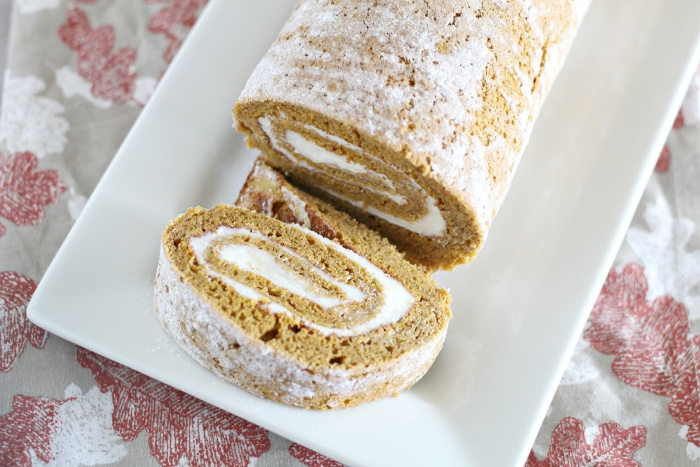
I have been wanting to share this pumpkin roll recipe with you again to give you an update. You may have seen it called a jelly roll cake, or something similar. Mark and I had been married about 10 years when a woman in the neighborhood made one of these for a church party.
Of course, I asked for the recipe; it was so yummy! And I wasn’t the only one who wanted it. What I love about this recipe is that I always have the ingredients in the pantry and cream cheese in the refrigerator.
I have made this recipe for years now whenever fall comes around. It has pumpkin, spices, and cream cheese all wrapped up in one jelly roll! What’s not to love, right?
Do you find yourself drawn to homemade treats at neighborhood functions or church parties? If I have a choice between homemade and store-bought, I usually go for homemade.

Homemade Pumpkin Roll Recipe
Ingredients – Pumpkin Cake
- Eggs: A Great source of protein that helps bind the pumpkin cake together, creating a moist, soft pumpkin roll. Increases browning during the cooking process. Adds a deliciously rich flavor and helps to extend the life of the pumpkin roll.
- Sugar: Used to maintain moisture, creating a softer pumpkin roll, and adding sweetness and flavor.
- 100% Pumpkin Puree (not pie filling): Acts as a sweetener; softens the dough, and adds delicious flavor!
- Lemon Juice: Helps lock in the moisture in the pumpkin roll and adds a slight tartness.
- Flour: Used to stabilize, thicken, and control the cake’s rise; helps hold the pumpkin cake together.
- Cinnamon: Adds a little spice and warmth to the pumpkin roll.
- Ginger (ground): Adds a little spice; more concentrated than fresh ginger.
- Nutmeg: A warm spice that adds a slightly sweet, nutty flavor to the recipe.
- Salt: Enhances the flavors of other ingredients, making the pumpkin roll chewy and strengthening the cake’s protein; it also offsets the taste of sugar.
- Baking Soda: Adds carbon dioxide to the dough, which helps to create a delicious, soft, and chewy pumpkin roll.
Ingredients – Pumpkin Roll Cream Cheese Frosting (Filling)
- Powdered Sugar: Helps to create a smooth consistency; adds sweetness; preferred sugar in baked goods.
- Cream Cheese: Helps thicken the frosting and adds a mild, smooth flavor.
- Butter: Due to the fat content, butter helps to produce a softer cream cheese frosting and enriches the flavor.
- Vanilla Extract: Enhances the flavors of butter, powdered sugar, and cream cheese.
Kitchen Items You May Need:
- Jelly Roll Pan
- A lint-free towel
- Measuring Cups
- Measuring Spoons
Step 1: Beat the Eggs, Add the Sugar
Start by beating your eggs for 5 minutes on high speed with a hand mixer. Gradually add in sugar. Fold in pumpkin and lemon juice.

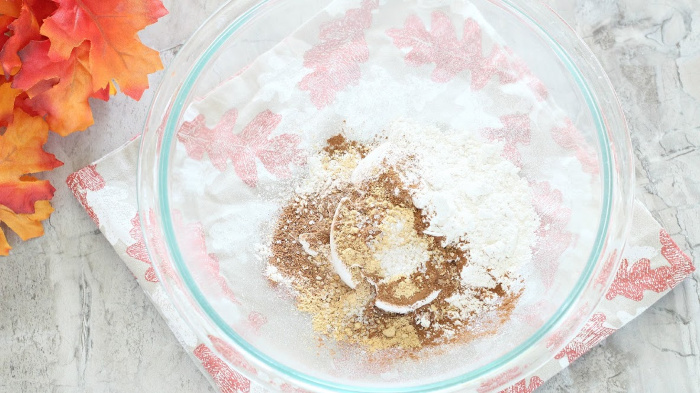
Step 2: Combine the Dry Ingredients
In a separate mixing bowl, whisk together all of your dry ingredients, except your powdered sugar.
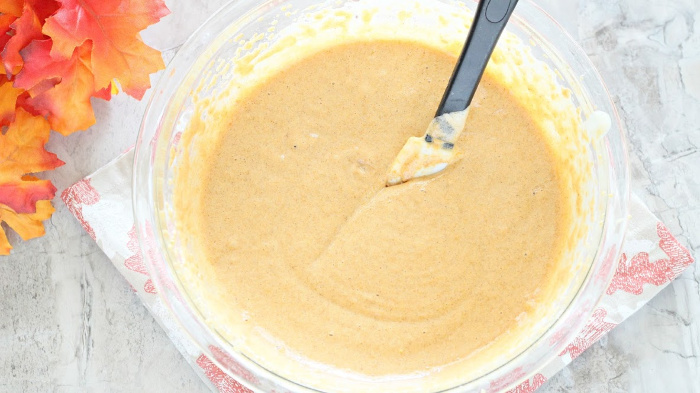
Step 3: Combine the Wet with the Dry Ingredients
Fold your pumpkin mixture into your flour mixture until well combined.
Step 4: Pour the Batter Onto the Prepared Pan
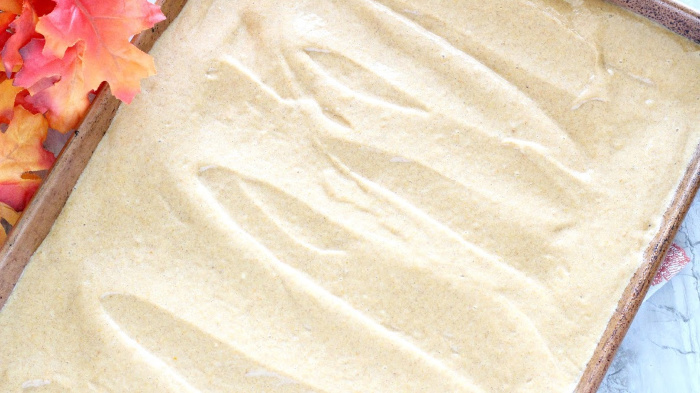
Line a large baking sheet (16 x 11 x 1 is ideal) with wax paper and grease it well. Pour batter onto the baking sheet and smooth out evenly. Bake in the oven at 375°F (190°C) for 12 minutes until baked through. Jelly Roll Cookie Sheet
Step Five: Prepare Baked Cake
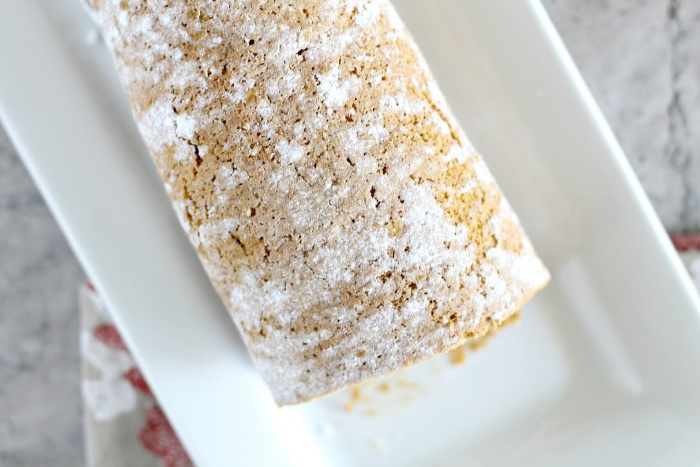
Lay a clean, dry towel, then cover it with powdered sugar to keep the cake from sticking to it. Lay the baked cake out on the towel, parchment paper facing up. Roll the cake and towel together, then let cool completely. Waxed Paper
Step Six: Spread the Cream Cheese
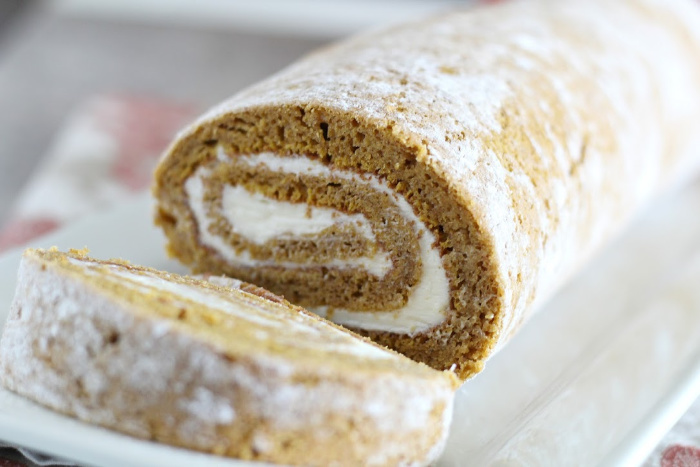
Once the cake is cooled, roll it back out and remove the parchment paper. Spread the cream cheese mixture (recipe below) evenly on the cake. Roll it back up tightly. Cut ends off evenly. Refrigerate for half an hour (wrapped in plastic wrap). Slice the pumpkin roll into the desired number of slices, serve, and enjoy!
Pumpkin Roll Recipe

Pumpkin Roll by Food Storage Moms
Servings 8 people
Ingredients
- 3 eggs
- 1 cup sugar
- 2/3 cup 100% pumpkin puree (not pie)
- 1 teaspoon lemon juice
- 3/4 cup flour
- 2 teaspoons cinnamon
- 1 teaspoon ground ginger
- 1 teaspoon nutmeg
- 1 teaspoon salt
- 1 teaspoon baking soda
Pumpkin Roll Cream Cheese Frosting (Filling)
- 1 cup powdered sugar
- 8 ounces cream cheese (softened)
- 4 tablespoons butter (softened)
- 1/2 teaspoon vanilla extract
Instructions
Pumpkin Roll
- Start by beating your eggs for 5 minutes with a hand mixer, set to high. Gradually add in sugar.
- Fold in pumpkin puree and lemon juice. In a separate mixing bowl, whisk together all of your dry ingredients, except your powdered sugar.
- Then fold your pumpkin mixture into your flour mixture until well combined.
- Line a large baking sheet (15x10x1 is best) with parchment paper and grease the paper well. Pour the batter onto the baking sheet and smooth it out evenly.
- Bake in the oven at 375°F (190°C) for 12 minutes until baked through. Lay a clean, dry kitchen towel and sprinkle/dust it with powdered sugar to keep the pumpkin cake from sticking to the towel.
- Lay the baked pumpkin cake out on the towel, parchment paper facing up. Roll the pumpkin cake and towel up together and let it cool completely on a wire rack.
Pumpkin Roll Cream Cheese Frosting (Filling)
- In a mixing bowl or bowl of a stand mixer, mix your one cup of powdered sugar, cream cheese (softened), butter (softened), and vanilla extract.
- Beat them until completely smooth. Once the pumpkin cake is cooled, roll it back out and remove the parchment paper.
- Spread the cream cheese mixture evenly on the cake. Roll it back up tightly to create a pumpkin roll. Cut the ends off evenly. Refrigerate for half an hour (wrapped in plastic wrap).
- Slice the pumpkin roll into desired slices, serve, and enjoy!
What Is A Pumpkin Roll?
If you have never heard of a pumpkin roll, I get it. It’s basically a sheet cake made on a cookie sheet. The size I used was the typical size: 18 inches by 13 inches by 1 inch.
It’s thinner than a cake made in a 9-by-13-inch pan. The thicker-sized pumpkin roll would be too hard to roll.
This classic pumpkin roll is filled with a cream cheese filling, or in some cases, just whipped cream. I prefer the cream cheese filling because it can be kept cold in the refrigerator, allowing me to serve it the next day or the day after. The whipping cream-type cake would have to be served immediately, or it would become a soggy mess.
Why does my pumpkin roll crack?
I always recommend rolling the warm cake in a towel immediately after it is baked. It is more likely to crack if you try to roll the cake while it is still cool without using a towel. The moisture and heat will keep the cake crack-free. Just giving you a heads-up here.
What is the difference between pumpkin puree and pumpkin pie filling?
Although pumpkin puree and pumpkin pie filling are both made with pumpkin puree, the pie filling has additional flavors, such as sugar, cloves, cinnamon, and nutmeg. The pumpkin puree best used in this recipe is 100% pure pumpkin, without added sugar or spices.
Could I use allspice or pumpkin pie spice in this pumpkin roll recipe?
Yes, you can substitute the spices with your favorite ones. I prefer simple, or should I say subtle, flavors when it comes to pumpkin recipes.
Could I use a jelly roll pan for this pumpkin roll recipe?
A jelly roll pan is a smaller version of a “cookie sheet”, measuring approximately 15 by 10 inches. A half-sheet cookie sheet is approximately 17-18 inches by 12 inches. The small jelly roll pan will make the cake a bit thicker and easier to roll compared to a thinner, larger cake.
What is the best way to store this pumpkin roll?
I highly recommend refrigerating the pumpkin roll for at least 1/2 hour before serving. This will cause the pumpkin roll to set slightly, making it easier to slice. This pumpkin roll will last in the fridge for 5 days and freeze well for up to 3 months.
Would this pumpkin roll taste good if I added a nut to the recipe?
I really love this pumpkin roll recipe made as is! If you’re interested in adding a nut to this recipe, I would recommend adding crushed pecans or walnuts. This recipe is very versatile, which I love!
What is the secret to rolling a pumpkin roll?
The cake must be warm so it will roll more easily on the towel. It’s easier than you may think. The instructions in the recipe card will help you learn the secrets.
When Did Cake Rolls or Jelly Rolls Start?
Cake rolls have been delighting home bakers for well over a century. Rolled sponge cakes began appearing in American and European cookbooks in the middle of the 1800s, often called jelly cakes or jelly rolls because they were simply spread with fruit jelly and rolled up while still warm. Across the ocean, the British version became known as the Swiss roll, and the French created the beautiful Bûche de Noël, a chocolate rolled cake decorated to look like a Yule log for Christmas. The pumpkin roll as we know it today is a much newer favorite. It rose to fame in the 1970s and 1980s, helped along by recipes printed on canned pumpkin labels and shared at church potlucks, bake sales, and family gatherings. Before long, a pumpkin roll filled with sweet cream cheese frosting became a treasured fall tradition in kitchens all across the country, and it still is today.
Interested in some additional delicious pumpkin recipes? Here are a few more to try:
- Easy-To-Make Pumpkin Dinner Rolls
- Pumpkin Muffin Recipe-Only Two Ingredients
- Pumpkin Chocolate Chip Bars
- Pumpkin Cookies-A Family Favorite
- Pumpkin Pecan Chocolate Chip Cookie Recipe
- 20 Pumpkin Desserts For Fall
- How To Make The Best Homemade Pumpkin Soup
Final Word
Can you believe how easy this pumpkin roll is to make? Please let me know if you have ever made a jelly roll cake. I have seen them in different flavors and served at various parties.
Life is so good when you have a homemade dessert, right? Thanks for being prepared for the unexpected. May God bless this world, Linda
The post Homemade Pumpkin Roll Recipe appeared first on Food Storage Moms.
from Food Storage Moms
How to Build and Sustain a Fire in the Rain
Estimated reading time: 3 minutes
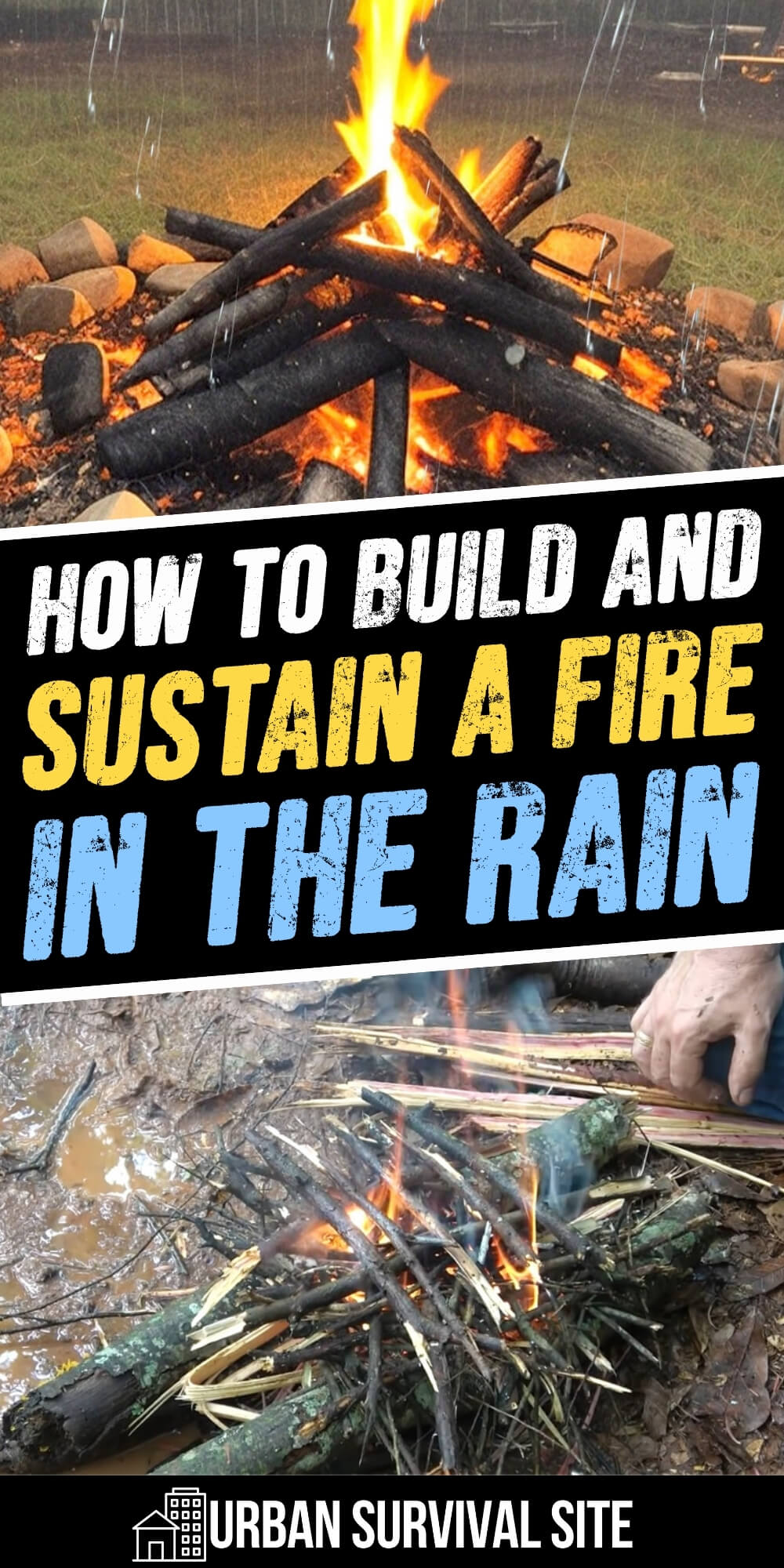
Building and sustaining a fire is one of the most valuable survival skills, but it's challenging when you have to get one going in cold and wet conditions. Things become even worse when it’s actively raining.
The good news is that it can be done. As this video by Corporals Corner explains, you can build and sustain a fire in the rain. Here's a brief summary of his advice…
Choose The Right Location
You need to be very selective about your location because otherwise, the rain will quickly douse it out. Light rain should be okay, but for pouring rain conditions, this is especially important.
Therefore, look for a place where the flow of rain will be stopped or hindered. Examples include under boughs from trees, or better yet, you can set up a tarp or emergency blanket over the fire by suspending it between two trees.
Find Dry Kindling
While you may get lucky and find some dry moss or tinder underneath bushes or trees, your best bet is to create your own. Find a stick or pole, and using a knife or sharp edge, shave it down to the dryer insides. These will convert a spark into a flame more easily.
Also, it’s wise to include kindling or other flammable materials in your survival kit. Cotton balls dipped in Vaseline are very flammable, as is hand sanitizer.
Get Your Fire Up From The Ground
Set multiple sticks and poles on the ground to elevate your fire from the soggy and moist ground. Even if the sticks are themselves wet, this will be better than nothing at all.
Specifically, set thick sticks on the ground about six inches apart from one another so they run parallel. Then place four more thinner sticks across the base between the two sticks, and keep them around a half-inch to an inch apart from one another. Then continue to place more sticks to create a small platform.
Another option is to dig further into the earth until you reach dryer ground. If anything, this will work better than the above method of creating a small wooden platform.
Build A Teepee Fire
If possible, try to set up your fire in the form of a teepee. Take small sticks and place them upright so they rest against one another. Then place your tinder or kindling inside the teepee and light it up. This will be a much more effective method than just getting your fire started out in the open.
Keep in mind that most fires in the rain will be smaller than ones outside of the rain, and that’s okay. What matters is that you get one going. It may be difficult, but with the above method, it can be done.
Collect Dry Wood And Fuel As You Travel
This is especially important if you see storm clouds in the sky. Collect dry fuel while you still have time and cover it up in a blanket or tarp to keep it dry. This can be a lifesaver later on.
For more tips on building a fire in the rain and to see these methods demonstrated, watch the video by Corporals Corner below.
Originally published on Homestead Survival Site.
You May Also Like:
The post How to Build and Sustain a Fire in the Rain appeared first on Urban Survival Site.
from Urban Survival Site
Subscribe to:
Posts (Atom)