Will wheat be in short supply this year? My gut is telling me yes. My research backs it. If you’ve been watching grocery prices creep up, you aren’t imagining things. Wheat, one of the most basic ingredients in our kitchens, is facing a genuinely tight year, and it’s worth understanding why before you decide how to prepare your own pantry.
Types Of Wheat
- Hard White Wheat: This is the only kind I buy. It makes soft and fluffy bread. It’s lighter in color and has a moderate protein content.
- Hard Red Wheat: This is what I was raised on; I called the loaves bricks. Hard red wheat has a stronger flavor, a heavier bread texture, and higher protein content.
- Soft White Wheat: This wheat is designed primarily for pastries; it makes pastries flaky and light. This wheat is shorter and plumper and works great for making cakes, cookies, sweet breads, and muffins. It has more starch, less gluten, and lower protein content compared to hard white wheat.
Wheat Grinders
Will Wheat Be in Short Supply This Year?
Why wheat supplies are tightening
The 2026 wheat harvest in the United States is shaping up to be one of the smallest in generations. This year’s Hard Red Winter wheat crop, the variety that makes up most of America’s wheat production and exports, is forecast to be the smallest since the 1957 to 1958 growing season. Major wheat-producing states across the Great Plains have been hit by a severe drought, which has lowered yields and led farmers to abandon more acres than usual.
The numbers get more striking when you look at planted acreage. Total wheat planted nationwide dropped to 42.7 million acres in 2026, six percent below the previous year, and the harvested area is expected to fall to around 32 million acres, the lowest level in about a century and a half. Texas alone is expected to plant close to 4 million fewer acres than last year, with Oklahoma and Kansas not far behind.
The reasons behind this are layered. Consecutive years of heat, drought, and disease pressure have eroded yields, and rising fuel and fertilizer costs have squeezed farmers financially. Wheat experts don’t expect a quick rebound either, with acreage likely to remain at these record-low levels or shrink further into 2027.
National Supply
National supply estimates confirm the tighter picture. Total wheat production for the 2026 to 2027 marketing year is projected at 1,561 million bushels, down 424 million bushels from the prior year, and projected ending stocks are 18 percent lower than last year. The projected season average farm price for wheat has climbed to 6.50 dollars per bushel, a full 1.50 dollars higher than the year before.
Globally
Globally, the picture is a bit more reassuring, but not by much. Global wheat production for 2026 is projected at 806.5 million tonnes, down 4.3 percent from last year. World wheat stocks are still expected to grow slightly by the end of the season, so this isn’t a story of empty grain silos worldwide. It is a story of a smaller harvest, higher prices, and a supply chain with far less cushion than in years past.
For families who care about being prepared, that combination of smaller harvests, rising farm prices, and reduced stockpiles is exactly the kind of signal worth paying attention to. Wheat prices tend to work their way into flour costs and bakery products over time, even if the full effect doesn’t reach the grocery shelf for a while.
Why it’s critical to store wheat now
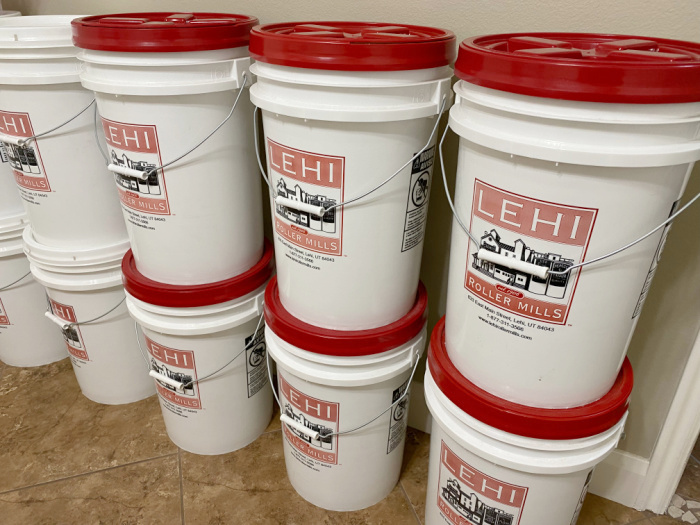
Wheat is one of the most stable foods you can store. Properly sealed in food-grade buckets with oxygen absorbers, whole wheat berries can last twenty years or longer. Unlike flour, which loses freshness and nutrition over time because the wheat germ has already been exposed to air, whole wheat berries protect the grain until you’re ready to grind it.
Storing wheat now, while it’s still available and before prices climb further, means your family will have a reliable source of flour no matter what happens with future harvests. A little bit set aside every month adds up quickly, and wheat takes up relatively little space for the amount of food value it provides.
Why a wheat grinder belongs in your kitchen
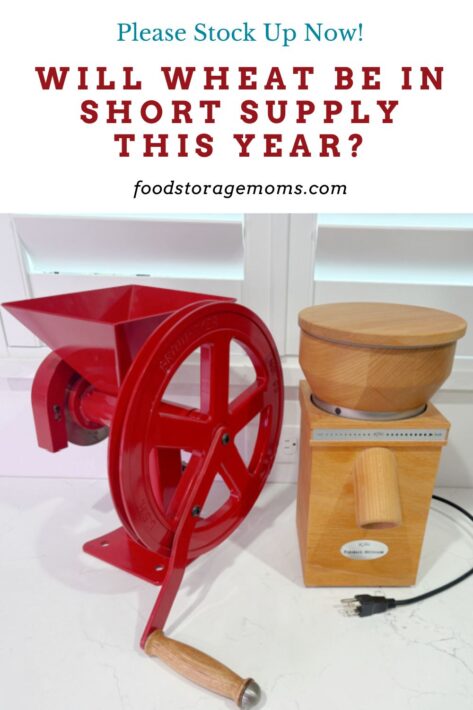
Storing wheat only helps if you can turn it into flour when you need it. A good wheat grinder, whether it’s a hand crank model for power outages or an electric mill for everyday baking, is what makes your stored wheat usable. Freshly ground flour also has more nutrition and flavor than flour that’s been sitting on a store shelf for months, so a grinder isn’t just a preparedness tool. It’s a way to improve the food you make every day.
If you already store wheat but don’t own a grinder, now is a good time to close that gap. A pantry full of wheat berries with no way to grind them is a bit like storing gasoline with no car to put it in.
Why knowing how to make bread matters
Grinding your own flour is only half the equation. If your family doesn’t know how to turn that flour into bread, biscuits, or tortillas, you’re still missing a key skill. Bread baking is a skill that improves with practice, and it’s much better to learn it now, in a calm kitchen with time to experiment, than to try to learn it for the first time during an emergency.
This is exactly why I want to share some of my own tried-and-true bread recipes with you. Once you have wheat stored and a grinder ready to go, the final piece is knowing what to do with the flour once it comes out of the mill. Stay tuned, because I’ll be walking you through my favorite recipes so you can practice now and feel confident later.
My No-Fail Whole Wheat Bread Recipe
You MUST use fresh ingredients, or your bread may not turn out the way you want.
Freeze The Following
Freshly Ground Whole Wheat Berries: Bread Bags Whole Wheat Flour for Freezer

Whole Wheat Bread For Two
Ingredients
- 1 1/2 cups warm water
- 2 tablespoons olive oil
- 1/4 cup or so of honey
- 1/2 tablespoon salt
- 1/2 tablespoon SAF instant yeast
- 1/2 tablespoon dough enhancer
- 1/2 tablespoon wheat gluten
- 1/2 tablespoon lemon juice
- 3-1/2 to 4 cups whole wheat flour
Instructions
- Start adding the ingredients in the order shown above with one exception into your mixing bowl…start with 2 cups of flour and slowly add more flour until the dough pulls away from the sides of the bowl. I use a Bosch Mixer.
- I grew up making bread without a mixer. It can be done by hand. I grew up letting my bread rise twice so I still do that. Old habits are hard to break!
- I mix it for 10 minutes in my Bosch. Cover with greased plastic wrap until it doubles in size.
- Punch down and form dough into two one-pound loaves. I let the dough rise one more time with greased plastic wrap.
- Remove the plastic wrap Bake the bread at 350°F (177°C) for 27-30 minutes. If your pans are larger you will bake your bread longer. You will love making whole-wheat bread, I promise!!
Whole Wheat Pancakes

Whole Wheat Pancakes
Ingredients
- 1-1/2 cups freshly ground hard white wheat
- 1-1/2 cups milk
- 3 tablespoons milk
- 3 tablespoons oil
- 3/4 teaspoon salt
Instructions
- Combine all of the ingredients in a bowl and whisk until smooth. These take a bit longer to cook because of the whole wheat, but it’s worth it, I promise. These are delicious!
Wheat berries are far more versatile than most people realize. Beyond grinding them into flour for bread, they can be cooked whole and added to soups and stews for a hearty, chewy texture. They make a wonderful base for grain salads when boiled until tender and tossed with vegetables and a simple dressing. Sprouted wheat berries can be used in salads or blended into recipes for added nutrition, and cracked wheat berries can be cooked into a warm breakfast cereal similar to oatmeal. Some people even use wheat berries to make homemade wheat sprouts for sandwiches and wraps. Whether you grind them, boil them, sprout them, or crack them, wheat berries offer a simple, affordable way to stretch your food storage into many different meals.
Cooked Wheat Berries

Cooked Whole Wheat Berries
Ingredients
- 1 cup uncooked whole wheat berries, rinse with water in a fine strainer
- 3 cups water
- 1/4 teaspoon salt
Instructions
Three Ways To Cook It
- SLOW COOKER: cook all the ingredients listed above for 8-9 hours on low in a slow cooker.
- STOVE TOP: add the rinsed wheat and salt to three cups of boiling water and cook uncovered on the stove for one hour or until tender.
- PRESSURE COOKER: add all of the ingredients above into your electric pressure cooker and cook on high for 30 minutes. You will use “natural release," let the pressure come down naturally.
Why You Need To Store Wheat For Survival
Final Word
Wheat is facing one of its tightest years in decades, driven by drought, shrinking harvests, and rising costs. That doesn’t mean panic is the answer. It means preparation is the answer. Store your wheat, invest in a good grinder, and learn to bake your own bread. These three steps together give your family real food security, not just for an emergency, but for everyday life. May God bless this world, Linda
Copyright Images: Pancakes From Mother Depositphotos_119341884_S
The post Will Wheat Be in Short Supply This Year? appeared first on Food Storage Moms.
from Food Storage Moms
No comments:
Post a Comment