Submissions     Contact     Advertise     Donate     BlogRoll     Subscribe                         

Monday, October 12, 2026

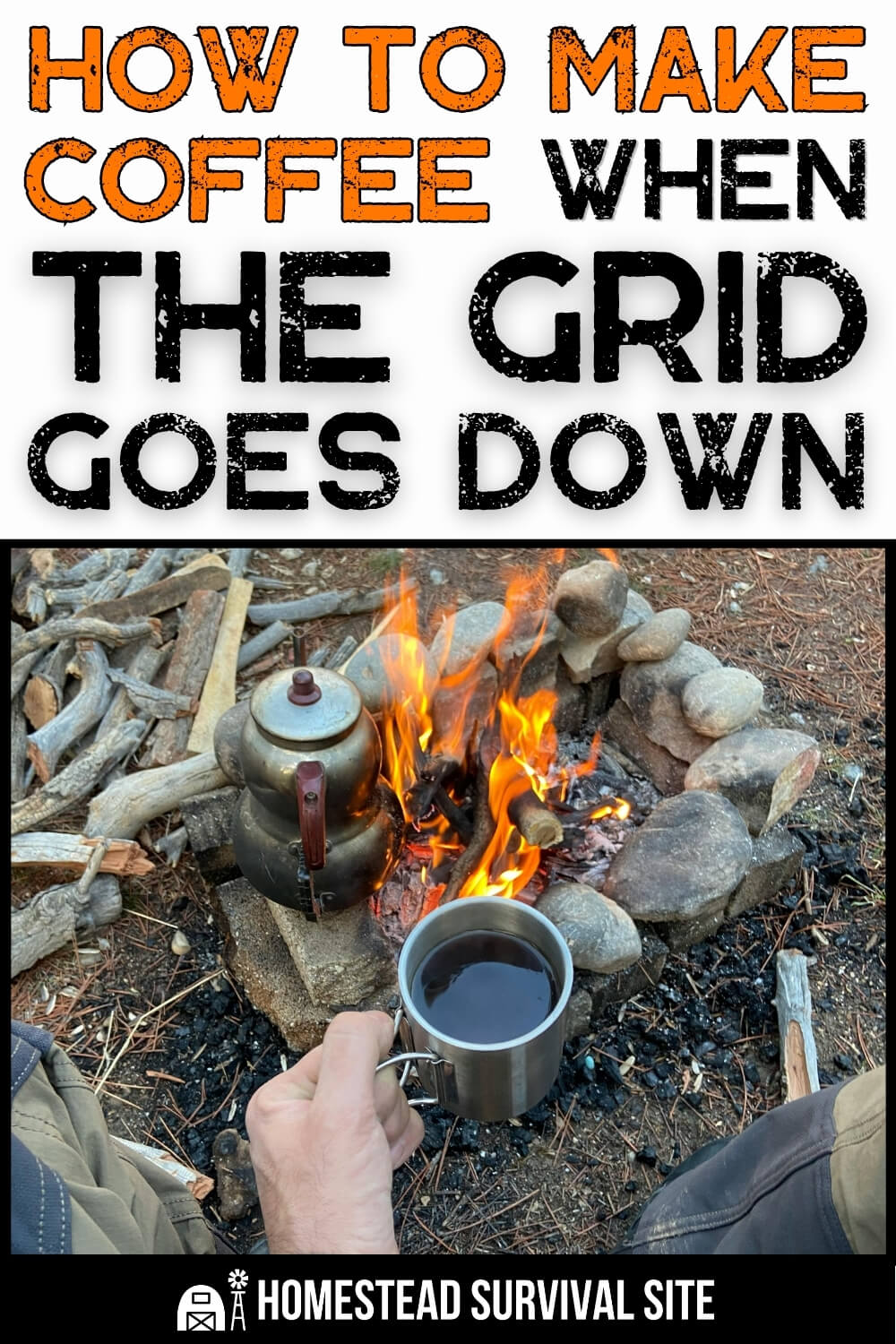
How to Make Coffee When The Grid Goes Down

Estimated reading time: 7 minutes

How to Make Coffee When The Grid Goes Down

Although it is enjoyed throughout the world, coffee has become an essential part of many Americans’ morning routine. Historians trace this affinity back to the time of the Boston Tea Party when many colonists replaced their previous hot beverage of choice – tea – with coffee.

According to a recent survey, 87 percent of American adults consider themselves as devoted coffee drinkers. The study found that only 2 percent of survey respondents hated coffee.

Today, you’d be hard pressed to find a morning commuter train, office meeting, car cupholder, or breakfast table without the presence of coffee. For many of us, a hot mug of coffee gives us a morning pick-me-up and a comforting sense of normalcy.

But in a world that is subject to the increasing frequency of power outages, what can you do when you can’t have your usual cup of joe?

Fortunately, brewing a basic cup of coffee is not a high-tech task. With a little planning and know-how, you can enjoy your favorite beverage when the grid goes down. For most of the options on our list, you will need to begin with hot water.

Without power, you can heat water in a variety of off-grid ways, including a wood stove, fireplace, camp stove, rocket stove, solar kettle, or other non-electric device. Now, on to our coffee-making list.

Want to save this post for later? Click Here to Pin It On Pinterest!

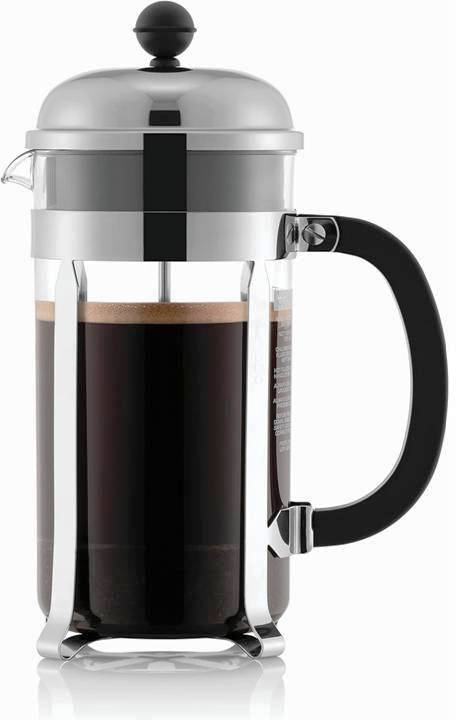
1. French press

FRENCH PRESS

A French Press is a manual coffee brewer made from metal or glass. A French press can come in many different sizes, but they all contain a plunger, spout, lid, rod, spiral plate, handle, mesh filter, frame, cross plate, beaker, and base.

With this device, you press down the coffee and pour hot water over it to get a filtered brew. As you press the plunger, the liquid coffee remains on top near the spout, and the grounds stay at the bottom.

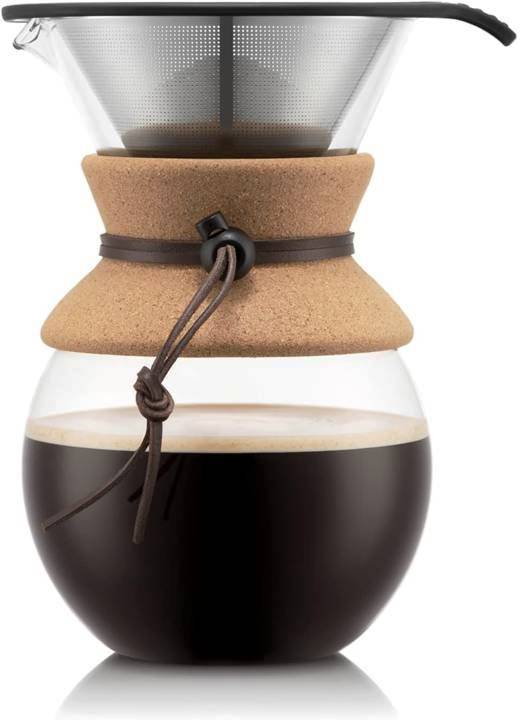
2. Pour over

POUR OVER COFFEE

Another way of making coffee without electricity is to use the pour over method. Some coffee ships use fancy devices, but simplicity works well too. All you really need are hot water, ground coffee, and a filter.

The idea is to slowly pour the water over the coffee grounds, allowing it to drip through the filter into your cup. Many coffee aficionados believe the pour over method enables the grounds the best time to bloom into fully-extracted coffee.

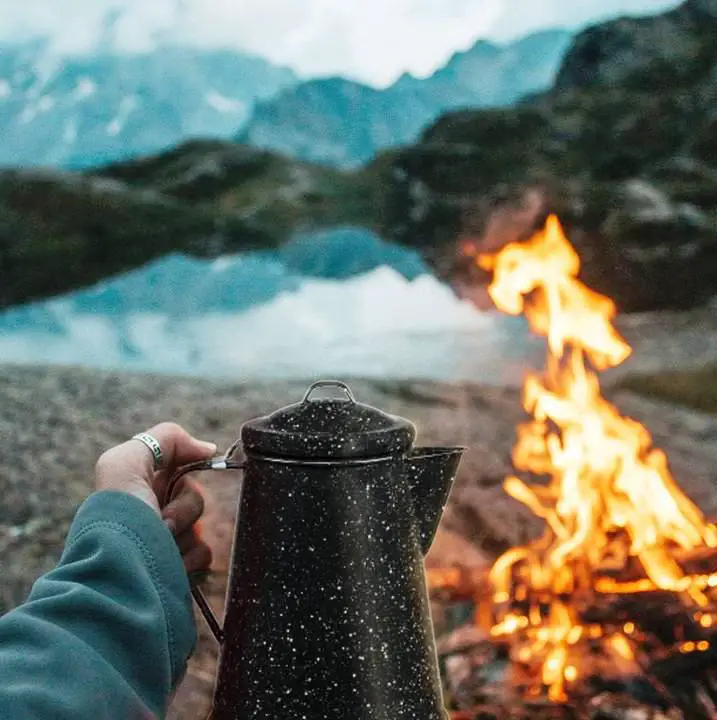
3. Cowboy coffee

COWBOY COFFEE

Cowboy coffee is the term commonly used for making coffee over a campfire. All you do is add coffee grounds to hot water and let it sit in a pot over the fire for a few minutes.

Then, you remove the pot from the heat and allow the mixture to steep, just as you would a cup of tea. Then, you pour the coffee through a strainer or filter and into your mug.

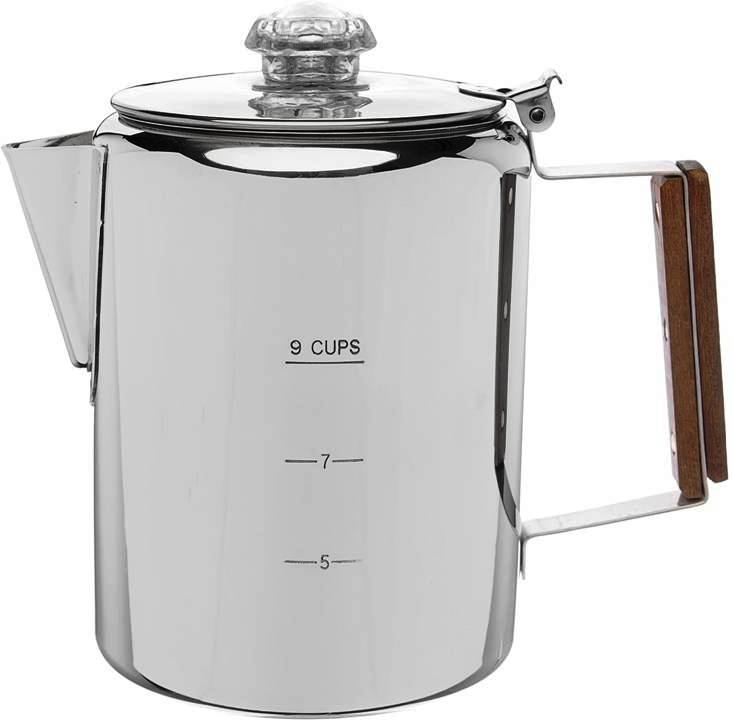
4. Percolator

PERCOLATOR

You can also use a non-electric percolator to make coffee over a campfire or another alternative heat source when the power goes out. As the water boils in this kiln-hardened blue kettle, it moves up a central tube to the top, where it sprays over the grounds.

5. Aeropress

AEROPRESS

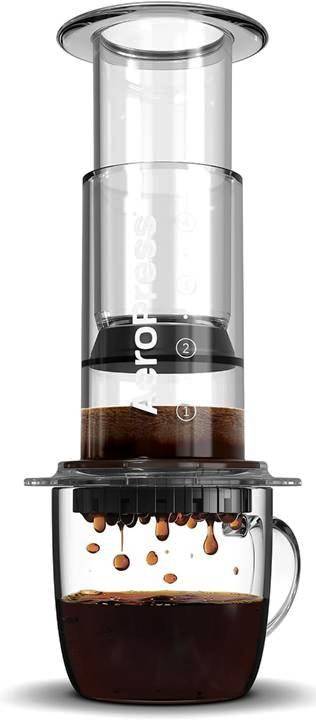
An Aeropress is a coffee brewer that uses pistons to force coffee directly into a mug through a thin filter. You can use an Aeropress in two ways. The standard method involves placing the device on top of a cup, filling it with water and ground coffee, inserting the plunger, and pressing it.

The inverted method involves placing the filled Aeropress upside down on top of the plunger and then flipping it onto the cup to be pressed.

6. Cezve

CEZVE

Using a cezve is a traditional method for brewing coffee that originated in the Middle East. With this device and a heat source, you boil finely-ground coffee in a small pot. Turkish coffee is very strong – here’s how to make it.

7. Battery-operated coffee maker

BATTERY COFFEE MAKER

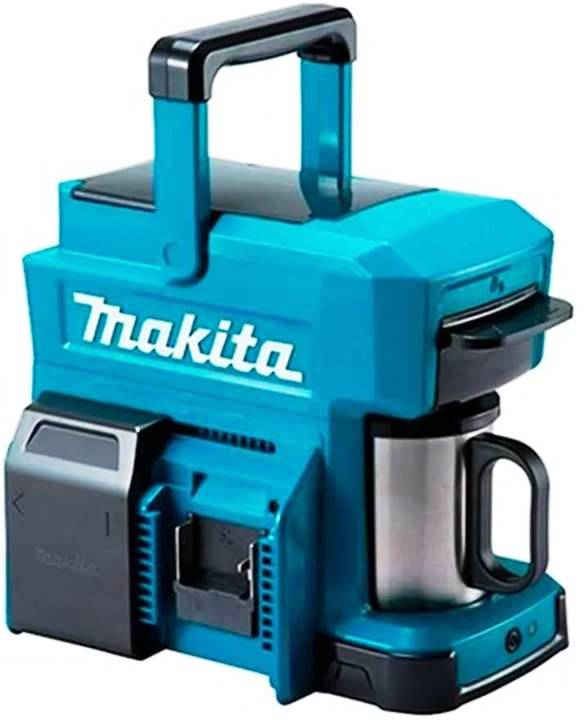
Another option is to purchase a battery-operated coffee maker to use on camping trips and as a backup when the power goes out. You don’t need hot water to use the Makita DCM501Z Coffee Maker. Using a 12V or 18V lithium-ion battery. It does all the work for you.

8. Cold brew

COLD BREW

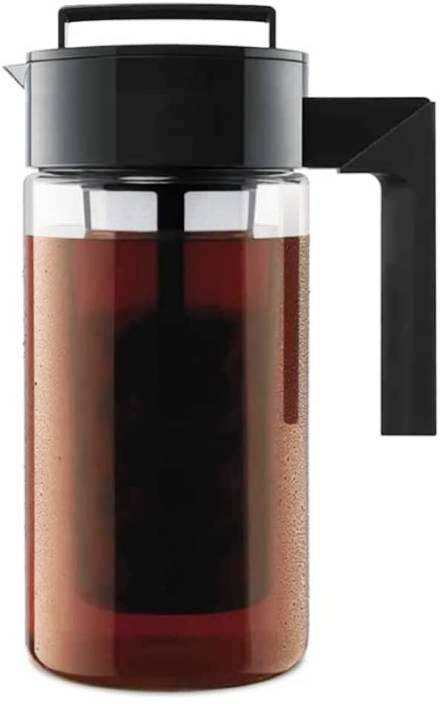
Another way to satisfy your longing for coffee during an extended power outage is to make a cold brew. It takes a while – eight or more hours — but requires no heat and tastes great. Many coffee drinkers believe cold brew has a less bitter taste than coffee made with other methods.

The process is pretty simple. Place coarsely-ground coffee in a jar of cold water and allow it to sit covered for a minimum of eight hours. Strain out the grounds and then drink it as is or heat it if possible.

Plan Ahead For A Power Outage

If powerful storms are in your forecast, you can add coffee making to your to-do list as you prepare for a potential power outage. Here are some ideas:

A power outage and the factors that cause it are stressful enough. You can help yourself manage the chaos by planning ahead. Although you don’t need coffee to survive, that familiar warm mug in your hands and the jolt of caffeine it offers can help you handle things a lot better.

Like this post? Don't Forget to Pin It On Pinterest!

You May Also Like:

The post How to Make Coffee When The Grid Goes Down appeared first on Homestead Survival Site.


from Homestead Survival Site https://ift.tt/wcN0ARe

Strait of Hormuz: Do We Need to Be Concerned?

Strait of Hormuz

Strait of Hormuz: Do We Need to Be Concerned? If you’ve been watching the news this year, you’ve probably heard the words “Strait of Hormuz” more times than you can count. Maybe you’ve noticed it at the gas pump or the grocery store before you ever heard it on television. Today I want to explain in plain language what’s going on, why a little strip of water on the other side of the world matters to our families, and what we can do about it without panicking.

Strait of Hormuz with Red

What Is the Strait of Hormuz?

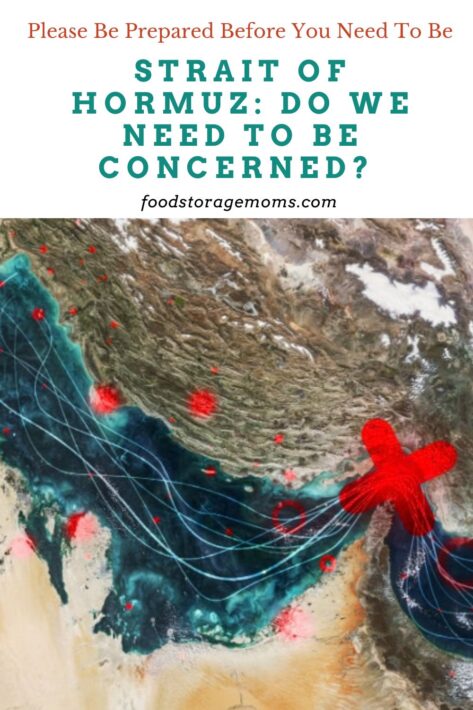
The Strait of Hormuz is a narrow waterway between Iran and Oman. It’s the only way for ships to travel from the Persian Gulf out to the open ocean. At its narrowest point, it’s only about 21 miles wide. That doesn’t sound like much, but an enormous share of the world’s energy travels through it. Before this year’s conflict in Iran, roughly a quarter of the oil shipped by sea worldwide and about 20 percent of the world’s liquefied natural gas passed through the strait. WikipediaWikipedia

Think of it like the one road in and out of a busy town. When that road’s blocked, everything backs up.

What Happened This Year?

Shipping through the strait has been mostly blocked by Iran since February 28, 2026, when the United States and Israel began an air war against Iran. In response, Iran’s Revolutionary Guard warned ships not to pass, attacked and boarded merchant vessels, and placed sea mines in the water. Wikipedia

Since then, there’ve been several rounds of talks, ceasefires, and agreements, followed by setbacks. In June, the United States and Iran signed a memorandum of understanding meant to end the war and reopen the strait. Sadly, it didn’t hold. That interim truce fell apart on July 8 after Iran struck several commercial ships in the strait. WikipediaWikipedia

Where Do Things Stand Right Now?

As of this week, the situation has actually grown more tense. Maritime security sources report that at least 12 oil and gas tankers were attacked around the strait between September 28 and October 5, the most in any single week since the war began. India’s foreign ministry said 12 crew members were hurt when a projectile hit a tanker called On Peace as it passed through. thestarthestar

Very few ships are getting through. One independent tracker reported just 4 ship crossings on October 4, compared with a normal pace of about 85 a day before the crisis. Please keep the sailors and their families in your prayers. Many of them are simply doing their jobs, far from home. straits. Please keep in mind these numbers will change often.

How Does This Affect Our Families?

This is the part that matters most for those of us running households.

Gas prices. When less oil reaches the world market, prices rise based on supply and demand pressures. Brent crude oil climbed above $100 per barrel in early March for the first time in four years, peaking at $126 per barrel. Here at home, AAA reported the national average for regular gas at about $4.41 on October 1, following a record September when the monthly average was $4.33. A year ago, it was about $3.16. That difference adds up quickly for a family with two cars and a busy schedule. Wikipedia

Grocery prices. This is the one I want you to pay close attention to, because it’s easy to miss. The Persian Gulf region produces a large share of the world’s fertilizer. Up to 30 percent of internationally traded fertilizer normally passes through the strait. By late March, urea fertilizer prices had jumped 50 percent. Analysts warned that higher fertilizer costs and shortages during spring planting could reduce corn yields in the United States, which feeds our beef, poultry, and dairy animals, and could push food prices higher into 2027. When farmers pay more to grow food, we eventually pay more to buy it. 2026 Strait of Hormuz crisis +2

Everyday costs. Higher fuel prices touch almost everything, because trucks deliver nearly every item we buy. In March, the OECD projected U.S. inflation of 4.2 percent for 2026, about 1.2 points higher than it had expected before the war. Wikipedia

So, Should We Be Concerned?

My honest answer is this: we should be aware, not afraid. There’s some reassuring news. Some economists point out that today’s economy is less vulnerable to oil shocks than it was in the 1970s, and a July survey of 74 economists by the Wall Street Journal found most still expected the United States to avoid a recession. Nobody knows how long this will last. It could ease quickly with a new agreement, or it could drag on through the winter. That uncertainty is exactly why a prepared family sleeps better at night. Wikipedia

Practical Steps Your Family Can Take Today

Keep your gas tank at least 3/4 full. If prices spike suddenly or supplies get tight, you won’t be stuck. Combine errands and plan your driving for the week to save fuel.

If you store gasoline, do it safely. Use approved containers, add fuel stabilizer, keep it away from your home, and rotate it every few months. Never store more than your local rules allow. Gas Stabilizer

Build your pantry now, a little at a time. Prices on many foods may keep creeping up, so buying a few extra cans each week while prices are still reasonable is smart stewardship. Focus on what your family actually eats.

Stock up on the basics that store well. Rice, beans, oats, flour, pasta, canned meats, canned vegetables, and powdered milk/instant milk are great choices. Remember the rule: store what you eat, and eat what you store.

Plan next year’s garden. If fertilizer and produce prices stay high, a backyard garden becomes even more valuable. Start a compost pile this fall so you have rich soil ready in the spring.

Prepare for winter heating costs. Energy prices affect more than your car. Check your windows and doors for drafts, have warm blankets on hand, and set aside a little extra in your budget for higher utility bills.

Build a small emergency fund. Even a few dollars set aside each week can soften the blow of rising costs.

Avoid panic buying. Steady, thoughtful preparation is always better than rushing to the store when headlines get scary. Panic buying empties shelves for our neighbors and stretches our own budgets thin.

Frequently Asked Questions About the Strait of Hormuz

Is the Strait of Hormuz closed right now? It’s not officially closed to every ship, but attacks and threats have kept most commercial traffic away. Only a handful of ships are crossing each day, compared with the norm.

Why does the Strait of Hormuz affect gas prices in America? Oil is bought and sold on a world market. When a large portion of the world’s oil supply is blocked, prices rise everywhere, including here at home.

Will food prices go up because of the Strait of Hormuz? They may. Higher fuel costs in the trucking industry and fertilizer shortages both raise the cost of growing and shipping food, and some analysts expect effects to continue into 2027.

What is the best way to prepare? Keep your gas tank more full, slowly build a food storage pantry, plan a garden, and set aside some emergency savings.

Fertilizer: Why It’s Important To All Of Us

30 Food Items That You Need Now

Final Word

Events like this remind us why we prepare. We can’t control what happens on the other side of the world, but we can control how ready our own homes are. A stocked pantry, a little savings, and a calm heart go a long way. Take one small step this week, and then another next week. You’ll be amazed at how much peace of mind that brings. May God bless this world, Linda

Sources:
2026 Strait of Hormuz crisis, Wikipedia
Attacks on tankers in Hormuz hit highest of any week, Reuters via The Star
Straits daily brief, October 9, 2026
AAA Gas Prices, October 1, 2026

Copyright Images: Strait of Hormuz AdobeStock_2093994789 By Noor Afzal, Strait of Hormuz with Red AdobeStock_1983460073 By alones

The post Strait of Hormuz: Do We Need to Be Concerned? appeared first on Food Storage Moms.


from Food Storage Moms

Water Bath Canner: How to Choose One, Use It Right, and Keep It Working When the Grid Goes Down

A water bath canner is the cheapest, simplest piece of preservation gear a prepper can own. It turns a summer glut of tomatoes, peaches, and cucumbers into shelf-stable jars that sit in the pantry for a year without power. It also has hard limits, and ignoring them is how people end up with spoiled food or worse.

This guide covers what the canner can and cannot do, how to pick the right one for your stove and your setup, and how to run it safely. It also covers the part most guides skip: keeping your canning going on propane or wood when the electric stove is dead. If you still need the smaller tools like jar lifters and funnels, our canning supplies guide covers those separately.

What a Water Bath Canner Actually Does

A water bath canner holds filled, lidded jars completely submerged in boiling water for a set number of minutes. At sea level that water tops out at 212°F, and no amount of extra boiling pushes it higher. That heat destroys the molds, yeasts, and bacteria that spoil acidic food, which is why NDSU Extension recommends the method for high-acid foods only.

What 212°F will not do is destroy botulinum spores. In acidic food with a pH of 4.6 or lower, those spores cannot grow and produce toxin, so the acid does the job the heat cannot. In low-acid food, the spores survive the bath, and the sealed, oxygen-free jar becomes the perfect place for them to make toxin.

What Goes in a Water Bath Canner

Safe candidates are naturally acidic or properly acidified foods made from a tested recipe. That includes most fruits, jams, jellies, fruit butters, pickles, sauerkraut, and tomatoes with added acid. Tomatoes sit right on the line, so tested recipes call for 2 tablespoons of bottled lemon juice or 1/2 teaspoon of citric acid per quart.

What Never Goes in a Water Bath Canner

Plain vegetables, meat, poultry, fish, beans, and broth are low-acid and must be pressure canned. The CDC states plainly that a boiling water canner will not protect against botulism in low-acid food, and that home-canned vegetables are the most common cause of botulism outbreaks in the United States. You will still hear that grandma water-bathed green beans for three hours, but extra time does not raise the temperature, which is the whole problem.

If you want to put up meat, beans, or plain vegetables, you need a pressure canner, and our guide to pressure canning hamburger meat walks through that process. The water bath canner is the tool for everything acidic.

Anatomy of a Water Bath Canner

Strip away the marketing and a water bath canner is three parts: a deep pot, a fitted lid, and a removable rack. The rack keeps jars off the hot bottom and lets boiling water circulate underneath, which prevents breakage and uneven heating. Most models use a wire rack with handles that hook over the rim, so you can load jars above the water and lower them all at once.

According to the National Center for Home Food Preservation, most canners are aluminum or porcelain-coated steel, with a few stainless models on the market. The pot must be deep enough to keep at least 1 inch of briskly boiling water over the jar tops, and 2 inches for processes longer than 30 minutes. That depth requirement, not the quart rating stamped on the box, decides whether a pot can work as a canner.

How to Choose the Right Water Bath Canner

Size and Jar Capacity

The standard full-size canner holds about 21 quarts of liquid, which fits 7 quart jars or about 9 pint jars per load. That is the right size for anyone canning garden-scale batches of tomatoes or applesauce. Smaller 12 to 16 quart canners are lighter and heat faster, but many cannot fit quart jars with enough water over the top.

Before you buy, do the math with the tallest jar you plan to use. A quart jar stands roughly 7 inches tall, so you need about 11 inches of inside depth to fit the rack, the jar, 2 inches of water cover, and headroom so the boil does not slop over. Measure inside depth yourself if the listing does not give it.

Material: Enamel, Aluminum, or Stainless

Porcelain enamel on steel is the classic speckled canner your grandmother used. It is cheap and heats fast, but the enamel can chip, and exposed steel will rust. Aluminum is light and heats evenly, which is why it shows up in most steam canners and many pressure canners.

Stainless steel costs more, lasts longest, and is the material you want if you cook on induction. Look for a thick, flat, clad bottom, since thin stainless develops hot spots. For a prepper planning decades of use, stainless is the buy-once option.

Match the Canner to Your Stove

This is where most first-time buyers get burned. Clemson Extension advises that on an electric stove the canner should have a flat bottom and be no more than 4 inches wider than the burner, so it never overhangs the element by more than 2 inches on any side. Ridged or uneven bottoms are fine on gas but heat poorly on electric coils and smooth tops.

Glass and ceramic cooktops call for extra caution. Some range makers limit canner size on these surfaces and some advise against canning on them at all, so check your range manual before you buy anything. Induction ranges need a magnetic base, which rules out aluminum and any enamel canner not specifically labeled induction-ready.

Can You Use a Stockpot Instead?

Yes, if it passes the depth test and you add a rack. Any large stockpot that holds your jars upright with 1 to 2 inches of water above them, plus room to boil, does the same job as a purpose-built canner. You can buy a stand-alone canning rack or use a round cake rack, but jars must never sit directly on the pot floor.

A Pressure Canner That Doubles as a Water Bath Canner

Many pressure canners can also run as a water bath canner, which saves money and storage space. Presto’s own instructions, distributed by WSU Extension, say to remove the overpressure plug and pressure regulator, lock the lid, and process at a gentle boil. Their chart shows the current 23-quart models handle quart, pint, and half-pint jars in boiling water mode, while the 16-quart models skip quarts.

For a prepper building a kit from scratch, this is the strongest argument for skipping a dedicated water bath canner. One pot covers both acidic and low-acid foods. The tradeoff is weight and the fact that you cannot run both processes at the same time.

The Steam Canner Alternative

An atmospheric steam canner is a shallow base with a tall domed lid that processes jars in steam instead of submerging them. Research from the University of Wisconsin found it safe for high-acid foods using tested boiling water recipes and times, and it uses only about 2 quarts of water versus 16 or more in a traditional canner. In a grid-down situation where every gallon counts, that difference matters.

The rules are strict, though. Start timing only after a full 6 to 8 inch column of steam vents steadily, never open the canner to add water, and cap processing at 45 minutes including altitude adjustments. UW tested only two designs, a Back to Basics model and a Victorio model, and does not recommend converting a regular canner into a steam canner.

Water Bath Canners Worth Buying

These picks cover different stoves and situations, and none of them repeat the canners in our supplies roundup. Ask a Prepper may earn a commission on purchases made through these links at no extra cost to you. Prices and stock change often, so check the listing before you buy.

Granite Ware 21.5-Quart Enamel Canner (Best Budget Classic)

The Granite Ware 21.5-Quart Water Bath Canner with Rack is the speckled black pot most home canners learned on, and it is still one of the cheapest full-size options available. It holds 7 quart jars or 9 pints and comes with a chromed steel rack whose handles rest on the rim. It works on gas and coil electric, but the maker does not recommend it for glass cooktops.

Victorio VKP1130 Stainless Multi-Use Canner (Best for Glass-Top and Induction)

If you cook on glass or induction, the Victorio VKP1130 Stainless Steel Multi-Use Canner solves the stove problem with a flat clad bottom rated for all cooktops. The 20-quart pot holds 7 quart jars, and its glass lid has a built-in temperature indicator with elevation zones. Its double-sided rack lets it run as a steam canner too, but UW’s research tested Victorio’s dedicated steam canner rather than this design, so treat it as a water bath canner first.

Presto 01781 23-Quart Pressure Canner (Best Two-in-One)

The Presto 01781 23-Quart Pressure Canner is the pick for preppers who want one pot that does everything. It pressure cans low-acid foods and, per Presto’s chart, doubles as a boiling water canner for quart, pint, and half-pint jars. It works on regular and smooth-top ranges, but Presto rates it for burners of 12,000 BTUs or less, which matters if you plan to can outdoors.

Victorio VKP1054 Aluminum Steam Canner (Best for Water-Scarce Setups)

The Victorio Aluminum Steam Canner is the lightest and most water-efficient option on this list. It needs only a couple of quarts of water, holds 7 quart or 8 pint jars, and has a lid gauge with elevation zones that tells you when to start timing. Its base is not flat, so it suits gas burners better than glass tops, and like any steam canner it is limited to high-acid recipes processed for 45 minutes or less.

How to Use a Water Bath Canner, Step by Step

The procedure below follows the NCHFP boiling water canner method. Read your tested recipe all the way through before you start, since it sets the jar size, headspace, and processing time.

  1. Set the rack in the canner and fill it about halfway with clean water, enough that a load of pint jars ends up with 1 to 2 inches of cover.
  2. Preheat the water to about 140°F for raw-packed food or 180°F for hot-packed food while you prepare the recipe.
  3. Fill the jars, wipe the rims, apply lids and bands, and load each jar upright using a jar lifter gripped below the band.
  4. Add boiling water, pouring around the jars rather than onto them, until the tops are covered by at least 1 inch, or 2 inches for processes over 30 minutes.
  5. Cover the canner, turn the heat to high, and start the timer only once the water reaches a full, rolling boil.
  6. Lower the heat if you like, but hold a gentle, complete boil with the lid on for the entire processing time.
  7. If the boil ever stops, bring it back to a vigorous boil and restart the full processing time from zero.
  8. When time is up, turn off the heat, remove the lid, and wait 5 minutes before lifting the jars out.
  9. Set the jars upright on a towel or rack with an inch of space between them, away from drafts, and leave them alone for 12 to 24 hours.
  10. Check the seals, remove the bands, refrigerate any jar that did not seal, and label and store the rest in a cool, dark place.

Adjust for Altitude

Water boils at a lower temperature as elevation rises, so processing times go up to compensate. NCHFP warns that food may spoil if you skip the added time above 1,000 feet. Their peach example shows the swing: hot-packed quarts need 25 minutes up to 1,000 feet, 30 minutes up to 3,000 feet, 35 minutes up to 6,000 feet, and 40 minutes above that.

Always take processing times from a current tested source such as the USDA Complete Guide to Home Canning, which lists elevation adjustments for every product. Our apple butter canning guide follows those tables. Old family recipe cards rarely include altitude adjustments, and many predate current safety research.

Water Bath Canning Mistakes That Ruin Batches

Most failures trace back to a short list of shortcuts. Avoid these and your seal rate and food safety both improve fast.

  • Starting the clock too early. The timer starts at a full rolling boil, not when you load the jars or see the first bubbles.
  • Letting the water level drop. Jars poking above the surface are underprocessed, so keep a kettle of boiling water ready for top-ups.
  • Using methods that are not canning. NCHFP lists open-kettle canning and processing jars in the oven, microwave, or dishwasher as practices that do not prevent spoilage.
  • Overhanging the burner. A canner that extends far past the burner heats unevenly, and jars near the edge get less heat than jars in the middle.
  • Shocking hot jars. Setting jars on cold stone or in a draft can crack them, and tightening bands or pressing lids while they cool can break the seal.
  • Trusting the seal alone. A sealed lid proves a vacuum formed, not that the food was processed correctly, and the CDC’s rule for leaking, bulging, spurting, moldy, or off-smelling jars is to throw them out without tasting.

If you want the history behind some of these shortcuts, our breakdown of Amish canning myths covers where the old methods came from and why the rules changed.

Running a Water Bath Canner When the Grid Goes Down

Your canner does not care where the heat comes from, as long as it holds a steady, full boil for the whole process. That makes the water bath canner one of the most grid-independent tools in a prepper’s kitchen. The challenge is controlling the heat source, not the canner.

Propane Burners and Camp Stoves

Clemson Extension’s outdoor canning guidance recommends keeping a propane burner at 12,000 BTUs or lower when running a water bath canner, to avoid damaging it. At that rate, a standard 20-pound tank can run a single burner for up to 35 hours, which covers a heavy canning season. The burner also has to support a fully loaded canner safely, so skip flimsy backpacking stoves.

Wind is the hidden enemy outdoors. It stretches the time to reach a boil, knocks the flame down mid-process, and hits hot jars with cold air, so set up a three-sided windbreak or work under a covered porch or carport. Clemson puts the ideal outdoor canning temperature around 75°F and warns that cold air raises the risk of cracked jars.

Wood Stoves and Cookstoves

A wood cookstove can run a canner, but holding a constant boil takes attention. Get the firebox hot and steady before you load jars, keep split, dry hardwood within reach, and keep a kettle of boiling water on the back of the stove for top-ups. If the boil drops at any point, the rule does not change: bring it back and restart the timer.

Plan for Water

A full-size canner swallows several gallons of water per load, and in a grid-down event that water comes out of your storage. Reuse the canner water for the next load the same day, then use it for cleaning or the garden once it cools. If water is your bottleneck, a steam canner cuts the demand to a couple of quarts per batch.

The tradeoff is the 45-minute processing cap. University of Missouri Extension points out that whole tomatoes packed in water need 85 minutes in a boiling water canner at low elevation, so long-process foods still belong in the full water bath.

Caring for and Storing Your Canner

Dry the canner completely after each session, especially the rack, which rusts first on cheaper models. Hard water leaves a white mineral film that you can remove by simmering a splash of white vinegar in the pot. Check enamel canners for chips every season, since bare steel will rust and eventually leak.

For off-season storage, extension specialists recommend putting crumpled paper inside the clean, dry canner and setting the lid upside down rather than sealing it shut. That lets air move through and prevents stale odors. Store it where you can reach it, because a canner buried behind holiday decorations is a canner you will not use when the harvest hits.

When the Power Goes Out, Will You Still Know How to Feed Your Family?

A water bath canner is just one piece of the puzzle. Knowing how to preserve food without electricity is valuable, but true self-sufficiency means having the skills to grow, preserve, prepare, and protect what your family needs, even when modern conveniences disappear.

That’s where Lost Skills of Independence comes in.

This practical guide brings back the forgotten knowledge that helped previous generations survive without relying on supermarkets, modern technology, or a constant supply of electricity.

Discover traditional skills that can help you:

  • Preserve your harvest and build a reliable pantry using time-tested methods and modern safety practices.
  • Grow more of your own food and make better use of the resources already available around your home.
  • Cook and manage everyday necessities without electricity when the grid goes down.
  • Reduce your dependence on expensive store-bought products by learning practical DIY skills.
  • Become more resourceful and prepared for shortages, emergencies, and unexpected disruptions.

The best time to learn these skills isn’t when the shelves are empty or the lights go out. It’s right now, while you still have time to practice.

👉 Discover Lost Skills of Independence and Start Reclaiming Your Self-Sufficiency!

Because real independence isn’t about how much you stockpile. It’s about how much you know how to do for yourself.

The Bottom Line

A water bath canner is not complicated, but it is unforgiving about the rules. Use it only for acidic foods, follow a tested recipe, adjust for altitude, and hold a full boil for the whole process. Match the canner to your stove, and plan now for how you will heat it when the power is out.

Get those basics right and one pot will put up hundreds of jars a year of fruit, tomatoes, pickles, and sauces. For a solid first project, try our guide to canning pasta sauce. That is food you grew or bought cheap, sitting on your shelf, ready when the stores are not.


You may also like:

tlw banner What Happens If You Put Raw Meat Over A Dead FireCanning Green Beans – The Complete Guide

Cheap and Easy to Build Root Cellar in Your Own Back Yard (VIDEO)

How to Sterilize Canning Jars – The Complete Guide

Water Bath vs. Pressure Canning

My Grandma’s Method of Canning Eggplant


The post Water Bath Canner: How to Choose One, Use It Right, and Keep It Working When the Grid Goes Down appeared first on Ask a Prepper.


from Ask a Prepper https://ift.tt/2EIYpgZ
Power Outage Preparedness: The First 7 Days

Estimated reading time: 8 minutes

Power Outage Preparedness: The First 7 Days

Summers keep setting new heat records, massive data centers are using ungodly amounts of electricity, and most of the U.S. power grid runs on equipment that hasn't been upgraded in decades. Put those together and it's easy to picture a future where rolling blackouts are a regular part of life in America, the way they already are in many developing countries.

That might sound far-fetched, but for millions of people around the world, unreliable power is simply normal. In parts of South Africa, India, Pakistan, Lebanon, and elsewhere, families plan their days around when the electricity is expected to be on. They get by, but only because they've learned certain skills and keep certain supplies on hand. Most Americans have never had to do either.

I recently came across a YouTube channel called Sketchocalypse. They make really good sketch-style videos about emergency preparedness, and they're aimed at beginners. This video covers how to get through the first seven days of a total blackout. If you're new to prepping, it's a good place to start. You can watch it and read the outline below.

Day 1: The Denial Phase

On the first day, most people assume power will be back in a few hours. That's a dangerous assumption. A total blackout doesn't just turn off your lights. Water pumps, sewage systems, gas stations, and refrigeration can all stop working. The problems don't show up right away, but they're already building.

Fill Every Container You Have With Water

Stop worrying and start moving. Fill your bathtub, pots, buckets, pitchers, and anything else that holds liquid. Once pumping stations lose power, municipal water pressure can drop within hours, and after that your faucets won't do much.

Even if water keeps trickling out for a while, don't trust it after the first day or two. Water sitting still in the pipes can grow bacteria quickly. Boil it before you use it for anything, including coffee and brushing your teeth.

Take Stock of Your Food

At this point, food is about calories and energy, not enjoyment. Eat the perishable stuff first: dairy, meat, and fresh produce. Cook it while it's still safe. A gas stove will often still work if you light it manually. Outdoors, you can use a charcoal grill or a backyard fire. Never use a grill indoors.

After the fridge is empty, you'll be relying on canned goods, dried pasta, rice, and beans. Ration them. Stress burns more energy than you'd think, and a week lasts a long time when you're hungry.

Handle Lighting Carefully

Candles cause a lot of house fires, especially if someone falls asleep with one burning. Use flashlights and lanterns instead, and use them sparingly, because batteries will be hard to replace. A hand-crank flashlight is a smart thing to have. The video also shows that you can make a basic one from a small DC motor salvaged from an old toy, a handle, and an LED.

Don't Advertise That You're Prepared

This is one of the most important points in the video. If your house is the only one on the street with lights on or music playing, people will notice, and some of them may come looking for what you have. Keep things dim and quiet after dark.

Day 2: The Realization Phase

By the second day, people start to understand how serious this is. The toilets won't flush, things begin to smell, and your phone is basically useless. The neighborhood is quieter, but it doesn't feel peaceful.

Set Up Sanitation

Poor sanitation is how people end up sick with the kinds of diseases most of us only read about in history books. Without running water, you need a plan for human waste.

If you have a yard, dig a latrine at least 2 feet deep and about 200 feet from any water source, and cover the waste with dirt after every use. If you live in an apartment or don't have much space, a 5-gallon bucket lined with heavy trash bags and some kitty litter or sawdust works as a temporary toilet.

If you run out of toilet paper, you can use cloth, newspaper, or leaves (as long as you can identify them). Hand washing matters more than anything else here. Wood ash is alkaline and can help you scrub in a pinch, but it's much easier to stock up on bar soap and hand sanitizer ahead of time.

Find More Water

Your stored water will probably start running low around now. Rainwater is your best option, so set out tarps, trash bags, or anything else that can catch it and funnel it into containers. Run it through a homemade filter made of layered sand, gravel, and charcoal to remove debris, then boil it.

If it isn't raining, the video explains how to build a solar still. You dig a hole, put a container in the middle, stretch plastic sheeting over the top, and set a small rock in the center so the plastic dips down. The sun draws moisture out of the soil, it condenses on the plastic, and it drips into the container. It only produces a small amount of water, so treat it as a backup and not your main source.

You can also collect water from streams, ponds, or even puddles. Assume all of it is contaminated. Filter it and boil it every time.

Stay Warm

In winter, a house with no power gets cold fast. Choose one small room and make it your living space. Hang blankets over the windows, push towels against the gaps under the doors, and layer your clothes and bedding.

There's something important I should point out. The video talks about burning fires indoors, but you have to be extremely careful about the danger of carbon monoxide poisoning. Only use heaters that are specifically rated for indoor use, such as certain portable propane heaters, and keep a battery-powered carbon monoxide detector running.

Staying warm isn't only about comfort. Once you get too cold, your judgment slips, and bad decisions made in the cold can have serious consequences.

Days 3 to 5: The Chaos Phase

This is when things get unpredictable. Stores may have been cleaned out or looted. Some neighborhoods will organize and help each other, and others won't. You'll hear plenty of rumors about when the power is coming back or when help is on the way, and most of them won't be reliable.

Tighten Up Your Security

Keep your doors locked and your windows covered. The goal is to make your home look empty and uninteresting, because a house that looks well stocked is much more likely to be targeted.

Set up simple early-warning alarms, like cans strung along a line or gravel spread under your windows, so you'll hear if someone approaches. If there are several people in your household, take turns sleeping so someone is always awake.

Stay away from the windows and keep the noise down. It's also a good idea to have something you can use to protect yourself. You'll probably never need it, but you'll be glad you have it if you do.

Stay Informed With a Radio

Cell service and internet will likely be gone, but radio signals still get through. A battery-powered or hand-crank AM/FM radio lets you hear emergency broadcasts and news, and it's reassuring to know someone out there is still working on the problem.

If you don't have one, the video shows how to build a crystal radio from a coil of wire, a diode taken from an old circuit board, an earphone, and a long antenna wire. It doesn't need batteries because it runs on the energy of the radio signal itself. It's a fun project, but a $30 crank radio is much easier to use.

Find More Food

By now, you've probably eaten your perishables and much of your pantry, so you may be down to one or two meals a day. You'll likely feel tired and slower than usual as your body adjusts.

If you know what you're doing, you can add to your food supply by trapping, fishing, and foraging. A simple wire snare placed along an animal trail can catch squirrels or rabbits. Always cook wild game thoroughly.

Dandelions, cattails, and acorns (after the bitterness is leached out) can all be eaten, but only forage plants you can identify with complete confidence. Fishing gear can be improvised too: a bent pin, some string, and worms or insects for bait.

These skills are much easier to learn now than when you're hungry. Also keep in mind that hunting and trapping laws still apply in normal times.

Days 6 to 7: The Endurance Phase

If you've made it a full week, you're probably tired, dirty, and hungry, but you're still going. At this point, the biggest challenge is often mental.

Keep a Routine

Get up, eat, and go to bed at the same times every day. It may seem pointless when everything around you has fallen apart, but routine helps you stay stable and focused instead of sitting around feeling hopeless.

Stay Hopeful, but Keep Preparing

The power may come back tomorrow, or it may not. Plan for both possibilities. Keep rationing your food, treating your water, keeping yourself warm, and checking the radio. If the outage lasts longer, you'll keep learning and adjusting.

Final Thoughts

In a long blackout, the darkness itself isn't what hurts people. The real dangers are dehydration, disease, cold, and panicked decisions. If you understand the basics (water, food, heat, sanitation, and security), you can manage each of these problems one at a time.

The best part is that you don't have to wait for a crisis to get ready. Store some water, buy a crank radio, pick up a few extra bags of rice, and practice a couple of these skills while the lights are still on.

You May Also Like:

The post Power Outage Preparedness: The First 7 Days appeared first on Urban Survival Site.


from Urban Survival Site

Sunday, October 11, 2026

Project 2030 – the Year When MONEY Will Disappear

Back in 1930, a famous British economist named John Maynard Keynes made a guess about the year 2030. He believed machines would do so much of the work that people would only need to work 15 hours a week. Well, the machines came, but the short workweek never did, and plenty of us put in long, hard hours our whole lives instead.

Now 2030 is a little over three years away, and some very rich and powerful people are talking about it again. This time, though, the talk has turned to something much bigger, because a few of them say money could stop mattering.

Elon Musk said it out loud on a podcast last December. Then, at the end of September, the Pentagon brought him in to help plan for the wars of 2030. Around the same time, an AI company put out numbers showing what could happen to American paychecks if computers take over office work by 2030.

Nobody has signed a paper called Project 2030, of course. Still, when you line these plans up side by side, they look a lot like one road heading toward one place. And if you spent a lifetime earning and saving dollars, you have every right to ask where that road ends and who’s driving.

Why Elon Musk Says Money Will Disappear

You don’t have to be a fan of Elon Musk to take his words seriously. Plenty of folks soured on him after his public fight with President Trump last year, while others still respect him for going after government waste with DOGE. Either way, he’s the richest man in the world, and his companies build a lot of the machines he talks about.

Last December, he told a podcast called People by WTF that he thinks money will disappear as an idea. His reasoning is that robots and AI will one day make everything people need, so nobody would have to work for a paycheck to eat. And without paychecks, money no longer does its old job of deciding who gets what.

He even compared it to a series of science fiction novels where machines take care of everyone and nobody uses money at all. On top of that, he gave a timeline for when work becomes optional, and it’s shorter than you’d think. He said it could happen in less than a decade.

Ask yourself who runs that world, though. If robots do the work and money fades, the few companies that own the machines would decide what lands on your table. So you can start getting ready for that shift now with the 3 rules in The Ultimate AI Survival Plan, which show you how to protect your family when the systems you depend on stop working. It also teaches you the warning signs to watch for, so the change doesn’t catch you off guard.

The Pentagon’s New Plan for the Wars of 2030

At the end of September, Secretary of War Pete Hegseth spoke at the Quantico military base and announced Project Meridian. It’s a study on the future of warfare, and Musk will help lead it. He’ll share the job with Palmer Luckey, who founded the defense company Anduril, and former House Speaker Newt Gingrich. The group has 120 days to report back.

Luckey told Axios the team will think hard about the wars America can’t afford to fight in 2030, 2050, and 2100. So instead of writing more reports that sit on a shelf, their job is to figure out which weapons the country needs to build right now. Anduril already makes self-flying aircraft and electronic warfare gear for the military, so it’s easy to guess where the talk is heading.

Keeping America ahead on drones and AI makes sense, and nobody wants our troops fighting the next war with the last war’s tools. But what does a war study have to do with your money? Quite a lot, as it turns out, because a war fought with computers reaches far past the battlefield. Every card swipe and direct deposit now travels through computer networks. Worse, the less cash people carry, the fewer backups there are when those networks get hit.

So ask yourself two questions. If those networks went down tonight, how long could your house keep running without the grid? And while the hackers are still inside the system, who’s protecting your bank login and your identity? If you can’t answer both, the 10 Commandments for surviving an AI grid failure walk you through each one while there’s still time to get ready. 

Who Owns the Network in the Sky

Musk’s other 2030 goal shows how much of daily life could end up running through one company. SpaceX was valued at more than $2 trillion when it went public in June, and two days later Musk posted that it could bring in $1 trillion a year by 2030. Most of that money comes from Starlink, its satellite internet service, which has been a real help out in the country because it reaches homes the cable companies never bothered with. On the other hand, more banking apps and card readers now depend on that connection every day, and that’s a lot of eggs in one basket.

Musk also expects about half of all new cars worldwide to be electric by 2030. And it isn’t only cars, since the International Energy Agency says the world has entered an “Age of Electricity,” with demand growing about 3.6% a year through 2030. Much of that new demand here at home comes from AI, so utilities are building new power plants and power lines and passing the cost on to households.

That’s why researchers at Carnegie Mellon and North Carolina State found data centers could push average power bills up 8% nationwide by 2030, and more than 25% in some regions.

Picture the power bill that lands in your mailbox in 2030, after five years of data centers getting first call on the grid. Nobody is coming to save you from it, so the only real answer is making some of your own power. That’s what the Modular Backyard Power Plant is for, and the man behind it has lived completely off the grid for 43 years, so he knows exactly which corners you can cut and which ones you can’t. Best of all, you don’t have to do it all at once, because you build one module at a time and grow it as your needs grow.

What if your power bill paid you instead? That’s what The Money Generator Machine is built to do, and the whole thing costs under $200 in parts, with most people putting it together in under four hours. The guide comes with video tutorials, blueprints, and a full list of what to buy and where to get it, and it even shows you the best spot in the house to put it. Its creator is a 20-year farmer who says 29,127 families have already built one. 

Then there’s T. Henry Moray, who lit up a roomful of witnesses in the 1920s with a device that had no fuel and no battery. His lab was ransacked, his patents were refused, and his name vanished from the textbooks. The Energy Revolution has the plans to rebuild what he built, using parts from any hardware store, and you’ve got 60 days to watch your meter and decide for yourself.

Machines Smarter Than All of Us

On top of all that, Musk has said AI could be smarter than every human on Earth put together by 2030 or 2031. If he’s right, a lot of the desk work people get paid for, like doing taxes or reading over contracts, becomes cheaper to hand to a computer.

And it has already started at the banks. According to the Financial Times, HSBC plans to cut about 70% of the financial advisers in its UK wealth business as it moves to AI. The bank’s own CEO told investors back in May that this new kind of AI will destroy certain jobs.

Financial advisers are the people a lot of retirees trust with their nest eggs. So once a computer program replaces the person managing your savings, there’s nobody left to sit across the table from and look in the eye.

What an AI Company Admits About Your Paycheck

In September, the AI company Anthropic put out a study on what AI could do to the American economy by 2030. In its most extreme version, computers do nearly all office work, and the US economy grows to $44.4 trillion a year. That’s 32.4% bigger than it would be without AI, so on paper it sounds like a boom. But the same study also shows who would actually pocket that money.

In that version, unemployment climbs to about 12%, which is worse than a typical recession. Office jobs drop by more than 20%, and people who keep those jobs see their pay fall by more than 10%. On top of that, the share of the nation’s income that goes to working people shrinks from about 60% today to around 45%. The rest goes to whoever owns the AI and the giant computers behind it.

Worse, even with an economy a third bigger, total paychecks for American workers still wouldn’t beat what they’d be without AI. The study’s authors also admit they left out robots that could do physical work, so the real picture could be harsher. And Musk reacted by saying this extreme version will come true once robots built like humans go into mass production.

There is one bright spot, and it should feel familiar to anyone raised on a farm or in a workshop. Electricians, nurses, and people in the trades could see their pay go up, because their work needs skilled hands and a human touch. In other words, the hands-on skills fathers used to teach their sons could end up worth more than a college diploma.

Who Decides Who Gets What When Money Is Gone

When Fortune magazine wrote about Musk’s prediction, it raised a question nobody has answered yet. If money disappears, someone still has to decide who gets the house by the lake or the land with good water.

Some Silicon Valley billionaires already have an answer ready, and investor Vinod Khosla is one of the loudest voices behind it. He wants the government to step in with a universal basic income, which means a check sent to every adult whether they work or not. Khosla even warned that without it, the country could end up in an economic nightmare with the wealth piled at the very top.

For people who built their lives on hard work and standing on their own two feet, that answer raises a serious worry. A family living on a check it didn’t earn depends completely on whoever writes that check. And if the check shows up as a number on a screen instead of paper money, it can be cut or frozen with a few keystrokes.

When Venezuela’s money collapsed, cash in the bank bought nothing within weeks, while a few ordinary household items suddenly traded like gold. The same thing played out in Yugoslavia. So somebody went back and worked out which items held their value both times, and the result is this list of 27 skills that will become the new money. Some are obvious, though others, like a simple voltage protector, only make sense once you see what people were willing to trade for them.

What Still Holds Value When Paychecks Don’t

Nobody knows if Musk’s money-free world will show up in 2030, in 2045, or never. Still, every one of these plans points toward a life where more of what you own exists only on a screen. People who keep a full pantry and a well-stocked shed have been getting ready for that risk for decades, even if they called it something else.

  • Home-canned food comes first, because a jar of green beans from your own garden is worth the same whether the economy runs on dollars or digital credits. ➡Click here for the best 10 canning methods you can use this fall. 
  • Hand tools that need no power, like a bow saw or a hand drill, keep working when the grid and the payment system are both down. And a good tool is always easy to trade.
  • Practical skills count more every year, and the Anthropic study gives a strong hint about which ones. If electricians and nurses gain ground while office jobs shrink, then knowing how to wire a small solar setup or fix a well pump becomes as good as money.
  • First aid and repair know-how belongs on that list too, so it pays to practice basic wound care and small engine repair now.
  • A paper trail protects you if a cyberattack or a long outage locks you out of your bank for days. That’s why printed copies of your recent statements help prove what you own once the systems come back.
  • Open-pollinated seeds keep that food coming, since you can save them from this year’s tomatoes and plant them next spring without buying a new packet. If you don’t have any, here’s your solution. 
  • A little cash at home can cover groceries and gas until the card readers work again.
  • Good neighbors may turn out to be the most valuable thing you have. Before credit cards, small towns ran on trust and trade, and a man who could fix a tractor rarely went hungry.

The hardest stretch is usually the first three days, when card readers stop working and nobody knows yet how long the outage will last. A BlackOps officer wrote this plan for the first 72 hours of a blackout for people who can’t just load up the truck and drive somewhere safe, so it works with what’s already in your house instead of gear you’d have to buy. It walks you through locking down water, food, heat, and light in the right order, and it holds up whether the cause is an EMP, an earthquake, or a grid that simply quits. Just make sure you go through the blackout plan before it happens.

If money really does fade, the old way of doing business could come back faster than any billionaire expects. So the folks with full shelves and skills people need will be the ones setting the terms.

What 2030 Could Look Like

Nobody can read the future, but the news from the last few months paints a pretty clear picture. Going by what’s already been announced, these are the changes most likely to reach your door before 2030.

  • Project Meridian reports back around the end of January 2027, and the Pentagon moves fast on drones and AI weapons after that.
  • More of rural America’s internet, and the banking apps running on it, ends up depending on Starlink.
  • Office jobs keep shrinking as more big companies follow HSBC and hand the work to AI.
  • Electricians, nurses, and tradespeople stay in demand, and their pay could actually go up.
  • Power bills climb as utilities build for data centers and pass the cost to households.
  • Talk of a universal basic income gets louder, and more families end up living on a government check.
  • Paper money is still around, but it matters a little less every year.

Keynes was wrong about 2030 once, and Musk could be wrong too. But this time, the people making the predictions are the same ones building the satellites and AI systems that will shape the next decade.

But here’s the truth: every prediction on that list has one thing in common – it depends on the grid.

One major cyberattack or EMP could change all of them at once. And while nobody at the Pentagon is writing a plan for your house, physicist Charles Green did, after spending two years with an Old Order Amish community in Pennsylvania and studying how people live without the grid.

He put what he learned into Blast Proof.

You’ll learn how to keep insulin cold without refrigeration, which 5 electronics are still worth protecting after an EMP, how to build a Faraday shield from household materials, the generator mistake that can reveal your location, plus practical ways to grow medicinal plants and make your home harder to approach. 

Grab Blast Proof today and learn how to have a quality life even when the grid is no longer functional. 


You may also like:

8+ Devices That Will Survive An EMP

How to Live in a World Without Electricity (VIDEO)

28 Underrated Prepping Items That Could Save Your Life

What No One Told You About Faraday Cages

Prepping for an EMP on a Budget

The post Project 2030 – the Year When MONEY Will Disappear appeared first on Ask a Prepper.


from Ask a Prepper https://ift.tt/Gfn52jr

Salt, Slush and Sand: What Winter Boots Do to Carpet Fibers

The White Lines Nobody Invited

Every winter there’s a moment. Sunlight finally pours through the living room window, and there they are: chalky white trails across the carpet, running from the front door straight to the couch like a map of the household’s laziest route.

Salt. Of course it’s salt.

Road and sidewalk salt is brilliant at what it does – it keeps people from slipping and breaking things. But it has no interest in staying outside. It rides in on boot treads, dissolves in melting slush, and moves into the carpet for the season. Ask the crews who do carpet cleaning chicago households book every spring and they’ll describe the same thing: winter grime is its own category of dirt, and it behaves nothing like the stuff carpets collect in July.

What’s Actually in a Wet Boot Print

A single footprint in February is a small chemistry kit:

  • Rock salt (sodium chloride) and often calcium or magnesium chloride, which melt ice at lower temperatures
  • Sand and fine grit spread for traction
  • Melted snow, which turns all of the above into a mobile solution
  • Oil and road residue from parking lots and streets
  • De-icer additives that can leave a slick, sticky film

It’s often said that most of the dirt inside a home walks in on shoes. Whatever the exact share, winter pushes it higher. And it’s commonly reported that the US spreads well over 20 million tons of road salt in a typical winter. Some of that, unavoidably, ends up in living rooms.

Shakespeare gave Richard III the line “Now is the winter of our discontent.” He probably wasn’t talking about carpet. He could have been.

How Salt Works on Fibers

The white crust on top is just the visible part. The real trouble happens below it.

Salt is hygroscopic, which is a fancy way of saying it pulls moisture out of the air. A salty patch of carpet never fully dries. It stays slightly damp, slightly tacky, and that dampness attracts and holds new soil. So a path that started out white turns grey, then dark, and stays that way long after the snow is gone.

Then there’s the crystal issue. As water evaporates, salt crystallizes inside the pile. Those crystals are sharp on a microscopic level. Each step grinds them against the fibers like sand in a shoe. Nylon and polyester hold up better than wool, but no carpet enjoys being sanded from the inside.

Wool has another problem. Some de-icers leave alkaline residue that can dull and roughen wool fibers and shift their color. The result looks like wear. It’s closer to a chemical sunburn.

Pets make it more interesting. A dog coming in from a salted sidewalk carries de-icer between its paw pads, then licks it off on the rug, or simply rolls on the carpet to dry. Paw prints spread salt to rooms boots never visit. Bedrooms, under the dining table, the dog’s favorite sunny corner. Nobody walks there in snow boots, yet the white marks show up anyway.

Why Regular Vacuuming Doesn’t Catch Up

A vacuum handles dry soil well. Salt residue isn’t dry soil. It’s dissolved, re-crystallized and stuck to the base of the pile and sometimes the backing. Vacuuming removes loose grit on the surface and leaves the actual deposit exactly where it was.

Worse, a careless hot-water clean at home can dissolve the salt and push it deeper into the pad. When the carpet dries, salt wicks back up to the fiber tips, and the white lines return. Same lines, slightly blurrier. Mildly insulting, honestly.

A Winter Routine That Actually Works

Nobody needs to give up boots. A few habits, though, change the spring outcome dramatically:

  1. Double the entry mats. One coarse scraper outside, one absorbent mat inside. Most grit should die between them.
  2. Set up a shoe-off zone with a tray. Boots drip on rubber, not on fibers.
  3. Vacuum high-traffic paths more often in winter, slowly, with overlapping passes, to pull grit before it grinds.
  4. Treat white marks with a mild solution of warm water and a little white vinegar, then blot until dry – after testing a hidden spot first.
  5. Dry the area fully with a fan. Salt hates thorough drying almost as much as people hate wet socks.
  6. Book a deep extraction after the thaw. Hot-water extraction with proper rinsing flushes salt out of the pile and backing instead of just moving it around.

The Spring Payoff

John Steinbeck asked, “What good is the warmth of summer, without the cold of winter to give it sweetness?” Carpets would probably skip the sweetness.

Still, winter doesn’t have to be a carpet’s undoing. Salt is manageable when it’s caught early and removed properly, not left to crystallize for four months. A carpet that gets a little care during slush season and a real cleaning after it can look surprisingly fresh by April.

Grey paths are not a personality trait of the hallway. They’re just salt waiting to be rinsed out.


You may also like: 

This Backpack-Sized Water Generator Produces Up to 40 Gallons of Water Per Day

If You Find This in Your Garden, Burn It Immediately

Do This Every Time You Lock Your Door (Video)

How Long Does Flour Last?

Homemade Water Wheel Electric Generator

Best Prepper Books – 9 Books To Survive ANY Crisis!


The post Salt, Slush and Sand: What Winter Boots Do to Carpet Fibers appeared first on Ask a Prepper.


from Ask a Prepper https://ift.tt/ZwumrKh