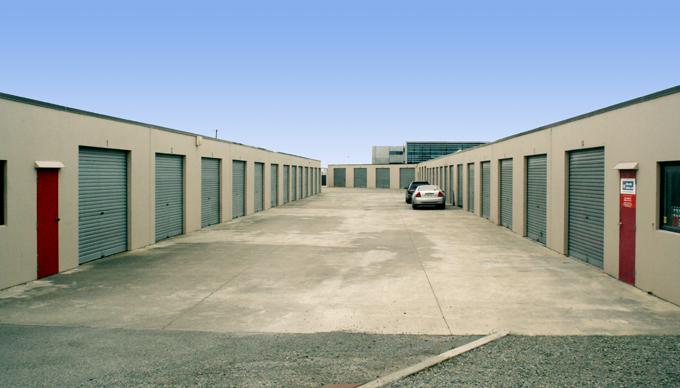
Many self-storage caching ideas have been put forward by readers of SurvivalBlog. Generally, most people in the preparedness community do not approve of using a self-storage unit as a cache, but I think it has some great advantages. As with anything, you must properly plan and weigh your options. There are many considerations you must make, but if you find a self-storage place under the right conditions, it can be very helpful. A main concern is that it should be walking distance from your home. Also make sure the place has rodent and insect control. Some pros and cons are listed below:
Pros:
Of course you want security, but not too much security. In a grid-down collapse, you want to be able to get inside the property with some bolt-cutters and access your goods. Most of these places have chain-link fences with barbed-wire. This is perfect, because in a pinch, you can easily cut a hole in the fence. Also make sure you can access your storage unit from outside. In some of these places, you have to walk into a warehouse and go up an elevator. In a grid-down collapse, these units will be unavailable because the exterior doors to the warehouse will be locked. These places are pretty secure so good luck getting through those heavy metal doors.
While it may be nice to have a heated indoor storage unit for your cache, lack of access is simply too big a risk. Get a unit with direct access from outside, preferably heated for food and water storage. You don’t want your food and water going through many freeze-thaw cycles.
Get a good lock! You are going to be spending $1,000 to $4,000 a year on rental fees anyway, so you might as well buy the thickest, highest quality padlock you can afford. Often, these storage places provide you with a padlock of their own. Do not use it! They have their own master key, and it will be a cheap lock that they bought in bulk. A raider could easily cut those locks.
It is my opinion that these facilities won’t be raided immediately in a TEOTWAWKI event. Grocery stores, restaurants, hotels, and food storage warehouses will be first. Apartment buildings will be second, then suburban homes, and lastly rural homesteads. In my opinion, storage places won’t be picked clean until all the food, water and fuel has been secured by whoever is in charge at the time.
Camouflage:
If possible, store your goods among a pile of the worthless things that nobody would steal. Namely, make sure it can’t be traded, worn, eaten, or burned [as fuel]. Scrap metal is one idea. It is heavy, and has no immediate value in terms of day-to-day survival. Who is going to steal a rusted 200-pound boat anchor? Nobody will, at least not at first.
I am currently working on a self-storage cache and have been collecting scrap metal. Among the dirty, rusted heap of garbage I plan to put together, I’ll have a couple very large boxes with large labels such as “House Furnace, 1986”. Inside these boxes will be my cached items. These boxes will be at the back of the storage unit, and thieves will have to walk over piles of twisted metal and rusty nails just have a peek in the dusty old beat up boxes. Hopefully raiders will simply move on before that. Well actually, I hope I’ve emptied the cache before they raid the place!
What you should store has been constantly discussed on SurvivalBlog so I won’t go into much detail. We all know what to put into a cache... Beans, Bullets and Band-Aids!
I’ll also include tents, propane, camp stove, clothing, blankets, stabilized gas, some water, batteries, flashlights, candles, a water filter, rope, knives, chlorine powder, lighters, and a radio. I’ve also been considering whiskey for barter if space and weight don’t make it prohibitive.
A Word About Water:
It is difficult to cache enough water to survive for long, so keep more at home, along with a water filter. People can’t carry much water very far, so I will have a minimal amount of water in my caches. Without access to a replenishing water source [and a water filter, if needed], we will not survive for long, but we all know that already--thanks to Jim. Try to have access to a replenishing water source, or buy a hand-cranked reverse osmosis filter if on the coast, as I did. This avoids so much work if the SHTF, and you can concentrate on food, shelter and security.
Pros:
- It is located away from your home (your eggs not "all in one basket".)
- It is very secure while the grid is up. Semi-secure during grid-down.
- Almost nobody stores food there, so raiders will mostly be looking for tools, clothing and things to burn [for fuel] like boxes, paper and furniture (won’t be immediately raided.)
- If your wife / family / roommates are not on board, it’s private.
- If you are low on space at home (apartment), it’s great for reducing clutter.
- Nobody gets suspicious when you move 20 large containers in and out whenever you want.
- Fire is of little concern as four-hour firewalls are common in these places, and most new storage buildings are constructed out of concrete.
- Expensive rental fees.
- Will eventually be raided for equipment and burnable materials.
- May not be located close enough to your home.
- In Canada, you cannot store firearms in these facilities, as they must be in your home.
- These storage businesses usually have a clause in their rental contracts saying you can’t store food or flammable goods. Just make sure the boxes aren’t labeled as food, ammo, etc.
- If you are caught breaking the contract before a collapse, you may be liable for damage or injuries.
- Storing fuel is a BIG “no-no” in these places, so be careful. At best you’ll get one warning, and then be kicked out.
Of course you want security, but not too much security. In a grid-down collapse, you want to be able to get inside the property with some bolt-cutters and access your goods. Most of these places have chain-link fences with barbed-wire. This is perfect, because in a pinch, you can easily cut a hole in the fence. Also make sure you can access your storage unit from outside. In some of these places, you have to walk into a warehouse and go up an elevator. In a grid-down collapse, these units will be unavailable because the exterior doors to the warehouse will be locked. These places are pretty secure so good luck getting through those heavy metal doors.
While it may be nice to have a heated indoor storage unit for your cache, lack of access is simply too big a risk. Get a unit with direct access from outside, preferably heated for food and water storage. You don’t want your food and water going through many freeze-thaw cycles.
Get a good lock! You are going to be spending $1,000 to $4,000 a year on rental fees anyway, so you might as well buy the thickest, highest quality padlock you can afford. Often, these storage places provide you with a padlock of their own. Do not use it! They have their own master key, and it will be a cheap lock that they bought in bulk. A raider could easily cut those locks.
It is my opinion that these facilities won’t be raided immediately in a TEOTWAWKI event. Grocery stores, restaurants, hotels, and food storage warehouses will be first. Apartment buildings will be second, then suburban homes, and lastly rural homesteads. In my opinion, storage places won’t be picked clean until all the food, water and fuel has been secured by whoever is in charge at the time.
Camouflage:
If possible, store your goods among a pile of the worthless things that nobody would steal. Namely, make sure it can’t be traded, worn, eaten, or burned [as fuel]. Scrap metal is one idea. It is heavy, and has no immediate value in terms of day-to-day survival. Who is going to steal a rusted 200-pound boat anchor? Nobody will, at least not at first.
I am currently working on a self-storage cache and have been collecting scrap metal. Among the dirty, rusted heap of garbage I plan to put together, I’ll have a couple very large boxes with large labels such as “House Furnace, 1986”. Inside these boxes will be my cached items. These boxes will be at the back of the storage unit, and thieves will have to walk over piles of twisted metal and rusty nails just have a peek in the dusty old beat up boxes. Hopefully raiders will simply move on before that. Well actually, I hope I’ve emptied the cache before they raid the place!
What you should store has been constantly discussed on SurvivalBlog so I won’t go into much detail. We all know what to put into a cache... Beans, Bullets and Band-Aids!
I’ll also include tents, propane, camp stove, clothing, blankets, stabilized gas, some water, batteries, flashlights, candles, a water filter, rope, knives, chlorine powder, lighters, and a radio. I’ve also been considering whiskey for barter if space and weight don’t make it prohibitive.
A Word About Water:
It is difficult to cache enough water to survive for long, so keep more at home, along with a water filter. People can’t carry much water very far, so I will have a minimal amount of water in my caches. Without access to a replenishing water source [and a water filter, if needed], we will not survive for long, but we all know that already--thanks to Jim. Try to have access to a replenishing water source, or buy a hand-cranked reverse osmosis filter if on the coast, as I did. This avoids so much work if the SHTF, and you can concentrate on food, shelter and security.