Submissions     Contact     Advertise     Donate     BlogRoll     Subscribe                         

Friday, June 28, 2024

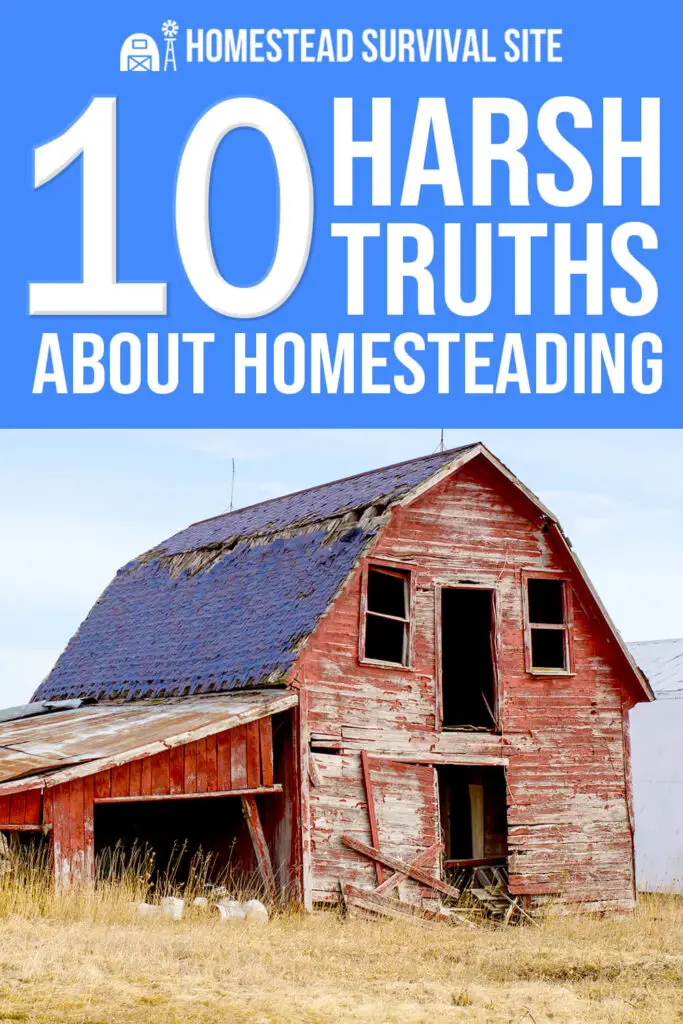
10 Harsh Truths About Homesteading

Estimated reading time: 6 minutes
10 Harsh Truths About Homesteading

If you are thinking of homesteading or are just starting out, you may be seeking a way out of the typical consumer-driven lifestyle of the 21st century. You are willing to put your time, effort and money into a simpler, more self-sustaining way of life.

However, in order to be successful as a homesteader, you need to take off your rose-colored glasses and realize that homesteading requires hard work and dedication. Too many new homesteaders fail because they think a simpler life means an easier life. In many ways, you will be working harder than you ever have before.

The good news is that if it is the right lifestyle choice for you and your family, this hard work will be more than worth it. In the spirit of the old adage “forewarned is forearmed,” here are ten harsh truths about homesteading.

1. Homesteading Equals Long Hours And Hard Work

If you dream of saying goodbye to the old 9-to-5 regimen, just know that homesteading often involves long hours with less pay. The upside is that although you won’t be punching a time clock for someone else, you will be using mental and physical strength every day, seven days a week.

You will be at the whim of Mother Nature in many regards, and you will not be able to take significant time off unless you have someone you can trust to take over your work. You also will need to get up early in the morning and turn in relatively early at night in order to have the stamina to accomplish your daily tasks.

2. Homesteading Is Not For Dummies

In fact, there is a dramatic learning curve for beginners. Unless you grew up on a homestead, you will need to learn a myriad of new skills, ranging from carpentry to livestock raising.

You will need to learn about growing your own food and preserving that food. You will have to build fences and fix plumbing. Much of your education will be in the form of on-the-job training.

3. You Won't Be Able To Do Everything Yourself

Despite your best intentions, you will not be able to raise all your own food, and you will not be able to handle every new situation without help. In time, you will learn how to provide many of your family’s needs, but no one homestead or one homesteader can provide everything.

You will need to build a network of like-minded individuals who will help each other out through barter, trade, and simple friendship. Work on finding a group of people you can learn from as you begin this adventure and then share with as you become more experienced.

Veteran homesteaders enjoy exchanging tips and advice they accumulated along the way, and you will build valuable contacts and friendships by learning from others. Attend workshops, trade goods and services, and ask questions.

4. Homesteading Costs Money

Yes, you will be learning and developing a frugal lifestyle. That is an essential part of homesteading. But, homesteading is not free. While you develop a sustainable income, you will need financial resources to pay taxes and purchase the equipment, services, feed, and other supplies you need.

Take things one step at a time. Begin with the basic needs of your family and do not exceed your income. You or your spouse may need to keep a traditional job until you establish other ways of providing income for your family.

Related: 30 Ways To Make Money With Your Homestead

5. Recordkeeping Is Essential

One of the reasons you are attracted to the homesteading lifestyle may be that it appears to have less stress than modern day-to-day life. However, you will not be worry-free if you do not learn from your mistakes.

Keep clear records of your expenses and your projects. Maintain a journal of what has worked and what has not worked in the way of profitability for your homestead. Learn from your mistakes and make adjustments accordingly.

6. Some Family Members And Friends Will Think You're Nuts

Get used to it. Some people you are close to will not embrace your new lifestyle choice. They may even try to talk you out if it. Your kids may even balk at the new lifestyle if it is radically different than what they know.

Instead of going on the defensive, stay focused and positive and try to surround yourself with supportive people who can help you achieve your goals.

7. You Are Going To Fail At Some Things

And it may not be pretty. You may lose livestock. You may have a poor harvest. Your truck or your farming equipment may fail. You may run through your savings more quickly than you thought you would.

Homesteading is going to have its major ups and downs. By preparing for the worst and hoping for the best, you will maintain a healthy attitude.

Now that you have read some of these harsh truths about homesteading, you may be feeling a bit discouraged. Don’t be! When you talk with veteran homesteaders, you will realize that all of these potential drawbacks are worth it in the long run. It's even good for your health.

With some advance planning and forethought, and by learning from other homesteaders' mistakes, you will be able to weather through the initial rough periods of homesteading. Then, with each passing year, you will gain more experience and more confidence to handle the inevitable problems that come with the territory. And you will gain the satisfaction of living out a rewarding lifestyle that you enjoy

8. Homesteading Can Be Isolating

One truth that often goes unmentioned is the isolation that often comes with homesteading. Living in remote or rural areas, far from the conveniences and social interactions of city life, can lead to feelings of loneliness and seclusion.

This isolation can be especially challenging if family members or close friends don't share your enthusiasm for homesteading. Building a supportive community, whether locally or online, is crucial to maintaining your mental health.

9. Environmental Challenges Are Inevitable

As a homesteader, you're at the mercy of the environment, and not every challenge can be anticipated. Severe weather, pests, diseases, and changing climate conditions can all wreak havoc on your plans.

Adapting to these environmental challenges requires flexibility and a willingness to continually learn and implement new strategies for managing your land and resources.

Finally, navigating the legal and regulatory aspects of homesteading can be surprisingly complex. Zoning laws, water rights, building codes, and other regulations can impose significant limitations on what you can do with your property.

Understanding and complying with these rules can require a substantial investment of time and sometimes even legal advice, adding another layer of difficulty to managing a homestead.

You May Also Like:

The post 10 Harsh Truths About Homesteading appeared first on Homestead Survival Site.


from Homestead Survival Site https://ift.tt/hHBkzbc

Third Man Syndrome

Survivors in the throes of survival ordeals sometimes report the presence of a second, third or fourth person who appears and gives encouragement and direction in times of dire need.

The post Third Man Syndrome appeared first on Survivopedia.


from Survivopedia

15 Gray Man Tips To Help You Blend In During A Crisis

The post 15 Gray Man Tips To Help You Blend In During A Crisis appeared first on Simple Family Preparedness.


from Simple Family Preparedness

17 Ordinary Plants You Can Make Into Flour

The post 17 Ordinary Plants You Can Make Into Flour appeared first on Simple Family Preparedness.


from Simple Family Preparedness

Thursday, June 27, 2024

Food Shortage: Why Shelves are Empty & What to Do

Food Shortage: Why Shelves are Empty & What to Do

The year 2020 was a year to remember. We had a global pandemic with looting, riots, and killer bees. Even now, we have to worry about food shortages of various products. The national lockdowns and social distancing measures dried up work and incomes and disrupted agricultural production and supply routes. This meant people were concerned about how they would get enough to eat when the shelves were empty. These issues still persist to a lesser extent, but now flooding is destroying farmland in our nation’s breadbasket states.

Of course, this is not a post to spread panic or worry because we are prepared! This is an informational post to help you understand why the shelves are empty and how to prepare better so you’re in a position where you don’t have to worry. Matt was kind enough to send me this link yesterday about Norway (my heritage) Norway Stockpiling Grain. Thank you, Matt; 30,000 tons is a lot of grain, my friends.

Food Shortage: Why Shelves are Empty & What to Do

Food Shortage: Why are Grocery Store Shelves Empty?

When it comes to being prepared, it is essential to know why something is happening so you can look for future trends like when things may get better. There are several reasons why we see empty grocery store shelves. 

Shifts in Eating Habits

Food Shortage: Why Shelves are Empty & What to Do

Before the pandemic, people went to restaurants as often as they pleased. When the lockdowns and social distancing took hold, more people bought food from the grocery stores instead of going out to eat. Now, food prices are so expensive people are eating out less.

Panic Shopping

Not only are people eating at home more, but there are many reports of price gouging, import restrictions, and more stay-at-home orders. This drives people to panic shop and stock up even more than before. This leads to empty shelves, which makes the cycle spin even faster. 

Meat Processing Plants were Closed

Food Shortage: Why Shelves are Empty & What to Do

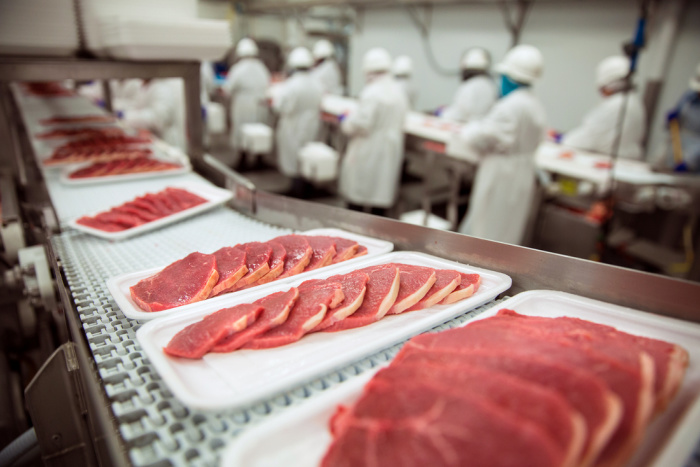
You must be very careful when dealing with raw meat. There are plenty of hogs, chickens, and cows, but they all have to go through processing and packing plants. If workers get sick or the plant closes, a limited meat supply is sent to the stores. 

Importing Has Slowed

Global trade has fallen pretty significantly in the last few months. The United States imports about half of our fruit, such as grapes and bananas, from Mexico.

We also import about 20% of our vegetables from Mexico during this time of year, and, as many people know, we import a ton from China.

Imports from China have drastically slowed, and small business owners can’t get many of the products they sell. Therefore, we will see more empty shelves. 

You may see empty shelves for many reasons, but just because the shelves are empty doesn’t mean you can’t still prep. 

How to Prepare During a Food Shortage

If you are a prepper, you will already have at least a few months of food stocked up. But, if you aren’t restocking, your food supply will soon run out, and you will have a food shortage. Here are some things you can do:

Buy What’s Available During a Food Shortage

Empty Shelves

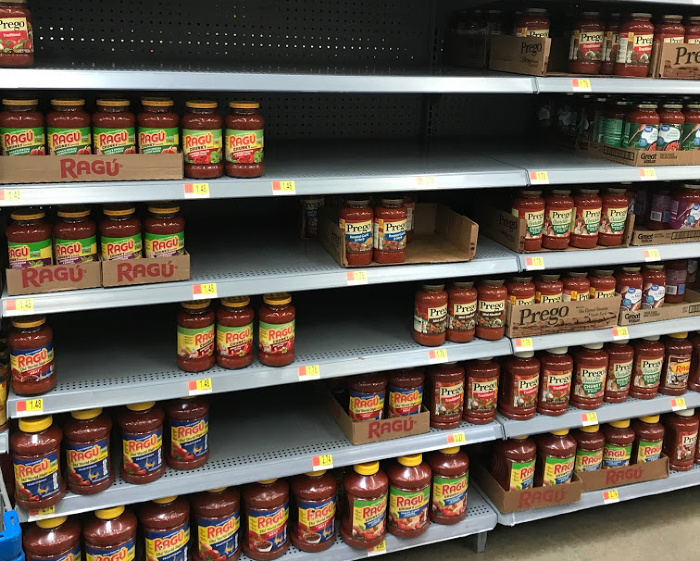
As shelves empty, you may not be able to get what you want, but there are still things on the shelves that you can buy. Grab what you can based on what you will eat. Obviously, if it comes down to it, you and your family will eat pretty much whatever you have, even if you don’t like it. If you can’t get white flour, be patient it may show up again on the shelves.

Make Frequent Shopping Trips

There may not be what you need on the shelves on Saturday, but you may be able to find it on Tuesday. If you are like me, you may only go to the store with a list once a month. When shelves are empty, it’s best to go more often.

You can also find out when each store has its various shipments. You will have more luck finding the supplies you need on the day the shipment is put on the shelves.

Always Buy the Limit

In many stores, there is a limit on what you can buy for particular items. If there is a limit of 5 cases of water, but you only need two, consider buying all 5. You don’t know when the shortage will improve, so to be on the safe side, buy the limit of anything you are buying if it will be used or eaten.

Can or Freeze Fresh Fruits and Vegetables

The produce section seems to have everything when I go to the store. Use this to your advantage. You can stock up on fruits and vegetables. Fresh fruits and veggies don’t last long, but if you can dehydrate or freeze them, you can keep them longer. And don’t forget, you can dehydrate most of it if you have a dehydrator. I highly recommend this canning book, which I received when I took the Utah State University’s USDA Master Canner Preserver Classes. USDA Complete Canning Guide

Related: Home Canning-Important Do’s and Don’ts

Keep in mind the capacity of your freezer, and that electricity can go out if you choose to freeze your fresh produce. Canning or dehydrating can be the best option. I still freeze a lot of stuff, we must live for today as well.

Related: 15 Items Perfect for Freezer Storage

Go to Multiple Stores During a Food Shortage

When shopping for things you need to restock, go to multiple stores, including off-the-wall stores you normally wouldn’t think of. For example, during the toilet paper shortage, I went to Costco three days ago, and they were out of Kirkland brand toilet paper and paper towels. There is no pandemic right now; I am just sharing what I saw.

You may not realize it, but many home improvement stores, gas stations, and places where you don’t normally buy food may have just what you need. 

Grow Your Food

Food Shortage: Why Shelves are Empty & What to Do

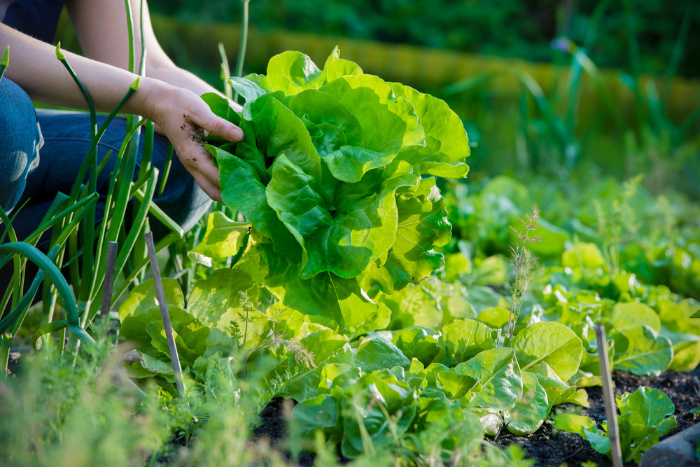
The best way to be prepared regarding food shortages is to have your supply. As preppers, we have to be self-reliant. This means we know how to grow and harvest food for survival. If you haven’t started a garden, now is the perfect time to do it.

Even if you live in an apartment, you can still have container gardens. If you aren’t sure where to start, check out my post on What to Plant in June: Zones. In my post, you will find what you can plant in each zone and a list of posts for what to plant each month of the year. 

Get Livestock if You Can

Not all of us can have livestock, but you most certainly can if you live in the country. Here’s the thing: even if you don’t know what you are doing, those animals can feed you in an emergency. So, consider doing it if you can get a pig, a cow, some chickens, or any other animal you can eat. 

If you live in the city, you can’t have all the livestock you can in the country, but there are still some you MAY be able to keep right on your city property. Here are 6 Farm Animals Perfect for City Living:

  • Chickens (not roosters)
  • Rabbits
  • Ducks
  • Quail
  • Pygmy Goats
  • Dexter Cattle

If you live in the city, check your local city guidelines on having farm animals in the city where you live and how you must keep them. 

Know Wild Edible Plants

One of the ways people stayed alive for generations was because they knew what they could and couldn’t eat in the wild. Even if you don’t have a green thumb, can’t grow a garden in your apartment, or don’t know where to start, there are food sources all around you. Check out our posts on edible weeds you can find in your backyard:

Final Word

As a prepper, I hope you were prepared before the shortage. If you are new and unprepared, start stocking up on non-perishable items such as canned goods, rice, beans, canned meats, soups, canned tomatoes, spices, pasta, and other items your family will eat.

Then, slowly stock up on long-term food. Dehydrated food is excellent, but freeze-dried food has a longer shelf life. One can a month works great. Just do it; you have a 3-month supply in no time. Then move onto a 6-month and then a 12-month supply.

Check out my post, How to Prepare for a Food Shortage. Stay calm, learn, and keep prepping! You can do this, one can at a time. May God bless this world, Linda

Copyright Images: Shopper at Grocery Store Deposit photos_22948142_s-2019, White Plate With Blue Napkin Deposit photos_31145011_s-2019, Pork Processing Company Depositphotos_78184714_s-2019, Picking Vegetables Depositphotos_10828132_s-2019

The post Food Shortage: Why Shelves are Empty & What to Do appeared first on Food Storage Moms.


from Food Storage Moms