Submissions     Contact     Advertise     Donate     BlogRoll     Subscribe                         

Saturday, May 30, 2026

21 Duck Egg-Laying Q&As

Ducks have been domesticated for ages, but only recently in the past year or two are they starting to come back into style compared to chickens. And to be honest, it’s mostly because of their productivity when laying eggs. Ducks typically start laying between 4 and 8 months old, and can crank out an egg ... Read more

21 Duck Egg-Laying Q&As can be read in full at New Life On A Homestead- Be sure to check it out!


from New Life On A Homestead

Friday, May 29, 2026

Growing Up During the Great Depression: What Kids Did and Why It Mattered

[…]

The post Growing Up During the Great Depression: What Kids Did and Why It Mattered appeared first on The Survival Mom.


from The Survival Mom https://ift.tt/Ia3k4mi

13 Things You Should Know BEFORE You Dehydrate Food

Estimated reading time: 7 minutes

13 Things You Should Know BEFORE You Dehydrate Food

Dehydration is a fantastic way to preserve food for the future. There are many reasons why I like dehydrating food: it's safe, it's easy, and it's cheaper than buying dehydrated food. Better yet, the food itself is more nutritious, it's lightweight, it doesn't take up much space, and some of it is absolutely delicious (like banana chips).

Of course, if you want to dehydrate your own food, you'll need a good dehydrator. This one–which I've used a lot–is about $60. It's not one of the high-end dehydrators like the Excalibur, but it definitely gets the job done.

Before you jump in and start throwing everything you can find into your dehydrator, there are a few things you should know. Here are 13 things I've learned along the way.

1. Start by learning your dehydrator and reading the instructions.

Dehydrators can be split into three categories: bottom fan, top fan, and back fan. Most people would recommend a back fan dehydrator since it encourages even drying. However, even with a back fan you will need to move trays around to ensure even and consistent drying.

2. If you don’t have a dehydrator, you can use your oven or air dry.

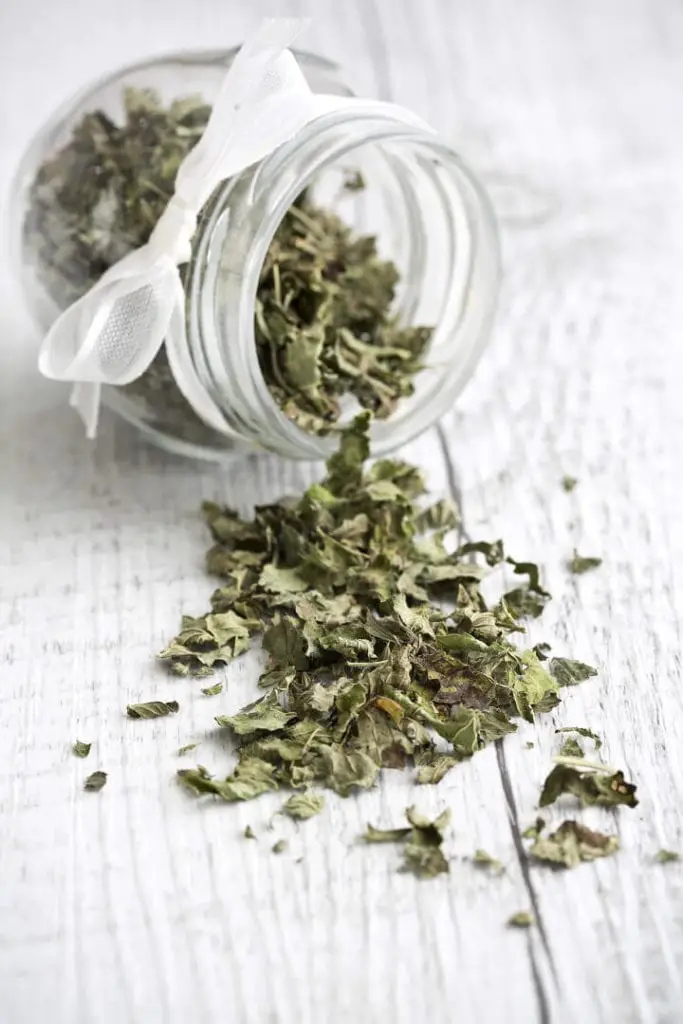
Any leafy green–mint, lemon balm, sage, oregano, lettuce, or even carrot tops–can be air dried. Herbs are particularly easy to dry. All you have to do is hang them up in a dry room. If you try this method, make sure direct sunlight does not strike the herbs.

Depending on the size of the herb bunch, it can take anywhere from a few days to a week to fully dry. Herbs should be crisply dried and should crumble easily.

Dehydrated Herbs Spilling Out Of Jar

3. Some vegetables should be blanched before you dehydrate them.

It's not required, but doing so will keep the colors brighter, help retain the vitamins, and make your dehydrated food taste fresher after you rehydrate it. All you have to do is lower your food into boiling water for a few minutes, then put it in ice-cold water to stop it from cooking. Here's a guide to blanching vegetables.

4. Dehydrate only one family of foods at a time.

If you are dehydrating tomatoes, you can also do hot peppers, but be aware that the tomatoes will end up being spicy. Any brassica should be dehydrated on its own, otherwise the sulfur taste will permeate into the other foods. Fruits can be mixed together, but mixing them with strong tasting or smelling vegetables is not recommended.

5. While drying in the same family of food, there are a few tricks to make sure the drying process is even.

Always aim to have fruits and veggies sliced to the same thickness. And never overlap fruit or veggie pieces, as it will block airflow and prevent the food from drying. The exception is greens, as they are loose and dry easily even with a few light layers on the tray.

6. You can dehydrate any fruit or vegetable, regardless of quality or ripeness.

If something is too ripe and soft, you can always puree it and dry the puree. Although using the best quality fruits and veggies will result in the best quality dried goods, remember that the goal here is preservation, not perfection.

So don’t be afraid to dehydrate the bruised, overripe, and slightly damaged goods. Just make sure not to put mold in the dehydrator as it can spread and infect the rest of the foods.

7. Fruit purees are an awesome way to store and eat overripe, funny shaped, or otherwise damaged fruits.

Small apples are awesome turned into fruit leather, and overripe plums, peaches, and berries also work amazing in fruit leather. You can combine most other fruits with apples to make a flexible leather that is perfect for snacks and keeping on hand for emergency energy.

If you do not have a dedicated puree tray as an accessory with your dehydrator, it is very easy to cover the normal tray with some cello wrap and dry on that. However, if you are using cello wrap, always make sure to flip the leather once the top is dry so that it dries completely on both sides.

8. If you intend to dry hot peppers or onions, keep your dehydrator outside in a well-ventilated area.

And be prepared to scrub the dehydrator trays with soap and water afterward. With peppers, the oils will become airborne in the first part of the dehydrating process and can be an eye irritant. The oils will also remain on the trays, so take care when cleaning them and packing the dried peppers away.

Onions are more airborne than peppers, so make sure there is plenty of ventilation around the dehydrator when working with them.

Dehydrated Fruit On A Plate

9. Berries, like blueberries or grapes, can be a challenge on the dehydrating front.

They are small, but a contained unit. Most berries are small enough to be dried whole, but large grapes should be cut in half. If you want to dry seeded grapes, you can cut them in half to remove the seeds and then dry them. Berries can easily over-dry, so you want to watch and make sure that they remain slightly supple, and not too crispy.

10. Different foods will require different dehydration temperatures.

Check your dehydrator thermostat and make sure it is accurate before beginning to dry meat or fish. Also, always remember to clean your dehydrator between families of items, or between doing meat or fish and any fruit or veggie.

11. You can also use your dehydrator to make special foods, like kale chips, for snacks or storage.

If you are making something like kale chips, which have oil and spices on them, you will want to ensure the trays get washed before drying fruit or something that doesn’t go well with garlic.

12. With a dehydrator, you don’t have to waste much of anything.

One fun way to get the most out of your summer harvest, and your dehydrator, is to dry and powder items you’d normally get rid of. Have an over-abundance of late-season lettuce, chard, beet greens, or carrot tops? Dry them all and powder them in a food processor–it makes an easy to store vitamin powder for late winter soups and stews.

If you’re making tomato sauce, take the skins you’d normally throw away and dehydrate them. Then powder the skins and you have your own tomato powder that is perfect for mixing into sauces or breads. You can dry tomato skins and hot peppers at the same time if you want a spicy tomato powder.

13. Storage is very important for any preserved food, and dehydrated foods are no exception.

Store either in heavy-duty zippered bags in a metal container, or store in dry, sterile, glass jars. If you choose to store in plastic bags within a larger can, keep food families separate.

For example, don’t try to store the broccoli in the same can as peaches. If you do, each will pick up hints of flavor from the other, which wouldn't taste very good. For long-term storage, I recommend using Mylar bags.

To learn more about dehydrating, watch this video series by Dehydrate2Store. If you're looking for ideas, check out these dehydrating recipes.

Originally published on Homestead Survival Site.

You May Also Like:

The post 13 Things You Should Know BEFORE You Dehydrate Food appeared first on Homestead Survival Site.


from Homestead Survival Site https://ift.tt/oGYvIXi

If We Have A War: Stock Salt Now

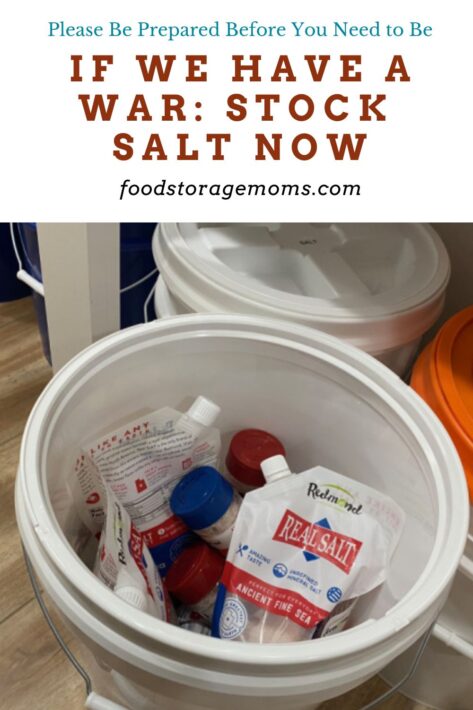
Salt Stored

If we have a war: Stock salt now. The ancient currency you are forgetting to store. There is a reason soldiers were once paid in salt. There is a reason the word “salary” comes from Latin. There is a reason civilizations rose and fell over trade routes built around them. Salt is not a seasoning. Salt is survival. And if the world around us ever fractures even slightly, whether through war, supply chain collapse, prolonged power outages, or any number of slow-moving disasters, the people who stocked salt will eat. The people who did not will quickly understand what they are missing.

This is not a doomsday screed. This is practical knowledge that every household used to carry as a matter of course, knowledge that has been quietly lost in the era of refrigeration and grocery delivery. Salt preserves food. Salt sustains the human body. Salt has no expiration date when stored correctly. It is one of the very few pantry items that will outlast everything else on your shelf, including you.

So let us talk about it honestly. What kinds of salt should you store, how much of it, what it actually does inside your body, and why now is the time to start. Please remember never to use oxygen absorbers in salt or sugar, as they will turn to bricks.

Salt In Buckets

The Three Salts Worth Stocking

Not all salt is created equal, and not all salt serves the same purpose. A well-prepared pantry benefits from having at least two or three varieties on hand, each suited to different tasks.

Fine Salt

Fine salt is your workhorse. It is the salt that dissolves fastest, the one you reach for when baking bread, seasoning a pot of beans, brining vegetables, or making a basic electrolyte solution. In a grid-down scenario where you are cooking over an open flame and measuring by sight alone, fine salt is forgiving and easy to control. It integrates into food quickly and evenly.

For preservation purposes, fine salt is essential. Lacto-fermentation, a centuries-old method of preserving vegetables without refrigeration, requires fine salt dissolved in water at specific ratios. Sauerkraut, kimchi, pickled beets, fermented carrots, preserved eggs: all of these depend on salt as the primary agent of preservation. Learning to ferment is one of the most valuable food skills a person can develop, and fine salt is the foundation of that practice.

A good stock of fine non-iodized salt is particularly important for fermentation, because iodized salt can inhibit the beneficial bacteria that make fermentation work. Store both varieties. They serve different purposes.

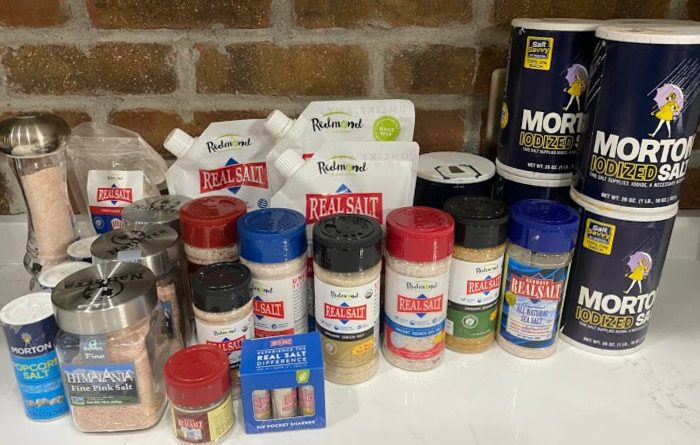
Redmond Fine Salt, Redmond Fine Salt Refill Pouches

Coarse Salt

Coarse salt, whether kosher salt or sea salt with large crystals, dissolves more slowly and is better suited for dry curing, meat preservation, and drawing moisture from foods before long-term storage. When you are salt-curing fish, making salt-cured pork, or preserving a harvest of summer cucumbers, coarse salt gives you more control and creates a more even cure across the food’s surface.

There is also something tactile and important about coarse salt that fine salt cannot replicate. When you are rubbing a cut of meat before hanging it to dry, or packing a crock with alternating layers of salt and fish, as coastal communities have done for thousands of years, you need the texture and staying power of a large crystal.

Coarse salt also stores beautifully. Because the crystals are less compressed than table salt, they absorb moisture more slowly. In a sealed container, coarse salt will remain usable indefinitely.

From a cooking standpoint, coarse salt gives you something else: restraint. You feel the amount you are using in a way that a shaker of fine salt does not offer. In a world where you are rationing your stores and cooking simply, that tactile feedback matters.

Redmond Coarse Salt, Redmond Coarse Salt Refill Pouch

Himalayan Pink Salt

Himalayan salt has accumulated a great deal of marketing mythology, and it is worth separating the hype from its genuine value. The claims that it contains dozens of trace minerals in medically significant quantities are largely overblown. The actual amounts of those minerals per serving are too small to constitute a meaningful nutritional contribution. What is true, however, is that Himalayan salt is a pure, unrefined product harvested from ancient sea beds and free from the additives and anti-caking agents found in much commercial table salt.

For those who are sensitive to additives or who are building a pantry with long-term purity in mind, Himalayan salt is an excellent choice. It comes in large blocks that can double as serving surfaces and have antimicrobial properties useful for food handling. It dissolves well, stores indefinitely, and works for every application where fine or coarse salt is used.

There is also something worth noting about morale. In a prolonged emergency, the quality of your food matters to your psychological state as much as your physical one. Himalayan salt, used on simple food cooked from your stores, elevates a plain meal. That matters more than it sounds.

Store some. Not because it is a miracle mineral product, but because it is real, pure, long-lasting, and versatile.

Himalayan Salt, Himalayan Salt Refill

Salt and the Human Body

Before we talk about appropriate intake, it is worth understanding what salt actually does in your body, because most people have only the haziest sense of why they need it at all.

Salt is sodium chloride. Sodium is an electrolyte, which means it carries an electrical charge and regulates the movement of water and nutrients in and out of your cells. Every time your heart beats, sodium is involved. Every time a nerve fires a signal, sodium is involved. Every time a muscle contracts, including the involuntary muscles that keep you breathing and digesting, sodium is involved.

Without adequate sodium, your body cannot maintain fluid balance. Blood pressure drops. Muscle cramps become severe. In cases of extreme sodium depletion, a condition called hyponatremia, confusion, seizures, and death can follow. This is not theoretical. Endurance athletes who drink too much water without replacing electrolytes have died from it. Disaster survivors who consume water without any salt intake over extended periods face a serious risk.

Salt also drives thirst, which is a survival mechanism. Your body uses thirst to encourage you to drink enough water to keep your sodium concentration at the correct level. In a high-stress, high-exertion situation like a war or a major disaster, you will sweat more, work harder, and lose sodium faster than usual. Your need for salt will increase.

Chloride, the other half of sodium chloride, is equally important. It is a component of stomach acid, essential for digestion, and plays a role in maintaining the proper pH of your blood.

In short, salt is not a luxury. It is a physiological requirement.

How Much Salt Does a Person Actually Need

The current guidance from most major health organizations in the United States suggests that adults should aim for less than 2,300 milligrams of sodium per day, with an ideal intake closer to 1,500 milligrams for individuals with hypertension or cardiovascular risk factors. One teaspoon of fine table salt contains approximately 2,300 milligrams of sodium, which gives you a practical reference point.

In a normal modern diet, most people consume significantly more than this, because sodium is hidden in processed foods, canned goods, restaurant meals, and bread. In a pantry-based emergency diet, where you are cooking from scratch using whole grains, dried beans, root vegetables, and preserved meats, your baseline sodium intake from hidden sources drops dramatically. You will need to add more salt consciously to meet your body’s requirements.

For physically active adults in a high-stress, labor-intensive situation, 3,000 to 5,000 milligrams of sodium per day may be appropriate. Heat, sweat, and exertion change the equation considerably. Athletes and laborers have always known this, which is why sports drinks exist and why field workers historically received extra salt rations.

Children need proportionally less sodium. A child under eight years old needs roughly 1,000 to 1,200 milligrams per day. Adolescents need somewhat more, approaching adult levels.

Individuals with heart disease, kidney disease, or high blood pressure should approach salt intake thoughtfully and in coordination with medical guidance. That said, even these individuals cannot survive without sodium. The goal is appropriate intake, not elimination.

For storage planning, a reasonable estimate is that one adult will consume roughly two to three pounds of salt per year for cooking and basic food needs alone. If you plan to preserve food through fermentation, curing, or brining, that number increases substantially. A five-pound bag of salt per person per year is a conservative baseline for a preparedness pantry. Ten pounds per person puts you in a comfortable position.

Why Salt Stores Better Than Almost Anything Else

Salt does not rot. It does not oxidize. It does not support microbial growth. It does not require cool temperatures or vacuum sealing. Pure salt, kept dry and away from contamination, will remain chemically identical in five hundred years as it is today.

The only storage consideration is moisture. Salt is hygroscopic, meaning it pulls moisture from the air, and if it gets wet, it will clump or, in extreme cases, begin to leach away into the moisture it has absorbed. Store your salt in sealed containers, glass jars with tight lids, food-grade buckets, or the original sealed bags kept inside a dry container. Keep it off concrete floors, which transfer moisture, and away from any area that floods or accumulates humidity.

Iodized salt has a slightly shorter shelf life, not because the sodium chloride degrades, but because the added iodine can dissipate over time, particularly when exposed to heat or humidity. If iodine supplementation matters to you, rotate your iodized salt stock or plan to source iodine from other means, such as seaweed, fish, or supplementation.

For long-term preparedness purposes, non-iodized salt in sealed containers is your most reliable option.

Salt as a Tool, Not Just a Seasoning

One of the practical realities of a world disrupted by war or collapse is that refrigeration becomes unreliable. When refrigeration fails, food preservation methods that predate electricity become essential. Salt is at the center of nearly all of them.

Dry curing preserves meat and fish for months or years without refrigeration. A salt box of pork, a barrel of salt cod, a crock of salt-preserved eggs: these were not quaint traditions. They were how people survived winters, famines, and the gaps between harvests.

Brine pickling preserves vegetables at room temperature for months. A simple saltwater brine will keep cucumbers, beets, green beans, and dozens of other vegetables edible long after they would otherwise have spoiled.

Lacto-fermentation uses salt to create an anaerobic, acidic environment in which beneficial bacteria thrive and harmful bacteria cannot survive. Fermented vegetables are not only preserved, but they are also enhanced in nutritional value, probiotic content, and flavor.

Salt-preserved lemons, a staple of North African cooking, last for months at room temperature and brighten any dish made from stored grains and legumes.

Each of these techniques requires salt in meaningful quantities. Each of them is a skill worth learning now, while the stakes are low and the ingredients are cheap.

A Note on Trading Value

In any prolonged disruption of normal society, salt has historically functioned as a trade commodity. This is not a conspiracy theory or a fantasy. It is documented history. Communities without access to salt have traded extensively for it. Coastal communities have wielded significant power over inland ones precisely because of salt.

This does not mean you should hoard salt as an investment strategy. It means that salt, along with other durable goods, has real value in a world where normal commerce has broken down. A person with fifty pounds of salt is not just fed. They are positioned to help neighbors, to barter for other necessities, and to participate in the informal economies that spring up whenever formal ones collapse.

Store enough for yourself first. Then store a little more.

Where to Start

If you have never thought seriously about food storage, salt is the single best place to begin. It costs almost nothing. A twenty-five-pound bag of non-iodized fine salt costs under ten dollars at most wholesale or club retailers. A five-pound bag of Himalayan salt costs a few dollars more. Coarse sea salt is widely available and inexpensive.

Buy a bag of each this week. Store them in dry, sealed containers on a high shelf where they will not be disturbed. Note the date, though you do not need to worry about it much. Start learning one salt-based preservation technique. Make a simple brine. Ferment a jar of vegetables. Salt-cure a piece of fish.

Please note, I do not buy salt in bulk. It’s a personal choice. I buy the bottles and refillable pouches. Mark and I prefer to open our 5-gallon buckets with Gamma Lids and take out what we need. This way works for us. Is it more expensive, yes it is, but it’s how I want to store my salt safely.

You are not building a bunker. You are restoring a practice that every generation before yours took for granted. You are bringing back into your home the knowledge that kept human beings alive through ice ages, plagues, wars, famines, and all the ordinary catastrophes of ordinary life.

Salt: Everything You Need to Know

Electrolytes: Everything You Need To Know

Final Word

Salt is the oldest food technology in human history. It is also among the most reliable. In a world that may become less predictable than we would like, that reliability is worth more than almost anything else you could put in your pantry.

Stock it now. While it is easy. While it is cheap. While the stores are full and the roads are clear, you have the luxury of choosing to prepare rather than scrambling to survive. That is the time to do it. That time is now. May God bless this world, Linda

The post If We Have A War: Stock Salt Now appeared first on Food Storage Moms.


from Food Storage Moms

Milk Powder for Preppers: The Complete Storage and Survival Guide

Most preppers spend serious time thinking about rice, beans, and canned goods. Milk powder rarely gets the same attention, and that is a mistake. It is one of the most calorie-dense, protein-rich, and versatile ingredients you can stockpile. It reconstitutes into drinkable milk, blends into soups and sauces, and adds nutrition to baked goods when fresh dairy is long gone.

This guide covers everything you need to know: the different types of milk powder, how long each actually lasts, the best storage methods, which brands are worth buying, and how to put it to use when the grid goes down. Whether you are building your first food cache or tightening up a long-term supply, milk powder deserves a real place on your shelf.

Why Milk Powder Belongs in Every Prepper’s Pantry

Fresh milk has a shelf life measured in days. Milk powder, stored correctly, can last decades. That gap alone makes it a critical prep. But the case goes deeper than shelf life.

Nutritionally, milk powder delivers a meaningful punch per serving. A quarter-cup of whole milk powder typically provides around 150 calories, 8 grams of fat, 8 grams of protein, and significant amounts of calcium and vitamin D. In a grid-down or supply-chain disruption scenario, those macronutrients can be hard to source. Kids especially need the calcium and fat for healthy development, and milk powder is one of the few long-shelf-life options that can help fill that gap.

Beyond nutrition, milk powder is a cooking multiplier. It makes oatmeal more filling, thickens soups, enriches bread dough, and creates a base for white sauce, pudding, and cheese sauce from scratch. A pantry without milk powder is missing a foundational ingredient that fresh-food cooking takes for granted.

From a cost and weight standpoint, it also makes sense. A single pound of whole milk powder reconstitutes to roughly one gallon of milk. Compared to storing liquid UHT milk, powder is far lighter to rotate, easier to pack, and more economical per serving.

Related: Butter Powder: The Shelf-Stable Fat They Don’t Want You To Know About

Types of Milk Powder: What You Actually Need to Know

Not all milk powder is the same. The type you choose affects shelf life, nutrition, taste, and best use cases in survival cooking.

Nonfat Dry Milk (Skim)

This is the most widely available and most commonly stored variety. The fat has been removed, which dramatically extends shelf life. Properly sealed in a #10 can or mylar bag with oxygen absorbers, nonfat dry milk can last 20 to 25 years. The tradeoff is taste: reconstituted skim milk powder is noticeably thinner and less rich than whole milk. For drinking straight, many people find it underwhelming. For baking, cooking, and adding to hot drinks, it performs well.

Whole Milk Powder

Whole milk powder retains its fat content, which gives it a much richer flavor but reduces shelf life to roughly 2 to 5 years in an unsealed container, or up to 25 years in a professionally sealed nitrogen-flushed can. The fat is the vulnerability: it can go rancid when exposed to oxygen, heat, or light. If you are buying whole milk powder for long-term storage, prioritize hermetically sealed cans over open bags. For taste and versatility in cooking, whole milk powder is clearly the better option.

Instant vs. Non-Instant

Instant dry milk has been processed to dissolve quickly in water, even cold water. Non-instant (also called regular dry milk) requires warm water and more stirring. For most preppers, instant is more practical since you may not always have the ability or desire to heat water just to reconstitute milk. Non-instant is typically cheaper and works fine if you plan to cook with it rather than drink it.

Buttermilk Powder and Cream Powder

These are specialty items worth considering for a well-rounded pantry. Buttermilk powder is invaluable for baking: pancakes, biscuits, and quick breads depend on its acidity for lift and texture. Cream powder adds richness to sauces and coffee when regular milk is not enough. Neither replaces standard milk powder as a core prep, but both add cooking range that most preppers overlook.

How Long Does Milk Powder Actually Last?

Shelf life claims on packaging are often conservative commercial estimates, not true limits under ideal storage conditions. Here is a practical breakdown:

Type Unopened (Ideal) Once Opened Worst Case (Poor Storage)
Nonfat Dry Milk 20-25 years 1-2 years 2-3 years
Whole Milk Powder 2-25 years* 3-6 months 6-12 months
Instant Dry Milk 2-10 years 1 year 1-2 years
Buttermilk Powder 2-5 years 6-12 months 1-2 years
Cream Powder 2-4 years 3-6 months 6-12 months

*Whole milk powder sealed in nitrogen-flushed #10 cans by manufacturers like Augason Farms or Emergency Essentials can achieve the longer end of that range. Bulk bags from a grocery store will not.

The four enemies of milk powder longevity are oxygen, moisture, heat, and light. Address all four and you are maximizing that shelf life. Ignore any one of them and you are cutting it dramatically.

How to Store Milk Powder for Maximum Shelf Life

Storage is where most preppers either get this right or waste their money. Here is the systematic approach.

Container Choice

  • #10 Cans: The gold standard for long-term storage. Metal provides a complete barrier against light and oxygen infiltration. Many survival food companies sell pre-packed, nitrogen-flushed milk powder in #10 cans ready to shelve. You can also purchase empty #10 cans and a hand seamer to pack your own.
  • Mylar Bags with Oxygen Absorbers: The DIY prepper’s best tool. Use 5-mil thick mylar bags (thinner bags allow oxygen migration over time), add appropriately sized oxygen absorbers for the volume, and heat-seal the bag. A one-gallon mylar bag needs roughly 300-400cc of oxygen absorber capacity. Mylar bags are often stored inside food-grade buckets for physical protection.
  • Food-Grade PETE Plastic Bottles: Suitable for short to medium-term storage (1-5 years) with oxygen absorbers. PETE plastic has low oxygen permeability. Regular HDPE buckets without mylar lining are not suitable for long-term milk powder storage because they allow gradual oxygen transfer.
  • Original Sealed Cans: Many commercial milk powders come sealed from the factory. Do not open until needed. Once opened, transfer to an airtight container immediately.

Oxygen Absorbers

These are non-negotiable for anything beyond a year or two of storage. Oxygen causes fat oxidation (rancidity) and nutrient degradation. A 300cc absorber is appropriate for a quart-sized container; use 2000cc for a one-gallon mylar bag. Purchase in bulk and use them the same day you open the packaging, as they activate on contact with air.

Temperature and Location

Every 10 degrees Fahrenheit above 70 degrees roughly halves the shelf life of stored food. A cool basement, interior closet, or root cellar where temps stay between 50-65 degrees is ideal. Avoid garages, attics, and anywhere with temperature swings. Consistent cool beats occasional cold.

According to the USDA Food Safety and Inspection Service, dried dairy products should be stored in cool, dry conditions away from direct light to maintain quality and prevent off-flavors from developing in the fat component. (USDA FSIS)

Moisture Control

Milk powder is hygroscopic, meaning it actively pulls moisture from the air. Even brief exposure to humidity can cause clumping and accelerate spoilage. Never scoop from a bag and leave it open. Use a dry spoon, reseal immediately, and consider adding a food-safe desiccant packet inside opened containers.

Labeling and Rotation

Label every container with the pack date, not just the best-by date. Rotate first-in, first-out. Keep opened containers accessible for regular use and long-term sealed supply in the back. If you have both whole and nonfat stored, note the difference clearly since they reconstitute at different ratios.

Best Milk Powder Brands for Preppers

Not all milk powder is worth buying for long-term prep. Here are the options that consistently deliver on quality, shelf life, and value.

Augason Farms Nonfat Dry Milk

One of the most popular long-term storage options on the market. Comes in nitrogen-flushed #10 cans with a claimed 20-year shelf life. Widely available through Amazon, Walmart, and directly from the company. Good flavor for reconstituted drinking, and it dissolves readily in warm water. The value per serving is hard to beat for nonfat.

Hoosier Hill Farm Whole Milk Powder

A frequently recommended choice for whole milk powder in the prepper community. Sold in resealable foil bags in various sizes. Rich flavor and good fat content make it superior for cooking. Because it comes in bags rather than cans, you should repack into mylar with oxygen absorbers for anything beyond a 2-year storage window. Widely available on Amazon.

NOW Foods Whole Dry Milk

A solid option for preppers who also track nutritional inputs carefully. NOW Foods tests for quality and publishes product specs. Available in bulk resealable bags. Repack for long-term storage.

Nestle Nido Whole Milk Powder

Originally formulated for markets where refrigeration is unreliable, Nido is an internationally trusted product and widely available in the US in large tin cans. It reconstitutes well and is well-suited for families with children. The tin can packaging provides reasonable protection; reseal tightly after opening and use within a year once opened.

Nido is particularly useful as an everyday-use option that you rotate through, keeping your dedicated long-term storage (sealed cans, mylar) untouched until genuinely needed.

Store Brand Nonfat Dry Milk (Short-Term Budget Option)

If budget is the constraint, grocery store nonfat dry milk in cardboard boxes is a legitimate short-term option (1-2 years). Transfer it immediately to a sealed PETE bottle or mylar bag with an oxygen absorber and you extend that meaningfully. It will not last 20 years, but it gets the job done for a starter pantry.

How to Reconstitute Milk Powder Correctly

Many people who claim to dislike powdered milk have simply made it wrong. Technique matters.

Basic Reconstitution Ratio

The standard ratio for nonfat dry milk is 1/4 cup of powder to 1 cup of water to yield roughly one cup of reconstituted milk. For whole milk powder, check the specific product, but 3 to 4 tablespoons per cup of water is typical. These are starting points; adjust to taste.

Temperature Matters

Cold water produces a better-tasting result than hot water for drinking. Start by mixing the powder into a small amount of cool water to form a smooth paste, then add the remaining water. Hot water can cause clumping and a slightly cooked flavor. For cooking purposes, warm water is fine.

Let It Chill

Reconstituted milk tastes significantly better after being refrigerated for at least an hour, ideally overnight. If you have any cooling capacity in a grid-down situation, this makes a real difference. The flavor mellows and the texture improves.

Blending

In a non-emergency setting, blending reconstituted milk with a hand blender for 20-30 seconds produces a smoother, frothier result that is much closer to fresh milk. Worth doing when you have the power.

Using Milk Powder in Survival Cooking

This is where milk powder really earns its shelf space. Knowing how to cook with it means your food stores go further and your meals stay nutritious.

Baking

Most bread, biscuit, pancake, muffin, and cake recipes that call for milk can use reconstituted milk powder at a 1:1 substitution. You can also add dry milk powder directly to dry ingredients and add the equivalent amount of water to the wet ingredients. This is faster and reduces washing up. Adding 2 to 4 tablespoons of dry milk powder per cup of flour in bread recipes improves protein content, texture, and browning.

Oatmeal and Hot Cereals

Stir 2 to 3 tablespoons of milk powder into dry oats before adding boiling water. The result is creamier oatmeal with meaningfully more protein and calcium per bowl. Over days and weeks of emergency eating, small nutritional upgrades like this accumulate.

Soups and Sauces

Milk powder is the base for white sauce (bechamel) in a grid-down kitchen. Mix 2 tablespoons of powder with 1 tablespoon of fat and add water to create a serviceable cooking cream. Works well in potato soup, cream of wheat, pasta sauce, and gravy.

Protein and Calorie Boosting

Adding a tablespoon or two of milk powder to meals, smoothies, and drinks is a low-effort way to increase calorie and protein density for children, elderly, and anyone in a physically demanding situation. Reconstituted whole milk powder provides roughly 150 calories per cup, making it a meaningful energy source when calories are scarce.

Coffee and Tea

Dry milk powder dissolves acceptably in hot coffee and tea. Whole milk powder produces a richer result. For those who take their coffee with cream, cream powder stored alongside milk powder is worth the added shelf space.

How Much Milk Powder Should You Store?

Recommended quantities depend on your household size, dietary habits, and storage goals. Here is a practical framework.

  • For a 3-month supply for one adult: plan for roughly 4 to 5 pounds of nonfat dry milk powder, which reconstitutes to approximately 16 to 20 quarts of milk.
  • For a 1-year supply for a family of four: most survival food planners suggest 60 to 75 pounds of dry milk for adequate coverage, assuming moderate use in cooking and drinking.
  • FEMA’s emergency food storage guidance recommends at minimum a two-week supply of non-perishable food per household, and dairy alternatives like milk powder are specifically cited as priority items for households with children.
  • A practical approach for most preppers: start with a 3-month supply in sealed #10 cans or mylar bags, rotate a smaller working stock of everyday milk powder (Nido or similar), and expand toward 6 to 12 months of dedicated storage as budget allows. Do not let perfect be the enemy of started.

Signs That Milk Powder Has Gone Bad

Even well-stored milk powder can eventually degrade. Know what to look for before using stored product.

  • Off smell: Fresh milk powder has a clean, faintly sweet smell. Rancidity from fat oxidation smells noticeably sour, musty, or paint-like. If it smells wrong, do not use it.
  • Yellow or gray discoloration: Properly stored milk powder is white to pale cream. Significant yellowing, especially with an off odor, indicates fat degradation.
  • Hard clumping: Some clumping is normal and breaks apart easily if moisture was briefly introduced. Solid, brick-like clumping that will not dissolve indicates significant moisture exposure. Discard.
  • Sour taste in reconstituted milk: Always taste a small amount before using in cooking. If the reconstituted product is noticeably sour or bitter, the batch is compromised.
  • Mold: Visible mold is an immediate discard. If mold is present, the entire container is contaminated.

Milk Powder vs. Other Long-Term Dairy Options

Milk powder is not the only game in town. Here is how it stacks up against alternatives preppers sometimes consider.

UHT (Ultra-High Temperature) Liquid Milk

UHT milk in aseptic cartons lasts 6 to 12 months unrefrigerated. It tastes significantly closer to fresh milk and requires no preparation. The downside: it is heavy, bulky, and more expensive per serving than powder. It is an excellent complement to a powder supply for the early weeks of a disruption, not a replacement for long-term storage.

Evaporated Milk

Canned evaporated milk lasts 1 to 2 years and reconstitutes easily with equal parts water. It works well in recipes and tastes decent. Storage density and shelf life are inferior to milk powder, but it is widely available and requires no special packaging.

Plant-Based Milk Powders

Coconut milk powder, soy milk powder, and oat milk powder are available as long-term storage options and serve preppers with dairy allergies or dietary restrictions. Shelf life varies by product and fat content. Coconut milk powder in particular has strong cooking applications. These are solid additions but do not replace the nutritional profile of dairy milk powder for most preppers.

Discover the Amish Secret to Food Security

Long before freeze-dried meals and warehouse stockpiles, Amish families mastered the art of keeping food on the table through hard winters, crop failures, and uncertain times. Their practical methods for food preservation, pantry management, self-reliance, and homestead resilience have been refined over generations.

The Amish Ways book reveals many of these time-tested strategies, helping modern families build a more secure and self-sufficient lifestyle. If you’re serious about preparedness, food storage, and reducing dependence on fragile supply chains, this book is packed with lessons that still work today.

👉 Get your copy of The Amish Ways and learn the proven skills that have helped Amish communities thrive for generations!
Final Thoughts

Milk powder is underrated in most prepper pantries. It is calorie-dense, protein-rich, extraordinarily shelf-stable when properly stored, and one of the most useful cooking ingredients you can stockpile. Nonfat dry milk in sealed #10 cans or mylar bags with oxygen absorbers is the backbone of a serious dairy prep. Whole milk powder adds flavor and fat for cooking. Buttermilk and cream powder round out a complete setup for anyone serious about maintaining real cooking capability long-term.

Start with a 3-month supply, learn to reconstitute and cook with it now while you can experiment, and scale up from there. The time to get comfortable with shelf-stable food is before you need it.


You may also like:

Canning hamburger meat for long term preservationDon’t Forget To Join Our WhatsApp Community!

The ‘Superweed’ That Saved Large Communities During The Great Depression (VIDEO)

Hardtack: The Survival Bread That Refuses to Die

Soft Milk Bread Without An Oven

Depression Era Chocolate Cake: The Recipe That Fed Families When Nothing Else Could


The post Milk Powder for Preppers: The Complete Storage and Survival Guide appeared first on Ask a Prepper.


from Ask a Prepper https://ift.tt/9FrkOu0