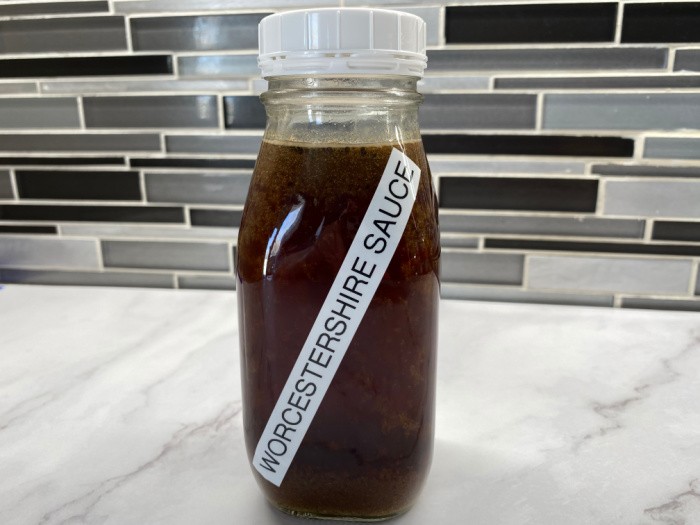
Today, I’m sharing my recipe for homemade Worcestershire Sauce. It’s one of those condiments that adds some extra flavor to so many recipes. I love making my own sauces and seasonings, and this recipe can be made with ingredients you should already have at home.
Have you been in the middle of a recipe and realized you are out of a certain spice or condiment? That’s one reason I’ve suggested to my readers to take inventory from time to time so they aren’t caught by surprise. It’s also why we need to know how to make our own condiments whenever possible.
The ingredients we see on commercial bottles of so many products have questionable chemicals that are hard to pronounce, let alone understand what effect they may have on our bodies. With that in mind, why not make our own so we know exactly what’s in them?
I love making homemade salad dressing because, as we all know, fresh is best. Lately, I’ve been making so many recipes with Worcestershire sauce, I thought to myself, “Why can’t I make it from scratch?” So here I am, sharing my recipe.
I saw recipes with fish sauce, honey, chili powder, etc. None of them looked good to me and my flavor preferences, so of course, I had to experiment with my own flavorings and seasonings.
Nothing is more frustrating than going to the refrigerator knowing you need 3 tablespoons of something, and only 1 tablespoon is left in the bottle! Let’s learn together how to make Worcestershire sauce so those situations are the exception.
Homemade Worcestershire Sauce
Worcestershire sauce began in Worcester, England, back in the 1830s. Two local chemists, John Wheeley Lea and William Henry Perrins, ran a shop on Broad Street that sold food and household goods along with medicine, which was common for pharmacies at the time. Their shop gave them access to spices and ingredients from all over the world, and they liked to experiment with them.
The story goes that a nobleman from the county had recently returned from time in India and asked the two chemists to recreate a spiced sauce he had enjoyed while overseas. Some versions of the tale say it was his wife who really wanted it recreated. Either way, Lea and Perrins mixed up a batch following his instructions, but it turned out harsh and unpleasant. Rather than throw it away, they stored the barrel in their cellar and forgot about it.
Months later, when they rediscovered it, everything had changed. The mixture had matured and fermented into something rich, balanced, and delicious, nothing like the sharp, unpleasant sauce they remembered mixing. That long rest in the cellar is really what created Worcestershire sauce as we know it, since natural fermentation is what gives it that deep savory flavor.
Pleased with what they had, Lea and Perrins began selling the sauce in 1837, making it the very first sauce sold under the Worcestershire name. To build interest, they paid stewards on ocean liners to serve the sauce in the dining rooms. Passengers who tried it during their voyage would often buy a bottle to take home once they landed, and that habit helped the sauce spread quickly.
It reached America soon after, imported into New York by the Duncan family in 1839, who stayed connected to the American side of the business for over a hundred years. Within a decade or two, the sauce had spread throughout the British Empire and beyond.
The exact recipe stayed a closely guarded secret for generations. It was not until 2009, when an old ingredients list was found discarded outside the factory, that the world got a real look at what went into the original sauce. That list included vinegar, molasses, sugar, salt, anchovies, tamarind, onions and garlic, along with hints of cloves, soy sauce, lemons, pickles and peppers. Soy sauce was actually one of the main ingredients for many years, until shortages during World War Two forced the company to replace it with hydrolyzed vegetable protein instead.
As demand grew, the little chemist shop could no longer keep up, so in 1896 production moved into a purpose-built factory on Midland Road in Worcester, where the sauce is still made today.
What started as a failed attempt to recreate someone else’s recipe, forgotten in a cellar for months, ended up becoming one of the most recognized condiments in the world. Now that you know the story behind it, here is how you can make your own homemade version right at home.
Ingredients You Need To Make Your Own Worcestershire Sauce:
- Apple Cider Vinegar: (this gives it the old-fashioned fermented flavor)
- Brown Sugar: (one of my favorite ways to sweeten a recipe)
- Dry Mustard: (this gives the recipe a little kick, not too hot, but just right)
- Soy Sauce: (this adds an even richer fermented flavor)
Items You Need In The Kitchen:
Homemade Worcestershire Sauce
Step One: Gather Ingredients
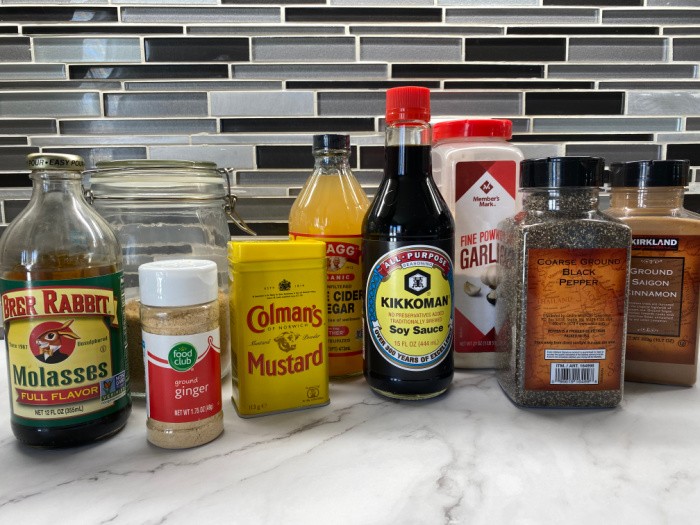
I like to gather all of the ingredients, so I’m ready to make the recipe. It also eliminates the chance of running out of an item while following the recipe.
Step Two: Mix Ingredients
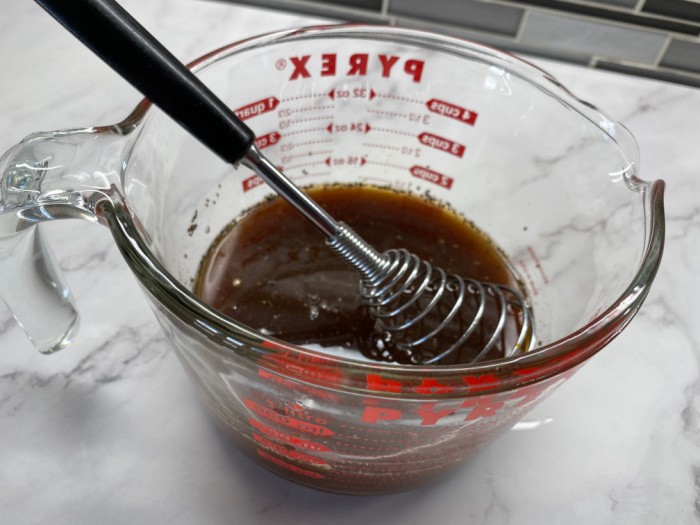
Mix together the brown sugar, dry mustard, garlic powder, onion powder, cinnamon, ground ginger, and black pepper. Add the apple cider vinegar, water, soy sauce, and molasses. Whisk until smooth.
Step Three: Pour Into Bottles
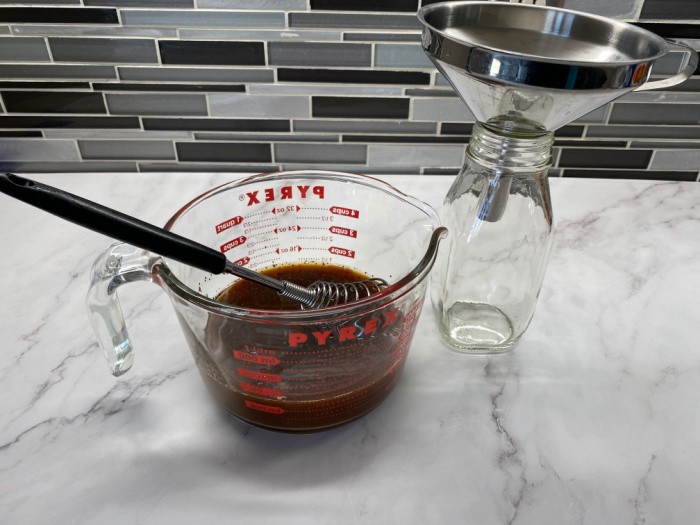
Use a funnel to fill your jar. I purchased these bottles similar to these: 12-ounce Glass Milk Bottles
Finished Product
Shake the jar before each use. Store in the refrigerator for up to two months.
Homemade Worcestershire Sauce Recipe
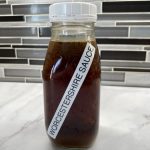
Homemade Worcestershire Sauce
Ingredients
- 1 cup apple cider vinegar
- 1/4 cup water
- 1/4 cup soy sauce
- 1 teaspoon molasses
- 2 tablespoons brown sugar
- 2 teaspoons dry mustard
- 1/2 teaspoon garlic powder
- 1/2 teaspoon onion powder
- 1/2 teaspoon cinnamon
- 1/4 teaspoon ground ginger
- 1/8 teaspoon black pepper
Instructions
- Mix together the brown sugar, dry mustard, garlic powder, onion powder, cinnamon, ground ginger, and black pepper.
- Add the apple cider vinegar, water, soy sauce, and molasses.
- Whisk until smooth.
- Use a funnel to fill your jar.
- Shake the jar before each use.
- Store in the refrigerator for up to two months.
Some Recipes To Use Your DIY Homemade Worcestershire Sauce:
How do you pronounce Worcestershire?
This may help: Wuss-Terr-Sherr sauce. You drop the shire.
How do I store my homemade Worcestershire sauce?
After making the recipe, store it in an airtight bottle for up to two months. Shake before each use.
Does Worcestershire sauce go bad?
The old “smell test” is one way to check on the sauce. If it has an unpleasant odor, it has probably spoiled and shouldn’t be eaten. I don’t expect it to get to this point, but if it has mold in the bottle, particularly near the top where it can be seen, it should be thrown out. When it comes to the quality of food, I’ve always taken the approach “if in doubt, throw it out.”
Can I make this recipe Gluten-Free?
Yes, you can, if you use a gluten-free soy sauce. Always check the ingredients before purchasing. I found this one, Gluten-Free Soy Sauce
What is the flavor of Worcestershire sauce?
Some brands have anchovies (I opted not to use them), but the flavor is a bit strong for me. It’s a dark condiment that’s sour from the vinegar, but sweet from the molasses and brown sugar. The spices give it that extra flavoring I like.
What can I use instead of Worcestershire sauce?
Here’s a hack for you: you can substitute it with the following by mixing them in a bowl. Sometimes we’re in a hurry and need it right now, right?
- 1 T. Ketchup
- 1 T. White vinegar
- 1/2 T. Soy Sauce
Some other sauces to consider trying are A1 Steak Sauce, Anchovy paste and water, fish sauce, liquid smoke, Miso paste and water, oyster sauce, pickle juice, red wine, sherry vinegar, and soy sauce.
For those of you who need gluten-free foods, be sure to consider the ingredients of these alternatives.
How can I use this recipe?
Add it to soups, stews, appetizers, chowders, meats, marinades, and pot pies. The list is endless; it gives a recipe that has a flavor none of us can explain, but we can taste it. And it’s fabulous. Consider using the sauce to marinate your meats rather than just spreading it on the meat or dipping each bite. The marinade makes every bite special!
Are there any health benefits to eating Worcestershire sauce?
Although it isn’t particularly high in the ingredients needed for daily nutritional needs, this sauce does have iron for blood cell production, as well as vitamin C and zinc. It also contains some carotenoids for stronger eyes. It is very low in calories, for those concerned about weight gain, and with a fat-free approach to flavor enhancement, it is considered a more heart-healthy sauce than others you may try.
Speaking of health issues, is this sauce Keto-friendly?
The sauce contains a very low level of carbs, so Keto lovers should be happy with that. My main concern is the amount of sodium/salt, so I wouldn’t use it in large quantities.
Why is Worcestershire sauce so popular?
It’s just a guess, but I think the tangy, savory, sweet, and salty combination makes it an easy choice as cooks try to figure out how to bring out the natural flavor in so many foods. Some people swear by the flavor added if you use anchovies; I’m just not fond of fish, let alone the really strong flavor of anchovies.
Easy Frugal Sauces You Can Make Yourself
Final Word
Isn’t it wonderful when we can make condiments from scratch? I hope you enjoyed my post today on making homemade Worcestershire sauce. Let me know if you make your own, and if so, what ingredients you used to make it taste just right for your family. May God bless this world, Linda
The post Homemade Worcestershire Sauce appeared first on Food Storage Moms.
from Food Storage Moms
No comments:
Post a Comment