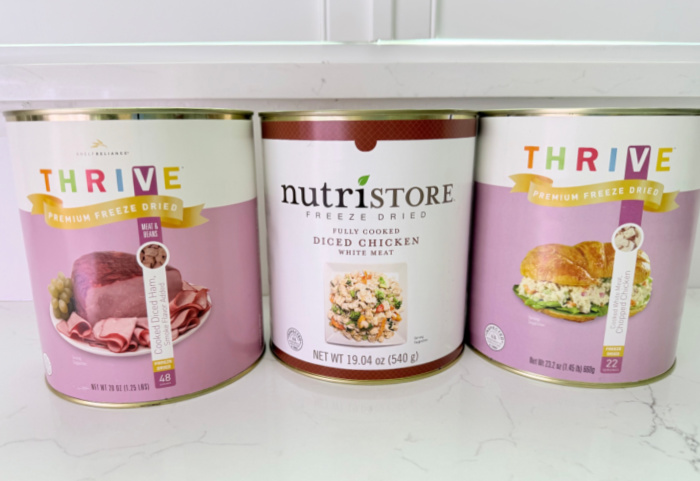
Let’s talk about Freeze-Dried Food vs. Dehydrated Food! When it comes to stocking an emergency pantry, two preservation methods dominate the market: freeze-drying and dehydrating. Both extend shelf life, both keep food lightweight, and both have passionate fans. But they’re not the same thing, and the differences matter when it comes to feeding your family in a real emergency. Please be aware that both Thrive Life and NutriStore have closed.
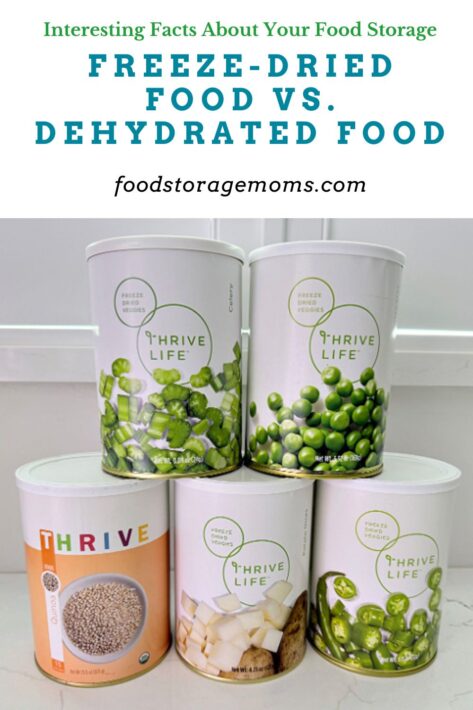
What is freeze-dried food?
Freeze-drying is a two-stage process. Food is first frozen solid at very low temperatures, often below -40°F. Then it goes into a vacuum chamber where the ice turns directly into vapor without ever becoming liquid; a process called sublimation. What remains is food that has lost nearly all of its water content, typically 98 to 99 percent, while retaining most of its original shape and color, and almost all of its nutritional value.
The result looks almost exactly like the original food. A freeze-dried strawberry looks like a strawberry. A freeze-dried pea looks like a pea. And when you add water back, the texture and flavor come remarkably close to fresh. This makes freeze-dried food one of the most popular choices for long-term emergency storage, camping, and backpacking.
What is dehydrated food?
Dehydration is an older method that removes moisture through heat and air circulation. Food is sliced and placed in a dehydrator or a low-temperature oven for hours until most of the moisture evaporates. The food shrinks, darkens slightly, and takes on a chewy or leathery texture. Think of jerky, dried apricots, or sun-dried tomatoes. That is dehydration at work.
Dehydrated foods retain around 80 to 95 percent of their nutrients, depending on the type of food and the heat used. They are denser and heavier than their freeze-dried counterparts because some residual moisture remains. They are also much less expensive to produce, making them typically much more affordable for families building a food supply on a budget.
Side-by-side comparison
| Factor | Freeze-Dried | Dehydrated |
|---|---|---|
| Shelf life (sealed) | 25–30 years | 1–5 years typical |
| Moisture removed | 98–99% | 80–95% |
| Texture after rehydrating | Close to fresh | Chewy or softer |
| Nutrient retention | Very high | Good to very good |
| Weight | Very light | Light but denser |
| Cost | Higher | Lower |
| Rehydration time | 1–5 minutes | 5–20 minutes |
| Home production | Difficult/expensive equipment | Easy with a basic dehydrator |
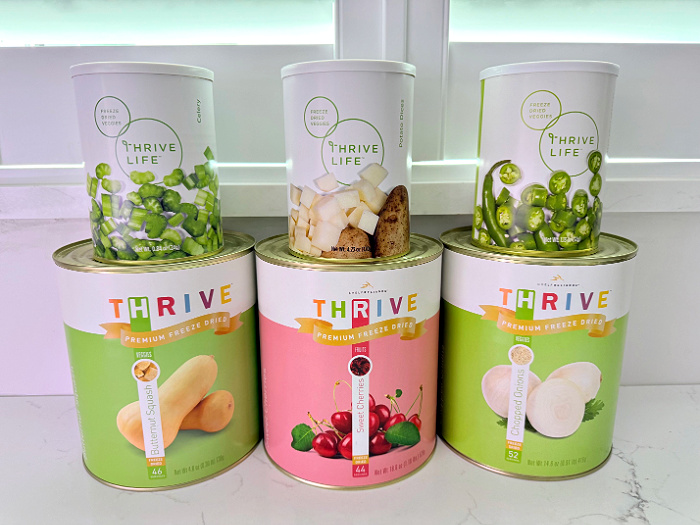
Recommended freeze-dried foods for families
These are the freeze-dried items that offer the best balance of nutrition, versatility, and family acceptance. Prioritize these when building your long-term supply.
Proteins
- Freeze-dried chicken: works in soups, pasta, rice dishes, and casseroles
- Freeze-dried ground beef: rehydrates well for tacos, chili, and pasta sauce
- Freeze-dried shrimp: surprisingly versatile and lightweight
- Freeze-dried eggs: essential for breakfast and baking; scrambled eggs rehydrate well
- Freeze-dried cheese: great for morale, melts acceptably after rehydration
Fruits (often eaten dry as snacks)
- Strawberries: a family favorite, especially for children
- Blueberries: high in antioxidants, easy to eat straight from the can
- Bananas: sweet, filling, and popular with picky eaters
- Peaches and mangoes: add variety and sweetness to oatmeal and cereals
- Apples: work well dry or rehydrated, pair well with oats and grains
Vegetables
- Peas and corn: mild flavor, accepted by most children
- Broccoli and green beans: nutritious and rehydrate well in soups
- Bell peppers: add color and flavor to many dishes
- Sweet potatoes: filling, nutritious, and naturally sweet
- Spinach: blends easily into soups and sauces without detection
Complete meals (pre-packaged)
- Macaroni and cheese: universally accepted by children, easy to prepare
- Chicken noodle soup: comforting and familiar during stressful situations
- Beef stew: hearty and calorie-dense for cold conditions
- Pasta primavera or pasta with sauce: a reliable crowd-pleaser
Recommended dehydrated foods for families
These are the dehydrated staples that provide the most value per dollar and form the backbone of a practical emergency pantry. Many can also be made at home.
Grains and starches
- White or brown rice: stores extremely well, forms the base of countless meals
- Rolled oats: versatile for breakfast, baking, and thickening soups
- Pasta: inexpensive, filling, and easy to prepare with minimal water
- Dehydrated potato slices or flakes: quick to prepare, accepted by children
- Quinoa: higher in protein than most grains, stores well
Legumes
- Pinto beans: essential for chili, burritos, and soups
- Black beans: versatile and protein-rich
- Lentils: cook faster than most dried legumes, no soaking required
- Chickpeas: filling and useful in soups, stews, and salads
- Split peas: make excellent, hearty soups with minimal ingredients
Fruits and vegetables
- Raisins and dried cranberries: portable, no preparation needed
- Dried apricots and prunes: calorie-dense and nutritious
- Dehydrated carrots and celery: flavor staples for soups and stews
- Sun-dried tomatoes: add depth and umami to any savory dish
- Dehydrated onions and garlic: essential for flavor in almost every cooked meal
Proteins and dairy
- Beef or turkey jerky: high protein, no preparation, great for on-the-go
- Dehydrated powdered milk: useful for cooking, baking, and feeding young children
- Powdered butter: adds richness to rice, pasta, and baked goods
- Dried beans and lentils: inexpensive protein that stores for years
Shelf life and storage tips
If you’re building a long-term emergency pantry intended to last decades, freeze-dried food wins by a wide margin. Properly sealed cans of freeze-dried food are commonly rated for 25 to 30 years. Dehydrated foods are excellent for short- to medium-term storage, with most commercially dehydrated products having shelf lives of 1 to 5 years.
Both types of food last longest when stored in cool temperatures below 70°F, away from direct light, and in low-humidity environments. Opened cans and pouches should be sealed tightly and used within a few weeks to a few months. Mylar bags and oxygen absorbers extend the life of home-dehydrated food considerably.
Nutrition and taste
Freeze-drying preserves nutrients exceptionally well because the process doesn’t use heat. Vitamins, minerals, and even delicate antioxidants survive almost intact. When your family rehydrates a freeze-dried meal during a stressful situation, it’ll look and taste recognizable, which matters more than most people expect when morale is low.
Dehydration uses heat, which degrades heat-sensitive vitamins such as vitamin C. That said, most minerals and many vitamins survive the process well. From a flavor standpoint, dehydrated foods carry a more concentrated, sometimes sweeter taste. Children who are picky eaters may take longer to adapt to differences in texture, especially with rehydrated vegetables.
A note for families with young children: Kids often do better with freeze-dried foods in emergencies because the texture and appearance more closely resemble what they’re used to eating. If you’re building a supply with picky eaters in mind, including some freeze-dried fruits and complete meals can make a significant difference in helping children eat during stressful times.
Cost and home production
Freeze-dried food is more expensive to produce and therefore more expensive to buy. A family-sized emergency supply can run into several hundred dollars or even thousands. The process requires specialized industrial equipment that most households can’t replicate at home without investing $2,000 to $5,000 in a home freeze-dryer.
Dehydrated food is far more budget-friendly. Many families dehydrate food at home with a basic electric dehydrator that costs between $50 and $500. You can dehydrate seasonal produce when prices are low, preserve garden harvests, and build a meaningful food supply without a large upfront expense. For families on a budget, dehydrating is often the most realistic starting point.
Which one should your family choose?
The honest answer is that most well-prepared families benefit from having both. A layered approach gives you flexibility and resilience that a single method can’t. Start with dehydrated staples like rice, beans, oats, and pasta to fill the bulk of your pantry affordably. Then add freeze-dried proteins, fruits, and complete meals to extend your shelf life, improve nutrition, and give your family familiar comfort foods when it matters most.
The most important step is simply getting started. A modest, well-chosen supply built over time is far better than a perfect plan that never gets off the ground.
I Can No Longer Recommend Freeze-Dried or Dehydrated Foods in #10 Cans
Please let me explain. It’s a personal preference because food is so expensive NOW, so are the commercially processed #10 cans. I believe they are safer, but canned goods at the store will work just fine. If your pantry is stocked, you’ll survive without those expensive cans of meat, fruits, and vegetables. I’ve been stocking since I got married almost 57 years ago. Things have changed, and the prices have escalated.
I started stocking #10 cans back in 2013, from Thrive Life. I became a consultant so I could get the cases at a lower cost. Our friends traveled the world, and I stocked my shelves. We took vacations, but food storage was more important to me. If you read my book, you know why. “Prepare Your Family For Survival”. I want to thank you from the bottom of my heart for purchasing my book. It didn’t do as well as my publisher was hoping. You have to think about it this way: if you were at Barnes and Noble, and a Cupcake Book was next to the “Prepare Your Family For Survival” book, the cookbook would win. I wish my publisher had added different hashtags on Amazon, but they were from New York and had zero clue about preparedness.
Canned Foods I Highly Recommend You Store
Frequently asked questions
Can I make freeze-dried food at home?
Technically, yes, but it requires a home freeze-dryer, which currently costs between $2,000 and $5,000. For most families, it’s more cost-effective to purchase commercially freeze-dried food and focus home preservation energy on dehydration. Please keep in mind that if you buy a Home Freeze-Dryer, you still need to purchase the food, Mylar bags, cans (if available), oxygen absorbers, and jars.
Do these foods need water to prepare?
Most do. This is an important planning consideration. Make sure your emergency supply includes ample water storage or a reliable water purification method. Many freeze-dried fruits and vegetables can also be eaten dry directly from the container as snacks.
Are there foods that dehydrate better than others?
Fruits, vegetables, herbs, jerky, and grains dehydrate very well. Foods with high fat content, like full-fat dairy or avocado, don’t dehydrate reliably and can go rancid. Freeze-drying handles a broader range of foods, including full meals, dairy, and eggs.
How do I know if my stored food has gone bad?
Off smells, visible mold, unusual discoloration, or a rancid taste are all warning signs. Commercially sealed cans that show no damage and have been stored properly are generally safe within their rated shelf life. When in doubt, throw it out.
How much food should I store for my family?
Emergency preparedness experts generally recommend starting with a 72-hour supply, then working toward a 30-day supply, and eventually a 90-day supply. A general guideline is to store roughly 2,000 calories per person per day, adjusted for children and activity level. Please note: I don’t count calories. There, I said it. LOL!
Final Word
Whether you choose freeze-dried, dehydrated, or a mix of both, the goal is the same: making sure your family has safe, familiar food when it matters most. Start small, build steadily, and remember that any supply is better than none. Preparedness is not a one-time purchase; it is a habit, and one your family will be glad you built. May God bless this world, Linda
The post Freeze-Dried Food vs. Dehydrated Food appeared first on Food Storage Moms.
from Food Storage Moms
No comments:
Post a Comment