Estimated reading time: 7 minutes
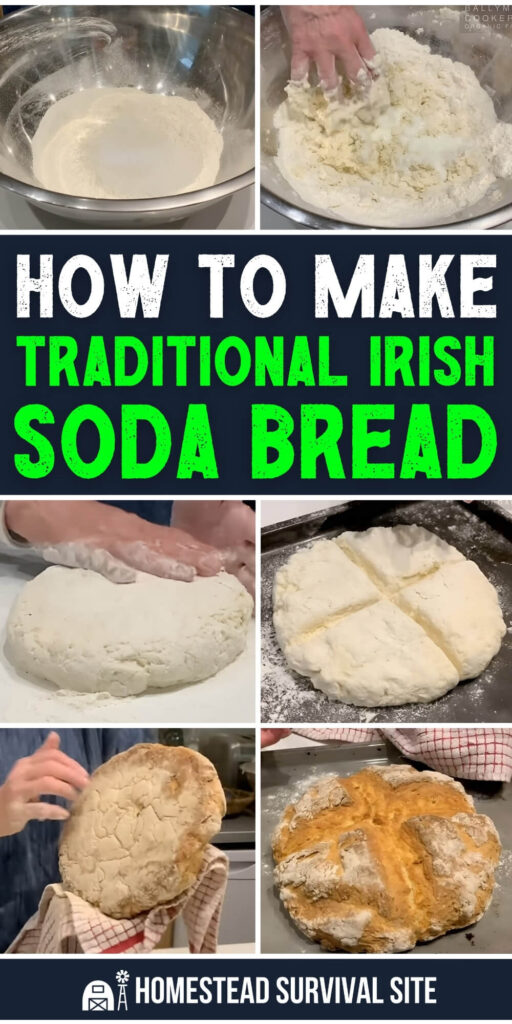
If you've never had a fresh-baked loaf of Irish soda bread, you're missing out. It's dense but tender, with a slightly tangy flavor from the buttermilk and a crispy crust that goes great with butter. It's not fancy or complicated, and that's the point. It's humble, hearty, and deeply satisfying in a way that a lot of more “sophisticated” breads just aren't.
Unlike most breads, soda bread doesn't use yeast at all. Instead, it relies on a simple chemical reaction between baking soda and the acid in buttermilk to create the rise. That means no proofing, no kneading, and no waiting around for dough to rise. It only takes a few minutes to make, and baking time is about 30 to 40 minutes.
Irish soda bread originated in the 1840s, when baking soda first became widely available in Ireland. For a country with a cool, damp climate better suited to soft wheat than the hard wheat used in yeast breads, soda bread was a perfect fit. It became a staple of Irish households almost immediately, and it's one of those recipes that has barely changed in nearly 200 years, which tells you everything you need to know about how good it is.
Want to save this post for later? Click Here to Pin It On Pinterest!
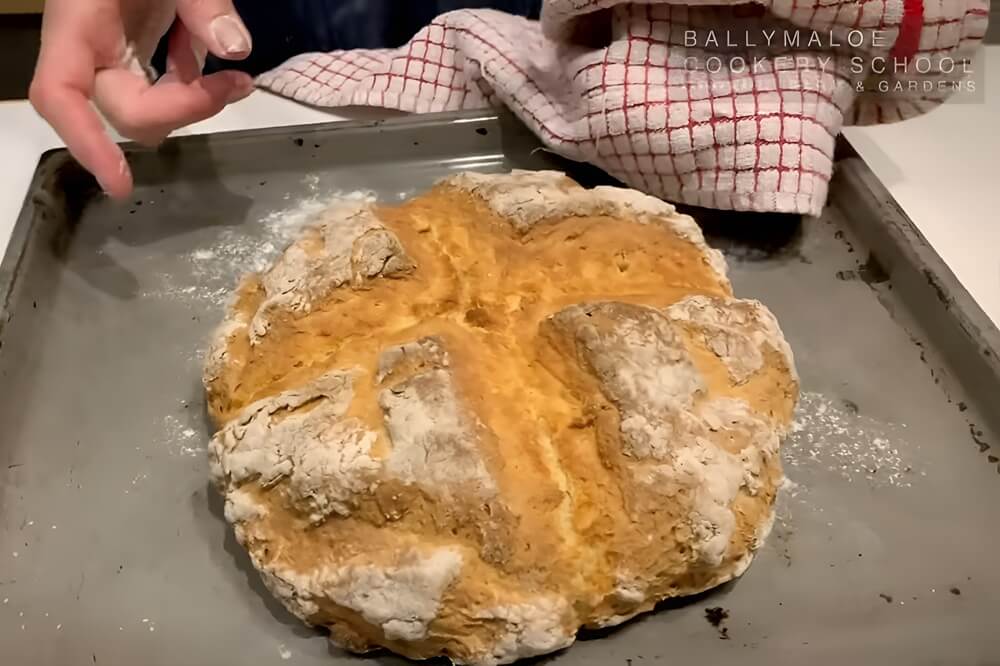
There are many versions of this recipe floating around, but I like this one I found on the YouTube channel, Ballymaloe Cookery School. It features Darina Allen, who is one of Ireland's most respected cooking teachers. Her approach is traditional, straightforward, and comes with a few charming bits of Irish folklore. You can view her video and recipe below.
Traditional Irish Soda Bread Recipe
Ingredients
- 450g (1 lb) plain white flour (all-purpose flour)
- 1 level tsp salt (½ tsp if using American measurements)
- 1 level tsp bread soda (baking soda / bicarbonate of soda)
- 350–400ml buttermilk (about 12–14 fluid ounces), plus a little extra if needed
Instructions
Step 1: Preheat Your Oven First
Before you do anything else, get your oven turned on. You want it fully preheated to 230°C (450°F / Gas Mark 8) by the time your dough is ready. Darina is emphatic about this. A hot oven is critical for getting the right rise and crust on soda bread. Don't skip this step or try to shortcut it.
Step 2: Mix the Dry Ingredients
Measure out your flour into a large, wide bowl. A wide bowl matters here as you'll need the space when you start mixing. Add the salt and the bread soda.
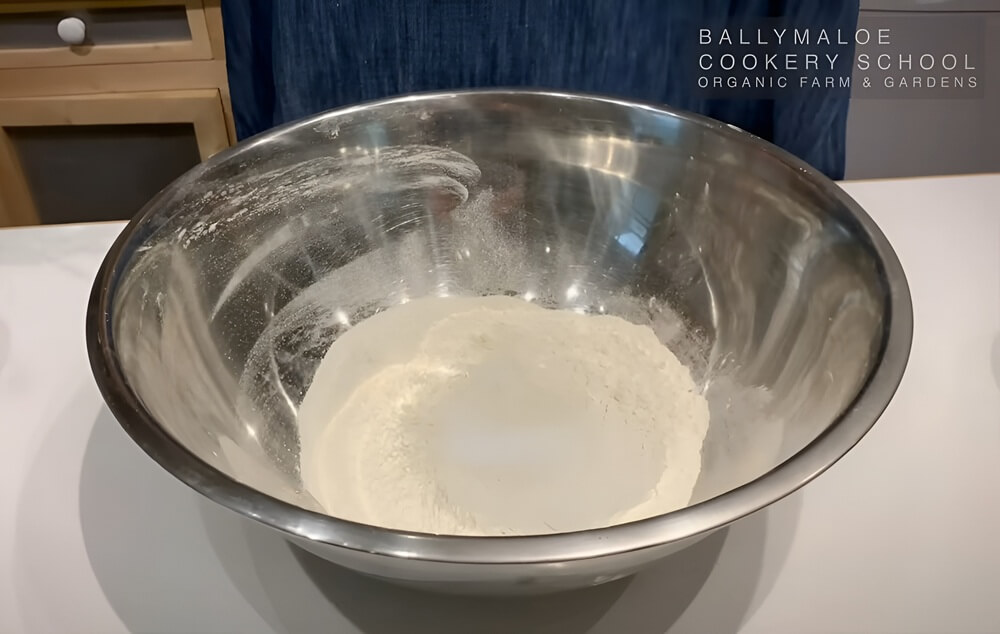
If your baking soda has any lumps in it (which it often does), either sieve it in or do what Irish mothers and grandmothers have always done: rub the lumps out between your palms and sprinkle it in. Then use your fingers to lightly mix everything together, making sure the salt and baking soda are evenly distributed through the flour.
Step 3: Add the Buttermilk
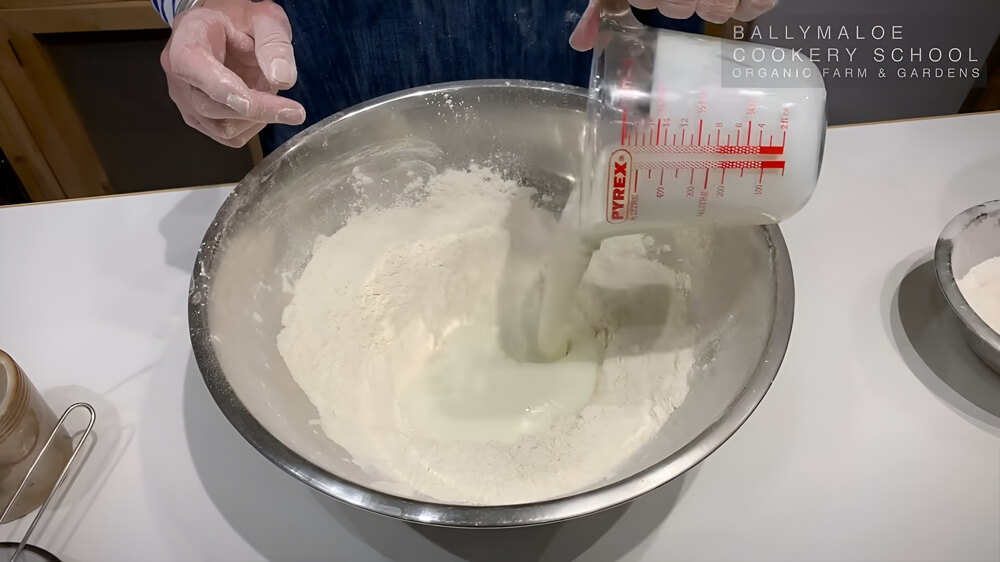
Make a well in the center of your flour. Pour in almost all of the buttermilk in one go. Hold a small splash back just in case the dough comes together perfectly without it, but get most of it in there at once.
Step 4: Mix with Your Claw Hand
Here's Darina's signature technique: make your hand into a claw shape, fingers outstretched and stiff, and stir in a full circular movement from the center of the bowl outward. Keep going in that same circle, working from the middle to the edges, and by the time you've made it around the bowl a few times, the dough will have come together.
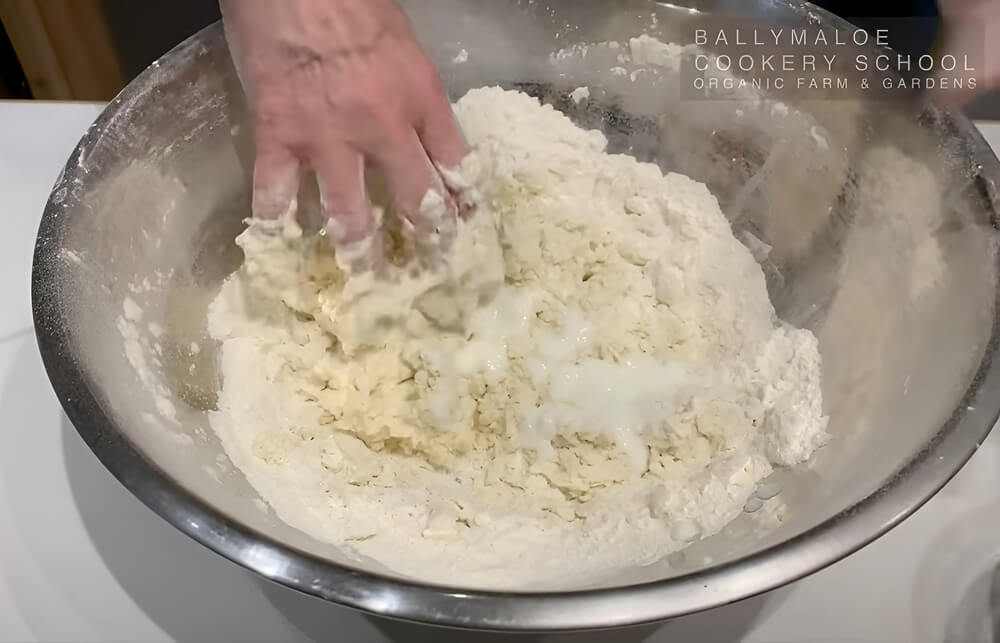
You're looking for a dough that is soft but not overly wet or sticky. If it feels too dry and isn't coming together, add a splash more buttermilk.
Step 5: Wash Your Hands
Darina actually stops and says this out loud in the video, and she means it. Your hands will be coated in sticky dough at this point. Wash them and dry them before you move on, otherwise the next steps get messy fast.
Step 6: Turn Out and Shape
Flour your work surface generously and turn the dough out onto it. With floured hands, gently tidy up the edges and flip the dough over. You're not kneading it, just tucking and shaping. Work it into a round loaf about 4cm (roughly 1.5 inches) deep, pressing and tucking from the sides to bring it up into a nice, even shape.
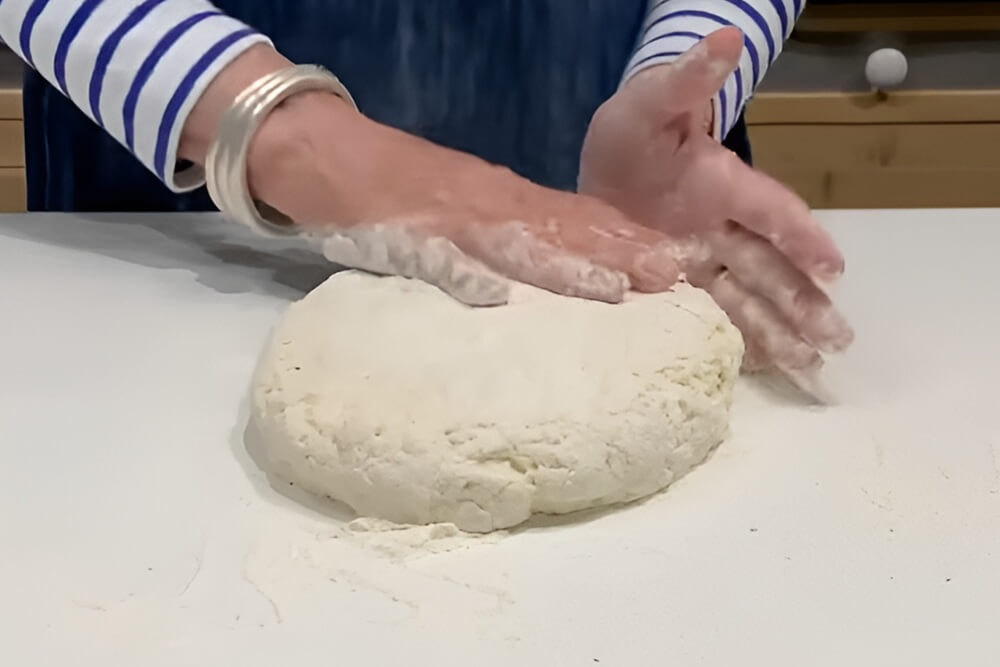
Sprinkle a little flour over the top and underneath, then transfer the loaf to a baking tray.
Step 7: Score the Cross and Prick the Corners
Using a sharp knife, cut a deep cross into the top of the loaf. This is known as the traditional blessing, but it also has a very practical purpose: the cross opens up in the oven and allows the center to bake evenly.
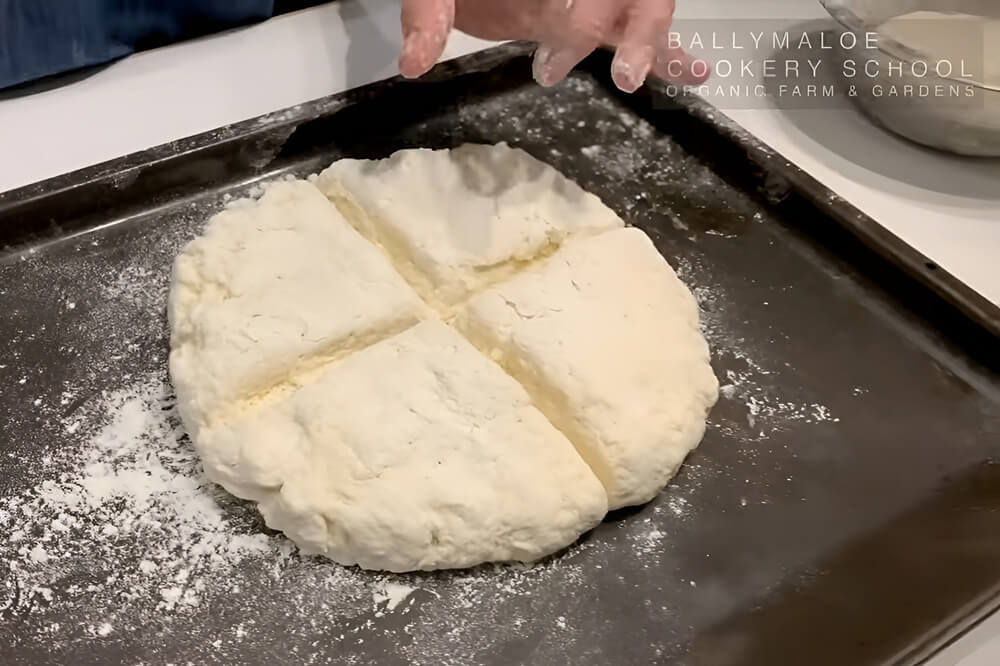
Then, prick the dough once in each of the four corners of the cross. According to Irish tradition, this lets the fairies out of the bread. Leave them in and they'll jinx it. Whether or not you believe in fairies, it's a fun step, especially if your kids are helping.
Step 8: Bake
Bake at 230°C (450°F) for 15 minutes, then reduce the heat to 200°C (400°F / Gas Mark 6) and bake for another 15–20 minutes.
Total baking time is roughly 30 to 40 minutes. To check if it's done, pick up the loaf and tap the bottom. It should sound hollow. If it sounds dense and dull, give it a few more minutes.
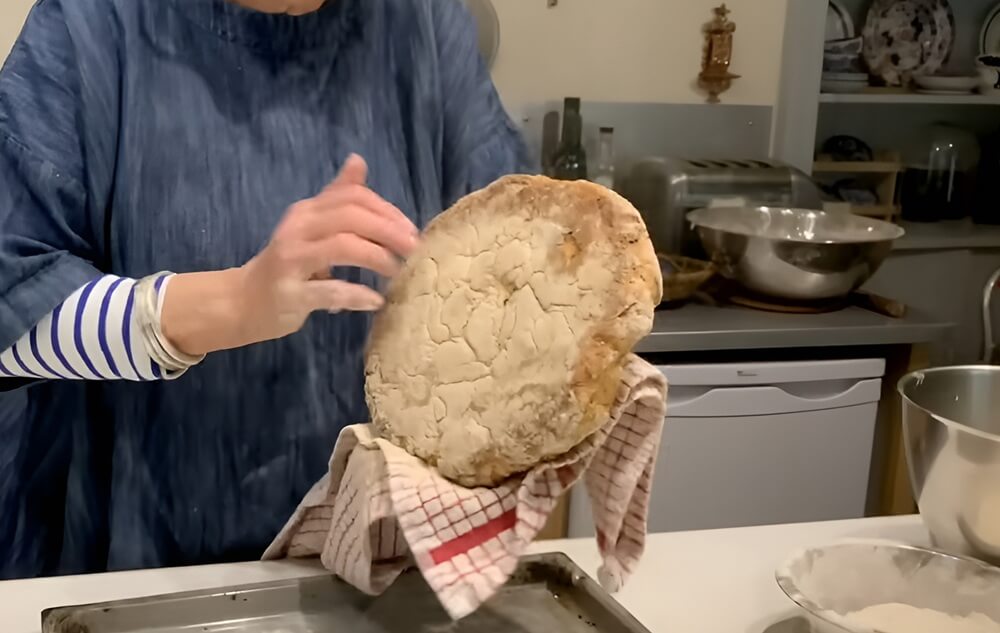
Step 9: Cool on a Wire Rack
This step matters more than it might seem. Cooling the bread on a wire rack lets air circulate all the way around it, which keeps the bottom from going soggy and helps you get that slightly crispy crust. Give it at least 15–20 minutes before you slice into it.
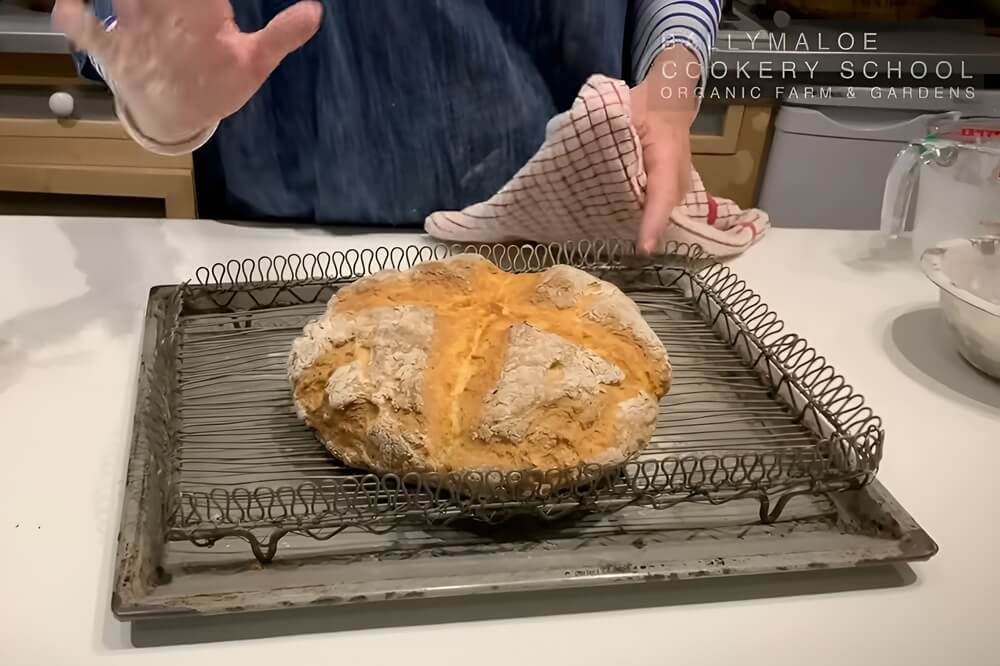
How to Serve It
Darina puts it simply: soda bread is best eaten on the day it's made, slathered with good Irish butter. She's not wrong. It's also fantastic toasted the next morning, and you can press the dough into scones instead of a loaf if you want something even quicker. The scones are done in about 10 minutes.
Once you've made this once, you'll understand why it's been a daily staple in Irish homes for nearly 200 years. Three minutes of work, 35 minutes in the oven, and you've got a loaf of bread that tastes like it took all day.
Like this post? Don't Forget to Pin It On Pinterest!
You May Also Like:
The post How to Make Traditional Irish Soda Bread appeared first on Homestead Survival Site.
from Homestead Survival Site https://ift.tt/WVTUvMp
No comments:
Post a Comment