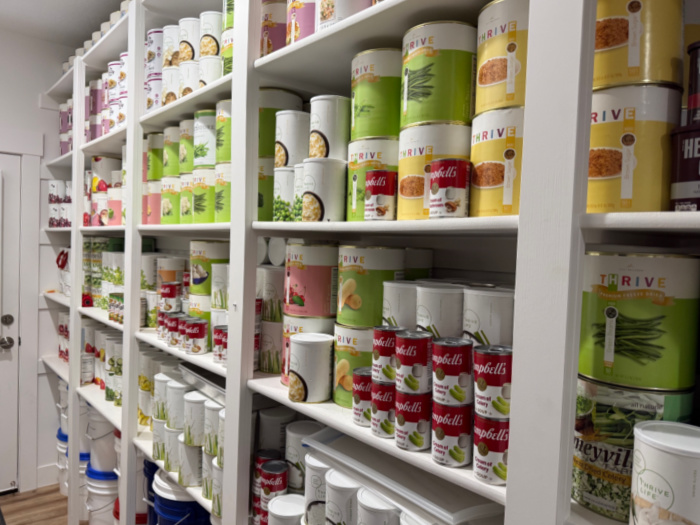
If We Have a War: Have You Actually Tested Your #10 Cans? Most families who have built up a food storage supply did so with the best intentions. They stacked the cans, rotated a few boxes, wrote the year purchased on a piece of tape, and felt ready. But there’s a question that doesn’t get asked nearly enough: Have you opened any of it lately?
Because opening it is the only way to know whether your stored food will actually be of the quality needed to feed your family when it matters most. Can Openers, Large Can Openers, and Electric Can Openers
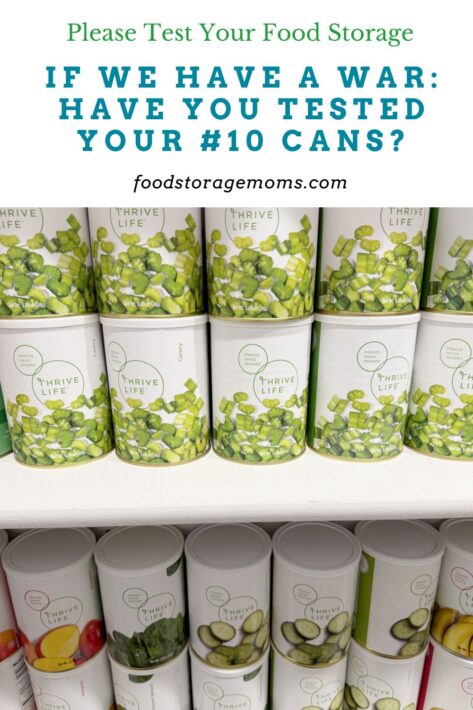
The Myth of the 25-Year Shelf Life
Walk into any emergency preparedness store or scroll through prepper websites, and you’ll see it everywhere: “25-year shelf life.” It sounds reassuring. It’s also frequently misleading.
That number, when it’s legitimate at all, refers to a very specific set of conditions. The food must be stored in a cool, dry, dark environment with consistent temperatures, ideally between 55 and 70 degrees Fahrenheit. It must be sealed in a nitrogen-flushed, oxygen-absorber-packed #10 can with no prior exposure to humidity, light fluctuations, or heat.
Your garage in July doesn’t qualify. Neither does the corner of a basement that floods. Neither does the closet next to the water heater.
Many families store their emergency food in exactly those kinds of places and never think twice about it. The 25-year clock starts the moment those cans were filled, and it assumes conditions most households simply can’t maintain.
Not All #10 Cans Have a 25-Year Shelf Life
Not all items in your storage have a 25-year life, either. Here is a quick reality check on commonly stored foods and their realistic shelf lives under good but not perfect conditions:
White rice: 25 to 30 years when sealed with oxygen absorbers
Hard red or white wheat: 25 to 30 years when properly sealed
Powdered milk: 2 to 10 years, depending on fat content and storage temperature
Instant Milk (Thrive Life): 25 years under ideal conditions, far less in heat
Freeze-dried fruits and vegetables: 25 years under ideal conditions, far less in heat
Canned goods from the grocery store: 2 to 5 years, sometimes more, but quality declines significantly after that
Cooking oils: 1 to 4 years, and rancid oil is a health hazard, not just a flavor problem
Sugar and honey: indefinite if kept dry and sealed
Salt: indefinite if kept dry and sealed
Pasta: 8 to 10 years under good conditions
Dried beans: technically edible for decades, but after 8 to 10 years, they may never fully soften, no matter how long you soak and cook them. Please note that you could pressure-can them if you have the jars, lids, rings, stove, and fuel available.
That last one surprises people. Old dried beans are safe to eat, but can remain hard as pebbles even after hours of cooking. In a crisis with limited fuel, that’s a serious problem.
What Happens When Food Goes Bad in the Can?
People often assume that sealed means safe. That assumption can get a family into trouble. Inside a sealed can, several things can go wrong over time, even without visible signs of damage on the outside.
Oxygen absorbers lose effectiveness. If a can wasn’t properly sealed from the start, or if oxygen was not fully removed, oxidation continues slowly inside. This causes fats to go rancid, vitamins to degrade, and flavors to become stale or unpleasant.
Moisture intrusion causes mold and bacterial growth. Even a tiny pinhole or an imperfectly sealed lid allows moisture vapor to enter over the years. You may open a can that smells fine on first sniff but reveals clumping, discoloration, or a musty odor underneath. You’ll also notice the color has changed. It shouldn’t be dark and discolored. It would be bright and colorful if it were sealed with the correct amount of oxygen absorbers.
Temperature cycling causes condensation inside the can. If a storage area heats up in summer and cools in winter, moisture repeatedly condenses on the inner walls of cans. This degrades product quality and can encourage spoilage even in sealed containers.
Insects can compromise packaging. Grain weevils and other pantry pests are surprisingly good at finding their way into storage areas. If you’re storing grain in buckets without proper seals, you may open a bucket years later to find it’s been colonized.
Signs That Your Stored Food Has Failed
Here’s what to look for when you open a can or package you haven’t checked in a while. Smell is your first and most reliable tool. Freshly stored wheat has a mild, clean, slightly earthy scent. Fresh powdered milk smells faintly dairy-sweet. Freeze-dried vegetables smell like concentrated versions of themselves. When those smells turn sour, rancid, musty, or sharp, something has gone wrong.
Color changes are a strong warning sign. Powdered milk that has yellowed significantly has oxidized badly. Freeze-dried apples that have turned dark brown have likely been exposed to excessive heat. White rice that has developed yellowish or grayish patches may have absorbed moisture.
Check The Texture
Texture tells a story, too. Powdered items that have clumped into solid masses have absorbed moisture. Grains that feel soft or gummy instead of hard and dry have been compromised. Freeze-dried foods that are no longer crisp but instead feel leathery or chewy have lost their protective dry state.
Taste it. This is the step most people skip, and it’s the most important one. A small taste of reconstituted powdered milk, cooked wheat, or rehydrated freeze-dried vegetables will tell you immediately whether the flavor is acceptable. Rancid fat in whole-wheat or whole-grain products has a bitter, almost metallic taste that’s unmistakable. Oxidized powdered milk has a flat, almost soapy flavor. These are foods you don’t want to rely on.
For commercially canned goods, bulging lids are an absolute red flag. Discard any can that bulges, hisses when opened, or has an obviously off smell. Botulism is odorless, but most other forms of spoilage aren’t, and a bulging can is never safe regardless of cause.
How to Actually Test Your Storage
Set aside an afternoon and approach this like a home inspection, not a casual browse. Start by going through every area where you store food and making a written list of what you have, when it was purchased or packed, and where it has been stored. Be honest about the storage conditions. If cans spent three summers in a hot shed, note that.
Then open things. You don’t need to open every can. Open a representative sample from each type and each storage location. Check the oldest items first. Open items stored under the worst conditions first.
Reconstitute powdered products and actually taste them. Cook a small amount of your stored grains and taste the result. Rehydrate a portion of freeze-dried food and taste it. Write down what you find.
Check For Damage On Cans
Check for physical damage on all containers. Look for rust on #10 cans, particularly around the seam and the lid edge. Light surface rust on the outside doesn’t necessarily mean the food inside is bad, but deeper rust or rust near the seal line is concerning. Look for dents on the seam lines of commercial cans, not just on the body. A seam dent is a structural failure that may have compromised the seal.
Check your bucket storage carefully. Gamma seal lids are more reliable than standard snap lids for long-term storage. If your buckets have only standard snap lids, consider whether they have been sealed well enough over the years.
What to Do With What You Find
Food that tests well goes back into storage with a fresh label including the test date and a note that it passed. Food that has declined in quality but is still technically edible gets moved to active use. Work it into your current cooking now so it doesn’t go to waste.
Food that has genuinely failed gets discarded. This is hard when you’ve spent real money building a supply, but eating rancid fat causes real harm, and serving your family food that makes them sick during a crisis is worse than having no food at all.
Replace what you discard with fresh stock, properly sealed, labeled, and stored in your best available conditions. And this time, commit to a rotation and testing schedule so you aren’t in the same position five years from now.
Building a Testing Schedule Going Forward
Emergency food storage isn’t a one-time purchase. It’s more like a garden: something you tend, check on, and actively maintain. A reasonable schedule looks like this. Once a year, do a full audit of your storage. Walk through every location, check dates, look for physical damage, and open and taste at least one item from each category. Twice a year, rotate any items within 2 years of their expected shelf life into active use and replace them. After any significant temperature event, such as a power outage in winter, flooding, or an unusually hot summer, do a spot check on anything that may have been affected.
Keep a simple storage log. A notebook or a basic spreadsheet works fine. Record what you have, where it’s stored, when you purchased or packed it, and when you last tested it. This small investment of time will save you from discovering failures at the worst possible moment.
A Note About Commercial Grocery Store Cans
Not everything in emergency food storage comes from specialty preparedness-oriented companies. Many families round out their supplies with regular canned goods from the grocery store, and that is completely reasonable. But those cans operate on a different timeline.
The dates printed on commercial cans usually list best-by dates, not safety dates. Most commercially canned vegetables, fruits, and meats remain safe to eat well past those dates if the can is undamaged. However, quality, flavor, and nutritional content decline over time. A can of green beans from three years ago is safe. A can of green beans from ten years ago in a corroded or dented can isn’t something to gamble on.
High-acid foods like tomatoes and fruits degrade faster than low-acid foods like vegetables and meats. Commercial canned fish and meat hold up reasonably well for several years past the printed date under good storage conditions.
Plan to rotate your commercial canned goods on a two to three-year cycle, and you’ll generally have no problems.
The Uncomfortable Truth About Preparedness
Having a storage supply on paper and having one that’ll actually function in a crisis are two different things. The gap between them should be tested regularly, not stored indefinitely.
The families who’ll fare best in any extended disruption, whether from a natural disaster, an economic shock, supply chain failure, or something more serious, are the ones who actually know what they have, know that it’s still good, and know how to use it. That knowledge only comes from opening cans, tasting food, and doing the maintenance that effective preparedness actually requires.
Check your cans. All of them. Not because the world is ending next week, but because the whole point of having a supply is to be able to count on it when needed.
Food Poisoning: What You Should Know
Foods That Have a Long Shelf Life
Final Word
As mentioned, having a storage supply on paper and having one that will actually function in a crisis are two different things. Most families stack the cans, write a year on a piece of tape, and feel ready. But sealed doesn’t always mean safe, and 25 years isn’t a guarantee; it’s a best-case number that assumes cool, dry, stable conditions that most homes simply don’t provide. Powdered milk can turn soapy and flat. Dried beans can become permanently hard. Cooking oil goes rancid in ways that are genuinely harmful, not just unpleasant. The only way to know what you actually have is to open it, smell it, and taste it. Do that before you need it. May God bless this world, Linda
The post If We Have a War: Have You Tested Your #10 Cans? appeared first on Food Storage Moms.
from Food Storage Moms
No comments:
Post a Comment