Estimated reading time: 8 minutes
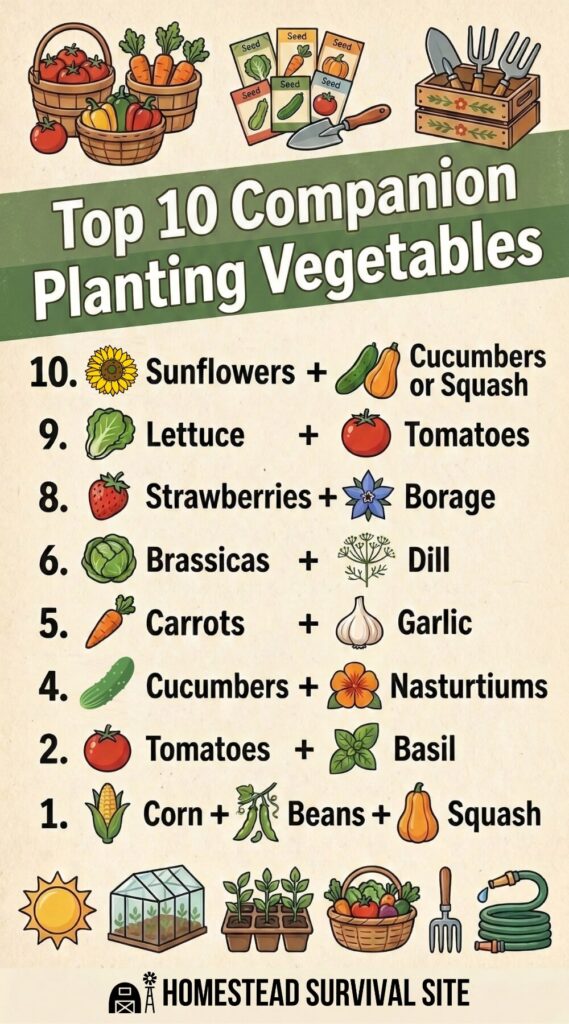
If you've been gardening for any length of time, you've probably heard the term companion planting. It's simply the practice of growing certain plants together so they can help each other thrive.
Some plants repel the pests that plague their neighbors. Others attract beneficial insects that do things like pollination and eating pests. Some plants improve the soil, others provide shade for smaller plants, and a few can even improve the flavor of plants growing beside them.
Done right, companion planting can help you minimize pests, prevent disease, and use your garden space more efficiently. The best part is how easy it is. You don't need any skills or experience. You just need to know which plants to put together.
In this article, we put together a list of the 10 best companion planting combinations to start with. These are all tried-and-true pairings that are popular, proven, and easy for any gardener to pull off.
10. Peppers + Carrots
As carrots grow, their roots naturally loosen and aerate the soil around them, which is great news for pepper plants, whose roots thrive in well-drained, breathable ground. In return, pepper plants provide light shade that helps keep the soil cool and moist, which carrots appreciate during the heat of summer.
There's a pest-control benefit here too. Carrots attract beneficial insects like parasitic wasps and lacewings, which prey on the aphids and spider mites that love to target pepper plants. It's a great partnership that keeps your soil healthy and pests to a minimum.
9. Sunflowers + Cucumbers or Squash
If you've ever struggled with poor cucumber or squash yields, the problem might be a lack of pollinators. Sunflowers are one of the best pollinator magnets you can plant, drawing bees and other beneficial insects to your garden in large numbers. When planted near cucumbers or squash, that boost in bee activity can make a big difference in your harvest.
Sunflowers also pull double duty as a living trellis and trap crop. Vining cucumber plants will naturally climb their sturdy stalks, freeing up ground space and improving air circulation. At the same time, sunflowers tend to attract aphids, drawing them away from your cucumbers and squash before they can do real damage.
8. Lettuce + Tomatoes (or Tall Plants)
Lettuce is one of the easiest vegetables to grow, at least until summer hits. As temperatures climb, lettuce bolts quickly, turning bitter and going to seed before you've had a chance to enjoy it. That's where tomatoes come in. By planting lettuce at the base of your tomato plants, you give it the shade it needs to stay cool, slow down bolting, and extend your harvest window by several weeks.
The benefits go both ways. Lettuce acts as a living mulch around the base of your tomato plants, helping the soil retain moisture and suppressing weeds that would otherwise compete for nutrients. Tomatoes are heavy feeders, so anything that helps keep their root zone cool and weed-free is a win. If you don't have tomatoes, this same strategy works beautifully with other tall plants like corn, sunflowers, or pole beans.
7. Strawberries + Borage
If you've never grown borage, this combination might be the perfect excuse to start. Borage is a fast-growing, easy-care herb with beautiful star-shaped blue flowers that pollinators absolutely love. Plant it near your strawberries and you'll notice a significant uptick in bee activity, which translates directly into better pollination and bigger, more abundant fruit.
Beyond pollination, borage offers some solid pest protection for your strawberry patch. It's known to repel tomato hornworms and a number of common strawberry pests, helping to keep your plants healthier throughout the season. Borage also has a habit of self-seeding, meaning once you plant it, it tends to come back year after year with very little effort on your part.
6. Brassicas + Dill
Cabbage, kale, broccoli, and their brassica relatives are some of the most pest-prone garden plants. Cabbage worms, aphids, and cabbage loopers can devastate a brassica bed in a hurry if left unchecked. That's where dill earns its place in the garden. Dill is a powerhouse at attracting predatory and parasitic wasps, which are nature's own pest control, laying their eggs inside cabbage worms and effectively eliminating them before they can do serious damage.
The best part is how effortless this combination is to pull off. Dill is one of the easiest herbs to grow from seed, thrives in the same cool-weather conditions that brassicas prefer, and doesn't compete aggressively for nutrients or space. Just scatter a few seeds along the edges of your brassica bed at the start of the season and let it do its thing.
One important note: Once dill matures and begins to flower, it can actually have a negative effect on some brassicas, so plan to succession-sow small amounts throughout the season to keep young dill growing alongside your crops.
5. Carrots + Onions
Carrots and onions are one of the most time-tested companion planting combinations in the garden, and for good reason. The strong scent of onions confuses and repels carrot flies, which locate their host plants primarily by smell. Meanwhile, the feathery, pungent foliage of carrots returns the favor by masking the scent of nearby onions from onion flies. It's a mutual defense system that nature essentially built for you.
Beyond pest control, carrots and onions make practical neighbors because they don't compete with each other underground. Onions are shallow-rooted bulbs that occupy the upper layer of soil, while carrots push straight down into the deeper layers, so they're essentially working in completely different root zones without getting in each other's way. They also share similar growing conditions, preferring well-drained, loose soil and plenty of sun.
4. Roses + Garlic
Roses are beloved by gardeners everywhere, but they come with a well-known downside: they're magnets for pests and disease. Aphids, Japanese beetles, and fungal problems like black spot can take a gorgeous rose bed and turn it into a frustrating battle almost overnight. Garlic is one of the oldest and most reliable natural remedies for all of these problems. Its pungent sulfuric compounds repel aphids and beetles on contact, and its antifungal properties have been shown to reduce the spread of black spot and other common rose diseases.
What makes this pairing even better is how little effort it requires. Garlic is one of the most undemanding plants in the garden. Just plant it in fall and let it quietly go to work all season long. It stays low to the ground, so it never competes with your roses for sunlight or space, and it actually makes a tidy, attractive border around a rose bed.
3. Cucumbers + Nasturtiums
Nasturtiums are one of the most effective trap crops, and cucumbers are one of their greatest beneficiaries. Aphids and cucumber beetles are drawn irresistibly to nasturtiums, pulling them away from your cucumber plants before they can do any real harm. Instead of spraying or picking pests off your cucumbers by hand, you let the nasturtiums take the hit, then deal with the pests on one concentrated plant rather than scattered across your entire bed.
What makes this combination so popular is that nasturtiums have almost no downsides. They grow quickly from seed, thrive in poor soil, require virtually no maintenance, and produce edible flowers and leaves that are a peppery, colorful addition to summer salads. They also attract pollinators, which gives your cucumber plants an extra boost when it comes to fruit production.
2. Tomatoes + Basil
These two have been grown together for centuries, and the reasons are almost too numerous to count. Basil's strong aromatic oils are known to repel some of the most common tomato pests like aphids, whiteflies, and tomato hornworms while also attracting pollinators that help your tomato plants set fruit. Many gardeners swear that basil improves the flavor of tomatoes grown nearby.
Beyond the pest control and flavor, this combination is just incredibly practical. Tomatoes and basil thrive in the same conditions, which means caring for them together is no more work than caring for either one alone. Basil stays compact and low-growing, so it never shades out your tomato plants, and it fits neatly between or around the base of your tomato cages.
1. The Three Sisters: Corn + Beans + Squash
Few companion planting combinations in history can match the Three Sisters. This legendary trio, corn, beans, and squash, has been grown together by Native American peoples for centuries, and it remains one of the most famous and popular companion planting methods in the world.
What makes it so remarkable is that it isn't just a pairing of two plants that happen to help each other. It's a complete, self-sustaining growing system where each plant plays a distinct and essential role. Corn grows tall first, providing a natural trellis for bean vines to climb. Beans fix nitrogen from the air directly into the soil, continuously feeding the heavy-feeding corn and squash throughout the season. And squash spreads its broad, sprawling leaves across the ground, shading out weeds, retaining soil moisture, and deterring pests with its prickly texture.
Together, these three plants create something that none of them could achieve on their own: a balanced, productive, nearly self-managing garden bed that feeds the soil as much as it feeds the gardener. Whether you have a large garden plot or just a modest raised bed, planting the Three Sisters is one of the most rewarding experiments you can try. You can learn more about it in this article.
You May Also Like:
The post Top 10 Companion Planting Vegetables appeared first on Homestead Survival Site.
from Homestead Survival Site https://ift.tt/4rhmoXB
No comments:
Post a Comment