Submissions     Contact     Advertise     Donate     BlogRoll     Subscribe                         
Showing posts with label Herbs. Show all posts

Sunday, August 6, 2023

How to Dry Fresh Herbs at Home

 Original Article


Learning how to dry fresh herbs at home is easy, and there's no replacement or substitute for doing it yourself. Learn the best methods for drying herbs at home in this post!

dried herbs in Mason jar on counter

Growing an herb garden is an excellent place for a beginner gardener to start, and making your spice blends at home is a frugal way to save on your grocery bill.

Why I Love Growing and Cooking With Herbs

Monday, May 22, 2023

Common Commercial Landscaping Plants for Herbal Medicine


Disclaimer. I am not a licensed health practitioner. This is just another post on items you might wish to have available if needed so that a physician can treat you and your family as best as possible. No medication, including those available over the counter, should be taken without consulting a physician. Information shared here is for educational and entertainment purposes only. It is not medical advice nor a substitute for licensed medical care. A qualified, licensed physician or other medical provider should be consulted before beginning any herbal or conventional treatment.


So much of writing about herbal medicine in a collapsed society revolves around finding plants in the wild. However, as the current pandemic has demonstrated, none of us had to bug out. We're all at home. We also found some medicines became a little more difficult to obtain. Fortunately, with social distancing, far fewer people are getting sick. But what will the next crisis bring? While food shortages and riots seem baked in, beyond that it's difficult to guess.

Still, illnesses can and will happen. What if you can't get the pharmaceuticals you want? What if you live in the city, or you're a student or apartment dweller? What if you can't grow your own herbal medicine?

Sunday, July 24, 2022

5 Calendula Tea Benefits


Original Article

5 Calendula Tea Benefits

The making and drinking of herbal tea has become popular nowadays.

Depending on the type of tea you use, you can be protected and relieved from various types of illnesses and illnesses.

calendula tea benefits

The use of calendula primarily for medicinal purposes began in ancient times.

And even modern science would agree that the chemical properties of teas can indeed have positive effects on the body.

One of the most popular medicinal herbs used to make tea is Calendula, also known as Calendula officinalis, a pot marigold plant characterized by beautifully rich yellow and orange flowers which are used to treat different ailments due to its medicinal properties.

It has many common names, including Calendula, English Garden Marigold, Scotch Marigold, Fleur de Calendule.

Till now, calendula tea is still a popular tea around the world. Here are its benefits:

pot of calendula tea

Calendula Tea Background & Uses

The Calendula plant is native to Canada and the 48 states in the United states of America.

It belongs to the Asteraceae / Compositea daisy family of the Asterales order, and is best grown in sunny climatic conditions with moderately fertile and well-drained soils.

It is one of the easiest plants to grow, whether in pots, flower beds, cutting gardens, cottage gardens, or borders.

It is a popular plant because of its variety of medicinal uses.

Colorful calendula petals, for example, attract butterflies and can be a perfect ingredient added to some healthy and delicious salads.

Enroll Early in Herbal Summer School!

You get an extra boost in your health because the calendula flower petals are rich in flavonoids, an active ingredient commonly used for the treatment and prevention of various diseases and conditions.

The yellow flower is also often used as a decoration for the home due to their bright yellow and orange colors and striking appearance.

From a health standpoint, the flowers heads of the calendula plant are often infused in a carrier oil, such as coconut oil or olive oil, to make lotions, ointments, balms, essential oils and creams.

The infused oil is also used in the production of Calendula tea, capsule and tincture.

herbal calendula tea benefits

Top 5 Calendula Tea Benefits

To make Calendula tea, you need to soak the fresh flowers in a boiling cup of water.

It has slightly bitter taste, but contains many health benefits such as the following:

1. Fights Oxidative Stress and Inflammation

The main components of a Calendula plant that neutralize the harmful effects of oxidative stress are carotenoids, flavonoids, triterpenes and polyphenols.

Likewise, they are antioxidants with anti-inflammatory properties perfect for stimulating our body’s immune system to fight against chronic inflammation caused by serious health problems, such as diabetes, obesity, and metabolic syndrome.

The study was tested on rats fed monosodium glutamate or MSG. The result was a 122% increase in antioxidant levels and a decrease in oxidative stress.

Since this was an animal study, more research, especially in humans, is needed.

several beautiful calendula flowers

2. Promotes Wound and Ulcer Healing

Calendula tea can also be used to treat wounds and ulcers topically.

Just dip a clean cloth in it and apply it directly to the affected area (cloth compress).

The other method is to spray Calendula tea on the wound using a spray bottle.

This was proven by a test-tube study when they discovered the positive effects of calendula extract on collagen.

The result showed that Calendula has the ability to increase the production of collagen, thus aiding in the wound healing process.

Many have also suggested drinking calendula tea to get the same effects, especially for duodenal ulcers and gastric ulcers,  but the evidence is still unclear and more studies are needed.

calendula flowers

3. May Combat Certain Cancer Cells

Due to Calendula’s antioxidant properties, new cancer research shows that this medicinal plant may also have anti-tumor effects.

This means that anyone diagnosed with cancer or possibly at risk can benefit from its triterpene and flavonoid compounds, which can eventually deplete pancreatic, leukemia, colon, melanoma, and breast cancer cells.

According to a research study, these powerful components can activate proteins that can kill free radicals or cancer cells, as well as proteins that interfere with the death of cancer cells.

But then again, there is no concrete evidence yet on this and more human studies are needed to prove its cancer fighting abilities.

Perhaps drinking calendula tea as part of your regular diet can protect you, but be sure to see your doctor first to avoid any possible allergic reaction.

Remember that Calendula tea should never be used to replace cancer treatment.

tea, flowers and a book

4. May Have Antifungal and Antimicrobial Properties

The interesting thing about Calendula flowers, the main ingredient for making tea, is that it contains both antimicrobial and antifungal properties.

Oil from the flowers can fight 23 strains of Candida yeast infections, a fungus found in skin, oral and vaginal infections, according to a test-tube study.

On the other hand, as an antimicrobial agent, the oil has also been proven by another test-tube study to inhibit the growth of leishmania, the parasite responsible for leishmaniasis, which is a disease affecting the skin and internal organs, especially the bone marrow, liver and spleen.

To treat skin sores caused by leishmaniasis, simply apply a calendula ointment or calendula oil to the affected area, spray calendula tea, or make a cloth compress.

Since the research has not been conducted in humans, the evidence is still unclear.

someone pouring calendula tea

5. May Support Oral Health

The anti-inflammatory and antimicrobial properties present in the calendula plants may also help in the treatment of certain oral problems, especially those characterized by severe inflammation of the gums, such as gingivitis, according to a research study.

A total of 240 people with gingivitis participated in the 6-month research study.

Participants who received Calendula mouthwash experienced a 46% reduction in their inflammatory levels compared to the control group who only experienced a 35% reduction.

A test tube study was also conducted regarding the effects of calendula mouthwash on the number of microorganisms on the suture materials used for tooth extraction, and the result was also a significant decrease of the number.

The results also led to the conclusion that drinking calendula tea may also help relieve sore throats and menstrual cramps, but more evidence is needed.

calendula flower

Conclusion

Besides being a beautiful flower, calendula is packed with many beneficial anti-inflammatory, antifungal, and antioxidant compounds.

These compounds play a vital role in the treatment and prevention of many health problems.

If you want herbal medicine for your health concerns, try drinking calendula tea or using calendula ointments and topical calendula cream, especially for skin irritation, insect bites, diaper rash and varicose veins.

Since more human studies are needed to prove their healing properties, it is best to consult a doctor first before incorporating it into your diet or health treatments.

Wednesday, May 25, 2022

How to Grow Oregano Step By Step

 Original Article


Oregano is a superb multi-purpose culinary and medicinal herb. The delicious herb is not only often used in my homesteading kitchen, but also in herb balls that I made for all of our livestock to boost their immune systems and help keep them healthy.

This herb plant is a part of the Origanum genus. Origanum vulgare, the scientific name for oregano, is typically grown for its leaves that are dried and powdered, and used as a spice on pizza, spaghetti, lasagna, and a host of other homestyle favorite dishes.

oregano plants in containers

Oregano Healing Attributes

This herb plant is known for its natural antibacterial properties. It contains powerful antioxidants such a carvacrol and thymol, which may help fight serious infections, such as staph. Oregano also contains significant compounds of vitamin K, fiber, vitamin E, iron, manganese, calcium, and tryptophan.

Just two tablespoons of oregano equals about six percent of the body’s needed daily intake of fiber – without adding a single calorie to your diet.

Sunday, February 20, 2022

How To Make Your Own Medicinal Herb Garden


By 


Across the United States, millions of hard-working people struggle to make ends meet. A blight has fallen over many of America’s rural and suburban communities. Millions of people have little access to vital, life-saving health services.

With soaring unemployment, many lost their job and their insurance coverage. To top it all off, healthcare has never been more expensive in the country. A simple bruise, cut, or lesion can set you back hundreds or thousands of dollars.

For those of us in America’s salt-of-the-earth communities, healthcare is often a choice between illness and financial ruin. If that sounds like you, I wrote this guide for you. For you, and for anyone else who needs a way to regain some control over their health and wellness.

Medicinal herb gardens are the best low-cost solution for a broad range of day-to-day and chronic ailments. Many herbs and plants have powerful medicinal properties and are relatively easy to grow. In a pinch, that can be the difference between life and death.

Read on to find out how to set up your very own medicinal herb garden.

Planning Your Medicinal Herb Garden

Now, before you go off running to Home Depot, you need to make a few decisions. Namely, you have to choose the plants, herbs, and crops that’ll make up your home garden. It’s an important decision and one where you have to consider a couple of factors.

Soil Suitability

First, there’s soil suitability to consider. Not all plants are hardy enough for all soils. It would help if you found out which plants (and strains) can survive in your area. Additionally, you may want to take the time to find out what kind of soil you’re working with.

Plant suitability is often assessed through numbered zones. Each zone describes different adverse or benign conditions, such as droughts, floods, heat, and cold. Check the USDA Plant Hardiness Zone Map (USDA, 2012) to know which plants can grow in your area. Local strains may also be available, specially conditioned for your regional climate.

You can also take a small soil sample and request a test at your local university. Knowing your soil’s attributes can be essential to your gardening efforts, particularly if it needs amendment. To avoid this entirely, you can use planters and potting mix instead.

Next, you have to consider their function. Every plant in your garden should increase your chances of survival. They all have a role to play.

Medicinal Herbs & Plants

If you want a proper survival garden, choosing crops that provide a balanced, healthy diet year-round is half the job. Think about it. You’re in your homestead Shangri-La, enjoying some homemade lemonade from homegrown lemons. The world is in turmoil, but you’re at peace.

Then, you begin to notice the tell-tale signs. Your throat feels raspy like there’s an itch at the back that you can’t shift. You feel warm and you know what this is. Some stinking flu virus made its way to your system. Tomorrow, you’ll feel like someone parked a semi on you.

What can you do when there are no drugs in the drug store? Where do you turn to when the phone lines are down? Your medicinal garden, that’s where! Below, I’ve compiled a few common ailments and simple herbal remedies for them that you can easily add to your garden.

Skin Lesions

There are many kinds of skin lesions and countless ways to get them. Moving about in the world, you’ll get cuts, scrapes, abrasions, and lacerations. Then, there are burns to consider. Whether they’re caused by the sun, hot cooking oil, or an open fire, burns hurt.

Without access to pharmacies and creams, things can get ugly. That’s why having medicinal herbs and plants for skin lesions and burns is crucial for your survival garden. The two most helpful plants you can keep in your garden for skin lesions are calendula and aloe vera.

Calendulas are flowers that you can grow in your garden or inside pots to save space. Use the flowers to make a salve and apply it to small skin abrasions or minor burns. Humankind has used calendula for burns and scrapes for millennia (Khoshzaban, 2013).

Aloe vera can also be grown in pots. You can harvest aloe gel from its succulent leaves using a knife. It’s a very powerful healing ointment for burns and skin lesions of all kinds (Hekmatpou et al., 2019).

Colds

The seasonal cold has been an enemy of humanity for eons. When you consider the risks of a general collapse of the economic system, the flu might not top your list. However, the flu used to be much deadlier before modern medicine. In some parts of the world, it still is.

No survival garden would be complete without some cold remedies. Having the sniffles might seem like no big deal, but it costs you a lot. You’ll be less productive, less alert, more vulnerable, and weaker. Some colds can have you helplessly bound to a bed for days.

To avoid succumbing to the common cold every winter, get some eucalyptus, elderberry, and echinacea. All three take well to pots and are very easy to grow. Use elderberry for making cough syrup, or combine it with echinacea and eucalyptus for a medicinal tea.

Echinacea is also great for your immune system. If you need to boost your immune function, combine echinacea with fruits or veggies high in vitamin C. Those include citric fruits, like lemons, and edible flowers, like broccoli or Brussels sprouts.

Inflammation

If you’re on the wrong side of 50, you understand how vital remedies for inflammation and sore muscles are. A few decades of honest work will make the sturdiest backs ache after a long day of gardening. So, what can you do if there’s no CVS in sight?

Fortunately, nature has plenty of answers. The calendula flowers you planted for minor bruises will work wonders for sore muscles. Chamomile and arnica are two other staples that should make the cut in your survival garden. Both are small plants that can be grown in pots.

Starting chamomile from seeds can be challenging, but you can use cuttings in the future, which is much easier. For best results, plant about six weeks before the last frost. Arnica is easy to grow from seeds, but germination can be very slow.

Stress

Stress is a silent killer—and if you think that there’s no stress after a crisis or economic collapse, think again. Living without the safety net of civilization can be highly stressful, particularly during a rough season. Managing stress without TV, radio, the internet, and social media can be challenging.

While there’s always exercise or some good old-fashioned yard work, sometimes, it just doesn’t cut it. If stress and anxiety are getting to your nerves, that affects your ability to survive. The right herbs and plants give you the tools to handle the situation.

Use the chamomile you planted for inflammation to make an excellent anti-stress tea. Other herbs that can help include valerian and lavender, and they’re straightforward to grow. You can dry the leaves and store them for later usage. As tea, their shelf life can extend up to two years.

Digestion

A tummy ache is no laughing matter, particularly when you can’t call up your doctor or drive to the pharmacy. Your survival garden should have solutions for problems like gas, indigestion, and stomach cramps. Chamomile tea is a reliable way to settle an upset stomach.

However, for nausea, vomiting, and the stomach flu, ginger is your best bet. This bulb is very easy to plant and store. Add a few slices to hot water to make a tea that’ll calm your aching belly. Turmeric also makes a savory powder that you can add to any dish to improve digestion.

Antimicrobial

Infections are among the most serious and potentially lethal threats in any situation where modern medicine isn’t readily available. For generations, minor wounds that led to infections cost the lives of countless people.

Plant-based antimicrobial agents aren’t as effective as modern medicine, but they’re better than nothing. Many of them are proven by scientists to have antibacterial, antiviral, antifungal, and/or antimicrobial activity (Cowan, 1999, 564–582).

Some vital antimicrobial agents for your survival garden include bay laurel, cloves, cilantro, echinacea, eucalyptus, ginseng, goldenseal, licorice, turmeric, and rosemary.

Building Your Medicinal Herb Garden

Now that you’ve made your selection, it’s time to build your garden. Every home garden is unique, matching the needs and preferences of those who plant and tend to it. However, they’re all made out of the same basic building blocks.

Lay it Out

Space is limited, and prime gardening space, even more so. You must plan how you’ll use your garden’s land space ahead of time. You need to set out enough room for multiple rows of ground-based plants, as well as space for your pot-based plants and herbs.

Build Structures

If your garden is small, consider building a vertical outdoor farm to maximize production.

They’re relatively easy to build—make a few 2×4 A-frames, 4′ to 6′ tall. Use them to prop up 3 to 4 lengths of PVC pipe on either side of the frame. Drill holes in the PVC and fill the length 2/3 of the way with potting soil. You’ll need an extra A-frame for every 3 feet of PVC pipe.

You may also want to consider investing in a greenhouse if you have space. Greenhouses can prolong your planting and harvesting season through the winter.

Tilling & Sowing

Once you know what goes where it’s time to prepare the soil. Till the soil, mixing up the layers and letting air in. Dig the holes following your plan for the space and sow your seeds. Sow the seeds in your vertical outdoor farms as well. Make sure you follow the planting schedule you set.

Irrigation

A robust irrigation system is the backbone of a productive garden. There are many options out there, from fancy electronic systems to turnkey custom projects. However, it’s always best to use a technique you understand and can service by yourself.

At the very least, you’ll need a water source (either a stream or rain collecting) plus a reliable water reservoir. Beyond that, you can devise some pretty innovative systems if you’re handy enough. I recommend a simple hydraulic ram pump for off-the-grid water pumping.

Care & Maintenance

Your survival garden needs a lot of elbow grease to stay in tip-top shape. Keep an eye on weeds, which steal nutrients from your plants. Use natural fertilizers regularly, such as bone and blood meal. Add mulch at least once per year.

Remember to rotate your crops to give your soil a rest. Different plants have different nutritional needs and will exhaust the earth in different ways. Monitor your plants closely, and look out for pests. If you need some natural pesticide, consider planting some citronella.


Reference List

Tuesday, December 21, 2010

Rosemary Herb, Grow, Dry, Crush

Permalink


how-to-dry-rosemary-herb


If you like the flavor of Rosemary herb (especially delicious on chicken and poultry), no matter what time of year, you can benefit from growing and processing (dry) your own Rosemary.
I have to say, home grown dry crushed Rosemary tastes SO much better then grocery store spice-in-a-jar Rosemary. You will never go back once you start growing your own.
If you live in regions where temperatures drop much below freezing during the winter, you can still grow your own Rosemary in a pot, inside. Pick one up at a nursery. During the winter the Rosemary plant will need at least 6 hours of sunlight each day to survive, so either a proper facing window or grow light will be required.

How to dry Rosemary herb leaves

The process to dry your own is very simple. Snip a few sprigs (branch sections). I will typically snip 3 or 4 tips of branches, each about 6 to 8 inches long. In the end, this will provide about a half ounce of dry Rosemary leaves.
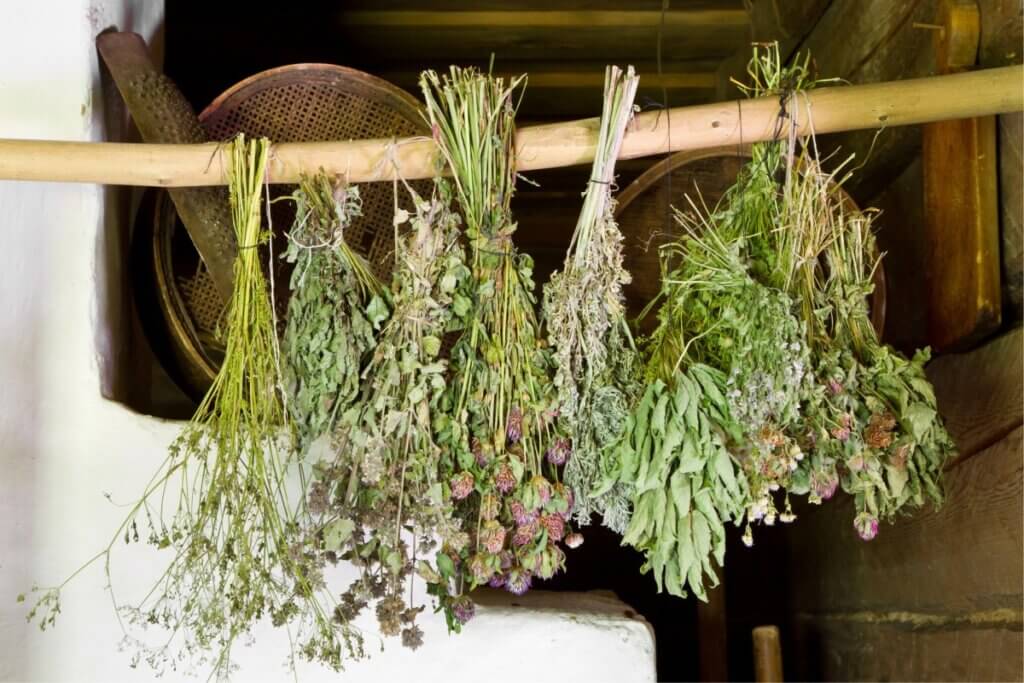
Hold the sprigs and bunch up one end and tie them all together at the end with a string, so you can hang it. Then, hang it (I hang Rosemary indoors and out of direct sunlight). So long as the environment isn’t terribly humid, it will dry out just fine.
After about 2 weeks, or whenever the leaves easily come off the branch when handled, scrunch each branch with your hand so that the Rosemary leaves will fall into a bowl.
Then, pick up handfuls and crush the leaves until they are as small as you prefer. When the leaves are dry enough, they will split into smaller pieces easily when crushed . Otherwise you could use a mortar and pestle and crush them using the tool.
I store mine in a small jam sized canning jar to keep it fresh. After several months it will lose some potency, but that’s not a problem – just dry some more!
You can even order a Rosemary Plant online.


Here is a short video of the process
Click here to view the embedded video.


If you enjoyed this post, or topics of emergency – disaster – preparedness, consider subscribing to our survival blog RSS feed or E-mail notification of new posts on the Modern Survival Blog

Modern Survival Blog

Wednesday, November 24, 2010

How to Make Herbal Tinctures

If you don't know what a tincture is, don't be ashamed. I just learned last year. But, now that I do know, I am taking advantage of that knowledge and using in our home.

In my own words, a tincture is an alcohol or glycerin based concoction that has been infused with all the goodness from an herb.

Why would you use a tincture?
  • Like my definition says, it has all the essence (goodness) of the herb
  • They are more powerful and last longer than dried herbs
  • You get to control the quality of what is being made
  • It is inexpensive (if you make your own)
  • It is difficult to overdose on herbs
  • With herbs you don't get the same type of side effects you get with medication
  • It is a quick easy way to get the healing power of plants
How to make a tincture

You will need:
1 cup distilled water
1 cup glycerin
1/2 cup cut herb of your choice (you can even mix herbs to make your own blend)
1 mason jar with lid and ring
Hydrogen Peroxide in a spray bottle
Stainless steal strainer
Stainless steal bowl
Cheesecloth
2 weeks worth of patience

To start, you will want to make sure everything is clean, I wash all my materials, then I spray everything down with 3% hydrogen peroxide (the same stuff you should have in your Mother of All First Aid Kits)

To mix the tincture you will use 1 cup glycerin, 1 cup distilled water, and 1/2 cup herb. I like this amount because it fits nicely into a mason jar and it is an easy amount to work with. As long as you use the same proportions you could make gallons at a time if you would like. 

Mix your ingredients in your mason jar, put the lid on and give it a good shake. Easy, huh? Give it a good shake each day for 2 weeks.  


Why distilled water? Well, it has NOTHING else in it, so it is a hungry water, anxious to soak up all that goodness from the herb.

Why glycerin instead of alcohol? My children are going to be using these as well, and glycerin has a milder/sweeter taste, giving them more appeal than alcohol. I purchased my glycerin here.

After 2 weeks
Look at the difference in color from when it was first mixed and 2 weeks later.

We are ready to strain. Spray your bowl and strainer with hydrogen peroxide. 
I like to wipe up the extra with a paper towel.


Put the strainer over the bowl and cover the strainer with cheesecloth, let is sit and drain for a bit.


With clean hands squeeze out the rest.


You should be left with something that looks kind of like this.

You could store your tincture in the mason jar, but amber jars are going to be the best.
Make sure you label the tincture and include the date it was made.


I take about 1 ml, 20 drops, or about 1/2 tsp 3 times per day under my tongue. There have been times where I have craved more of a particular tincture, every time I crave it, I increase my dosage or the frequency for a couple days. I know that it is my body's way of telling me it needs the nutrients from that herb. 


If you have a child that doesn't like the taste of it, you could try adding it to water or juice.

~marisa