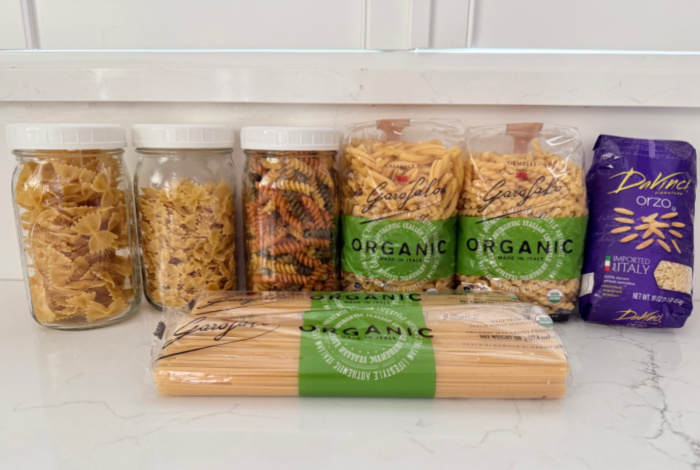
If we have a war, please stock pasta. When the world feels uncertain, the pantry becomes a place of quiet power. Stocking pasta isn’t a statement of fear; it’s an act of love for the people who depend on you. Dried pasta is one of the most practical, nourishing, and versatile foods a family can store, and in times of disruption, it may prove to be one of the most important decisions you ever make in a grocery aisle.
Governments, emergency management agencies, and generations of resilient families all agree: a well-stocked pantry is the first line of food security in any crisis. Whether the threat is war, natural disaster, supply chain collapse, or prolonged economic hardship, families who have stored food face a fundamentally different reality than those who haven’t.
Kitchen Supplies You May Need
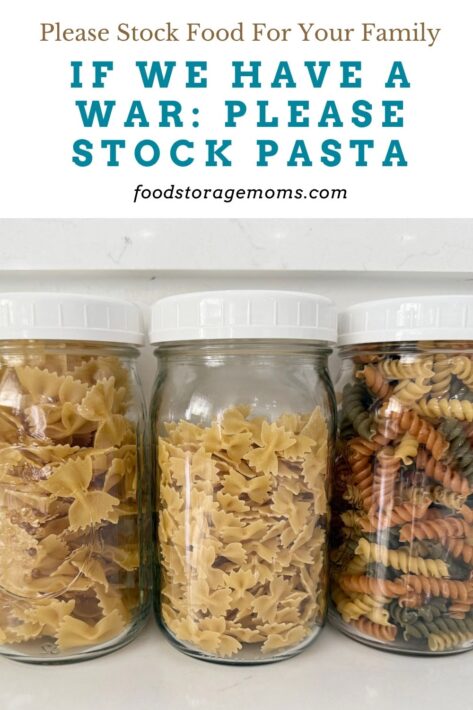
If We Have A War: Please Stock Pasta
Pasta keeps for years, feeds a crowd, requires no refrigeration, cooks with little fuel, and costs almost nothing to store. No other food checks every box quite like it.
Why Pasta Deserves a Place in Every Emergency Pantry
Dried pasta has an extraordinary shelf life. Stored in a cool, dry location, ideally in sealed containers away from light and moisture, most dried pasta varieties remain safe and nutritious for two to five years, and many last even longer. Unlike canned goods that can corrode or freeze-dried meals that require special packaging, plain dried pasta in its original sealed bag asks almost nothing of you.
From a nutritional standpoint, pasta provides complex carbohydrates that give sustained energy to adults and children during physically and emotionally demanding times. It pairs with virtually anything available in an emergency pantry: canned tomatoes, olive oil, dried beans, canned fish, powdered cheese, preserved vegetables, or simply salt and water. One pound of pasta feeds a family of four, making it an exceptional calorie-to-cost investment for any household budget.
Pasta also requires minimal cooking time and fuel. In scenarios where propane, electricity, or firewood may be rationed, a pot of pasta reaching the table in eight to twelve minutes offers a significant practical advantage over grains like rice or legumes, which may simmer for an hour or more.
Finally, pasta is familiar. Children eat it. Older family members recognize it. In moments of stress and displacement, a meal that tastes like home has a value that goes beyond nutrition.
Ten Pastas Worth Stocking
Not all pasta shapes serve the same purpose. Stocking a variety ensures your family can prepare different meals, accommodate different ages and textures, and adapt to whatever ingredients are on hand. Here are the ten essential shapes every emergency pantry should contain.
Angel Hair-Capellini: Very Fine Long Strand
Angel hair is the finest of all long pasta varieties, and its delicacy makes it uniquely practical in emergencies. It cooks in two to three minutes, faster than any other pasta shape, which means less fuel is consumed per meal. It goes gently with light broths, olive oil, canned clams, or simple tomato sauces, and its thin structure makes it easy for young children and older family members to eat. Store several bags: when fuel conservation matters, angel hair will earn its place.
Spaghetti: Classic Long Strand-The Universal Standard
Spaghetti is arguably the most universally recognized pasta in the world, and it belongs at the center of any emergency reserve. Its familiarity alone provides comfort. Families who rarely cook will know what to do with spaghetti when nothing else is available. It works with every sauce in a pantry arsenal, from bolognese made with canned beef, to aglio e olio with oil and garlic, to a simple broth with pepper. Stock more spaghetti than any other shape. It’s the workhorse of the pasta world. You may need to cut up the spaghetti noodles when feeding children, since long noodle strands can be difficult to pick up with a fork.
Elbow Macaroni: Short Curved Tube-The Children’s Staple
Elbow macaroni may be the single most important pasta to stock for families with young children. Its small, curved shape is easy for small hands to manage and for little mouths to chew. Elbow macaroni forms the base of macaroni and cheese, one of the most universally accepted meals among children, and it works equally well in soups, casseroles, and pasta salads. With powdered cheese stocked alongside it, elbow macaroni becomes an almost guaranteed meal that a distressed child will actually eat, which matters more than any adult-centered consideration during a crisis.
Lasagna: Wide Flat Sheet-The Layered Feast
Lasagna sheets are an underappreciated emergency pantry item because they signal abundance. A baked lasagna, even one assembled from canned meat sauce, powdered milk béchamel, and dried herbs, is a meal that can feed a large group from a single dish, which matters greatly when cooking for extended family, neighbors, or displaced community members. Lasagna also stores exceptionally well, and its wide surface area means it can be broken into pieces and used as a substitute in other baked pasta applications. When morale matters as much as calories, lasagna delivers both.
Rigatoni: Large Ridged Tube-The Hearty Vessel
Rigatoni is a large, ridged tube pasta that earns its place in an emergency pantry for its extraordinary ability to hold onto thick, chunky sauces. When protein is scarce, and a sauce must be stretched, beans, lentils, canned tomatoes with herbs, and rigatoni make every bite satisfying in a way that thinner pasta can’t. Its ridged surface grips sauce, its hollow center traps flavor, and its substantial size means a smaller portion feels filling. In conditions where food must be rationed, the psychological and physical satisfaction of rigatoni is a genuine asset.
Penne: Angled Short Tube-The Reliable All-Purpose
Penne is one of the most versatile short pasta shapes in existence, equally at home in baked dishes, stove-top sauces, cold pasta salads, and soups. Its diagonal cut ends and ridged or smooth exterior make it compatible with light olive oil preparations and hearty meat-based sauces alike. Penne is also the shape most likely to be eaten without complaint by both children and adults. If you’re stocking only one short pasta, penne is the most defensible choice for nutritional flexibility, recipe diversity, and universal palatability.
Fettuccine: Flat Ribbon-The Comfort Noodle
It’s a wide, flat ribbon pasta most commonly associated with rich cream-and-butter sauces, but its utility in an emergency pantry extends well beyond that reputation. Fettuccine provides a satisfying texture and chew that thinner noodles can’t offer, and it goes surprisingly well with broth-based soups, olive oil, and even simple tomato preparations. For families accustomed to Asian noodle dishes, fettuccine works as a reasonable substitute in improvised ramen or noodle soups. Its width and substance make each forkful feel like a meal, not a side dish, important when portions must be kept modest.
Farfalle: Bow Tie-The Morale Booster
Don’t underestimate the psychological value of farfalle, the bow-tie shaped pasta, in an emergency pantry. Children light up when they see it. Adults smile. In a sustained crisis where meals become monotonous, a bowl of bow-tie pasta communicates that life retains some of its playfulness. Beyond morale, farfalle is a practical, all-purpose pasta that holds up well in cold preparations, making it ideal for pasta salads when hot meals can’t be prepared. It’s a shape that stores without difficulty, cooks predictably, and delivers genuine delight in settings where delight has become rare.
Orzo: Rice-Shaped-The Soup Extender
Orzo occupies a unique position in the pasta family: shaped like a large grain of rice, it behaves like pasta but blends invisibly into soups, stews, and casseroles. This makes orzo one of the best tools for extending a limited supply of ingredients into a nourishing meal. A modest handful of orzo added to a broth with canned vegetables transforms a thin soup into something filling. Orzo is also easily tolerated by people who are ill or by older family members recovering from stress; its soft texture after cooking makes it easy to eat. Stock orzo specifically for the weeks when survival cooking, not comfort cooking, becomes the reality.
Fusilli: Twisted Spiral-The Sauce Trap
Fusilli, the spiral-shaped pasta also known as twisted or rotini, is one of the most efficient shapes for carrying sauce, second only perhaps to rigatoni among short pastas. Every twist and groove in a fusilli spiral collects and holds whatever liquid surrounds it, meaning that a thin or watered-down sauce still coats every bite with flavor. In emergency cooking, where sauces are often improvised and ingredients are stretched, this functional advantage matters enormously. Fusilli also works beautifully in cold applications, making it the preferred shape for pasta salads prepared without heat. Stock it generously alongside penne for maximum short-pasta flexibility.
How to Store Pasta for Maximum Shelf Life
Unopened commercial pasta bags typically last two to three years. To extend that meaningfully, transfer pasta into airtight glass or food-grade plastic containers after purchase, or seal them in vacuum-sealed bags. Keep stored pasta in the coolest, darkest corner of your home; a basement shelf or interior closet will always outperform a cabinet near the stove. Avoid storing pasta near onions, garlic, or any pungent items; the dried dough can absorb odors over time. Label every container with its shape and storage date, and rotate your stock by using the oldest containers first when cooking regular family meals.
A reasonable starting goal for a family of four is 40 to 60 pounds of assorted dried pasta, which provides roughly 30 to 40 pasta-based dinners. At current grocery prices, that entire supply costs less than a single restaurant meal. The investment is minimal. The return, if it’s ever needed, is immeasurable. Store what you eat, and eat what you store. Pasta earns its shelf space every single week, emergency or not.
If We Have A War: Stock Up On Wheat Berries
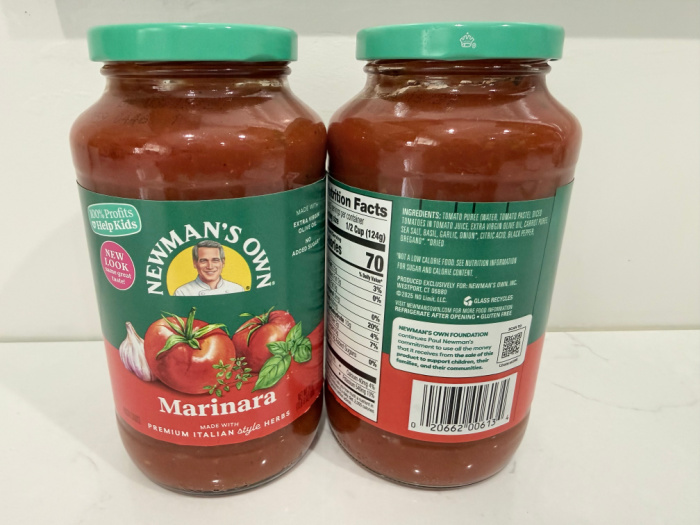
My Favorite Spaghetti Sauce
Yes, I used to bottle my homemade spaghetti sauce, but I don’t anymore. I don’t have the strength to can anymore. This is the healthiest spaghetti sauce I’ve found. My favorite nephew, Clint S., told me about it. He reads all the labels and packaging to be healthy. It’s now the only one I’ll buy. Bonus: the price is great!
Final Word
There is a particular kind of peace that comes from a ready pantry. Stockpiling pasta won’t prevent war, natural disasters, or economic crises. But it will mean that whatever comes your way, your family still sits down to dinner. The water boils. The steam rises. The smell of something warm fills the room. And for a moment, in the middle of whatever the world has become, everything is going to be all right. That’s not a small thing. That is everything.
As a side note, those plastic storage bags you have in your pantry ready to use with leftovers, prepared meals planned for later, or even to store nuts, bolts, and small tools, may become scarce and more expensive. We often forget that plastic is made from oil-based fossil fuels, and when the supply chain for those fuels is disrupted, the products made from them become more expensive. Stock up now, since we’re hearing that large oil tankers are backed up near the Middle East conflict zone. No one can tell us when the backlog will open up. Better safe than sorry. May God bless this world, Linda
The post If We Have A War: Please Stock Pasta appeared first on Food Storage Moms.
from Food Storage Moms
No comments:
Post a Comment