Estimated reading time: 6 minutes
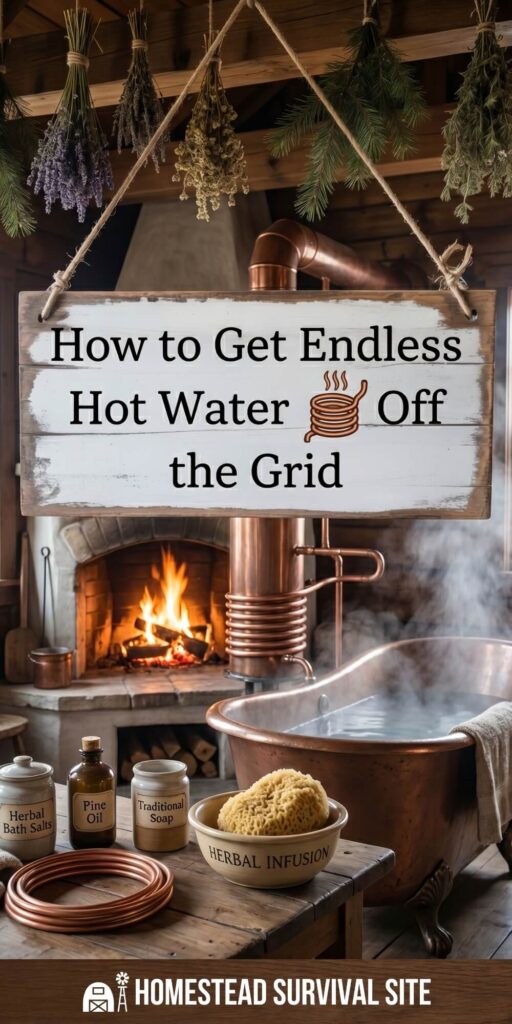
When the grid goes down, one of the first comforts people miss is hot water. It's easy to take for granted until it's gone, and then suddenly everything from washing dishes to preparing food to basic hygiene becomes a challenge. Knowing how to get hot water without electricity isn't just a convenience in a survival situation, it's a genuine necessity.
Most preppers who think about this problem default to solar water heating, but solar hot water systems come with a significant limitation: they depend entirely on sunlight. Cloudy days, storms, and winter conditions can all reduce or eliminate their effectiveness, which is a serious problem when you need hot water.
There's a better solution for off-grid hot water that works in any weather, at any time of day, and requires no electricity, no solar panels, and no propane. It's called thermal siphoning, and it's actually the same basic principle people used to heat water long before modern plumbing existed.
All it requires is a fire, a coil of copper tubing, and a water container. Once it's running, it can heat a 40-gallon tank in roughly 30 minutes using nothing but scrap wood.
This idea comes from the YouTube channel Engineer775, where the host demonstrates how to build and operate a DIY thermal siphon water heater using mostly salvaged and inexpensive materials. You can watch his video and read the instructions below.
What You'll Need
- A rocket stove or small wood-burning stove with a chimney
- A large water storage container (a salvaged 40-gallon water heater works perfectly — people throw these away all the time)
- Copper tubing, ideally 3/8 inch diameter or larger (upgrading to 1/2 inch tubing will increase your hot water output by roughly 40%)
- Stovepipe to house the copper coil inside the heat chamber
- Two pipe fittings to adapt the stovepipe connections
- A shut-off valve and a check valve
- Standard water pipe or hose to connect the container to the coil
- Wood fuel
How Thermal Siphoning Works
Before getting into the build, it helps to understand the principle behind it, because once you do, the whole setup makes more sense.
When water gets hot, it becomes less dense and naturally rises. When it cools, it becomes denser and sinks. A thermal siphon exploits this property to move water without any pump or electricity. Cold water enters the bottom of a heated coil, warms up rapidly, becomes buoyant, and rises up through the coil and out into the top of your storage tank.
As that hot water exits, it pulls more cold water in from the bottom of the tank, creating a continuous circulation loop driven entirely by heat. The bigger the temperature difference between the incoming cold water and the heated coil, the faster and more vigorously the siphon pumps.
How to Set It Up
Start by positioning your stove and water container near each other. The water container should be elevated slightly above the stove if possible, as this helps the thermosiphon circulate more efficiently.
Bend your copper tubing into a coil that fits inside your stovepipe. Engineer775 has a separate video demonstrating how to bend copper tubing using ice or sand to prevent it from kinking. It's worth watching before you attempt this step.
Once your coil is shaped, drill two holes in the stovepipe on opposite sides, one near the bottom for the cold water inlet and one near the top for the hot water outlet, and feed the ends of the coil through. Adapt the stovepipe fittings down to match your copper tubing diameter and seal the connections so heat doesn't escape.
Connect the cold water inlet at the bottom of the coil to the drain valve at the bottom of your water storage tank using your water pipe or hose. Install a shut-off valve and a check valve on this line. The check valve is important as it prevents hot water from flowing back the wrong direction.
Run the hot water outlet from the top of the coil back up to the top of your water storage tank. This is where the heated water will return after passing through the coil.
Inside the stove, position a small diffuser plate just above the coil to keep the heat concentrated in the coil chamber rather than letting it all escape up the chimney. This significantly improves heat exchange efficiency.
Operating the System
Fill your water storage tank with cold water before lighting the fire. Once the tank is full, get your fire going and let the stove build up heat. You're aiming for a temperature of around 500–560°F at the coil. At those temperatures, the water exiting the coil will be close to 180°F, which is hot enough to produce visible steam and will absolutely burn you if you're not careful.
Once the stove is up to temperature, open your shut-off valve to allow water flow. From this point, the thermal siphon takes over automatically. You'll hear gurgling as the hot water rises through the coil and pumps into the top of the tank, pushing cold water down and out through the bottom inlet.
The whole tank shakes slightly as the siphon runs, but that's normal. With a good fire going, you can heat a full 40-gallon tank in approximately 30 minutes.
As the tank water temperature rises over time, the temperature differential between the incoming water and the coil decreases, which slows the siphoning rate. This is normal behavior and not a problem in practice. By the time it slows down, you'll already have plenty of hot water.
One important caution: if you run the fire long enough with a sealed tank, pressure will build. Most salvaged water heaters have a pressure relief valve (also called a pop-off valve) that will activate before things get dangerous, but be aware of this and don't leave the system completely unattended for extended periods.
Getting More Output
The version Engineer775 demonstrates uses 3/8-inch copper tubing, which works well but leaves room for improvement. Upgrading to 1/2-inch copper tubing increases the surface area inside the coil by roughly 40%, which translates directly to faster heating and more hot water output. This is a worthwhile upgrade if you're building this system for serious long-term use.
You can also mix the output water with cold water to bring it down to a usable temperature for showering or washing. At nearly 180°F, the output is too hot to use directly on skin, but blended with cold water it becomes a very practical hot water supply.
A Note on Water Safety
If you plan to use any of this hot water for cooking, drinking, or food preparation, be sure to treat it first. The thermal siphon process heats the water but does not filter or purify it.
If your source water is from a questionable supply, boil it separately or run it through a filter before consuming it. For laundry and dish washing, the water coming straight from the system is more than adequate.
You May Also Like:
The post How to Get Endless Hot Water Off the Grid appeared first on Homestead Survival Site.
from Homestead Survival Site https://ift.tt/QjW1gdx
No comments:
Post a Comment