Submissions     Contact     Advertise     Donate     BlogRoll     Subscribe                         

Tuesday, April 28, 2026

Classic Cream Puffs Recipe

Cream Puffs Recipe

This cream puff recipe has been in our family forever, literally. When my four daughters were young, they would sell these door-to-door when they weren’t selling loaves made from my French Bread Recipe. Of course, nowadays, I would never have them go door-to-door selling anything. Boy, has life changed. It’s sad, but that’s how it is. This recipe would be great for taking an inexpensive dessert to a party or serving a treat for Sunday dinner.

Cream Puffs Recipe

I looked online for a recipe that looked familiar but felt way too hard to make. I knew I had to find the recipe I had used for years. Oh, the joys of moving and trying to set up in a different kitchen!

We are in our new home now. So, I started looking for MY Cream Puffs Recipe, then I remembered that before my mom died, my sisters and I set up a blog on Blogspot. Hooray, I found MY recipe!

I don’t always have whipping cream in the refrigerator, but if by chance I have some and feel like making a treat, these are so easy to make and fill with a dollop of it. It’s comforting when you have all the ingredients to make delicious recipes. You’ve worked all day to make these unique desserts, but thank goodness you didn’t! LOL! You can also fill them with your favorite Instant pudding mix. If you make your custard, that would be delicious as well.

This cream puff recipe makes the puff crispy on the outside and moist on the inside. You fill them with your favorite custard, whipped cream, or instant pudding. They are so good!

Classic Cream Puffs Recipe

Kitchen Items You May Need:

Cream Puffs Recipe Ingredients

Butter adds richness and flavor to the choux dough while also helping to create a tender, crisp shell. It is melted directly into the boiling water at the start, ensuring it is evenly distributed throughout the dough before the flour is added.

Flour provides the structure of the cream puff shell. When stirred into the boiling mixture of butter and water, the starch in the flour gelatinizes, forming a sturdy paste that traps steam produced during baking and holds its shape.

Eggs are what make choux pastry unique. Beaten one at a time, they add moisture and richness and, most importantly, act as a leavening agent. The proteins in the eggs set during baking, giving the puffs their firm, hollow structure.

Whipping Cream is the soul of the cream puff filling. When beaten, the fat molecules in the cream trap air and expand into a light, billowy texture. Its natural richness makes it the perfect contrast to the crisp, delicate shell.

Powdered Sugar sweetens the whipped cream filling without the graininess that regular sugar would introduce. Because it is so finely milled, it dissolves instantly into the cream, creating a beautiful, snowy dusting on top of the finished puffs.

Water acts as the steam engine of choux pastry. When heated in the oven, the water in the dough turns to steam and puffs the shells up from the inside, creating that signature hollow center that holds the cream filling.

Cream Puffs Recipe

Step One: Gather Ingredients

Gather together all the ingredients, so you’re ready to start. I try to make sure my ingredients are as fresh as possible so I can be proud of the result.

Ingredients

Step Two: Preheat Oven – Choose Pan

Preheat the oven to (400°F) = (204°C)degrees. Place the water and butter in the pan and heat them to a boil.

Boil the butter and water

Step Three: Add Flour to Melted Butter

Add the flour and stir over low heat for 1 minute or until it forms a ball.

Add The Flour

Step Four: Make a Ball

This is what a “ball” form looks like.

Cream Puffs Recipe

Step Five: Beat in the Eggs

Remove from the heat and beat in the eggs all at once, ensuring the mixture is smooth. I placed all the cracked eggs in the 4-cup measuring cup and dumped them into the saucepan.

Add the eggs

Drop dough by scant 1/4-cupfuls, about 2-3 inches apart, on an ungreased cookie sheet. You can also use parchment paper, as I did in the picture.

Cream Puffs Recipe

Step Seven: Bake

Bake for 35 to 40 minutes, or until puffed up and golden. Let them cool.

Baked Cream Puffs

Finished Product

Cut off the tops and, if necessary, pull out a little of the insides, then fill them with whipped cream or pudding using a spoon (or use a piping bag and squeeze the mixture in to fill). Dust with confectioner’s sugar and refrigerate until ready to serve. Enjoy.

Classic Cream Puffs Recipe

Cream Puffs Recipe
Print

Cream Puffs Recipe

Course Dessert
Cuisine American
Prep Time 20 minutes
Cook Time 40 minutes
Total Time 1 hour
Servings 24 Cream Puffs
Author Linda Loosli

Ingredients

  • 3 cups water
  • 1-1/2 cups butter (original recipe called for margarine)
  • 3 cups flour (I use bread flour)
  • 12 eggs
  • Whipping Cream (I have filled them with instant vanilla pudding as well)
  • Powdered Sugar (Confectioner's Sugar) optional for sprinkling on them

Instructions

Cream Puffs

  • Preheat oven to (400°F) = (204°C) degrees.
  • Heat water and butter to a boil. Add flour and stir over low heat for 1 minute or until it forms a ball.
  • Remove from heat and beat in the eggs all at once; beating until smooth.
  • Drop dough by scant 1/4 cupfuls about 3 inches apart on an ungreased cookie sheet.
  • You can also use parchment paper. Bake for 35 to 40 minutes or until puffed and golden.
  • Let them cool. Cut off the tops and pull out the insides of the puffs, fill the puffs with whipped cream or pudding using a spoon (or use a piping bag and squeeze mixture inside to fill).
  • Dust with confectioners' sugar and refrigerate until serving time. Enjoy.

Eclairs

  • To make eclairs instead of cream puffs: Preheat oven to (400°F) = (204°C) degrees.
  • Heat water and butter to a boil. Add flour and keep stirring over low heat for 1 minute or until it forms a ball.
  • Remove from heat and beat in eggs all at once, beating until smooth.
  • Shape dough into finger shapes about 4 inches long and 1-1/2 inches wide on an ungreased cookie sheet.
  • You can also use parchment paper. Bake for 35 to 40 minutes or until puffed and golden. Let them cool.
  • Cut off tops and pull out the insides of the eclair. You can fill them with pudding or whipped cream like the cream puffs. Refrigerate until serving time. Enjoy.

Eclair Chocolate Icing

  • Frost with chocolate icing: Melt 3 ounces of unsweetened chocolate and three teaspoons of butter over low heat.
  • Remove from heat and stir in 3 cups confectioners' sugar and about six tablespoons of hot water.
  • Beat until smooth. Spoon over the top of the eclairs and refrigerate.

How do I store these after making them?

After baking them, I wrap them in a paper towel and store them (without the filling) on the counter. You don’t want to put them in an airtight container, or they will become soggy.

Can I store these after they are filled with whipped cream?

You can store them in the refrigerator, lightly covered with plastic wrap, for 1-2 days. But remember, fresh is always best.

Why do my cream puffs go flat?

Next time, try lowering the temperature to (375°F) = (190°C). Another reason could be that they were not cooked long enough.

What can I fill or serve over these?

  • Whipped Cream
  • Instant Pudding
  • Custard
  • Chicken ala King
  • Creamed Tuna
  • Cream Chipped Beef
  • Fill With Scrambled Eggs
  • Chicken or tuna salad – they make great little sandwiches

What is the difference between a cream puff and an eclair?

The only difference between the two is their shape and the fillings and toppings you might use. The baked product is pretty much the same. Eclairs are long, rectangular shapes filled with custard and topped with chocolate icing. The cream puffs are round and filled with whipped cream.

Final Word

Please let me know if you try making my Cream Puffs Recipe. I would love to hear from you! I’ve always had a sweet tooth, so these little gems are perfect for satisfying that urge. Life is good when you know how to cook from scratch, right? May God bless this world, Linda

The post Classic Cream Puffs Recipe appeared first on Food Storage Moms.


from Food Storage Moms
Is There a Water Shortage Where You Live?

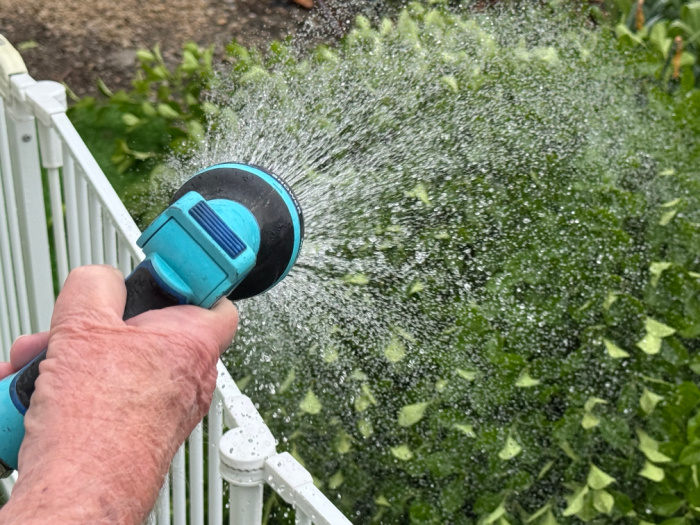
Water Sprinkling Using A Hose

Is there a water shortage where you live? This is something that every American family needs to know. Water is something most of us take for granted. We turn on the faucet, fill a glass, and don’t think twice. But across the United States, millions of families are discovering that clean, reliable water isn’t as guaranteed as they once thought. Whether you live in the dry Southwest, the growing Southeast, or even the wetter regions of the Northeast, water shortages are closer to home than many people realize.

This post breaks down what is happening with water in America right now, which states and cities are most affected, what is causing the crisis, and most importantly, what your family can do to help.

I just saw this on the news yesterday: KUTV 2 Water Shut Off In Emery, Utah

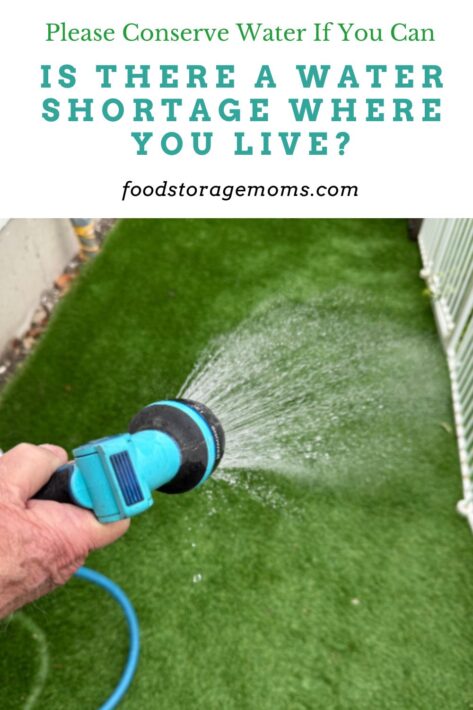
Water In Backyard Using Hose

How Bad Is the Water Shortage Problem in the USA Right Now?

The numbers are striking. As of April 2026, more than half of the United States and Puerto Rico are experiencing drought conditions, and over 62 percent of the contiguous 48 states are classified as being in drought, according to the U.S. Drought Monitor. That’s not a distant forecast. That’s today.

A landmark study released in January 2025 by the U.S. Geological Survey found that nearly 30 million Americans live in areas where the available surface water supply can’t keep up with demand. This was the first comprehensive assessment to examine water supply, demand, and quality across all 48 contiguous states.

The problem isn’t just about how much water falls from the sky. It’s about crumbling pipes, aging treatment plants, population growth outpacing water infrastructure, and a warming climate that’s changing where, when, and how much rain and snow the country receives.

Life Straw Filters, Sawyer Bottle Filters, Lifestraw Bottles

Which States and Cities Are Most at Risk?

Water challenges aren’t limited to the American West, though the West is certainly facing some of the most severe conditions. Here’s a look at what’s happening in key regions.

The Colorado River Basin

The Colorado River is the lifeblood of the American West, supplying water to seven states and about 40 million people. As of late 2025, the entire Colorado River Basin was in drought, according to data from Drought.gov. The basin lost nearly 28 million acre-feet of groundwater between 2002 and 2024, an amount roughly equal to the total storage capacity of Lake Mead, the nation’s largest reservoir.

Lake Powell, one of the two main reservoirs on the Colorado River, faced the possibility of dropping low enough to stop generating hydroelectric power entirely by late 2026. That wouldn’t just be a water problem. It would also be an energy problem for millions of households.

Arizona

Arizona sits in the lower Colorado River Basin, where about 68 percent of the region’s groundwater losses have occurred. Phoenix and Tucson depend heavily on Colorado River water, and as that supply tightens, communities in the state are looking at increasingly difficult choices about growth, agriculture, and daily water use.

Utah

Utah’s reservoir levels fell at more than double the normal rate during the summer of 2025, driven by increased demand, less snowfall, and a very dry season. For families in Salt Lake City and surrounding areas, this is a reminder that the Great Salt Lake region isn’t immune to serious water stress.

California

Southern California remains in moderate to extreme drought despite the northern part of the state seeing better conditions in recent years. The Los Angeles metro area, home to nearly 4 million people, relies heavily on imported water from hundreds of miles away and on Colorado River water that is increasingly strained. The 2025 Palisades fire exposed just how fragile the region’s emergency water supply systems can be, and city officials are now investing in recycled water programs that won’t be fully operational until 2056.

Texas

Texas is facing a triple challenge: an ongoing drought, aging water infrastructure, and an international water dispute with Mexico over treaty-required water deliveries. The town of Mathis, Texas, with about 5,000 residents, was racing in 2025 to find alternative water sources, including deep groundwater wells and recycled wastewater, before a potential shortage became a crisis.

Mississippi and the South

Jackson, Mississippi, has been struggling with a water crisis for years, made worse by aging pipes, leadership challenges, and equipment failures. In a region not traditionally associated with water scarcity, this situation is a warning to other Southern cities about the risks of deferred maintenance and underinvestment in water systems.

Virginia and the Mid-Atlantic

Richmond, Virginia, experienced a major disruption in January 2025 when a power failure knocked out its water treatment plant, triggering a boil-water advisory for 230,000 residents in the city and nearby counties. A second advisory followed in May. State health officials concluded the crisis was completely preventable with proper infrastructure investment.

Data centers are also creating new pressure in Virginia. Large tech facilities in the state can consume up to 5 million gallons of water per day, further straining groundwater supplies already affected by rising temperatures.

The Northeast

Even the historically water-rich Northeast saw record-low streamflow levels in 2025, with conditions so dry that New Hampshire’s Department of Environmental Services issued guidance urging households to immediately reduce water use. The region experienced drought conditions severe enough to trigger official state advisories.

What Is Causing the Water Crisis?

Understanding the causes helps families and communities make better decisions. The water shortage problem in the United States comes from several overlapping factors.

Climate change is altering precipitation patterns across the country, bringing more intense droughts to some regions and more flooding to others. In the West, about 70 percent of the water supply comes from mountain snowpack. When winters are warmer and drier, as 2025-2026 has largely been, there’s less snow to melt in spring and less water flowing into rivers and reservoirs.

Aging infrastructure is another major factor. Many American cities have water pipes and treatment facilities that are decades old. When those systems fail, entire communities can lose access to safe water overnight, as Richmond discovered.

Population growth is pushing demand higher in states like Florida, Arizona, and Texas at exactly the same time that water supplies are becoming less reliable. Florida, for example, depends on groundwater for about 90 percent of its drinking water, and overuse is drawing down those underground reserves faster than they can be replenished.

Agricultural demand plays a massive role as well. Farming accounts for the largest share of freshwater use in the United States, and in drought years, the competition between farms and cities for limited water can become intense.

What Can Your Family Do to Help?

While the scale of the problem can feel overwhelming, everyday household choices genuinely matter. According to the EPA, the average American family uses more than 300 gallons of water per day, and simple changes can reduce that by at least 20 percent while saving families over $380 per year.

Here are practical steps your household can take starting today.

In the Bathroom

Turning off the faucet while brushing your teeth can save between 4 and 8 gallons of water each day. A leaking toilet can waste about 200 gallons per day, which is more than 50 unnecessary flushes. You can test for a toilet leak by adding a few drops of food coloring to the tank and checking whether the color appears in the bowl without flushing. Shorter showers and low-flow showerheads are among the fastest ways to reduce household water use.

In the Kitchen and Laundry Room

Running the dishwasher only when it’s full can save roughly 320 gallons of water per year. A standard top-loading washing machine uses between 30 and 40 gallons per load, while a modern high-efficiency front-loader uses as little as 7 to 10 gallons per load. For large families, upgrading the washing machine is one of the highest-impact changes available.

In the Yard

Outdoor water use accounts for about 30 percent of the average household’s total water consumption. Watering the lawn or garden in the early morning or late evening, rather than at midday, can save up to 65 percent of the water that would otherwise evaporate. Installing a smart irrigation system can cut outdoor water use by up to 50 percent. Rain barrels are another easy, low-cost way to collect water from your roof for garden and landscape use. Some states regulate how much rainwater runoff you can capture and use. Check your local area water agencies for guidance.

Teaching Kids About Water

Children who understand where water comes from and why it matters tend to carry those habits into adulthood. Simple activities like checking for leaks together, timing showers, and watching a rain barrel fill up can make water conservation feel like a family adventure rather than a chore. The EPA even has free coloring books and puzzles for younger kids through its WaterSense for Kids program.

The Bigger Picture for American Families

The water situation in the United States is serious, but it’s also something that communities, families, and lawmakers can meaningfully address through smarter infrastructure investment, better water management policies, and everyday conservation habits.

Researchers project that if current trends continue without intervention, nearly half of the country’s freshwater basins could struggle to meet monthly demand by 2071. That is a long horizon, but the decisions made in the next few years, including where communities invest in water infrastructure, how agriculture adapts to drier conditions, and how families use water at home, will shape that outcome.

The question is no longer whether water shortages are a problem in the United States. They clearly are, affecting tens of millions of people right now. The question is what all of us are willing to do about it.

Start at home. Turn off the tap. Fix the drip. Talk to your kids about where water comes from. And pay attention to what your local water utility, city council, and state officials are doing to protect this most essential resource. Your faucet is part of a much bigger story. The good news is that every family gets to help write what happens next.

Quick Facts Summary

Less than 1 percent of all water on Earth is available for human use, according to the EPA. Nearly 30 million Americans live in areas where surface water supplies are limited relative to demand. As of April 2026, more than 62 percent of the contiguous United States is in drought. A single drip per second from a leaky faucet wastes more than 3,000 gallons of water per year. Families that switch to water-efficient fixtures can save over $380 annually. The Colorado River Basin lost groundwater equivalent to Lake Mead’s total storage capacity between 2002 and 2024.

75 Reasons Why You Should Store Water Now

Final Word

Water isn’t just a political issue or a distant environmental concern. It’s the most fundamental resource on Earth, and right now, it’s under pressure in ways that most American families have never experienced in their lifetimes. The good news is that awareness itself is a form of action. When you understand that nearly 30 million of your fellow Americans are already living in areas where water supplies can’t keep up with demand, and that more than half the country is currently in drought, the dripping faucet in your bathroom and the sprinkler running at noon in your front yard start to look very different.

Conservation isn’t about sacrifice. It’s about paying attention. It’s about teaching your children that the water in their glass traveled a very long way to get there, and that it’s worth protecting. Communities that invest in their water infrastructure, families that build smarter habits, and kids who grow up understanding the value of water will be the ones who help turn this story around. The shortage is real. So is the solution. And it starts at home, one drop at a time. May God bless this world, Linda

Sources: U.S. Drought Monitor (Drought.gov), U.S. Geological Survey National Water Availability Assessment (January 2025), U.S. Environmental Protection Agency WaterSense Program, Seven Seas Water Group, The Packer, New Hampshire Department of Environmental Services

The post Is There a Water Shortage Where You Live? appeared first on Food Storage Moms.


from Food Storage Moms
How to Make a Faraday Box: Step-by-Step EMP Protection Guide

An electromagnetic pulse can arrive without warning. Whether it comes from a high-altitude nuclear detonation or a severe solar storm, the result is the same: unprotected electronics are destroyed in an instant. Radios go silent. Communication tools fail. Years of preparation become useless because the devices you depend on are fried. A faraday box is […]

The post How to Make a Faraday Box: Step-by-Step EMP Protection Guide appeared first on Ask a Prepper.


from Ask a Prepper https://ift.tt/iVsUzgD

Monday, April 27, 2026

There’s $1,000 Hiding in Your …. Right Now. Here’s How to Cash It

Open the drawer next to your bed. Check the shelf in the hall closet. Look in that box in the garage you haven’t touched since you moved the Christmas decorations last year. Somewhere in there, you’ll find a phone you stopped using, a camera that lost to your phone, a laptop that got slow, or […]

The post There’s $1,000 Hiding in Your …. Right Now. Here’s How to Cash It appeared first on Ask a Prepper.


from Ask a Prepper https://ift.tt/EfQTP41

How to Make Switchel – 18th Century Energy Drink

Estimated reading time: 5 minutes

How to Make Switchel - 18th Century Energy Drink

Long before sports drinks and energy drinks were invented, hardworking people had their own go-to recovery drink. It was called switchel, and it earned its reputation as an 18th century energy drink for good reason.

The molasses deliver quick energy in the form of sugar while also being high in potassium to replace electrolytes lost through sweat. And the ginger helps settle the stomach so your body can absorb it all. It's simple, effective, and has been used by sailors, soldiers, and field hands across multiple cultures for over a thousand years.

This particular recipe comes from a mid-19th century cookbook called “The Skillful Housewife,” and was featured on the YouTube channel, Townsends, which specializes in 18th century cooking and living history. You can watch the video and read the recipe below.

What You'll Need

Ingredients:

  • 1/2 gallon of clean drinking water
  • 1/2 cup unsulfured molasses (Barbados or light molasses — not blackstrap)
  • 1/4 cup apple cider vinegar
  • 1 heaping tablespoon powdered ginger

How to Make Switchel

Step 1: Add the molasses to the water

Adding Molasses to Water

Pour half a gallon of clean drinking water into a large pitcher or jug.

Measure out half a cup of unsulfured molasses and add it to the water. Make sure you're using Barbados molasses or a light molasses. Blackstrap molasses is much too bitter and will throw off the flavor.

Step 2: Add the apple cider vinegar

Adding Apple Cider Vinegar

Pour in a quarter cup of apple cider vinegar. It may smell strong on its own, but once everything is mixed together the flavor mellows out considerably and takes on more of a pleasant apple cider quality.

Step 3: Add the ginger

Adding Powdered Ginger

Add a heaping tablespoon of powdered ginger. Powdered ginger was the common form in the 18th century since it was one of the most affordable and widely available spices at the time.

Step 4: Stir well and serve

Stirring the Switchel

Give everything a thorough stir. You want the molasses fully dissolved and all the ingredients well combined before serving.

Switchel is best enjoyed cool. Traditionally, people would place the jug down in a well or suspend it in a running stream to chill it. A bowl of ice water or the refrigerator works just as well today.

Bottle of Switchel

Variations Worth Trying

One of the great things about switchel is how flexible the recipe is. Here are a few variations that have historical roots or just taste great:

Swap the sweetener

Some historical recipes call for maple sugar or maple syrup instead of molasses, and in some older sources the word “molasses” actually referred to maple syrup. Honey is another excellent option and is historically accurate. In fact, it's what the ancient Romans used in their version of the drink.

Swap the vinegar

Instead of or in addition to apple cider vinegar, you can use fresh lemon juice or lime juice. It creates a noticeably different but equally refreshing drink.

Use fresh ginger

If you have it on hand, finely minced fresh ginger can be used in place of the powdered version. The flavor will be a bit brighter and more pronounced.

Add rum

If you want to go full 18th century sailor, add your daily rum ration right to the mix. It makes for a great variation that was definitely popular at the time.

Try shrub

A closely related drink called shrub follows a similar idea but uses fruit juice. Raspberries and blackberries were popular choices, sweetened to taste and mixed with vinegar. Here's how to make it.

You May Also Like:

The post How to Make Switchel – 18th Century Energy Drink appeared first on Homestead Survival Site.


from Homestead Survival Site https://ift.tt/s0L15Zw