Butternut squash is one of those humble vegetables that deserves a permanent spot in every kitchen. It’s affordable, widely available, naturally sweet, and incredibly versatile. Whether you’re cooking from scratch, feeding a family, or planning meals during colder months, learning how to cook butternut squash properly is a skill you’ll use again and again. I love any kind of squash; summer or winter squash is delicious to me. Mark shares all of his squash with me. In all of our 56 years of marriage, this is the only food he dislikes.
What Is Butternut Squash?
Butternut squash is a winter squash with tan skin, bright orange flesh, and a mild, nutty flavor. When cooked, it becomes tender and slightly sweet, making it perfect for both savory and sweet dishes.
Things You May Need:
Why people love butternut squash:
- Naturally sweet without added sugar
- High in fiber and vitamin A
- Long shelf life when stored properly
- Budget-friendly and filling
Ingredients for Cooking Butternut Squash (In-Depth Breakdown)
1 Whole Butternut Squash
The star of the recipe. Choose a squash that feels heavy for its size, with smooth, firm skin and no soft spots.
Why it matters:
A ripe butternut squash has deeper orange flesh, which means better flavor and more nutrients.
Olive Oil (or Alternative Fat)
Olive oil helps the squash roast evenly and enhances its natural sweetness.
Other good options:
- Avocado oil (higher smoke point)
- Melted butter (richer flavor)
- Coconut oil (slightly sweet undertone)
Why it matters:
Fat helps carry flavor and prevents the squash from drying out during cooking.
Salt
Salt brings out the natural sweetness of butternut squash.
Best choices:
- Sea salt
- Kosher salt
Why it matters:
Without salt, squash tastes flat—even when roasted.
Black Pepper
Adds subtle warmth and balances the sweetness.
Optional Seasonings (Choose Based on Your Dish)
- Garlic powder or fresh garlic
- Onion powder
- Cinnamon or nutmeg (for sweet dishes)
- Paprika or smoked paprika
- Fresh herbs like rosemary or thyme
Why it matters:
Butternut squash is mild, making it an ideal base for a wide range of flavor profiles.
Butternut Squash Roasted in The Oven
Ingredients
- 1 10-12 inch Butternut Squash, peeled and cubed
- 2 Tablespoons Olive oil
- 1/2 Teaspoon Salt
- 1/4 Teaspoon Pepper
Instructions
-
Preheat oven to 400°F (205°C).
-
Place cubed butternut squash on a large baking sheet.
-
Drizzle with olive oil and toss to coat evenly.
-
Sprinkle with salt, pepper, and any additional seasonings.
-
Spread squash in a single layer.
-
Roast for 25–35 minutes, stirring halfway through.
-
Remove when squash is fork-tender and lightly caramelized.
How To Prep The Squash
-
Wash the squash under cool water and pat it dry.
-
Cut off the top of the squash as well as the bottom.
-
Peel the squash with a very strong vegetable peeler. Discard the peelings.
-
Slice the squash in half lengthwise.
-
Scoop out the seeds with a spoon. Discard them.
-
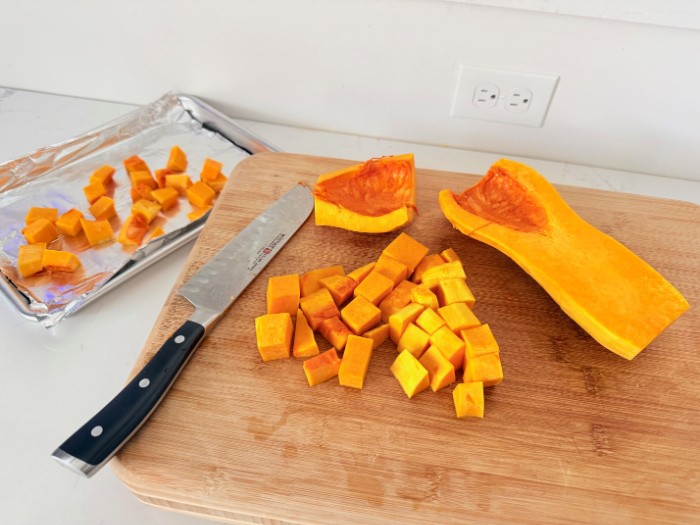
Cut into evenly sized cubes for even cooking.
How To Tell When Butternut Squash Is Done
- A fork slides into the squash flesh easily
- Edges are lightly browned
- Flesh is soft but not mushy
Overcooking can make squash watery, so keep an eye on it during the last 10 minutes
Other Ways To Cook Butternut Squash
Steamed
Great for mashing or soups. Mild flavor and very soft texture.
Boiled
Fast but less flavorful and best for purées.
Slow Cooker
Excellent for hands-off cooking and meal prep.
Air Fryer
Creates crisp edges faster than the oven.
How To Store Cooked Butternut Squash
- Refrigerator: Store in an airtight container for up to 4–5 days
- Freezer: Freeze cooked squash for up to 3 months
Tip: Freeze in portion sizes for soups, casseroles, or side dishes.
Common Mistakes When Cooking Butternut Squash
- Cutting uneven pieces (leads to uneven cooking)
- Skipping salt
- Crowding the pan (prevents browning)
- Cooking at too low a temperature
Why Everyone Should Know How To Cook Butternut Squash
Knowing how to cook butternut squash gives you:
- A reliable vegetable side dish
- A base for soups, stews, and casseroles
- A nutritious option during fall and winter
- A skill that fits cooking from scratch and preparedness lifestyles
In this guide, you’ll learn exactly how to prepare, season, and cook butternut squash, plus why each ingredient matters and how to get the best flavor every time.
What Is Butternut Squash?
Butternut squash is a winter squash with tan skin, bright orange flesh, and a mild, nutty flavor. When cooked, it becomes tender and slightly sweet, making it perfect for both savory and sweet dishes.
Why people love butternut squash:
- Naturally sweet without added sugar
- High in fiber and vitamin A
- Long shelf life when stored properly
- Budget-friendly and filling
Butternut Squash Nutrition: Why It’s So Good for You
Butternut squash isn’t just comforting and delicious—it’s packed with nutrients that support overall health. This winter squash is naturally low in calories, high in fiber, and loaded with vitamins that your body needs, especially during the fall and winter months.
Butternut Squash Nutrition Facts (Per 1 Cup, Cooked)
Approximate values:
- Calories: 80–85
- Carbohydrates: 21–22 grams
- Fiber: 6–7 grams
- Protein: 2 grams
- Fat: Less than 1 gram
- Sugar: 4 grams (naturally occurring)
Key Vitamins and Minerals in Butternut Squash
Vitamin A
Butternut squash is extremely rich in vitamin A due to its bright orange flesh.
- Supports eye health
- Strengthens the immune system
- Promotes healthy skin
One cup provides well over 400% of the recommended daily intake.
Vitamin C
This antioxidant helps protect cells and supports immune health.
- Helps the body fight illness
- Aids in collagen production
- Supports wound healing
Potassium
Butternut squash contains more potassium than most of us realize.
- Supports heart health
- Helps regulate blood pressure
- Supports proper muscle function
Magnesium
Important for nerve function and energy production.
- Helps reduce muscle cramps
- Supports bone health
- Plays a role in blood sugar regulation
Folate (Vitamin B9)
Especially important for cell growth and red blood cell formation.
- Supports healthy cell division
- Important during pregnancy
- Helps prevent anemia
Is Butternut Squash Good for Digestion?
Yes. Butternut squash is high in dietary fiber, which helps:
- Support healthy digestion
- Prevent constipation
- Keep you feeling full longer
Its soft texture when cooked also makes it gentle on the digestive system.
Is Butternut Squash Good for Blood Sugar?
Butternut squash contains natural carbohydrates, but its fiber content helps slow digestion and reduce blood sugar spikes. Please check with your medical professional before eating any of them. I am not a doctor or nurse, nor am I in the medical field.
- Pair with protein or healthy fats
- Avoid overcooking into a watery purée
- Enjoy balanced meals
Is Butternut Squash Anti-Inflammatory?
Yes. The antioxidants in butternut squash, especially beta-carotene and vitamin C, help reduce inflammation and protect cells from oxidative stress.
Butternut Squash for Special Diets
- Gluten-free: Naturally gluten-free
- Vegetarian & vegan: Plant-based and nutrient-dense
- Low-fat diets: Very low in fat
- Whole-food diets: Minimally processed and natural
Why Butternut Squash Is a Smart Pantry Staple
- Long shelf life when stored properly
- High nutrient density for the cost
- Works in sweet and savory dishes
- Great option for cooking from scratch and preparedness
Yellow Squash: The Best Way To Cook It
Everything You Need to Know About Squash
Final Word
Butternut squash is one of the most nutrient-dense vegetables you can keep on hand. It supports immune health, digestion, vision, and heart health, all while being affordable and easy to cook. Learning how to use it regularly is a simple step toward healthier, more resilient meals.
Butternut squash is simple, affordable, and endlessly useful. Once you learn how to cook it properly, you’ll find yourself reaching for it again and again, whether you’re roasting it for dinner, adding it to soups, or freezing it for future meals. May God bless this world, Linda
The post Butternut Squash: How To Cook It appeared first on Food Storage Moms.
from Food Storage Moms
No comments:
Post a Comment