Submissions     Contact     Advertise     Donate     BlogRoll     Subscribe                         
Showing posts with label Vermin. Show all posts

Monday, March 21, 2022

The Best Ways to Get Rid of Mice in Your House and Garage


If you build it, mice will come. Sooner or later, you'll probably need to get rid of mice or rats. Fall is prime time for an increase in mice in your house, as they look for winter protection, but mice and rats can move in at any time. While small, mice and rats can cause big problems. They chew on everything, causing property damage and potential fire risks when they gnaw on electrical wiring and build tinder dry nests in dark corners. Rodents can spread disease, on their own, through the parasites they carry (their fleas carried the Black Plague) or through their droppings (such as hantavirus).


get rid of mice

How to Tell if You Have Mice in Your House

It’s probably more common to see mouse droppings or mouse damage before you see the mice themselves, as they are nocturnal. When I was a kid, the little buggers would drive me crazy at night running around up in the attic. Thankfully we didn’t get rats in the house, but they would sometimes show up in the outbuildings around the farm.

Tuesday, November 30, 2021

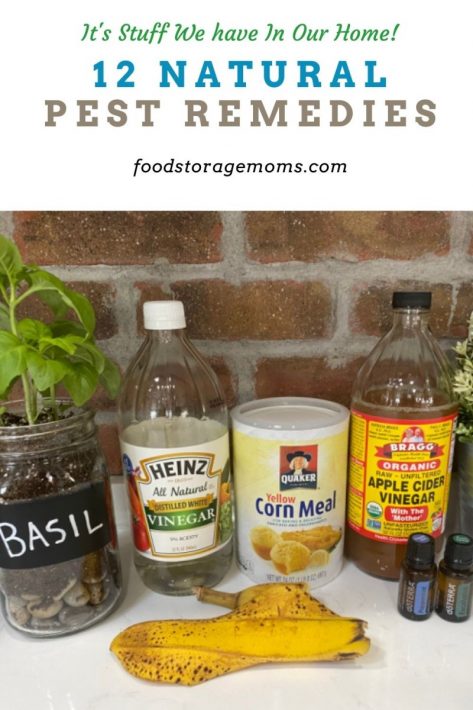
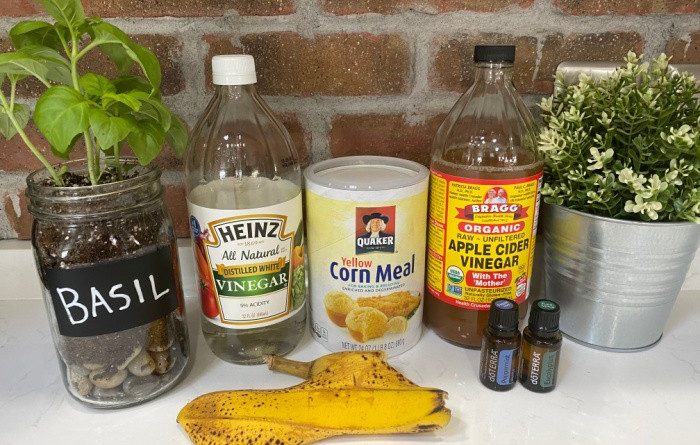
12 Natural Pest Remedies


By Linda Loosli


Enjoying your home and garden is impossible when you have a critter or bug infestation on your hands. It may surprise you, but you don’t have to head to your local lawn and garden store to figure out a solution in order to battle your current crisis. Keep reading to discover natural pest remedies.


That’s right, you probably have a majority of these natural household solutions already in your home. They’ll save you a great deal of money instead of having to buy pest control services or try to apply store-bought materials. At the same time, you’ll help keep your pets from getting into something that they shouldn’t. These are natural pest remedies that are safe and effective to use around your home and garden. In case you missed this post, The Best Herbs To Grow In Mason Jars


1. Apple Cider Vinegar

It’s rather unappealing when you have fruit flies hovering around in your kitchen, and they always seem to know the perfect time to show up, right before you have visitors. Take back control of your kitchen by pouring some apple cider vinegar into a bowl with a drop of liquid dish soap and then covering it up with plastic wrap. Then make tiny holes in the plastic and the vinegar should draw the fruit flies in, but they won’t be able to get back out.
2. Banana Peels

Being a gardener myself, I know firsthand how irritating aphids can be when they begin holding social gatherings in my garden. If left untreated, they can destroy all of the hard work and love you’ve put into our garden. I have a win-win natural remedy for you. By placing banana peels near the stem of your plants, it should keep the aphids away, and also help to enrich the soil of your garden.
3. Basil

Sweet basil is a member of the mint family that tastes great in pasta, salads, pizza, and several other recipes. Yet it can be used as a natural pest remedy when you’re dealing with kamikaze flies in your home that are buzzing past your ear. To keep those pesky flies from ever finding their way into your home, plant a pot of basil in a sunny location near a nearby entranceway. It should help to deter them. How To Grow Basil In The Garden

4. Cloves

Many people find ladybugs to be one of those bugs that they can tolerate, but that rare exception to the rules may change when they start to invade their house. As it turns out, ladybugs don’t like strong scents, which is why placing a bag of cloves near a heavily infested area is a great solution. You’ll just have to sweep or vacuum up the cloves when your situation has improved.
5. Coffee Grounds

The next time that you make a pot of coffee, don’t throw out the coffee grounds after you’re done. It turns out that critters and other small pests don’t like the smell of coffee, which I find totally bizarre because it smells so good. For ants, it’s actually fatal. Wherever you think critters are coming in, place some coffee grounds there and they won’t continue to come around.
6. Cornmeal

For those of you with pets, you certainly don’t want to go with an ant killer that is toxic because your furry loved ones can get sick from it. Instead, place small piles of cornmeal where you notice that ants are hanging around. While they will eat it and take it back to their colony, ants aren’t capable of digesting it. This method may take a couple of days, but it has proven effective.
7. Egg Repellent

Have you been noticing deer activity out in your garden recently? Instead of reaching for your rifle like you may be tempted to do, choose to go with an egg repellant that can get the job done. That way you’re not scaring your neighbors half to death and those rascally deer can continue grazing elsewhere. The mixture consists of combining 20% eggs and 80% water that has been run through a blender and then you simply spray your plants and tree leaves with it. This is not one of the very well-known natural pest remedies, but it works!
8. Essential Oils

Are you in desperate need of a dust mite repellant spray? You can use a mixture of lavender, eucalyptus, peppermint, or rosemary oil with a spray bottle of water, and then lightly mist your mattress with it. Allow it to air dry, and the dust mites should stay away.

9. Fresh Herbs

An evening out by the bonfire with family and friends can be going great, but once the mosquitos start to crash the party the fun you were having will be forgotten. Fortunately for you, there is a solution. Keep mosquitos at bay by throwing fresh sage or basil directly onto the fire and let the good times carry on.
10. Hot Pepper Spray

Hot peppers can even be difficult for people to eat at times, and for pests and critters, it’s awful. You can use your own chopped-up peppers, or use hot pepper flakes, but cayenne probably works the best. You’ll then mix it with a gallon of water and then spray it over your garden. Here’s more on how to make hot pepper spray along with a few other household items that will keep garden pests away.
11. Onions

Old wives’ tales are more often brushed aside as nothing but complete nonsense and silly superstition, yet this one actually has some truth to it. To keep spiders from hanging around and creeping about your home, slice up an onion and then put it in a bowl of water. You will then want to strategically place it where you think that they may be coming in, and they should get the hint that their presence in your home is unwelcome.
12. White Vinegar

Once a scout ant has detected food somewhere inside your home, it won’t be long after that you’ll have a trail of ants marching in to stake their claim. To help wash away the trail, spray a solution of 2 cups of water, ¼ cup of white vinegar, and 10 drops of eucalyptus oil or peppermint and the ant activity should dissipate.
Final Word

Everyone should be able to live comfortably and without any worry of outside pests making their way into their home or garden. By using these natural pest remedies that I’ve mentioned above, you will have both a safe and effective way to keep these intruders out. What are some natural pest remedies you know about or have experience using? May God Bless this world, Linda

Tuesday, November 23, 2021

7 Innovative Ways To Rodent Proof Your Food Storage


By Nicky Hoseck


Self-sustainable living is all well and good, but it often means sharing your home and its contents with other animals.

On our small-holding in South Africa, we don’t just have a mouse problem. I’m not sure quite what type of rodent is living in my attic, but I can hear them now, stomping around on the ceiling like a troop of tap dancers in hobnail boots.

Not only is our local rodent population noisy, but it’s also destructive and disease-ridden. Between the striped field mice and South African vlei rats, we’ve seen wooden crates devoured, heavy-duty plastic tool boxes gnawed to pieces, leather boots chewed up and spat out.


I realize that there are some things I can’t change, like living in an old house that doubles up as a mouse condominium.

I have, however, decided I’m going to do everything else in my power to mouse-proof my food storage. I’m sick of picking mouse poop out of the rice and sharing my oatcakes with ransacking rats.


So, this is my 7-step campaign to reclaim my food from the jaws of the rodents:
Step 1: Clear the Way For Rodent Eradication

If cleanliness is next to Godliness, then mice are the devil’s number one allies. Leave a newspaper lying around, and they’ll turn it into a three-bedroom mouse house.

After getting some motherly advice and doing some in-depth research, I’ve decided to start by spraying a mixture of water and lemon juice onto the urine and feces. This solution is supposed to soften them and make them easier to remove.

Once that stage is complete, I’ll wipe down all the surfaces in the cupboards and the kitchen itself using pure peppermint soap as mice dislike its strong scent.
Step 2: Crack Down On Rat Access

The other reason our old farmhouse is such a popular place for rodents is that it has more cracks than Humpty Dumpty. I need to patch up those holes and reduce the number of entrances available to rats and mice.

The smaller cracks I can fill with a foam sealant, but the larger ones will need patching with steel wool or copper mesh.

The final step will be to add door sweeps to the bottom of my external doors, thereby blocking off a veritable network of rat highways.
Step 3: Get a Cat or a Killer Canine

Jack Russells make great rodent hunters.


We have a Jack Russell and, as small as she is, she’s a killer canine! Snakes, rats, mice, even bats stand little chance when she’s around. She’s not the neatest of destroyers, but she sure is effective.

Natural predators like dogs and cats play an important role in pest control, especially in a survival situation where they can help prevent disease and rodent infestations.
Step 4: Make a Mint With a Stink

Rats and mice have a keen sense of smell that we can use against them.

Rodents rely on their sense of smell to track down food so, strong odors, like peppermint oil, for example, can be both disruptive and irritating. Potent as it is, even peppermint won’t eliminate your mouse problem but can help to combat it as part of a multifaceted rat attack.

Other strong-smelling products you can use to deter mice include:
Cayenne pepper
Tea tree oil
Cinnamon
Cloves
Lavender
Mothballs

I’ve tried a few of these methods and can safely say that using mothballs to keep mice out of your cupboards will likely drive you away as well. Mothballs contain either naphthalene or paradichlorobenzene, both of which are toxic to humans.

I know mice are a nuisance, but they’re not annoying enough to risk your life for.

Essential oils, like peppermint and tea tree, are probably the easiest to use but need topping up regularly to keep the smell fresh. Powdered spices, like cinnamon and cloves, can be sprinkled wherever you see signs of mouse activity.
Step 5: Introduce Some Super Sonic Vermin Control


Sonic pest repellers sound great, but they’re only effective in certain situations.

The theory is that they emit a sound that humans can’t hear, but that’s irritating to your unwanted rodent visitors.

The truth is, most mice get used to the noise and start ignoring it within a few weeks.

What’s more, sound waves can’t travel through solid objects either, so sonic pest repellers won’t work very well in anything but the most minimalistic homes.

Despite these drawbacks, I’m going to get one and put it in the attic where the loudest rat parties take place. Even if it doesn’t get rid of them completely, it’ll hopefully make them take their boots off before dancing.
Step 6: Tap into the Traps


Rat and mouse traps come in various shapes and sizes, and the classic snap-trap is no longer the top option.

Avoid glue traps at all costs. No matter how annoying a rodent is, it doesn’t deserve being tortured to death!

Humane traps, like those from Kensizer, are the best option for your conscience and are safe to use around pets, unlike a bait station trap which relies on poison. Better still, the mouse or rat won’t suffer either but can be re-released about 100 miles away and allowed to carry on life in someone else’s house!

If your rodent problem keeps recurring, changes are, relocation isn’t working, in which case, you may have to resort to more permanent measures. An electric mouse trap kills pesky rodents in seconds by delivering a high-voltage shock. The top-of-the-range models are also designed so you won’t have to deal with any crispy rodent corpses.

Step 7: Upping the Ante in The Storage Department

Keeping mice and rats out of your emergency food supplies is an uphill battle that requires ingenuity and, in my experience, numerous canning jars and some large food-grade buckets topped with Gamma seal lids.

The one approach I’m going to try is to put my emergency food rations into Mylar bags and then into food-grade buckets – a method most preppers agree is the best option for long-term food storage containers. I’m also hoping this two-pronged method will eliminate the food’s smell, so my marauding mice aren’t tempted to try gnawing on the plastic bucket.

I am a little concerned that the vlei rats will chew through the buckets for the fun of it, so I’m going to put my dried fruit and nuts into Mylar bags and then into tin canisters with airtight lids.
Conclusion

Rats and mice not only steal food, but they also spread disease, making them unwanted guests in your home, and especially in your survival camp.

Using heavy-duty airtight storage containers is by far the best way of keeping pests out of your emergency food supplies, but there’s only so many of those you’ll be able to carry when the SHTF.

Rodent deterrents that have alternative uses mean less stuff to carry, so things like peppermint oil which deters spiders and wasps, as well as rats, and can be used as a disinfectant, are ideal for preppers.

Similarly, cats and dogs are great natural predators and double up as good companions and hot-water bottles. Better still, they don’t need carrying!

While I’m relatively confident my 7-step rodent eradication plan will work, I still need all the help I can get, so if you have any other ideas or suggestions about how to mouse-proof food supplies, please share them in the comments below.

Thursday, September 30, 2021

Bed Bugs: Prevention and Treatment


Is there anything in the world that can give you the creepy-crawlies as well as the mere thought of having bed bugs? And then, if it really did happen, how would you handle it? They can go months without feeding, if necessary. They can just chill in the seams of your mattress or in the wallpaper or in the furniture. How do you get rid of them?