
How can we ease our anxiety in today’s chaos? If you’ve been feeling more anxious lately, you’re not imagining it, and you’re not alone. Between the relentless news cycle, economic uncertainty, and the pressure of daily life, anxiety has become one of the most common experiences of our time. The American Psychological Association consistently reports that stress levels across the country remain at historically elevated levels, and for many people, it can feel like there is simply no escape from the noise.
I often tell my readers that preparation for emergencies can help relieve stress and anxiety. But anxiety can creep in even when major safety issues aren’t imminent.
But here’s the good news: anxiety is manageable. With the right tools and a little consistency, you can find genuine calm, even when the world around you feels like it’s spinning out of control. This post walks you through practical, evidence-based strategies to ease anxiety you can start using today.
How can we ease our anxiety in today’s chaos?
- Turn off the news on the television (I’m not saying forever!)
- Put your phone down
- Turn your phone off (Even if it’s just for one day)
- Stay off your iPad or Laptop
- Stay off social media (I’m not saying forever!)
- Talk to a human face-to-face
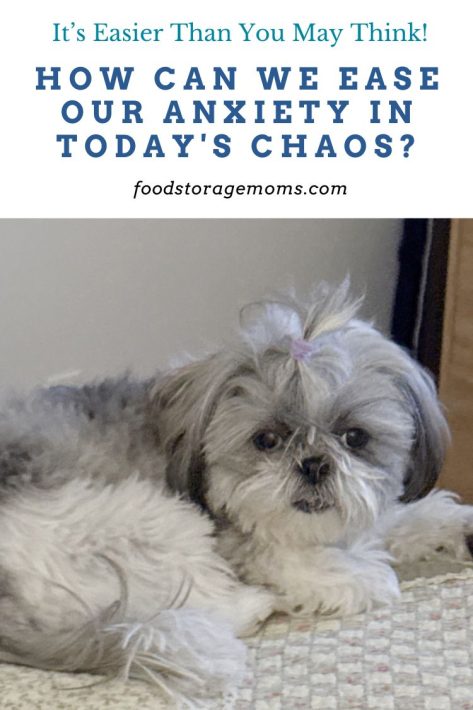
- Get a dog, we did, best thing ever (Stella, a 9-pound ShihTzu!)
Understanding Why We Feel So Anxious Right Now
Before we can address anxiety, it helps to understand why it spikes during times of chaos. Our brains are wired for survival. The amygdala, the part of the brain responsible for detecting threats, doesn’t know the difference between a predator in the wild and a distressing headline on your phone. It reacts the same way: it floods your body with cortisol and adrenaline, triggering the fight-or-flight response.
When stressors are constant, that stress response never fully shuts off. The result is chronic anxiety, a persistent background hum of worry, dread, and physical tension that wears you down over time.
The first step toward relief is recognizing that your anxiety is a normal biological response to an abnormal level of stimulation. You’re not weak. You’re human.
1. Limit Your News and Social Media Intake
One of the single most effective things you can do for your mental health right now is to set boundaries around your media consumption. Research published in journals like Health Communication has found a strong link between heavy news exposure and increased anxiety, depression, and even physical health problems.
This doesn’t mean you have to stick your head in the sand. Staying informed matters. But there is a real difference between being informed and being saturated.
Try designating two short windows per day, perhaps 15 to 20 minutes each, for catching up on news. Outside of those windows, close the apps, silence the notifications, and give your nervous system a break. You’ll likely find yourself feeling calmer and more grounded within just a few days.
2. Move Your Body Every Single Day
Exercise is one of the most well-researched and powerful tools for managing anxiety. Physical movement burns off the excess adrenaline and cortisol that anxiety produces. It also triggers the release of endorphins, serotonin, and dopamine, all of which are natural mood stabilizers.
You don’t need an intense gym routine to see results. A brisk 20 to 30 minute walk, a yoga session, a bike ride, or even dancing in your kitchen can make a meaningful difference. The key is consistency. Daily movement, even gentle movement, is far more effective than occasional intense workouts. I started riding my Schwinn recumbent bike one year ago. I ride it 4 miles each day in the comfort of my bedroom. It only takes 20 minutes each day.
If you can take your exercise outdoors, even better. Studies show that time in nature reduces cortisol levels, lowers blood pressure, and decreases activity in the brain region associated with rumination and negative thinking.
3. Practice Diaphragmatic Breathing
When anxiety hits, your breathing becomes shallow and rapid, which actually makes anxiety worse by signaling to your brain that danger is present. Learning to breathe deeply from your diaphragm breaks this cycle and activates the parasympathetic nervous system, which is your body’s built-in calming mechanism.
Try this simple technique: inhale slowly through your nose for a count of four, hold for a count of four, exhale through your mouth for a count of six. Repeat this four to six times.
The extended exhale is important. It stimulates the vagus nerve, which plays a central role in regulating your stress response. Many people are surprised by how quickly this technique works. Practice it when you’re calm so that it becomes second nature when anxiety peaks.
4. Build a Consistent Sleep Routine
Sleep and anxiety have a complicated relationship. Anxiety makes it harder to sleep, and poor sleep makes anxiety worse. Breaking this cycle is one of the most impactful things you can do for your mental health.
Start by setting a consistent bedtime and wake time, even on weekends. Your brain loves predictability, and a regular sleep schedule helps regulate cortisol and melatonin naturally. Aim for 7 to 9 hours of sleep per night.
In the hour before bed, wind down intentionally. Dim the lights, avoid screens, and choose calming activities like reading, gentle stretching, or journaling. Keep your bedroom cool, dark, and quiet. Over time, these habits train your nervous system to shift into rest mode more easily.
5. Try Mindfulness Meditation
Mindfulness has gone from a niche wellness practice to one of the most studied psychological interventions in the world, and for good reason. Dozens of peer-reviewed studies have found that regular mindfulness practice significantly reduces symptoms of anxiety and depression.
Mindfulness works by training you to observe your thoughts without getting swept away by them. Instead of treating anxious thoughts as facts, you learn to notice them as mental events that pass, like clouds across a sky.
You don’t need to meditate for an hour a day to benefit. Even five to ten minutes of daily practice can produce measurable changes in how your brain responds to stress over time. Apps like Insight Timer and Calm offer free guided meditations if you’re just getting started.
6. Stay Connected to Other People
Isolation is one of anxiety’s best friends. When we withdraw from others, we lose perspective, and our fears tend to grow in the dark. Human connection, on the other hand, is one of the most powerful buffers against anxiety and depression that exists.
Make a point of reaching out to people you trust, whether that’s a friend, a family member, or a colleague. You don’t have to talk about your anxiety directly. Simply spending time with others, sharing a meal, going for a walk, or even a phone call can lower cortisol and activate the neurochemistry of safety and belonging.
If you’re struggling significantly, consider joining a support group or speaking with a therapist. Cognitive behavioral therapy, in particular, has an exceptionally strong track record for treating anxiety disorders.
7. Create Structure in Your Day
Chaos thrives in uncertainty, and anxiety thrives in chaos. One of the most underrated antidotes to anxiety is creating a predictable daily routine. Structure gives your brain a sense of control, even when external circumstances feel uncontrollable.
This doesn’t have to be rigid or elaborate. Simply having consistent times for waking up, eating, working, exercising, and winding down can significantly reduce the low-grade anxiety that comes from a shapeless, reactive day.
Try writing out a loose daily schedule and see how it feels after a week. Many people report that even a basic structure makes a surprising difference in their overall sense of calm.
8. Watch What You Put in Your Body
What you eat and drink has a direct impact on your anxiety levels. Caffeine, for example, is a stimulant that increases heart rate and activates the stress response. If you’re anxiety-prone, even moderate caffeine intake can amplify symptoms significantly. Consider scaling back gradually and noticing whether it helps.
Alcohol, while it may feel calming in the short term, disrupts sleep and depletes serotonin over time, making anxiety worse in the long run.
On the positive side, a diet rich in whole foods, vegetables, healthy fats, and lean protein supports stable blood sugar and a healthy gut microbiome, both of which are increasingly linked to mental health outcomes. Omega-3 fatty acids, found in foods like salmon, walnuts, and flaxseed, have shown particular promise for reducing anxiety in clinical research.
9. Do Something That Gives You a Sense of Purpose
Anxiety often intensifies when we feel passive and helpless in the face of problems we can’t control. One of the most effective ways to counteract this is to channel your energy into something meaningful.
That might mean volunteering for a cause you care about, starting a creative project, deepening a skill, mentoring someone, or simply contributing more intentionally to your community. A sense of purpose and contribution activates different neurological pathways than passive worry, and it rebuilds a sense of agency that anxiety tends to erode.
10. Know When to Seek Professional Help
All of the strategies above are genuinely helpful, but sometimes anxiety requires professional support. If your anxiety is significantly affecting your quality of life, your relationships, or your ability to function at work, please don’t hesitate to reach out to a mental health professional.
Anxiety disorders are among the most treatable mental health conditions. Therapy, medication, or a combination of both can make an enormous difference. Seeking help is not a sign of weakness. It is one of the most courageous and self-aware things a person can do.
Final Word
Living with anxiety in a chaotic world is genuinely hard. But you have more power to shape your inner experience than it may feel like in your most anxious moments. Small, consistent actions, limiting media intake, moving your body, breathing deeply, sleeping well, and staying connected to others, compound over time into meaningful relief.
You don’t have to have a perfect life or a perfectly calm world to feel okay. You just have to show up for yourself, one day at a time. May God bless this world, Linda
The post How Can We Ease Our Anxiety In Today’s Chaos? appeared first on Food Storage Moms.
from Food Storage Moms
No comments:
Post a Comment