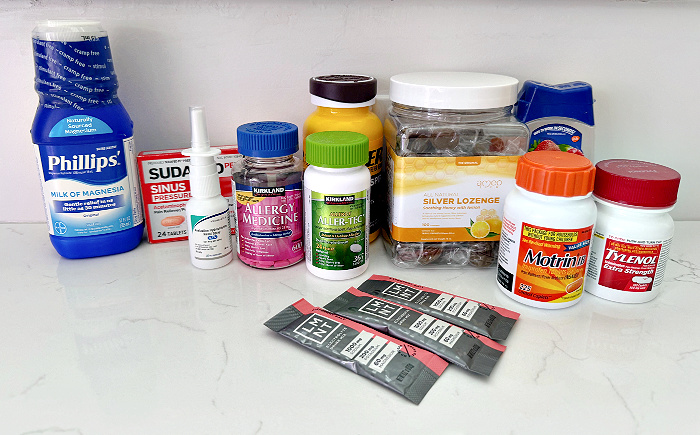
If we have a war, 30 OTC medications to stock are listed here for you today. If a war breaks out tomorrow, pharmacies will be among the first places to run out of supplies. Long before food shortages hit, medicine shelves go empty, and families are left managing fevers, infections, wounds, and pain with nothing on hand.
The good news is that a single trip to your local drugstore today can change that. We’ve put together 30 over-the-counter medications that every household should have on hand before a crisis arrives. No prescriptions, no medical degree required, just simple, practical preparation that could make all the difference for your family.
A Quick Note: This guide is for informational and preparedness purposes only. It is not medical advice. When in doubt, always consult a doctor or pharmacist. Dosages listed are for healthy adults unless noted otherwise. Please note, I’m not a nurse, a doctor, or anyone in the medical field.
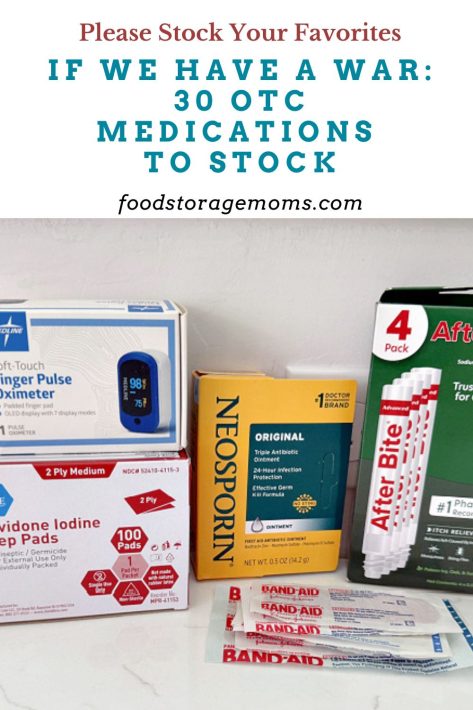
Please order an Oxygen 02 Oximeter if you don’t have one. A pulse oximeter is a simple yet vital tool that measures the oxygen saturation level in your blood, giving you a quick snapshot of how well your lungs and heart are delivering oxygen to your body. Many serious conditions, like pneumonia, heart disease, asthma, sleep apnea, and COVID-19, can cause oxygen levels to drop dangerously low before you even feel noticeably short of breath, a phenomenon sometimes called “silent hypoxia.”
Having an oximeter at home allows people, especially those with chronic respiratory or cardiac conditions, to catch these drops early and seek medical attention before a situation becomes life-threatening. They’re also useful for athletes monitoring performance at altitude, or anyone who simply wants peace of mind about their respiratory health.
If we have a war: 30 OTC Medications to Stock
PAIN RELIEVERS
1. Acetaminophen (Tylenol)
Fever reducer and everyday pain reliever. Pain and fever are two of the most common things you’ll deal with in any emergency. Having more than one type of pain reliever matters because they work in different ways.
This is the one medication no family should be without. It brings down fevers, eases headaches, toothaches, and body aches, and it’s gentle on the stomach. Safe for adults and children (in age-appropriate doses). Adults: 325–1,000 mg every 4–6 hours. Never exceed 3,000 mg per day, and watch out for combination cold medicines that already contain it.
Stock up: 500+ tablets. Buy both regular and children’s liquid for young kids.
2. Ibuprofen (Advil, Motrin)
Anti-inflammatory for injuries, swelling, and fever
Better than Tylenol when swelling is involved, think sprained ankles, sore muscles, dental pain, or infection-related inflammation. Can be alternated with acetaminophen every few hours to better control a stubborn fever. Always take it with food. Adults: 200–400 mg every 4–6 hours. Not for people with kidney issues, ulcers, or during pregnancy.
Stock up: 500+ tablets.
3. Naproxen Sodium (Aleve)
Long-lasting pain relief, one dose lasts 8 to 12 hours
Great for sleeping through pain or managing someone who can’t take medications frequently. Works well for back pain, joint pain, and menstrual cramps. Adults: one 220 mg tablet every 8–12 hours with food. Same cautions as ibuprofen, avoid if you have kidney disease or stomach ulcers.
Stock up: 200–300 tablets.
4. Aspirin (Bayer)
Pain reliever and a potential lifesaver during a heart attack
Here’s the big reason aspirin is on this list: if someone is having a heart attack and you have no way to call for help, having them chew a regular-strength aspirin (325 mg) right away can slow dangerous clotting and improve their chances of survival. Also works for pain and fever in adults. Never give aspirin to children or teenagers.
Stock up: 300 regular-strength tablets + low-dose 81 mg if anyone in your family takes it daily.
5. Voltaren Arthritis Pain Gel (Diclofenac)
Rub-on pain relief for sore joints and muscles
This is a strong anti-inflammatory in gel form. You rub it directly onto the painful area — a sore knee, stiff wrist, or aching elbow, and it works locally without upsetting your stomach or stressing your kidneys. Apply 4 times a day. Wash your hands after. Great for older family members or anyone doing heavy physical work.
Stock up: 2–4 tubes.
6. Lidocaine Numbing Cream or Spray (Bactine, LMX4)
Numbs the skin before cleaning a wound or treating a burn
Think of this as a mini local anesthetic. Apply it to the area around a cut or burn about 15–30 minutes before you need to clean it, and it significantly reduces the pain — especially helpful with kids. Bactine also contains an antiseptic, making it a two-in-one product. Don’t use it in deep wounds or near the eyes.
Stock up: 2–3 sprays or tubes.
DIGESTIVE ISSUES
Stomach problems are one of the most common emergencies in a crisis. Contaminated water, stress, and unfamiliar food can all cause serious digestive trouble — and in kids especially, dehydration from diarrhea can become dangerous very quickly.
7. Loperamide (Imodium)
Stops diarrhea fast — one of the most important items on this list
When diarrhea won’t stop, and clean water is limited, dehydration can become life-threatening. Imodium slows things down so the body can recover. Adults: 2 capsules (4 mg) to start, then 1 capsule after each loose stool, up to 8 capsules per day. Don’t use it if diarrhea has blood in it or comes with a high fever — see a doctor if you can.
Stock up: 200+ capsules. Small, lightweight, and incredibly important.
8. Bismuth Subsalicylate (Pepto-Bismol)
Handles diarrhea, nausea, heartburn, and upset stomach all in one
Pepto is a family staple for good reason. It coats the stomach, settles nausea, and helps with diarrhea all at once. The chewable tablets are far easier to store than the liquid. Adults: 2 tablets every 30–60 minutes as needed, max 8 doses per day. Don’t give to children or teenagers. It turns the stools dark, that’s normal and harmless.
Stock up: 4–6 boxes of chewable tablets.
9. Oral Rehydration Salts (DripDrop, Pedialyte Powder, LMNT)
The most important thing you can give a dehydrated child or adult
These aren’t a medicine, they’re a special mix of salt and sugar that helps the body absorb water even when someone is very sick. Plain water or sports drinks don’t do the same job. When anyone in your family has severe vomiting or diarrhea, ORS packets dissolved in clean water can prevent a dangerous situation. Safe for all ages.
Stock up: 50+ packets per person. Cheap, lightweight, and potentially life-saving.
10. Omeprazole (Prilosec OTC)
Daily heartburn and stomach protection, especially if you’re taking pain relievers
Stress causes the stomach to produce extra acid, which leads to painful heartburn and sometimes ulcers. If your family is relying on ibuprofen or aspirin for pain during a crisis, taking omeprazole once daily with them helps protect the stomach lining from damage. Take one 20 mg tablet every morning before eating. Give it 2–3 days to fully kick in.
Stock up: 3–4 boxes (42 tablets each).
11. Calcium Carbonate (Tums)
Fast-acting heartburn and indigestion relief
When heartburn hits suddenly, Tums works within minutes by neutralizing stomach acid directly. They also provide a bonus dose of calcium, which is especially good for women and older family members when dairy foods aren’t available. Chew 2–4 tablets as needed. Give other medications a 2-hour gap, since antacids can affect their absorption.
Stock up: 4–6 large bottles.
12. Simethicone (Gas-X)
Quick relief from painful gas and bloating
When your family is eating canned beans, MREs, and foods very different from normal, gas and bloating can possibly follow. Simethicone breaks up gas bubbles so they can pass naturally. Chew 1–2 maximum-strength tablets after meals as needed. Please consult with your medical professional before using this product.
Stock up: 2–3 boxes of chewable tablets.
COLD AND FLU
When families are crowded together in stressful conditions, colds and flu spread fast. Managing symptoms properly keeps everyone functional and reduces the risk of a simple cold worsening.
13. Pseudoephedrine (Sudafed — behind the pharmacy counter)
The real decongestant actually works to clear stuffy noses
This is the original Sudafed kept behind the pharmacy counter. The regular Sudafed on the open shelf is much less effective; studies have shown it barely works. The real one clears stuffy noses within 30 minutes. You’ll need to show ID to buy it. Adults: 30–60 mg every 4–6 hours. Use with caution if anyone in your family has high blood pressure.
Stock up: Buy the maximum allowed each time you go. Rotate your supply.
14. Guaifenesin (Mucinex)
This thins mucus so the body can clear it from the chest and sinuses
Thick, stuck mucus traps bacteria and can turn a cold into a chest infection. Mucinex thins it out so your body can clear it naturally. The extended-release tablets (every 12 hours) work much better than the regular kind. The most important rule: drink a full glass of water with every dose. Without water, it can’t do its job.
Stock up: 3–4 boxes of 1200 mg extended-release tablets.
15. Dextromethorphan / DXM (NyQuil, Robitussin DM)
Cough suppressant for that dry, sleep-robbing cough
Some coughs clear mucus and shouldn’t be suppressed. But the dry, barking cough that keeps your family awake all night serves no purpose, and lost sleep makes everything worse. DXM quiets that kind of cough. NyQuil is the classic nighttime option. Just remember that many combination products include acetaminophen, so track your total Tylenol intake carefully.
Stock up: 2 boxes of plain extended-release DXM + 1 bottle of NyQuil.
16. Zinc Lozenges (Cold-EEZE)
Shown to shorten colds when started at the very first sign
These actually work — clinical studies show zinc lozenges can shorten a cold by 2–4 days when started within 24 hours of the first scratchy throat or sniffles. The key is to start immediately and let them dissolve in your mouth; swallowing them whole doesn’t help. Don’t use it for more than 10 days in a row. They sometimes cause nausea, so take them after eating.
Stock up: 4–6 boxes. Time is everything — start them the moment you feel something coming on.
17. Saline Nasal Spray (Simply Saline, NeilMed)
A simple saltwater rinse that prevents and relieves congestion
Rinsing the nasal passages with salt water flushes out virus particles, dust, and bacteria before they cause an infection. Regular use in close-quarters living genuinely reduces how often families get sick. It also relieves congestion without any medication — completely safe for all ages, all day, every day. If you run out, mix 1/4 teaspoon of non-iodized salt into 8 oz of boiled, cooled water.
Stock up: 6–8 bottles. Also, keep non-iodized salt on hand for making your own.
18. Throat Lozenges (Cepacol, Halls)
Sore throat relief so your family can keep eating and drinking
A bad sore throat can make it nearly impossible to eat or drink, which can lead to dehydration quickly, especially in kids. Cepacol lozenges contain benzocaine, which numbs the throat directly. Halls uses menthol to create a cooling sensation that eases the pain. Use every 2 hours during an active sore throat. Cepacol is for adults and children 5 and older only.
Stock up: 4–6 bags of each type.
ALLERGIES
More dust, more outdoor exposure, more insects, and emergencies bring more allergy triggers. Stock both a fast-acting option and a daily non-drowsy option, and if anyone in your family has severe allergies, an epinephrine auto-injector is non-negotiable.
19. Diphenhydramine (Benadryl)
Fast-acting allergy relief that also helps with sleep and nausea
Benadryl works quickly and treats multiple conditions: allergic reactions, hives, insect-sting swelling, nausea, and sleep trouble. It causes drowsiness, which is a downside during the day but useful at night. Adults: 25–50 mg every 4–6 hours. Safe for children in weight-appropriate doses, check the package for the dosage based on your child’s weight. One of the most versatile medications a family can own.
Stock up: 400+ tablets. Also buy children’s liquid for young kids.
20. Cetirizine (Zyrtec) or Loratadine (Claritin)
Once-a-day allergy relief that doesn’t make you drowsy
For managing day-to-day allergy symptoms without the foggy feeling of Benadryl, these are the go-to. Zyrtec is slightly stronger; Claritin is the gentlest and safe for kids from age 2. Take one 10 mg tablet daily. They work best when taken consistently, not just when symptoms flare up. No significant side effects for most people.
Stock up: 365 tablets per person, enough for a full year.
21. Epinephrine Auto-Injector (EpiPen, Auvi-Q)
The only thing that can stop a life-threatening allergic reaction
If anyone in your family has a known severe allergy to bees, peanuts, shellfish, or anything else, this is the most important item on the entire list. A severe allergic reaction (anaphylaxis) can close the airway and cause the heart to fail within minutes. Benadryl is not fast enough. Generic epinephrine auto-injectors are now available without a prescription at some pharmacies. Every adult in your home should know how and where to use it.
Stock up: 2 auto-injectors per person with known severe allergies. Check the expiration date every year.
22. Hydrocortisone Cream 1% (Cortaid)
Stops the itch and redness of rashes, bug bites, and poison ivy
This mild steroid cream calms itchy, inflamed skin caused by bug bites, contact with poison ivy, eczema flare-ups, and rashes. Apply a thin layer to the affected area 2–4 times a day. Don’t put it on infected skin (it suppresses the immune response your body needs to fight infection). Safe for adults and children over 2. Combining it with Benadryl works well for widespread or severe rashes.
Stock up: 4–6 tubes.
SKIN, WOUNDS, AND BANDAGES
Cuts, scrapes, and burns occur much more often when families perform physical work in unfamiliar conditions. A small infected wound that goes untreated can become a serious problem. Clean every wound right away.
23. Povidone-Iodine (Betadine 10%)
Powerful antiseptic that kills germs in and around wounds
Betadine kills bacteria, fungi, and viruses on contact — but it must be diluted before using it on open wounds. First, mix 1 part Betadine with 10–20 parts clean water. Using it at full strength on a wound actually slows healing and damages tissue. Use a syringe or squeeze bottle to flush the diluted solution through the cut. It will stain skin orange-brown temporarily.
Stock up: 2–4 large bottles and irrigation syringes.
24. Bacitracin or Neosporin (Antibiotic Ointment)
Prevents infection and keeps wounds healing properly
After cleaning a cut, applying a thin layer of antibiotic ointment before covering it keeps the wound moist (which speeds healing) and prevents bacteria from getting in. Thin layer only; a thick glob actually slows healing. Reapply with each bandage change. Some people are allergic to neomycin in Neosporin. If the area gets more red after a few days, switch to plain Bacitracin. Some families like Polysporin since it doesn’t have as strong an antibiotic.
Stock up: 8–10 tubes.
25. Wound Closure Strips (Steri-Strips, Butterfly Bandages)
Close a cut that would normally need stitches, no needle required
These adhesive strips hold the edges of a cut together while it heals, mimicking what stitches do without any needles or medical training. They work best on flat areas like the forehead, forearm, or scalp. The skin must be completely dry before applying. Start from the center of the cut and work outward, pulling the edges gently together. Watch the wound daily for any signs of infection, increased redness, swelling, or discharge.
Stock up: Several boxes in different sizes and benzoin tincture (helps the strips stick much better).
26. Burn Gel and Non-Stick Dressings (Water-Jel, Telfa pads)
Treat burns the right way to prevent lasting damage
For any burn, start with 10–20 minutes of cool running water, not ice. Then apply burn gel to cool the tissue further and reduce blistering. Cover with a non-stick dressing, never regular gauze, which rips the raw skin off when removed. Change the dressing daily and keep the wound clean. Watch for signs of infection: worsening redness, warmth, pus, or fever in the injured person.
Stock up on: 6 burn gel packets, 2 boxes of non-stick dressings, rolled gauze, and medical tape.
27. Moleskin and Blister Pads (Second Skin)
Protect feet during extended walking and physical activity
If your family has to walk long distances in an emergency, blisters can quickly become a real problem, especially for kids. A blister that pops and goes untreated in unsanitary conditions can become infected. Apply moleskin at the first sign of a hot spot (redness or soreness) before a blister forms. Cut it into a donut shape to take pressure off the area. Second Skin pads cover and soothe blisters that have already formed.
Stock up on 4–6 sheets of moleskin and Second Skin blister pads.
These three cover needs that don’t fit neatly into other categories but will almost certainly come up in any extended emergency: trouble sleeping, eye problems, and fungal infections.
28. Melatonin (3 mg)
Helps the whole family get to sleep despite stress and disruption
Melatonin doesn’t knock you out; it gently signals to the brain that it’s time to sleep. That’s especially helpful when stress, anxiety, noise, or an unusual schedule is keeping everyone awake. Take 3 mg about 30–60 minutes before bedtime. It’s not habit-forming and is safe for most adults. Unlike Benadryl used as a sleep aid, it won’t leave you groggy if you need to wake up quickly for an emergency. I have tried Melatonin, but it doesn’t seem to work for Mark or me. I use Benadryl every night (I know it’s not good), but I would never go to sleep. My mind never stops going, literally.
Stock up: 300 tablets of 3 mg.
29. Artificial Tears and Antibiotic Eye Drops (Polytrim)
Keep eyes comfortable and treat pinkeye at home
Dust, smoke, and poor hygiene make eye irritation and pinkeye (conjunctivitis) very common in crowded emergency settings, and they spread quickly among family members. Artificial tears soothe irritated, dry eyes. Polytrim antibiotic eye drops treat bacterial pinkeye; look for thick discharge and eyelids crusted shut in the morning. Use 1–2 drops 4 times daily for 5–7 days. Viral pinkeye usually resolves on its own within 1–2 weeks. Pink eye is the worst. I really wish I could get something to stock at home.
Stock up: 4 bottles of artificial tears + 2 bottles of Polytrim.
30. Antifungal Cream (Lotrimin, Monistat)
Treats athlete’s foot, ringworm, jock itch, and yeast infections
Fungal infections love warm, moist, cramped conditions, exactly what emergency living looks like. Athlete’s foot, ringworm, and jock itch are all caused by the same type of fungus and are treated with the same cream. Apply twice daily to clean, dry skin for at least 2 full weeks, even after it appears to have gone. Stopping early almost always causes it to come back. Keep your feet dry and change socks daily as your best prevention.
Stock up on: 4 tubes of clotrimazole cream, antifungal foot powder for prevention, and Monistat-7 if relevant for your household.
Store your medications somewhere cool and dry, not in the bathroom, where heat and humidity from showers shorten shelf life. A bedroom closet or a dedicated storage bin works well. Most tablets and capsules remain effective for years beyond their expiration dates when stored properly.
35 OTC Medications You Should Store
Final Word
Build your stockpile gradually. Each time you buy one, buy two. Rotate older stock to the front. Write the expiration dates on a sticky note inside the lid so you always know what needs replacing soon.
Most importantly, make sure every adult in your household knows where the medications are and what they’re for. A medicine cabinet no one can navigate in the dark isn’t much help. A quick walk-through with your family now could make all the difference later. May God bless this world, Linda
The post If We Have A War: 30 OTC Medications To Stock appeared first on Food Storage Moms.
from Food Storage Moms
No comments:
Post a Comment