If We Have A War: Stock These First Aid Items! When conflict looms, most people think about food, water, and shelter. But when injuries happen, and in any war or civil unrest scenario, they do, the contents of your first aid kit can be the difference between life and death. These are not luxury supplies. They are targeted, proven tools that address the most common and most dangerous wound types you will face. Stock them now, before the shelves empty.
If We Have A War: Stock These First Aid Items
Emergency Laceration Closures
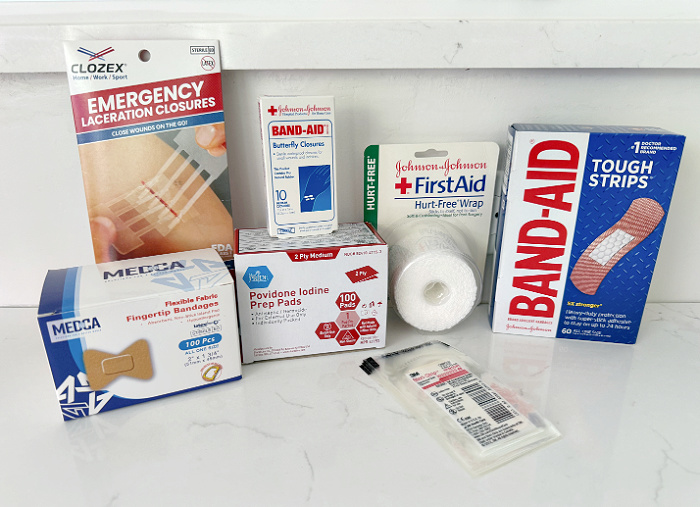
Deep cuts are among the most common injuries in any disaster or conflict environment. Emergency laceration closures are adhesive strips engineered to pull wound edges tightly together, replacing the need for sutures when medical care is unavailable. They hold under movement and moisture, making them far more reliable than improvised solutions. Every serious first aid kit should carry multiple packs in varying widths. When a gash is long or deep, these closures give you a fighting chance to prevent massive blood loss and infection while you seek further care.
Unlike standard bandages, laceration closures apply tension across the wound rather than simply covering it. This mechanical closure is what stops bleeding at the source. Keep them dry and sealed in their packaging until use, and they will remain effective for years. Emergency Laceration Closures
Bleedstop
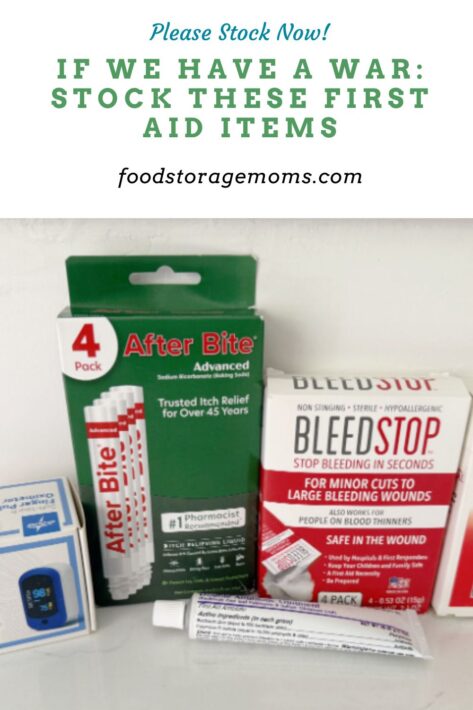
Bleedstop is a granular hemostatic agent, a powder that triggers the body’s clotting process rapidly when poured directly into a bleeding wound. It’s designed for exactly the kind of severe, high-volume bleeding that common bandages can’t address. In a war scenario, shrapnel wounds, lacerations from broken glass, or crush injuries can produce bleeding that overwhelms conventional dressings in seconds.
The powder works by absorbing moisture and concentrating clotting factors at the wound site, dramatically accelerating coagulation. It requires no refrigeration, has a long shelf life, and can be applied by anyone without medical training. Stock several packets. When blood pools quickly, Bleedstop buys precious time. BleedStop
After Bite for Insects
A war or grid-down scenario means spending time outdoors, in basements, in unfamiliar terrain, all environments where insects thrive. Mosquitoes, wasps, hornets, and biting flies can cause swelling, pain, and allergic responses that compound an already difficult situation. After Bite is a fast-acting topical treatment that neutralizes the compounds in insect venom responsible for itching and inflammation.
During a prolonged emergency, an untreated insect bite can develop into a serious secondary infection. By controlling itch and swelling immediately, After Bite reduces the urge to scratch, the primary mechanism by which bites become infected. Small, lightweight, and inexpensive, this product earns its place in any go-bag. After Bite Anti-Itch
Oximeter
A pulse oximeter clips painlessly onto a fingertip and reads blood oxygen saturation and heart rate within seconds. In an emergency involving smoke inhalation, respiratory injury, shock, or severe blood loss, these two numbers tell you information that no amount of visual observation can match. A person can appear calm while their blood oxygen drops to dangerous levels, and the oximeter detects what the eye misses. Oximeter Detector
Modern fingertip oximeters are battery-operated, cost very little, and require zero medical training to operate. Normal blood oxygen levels range from 95 to 100 percent. Anything below 90 is a medical emergency. In a war scenario where proper emergency services may be unavailable, this device helps you triage who needs intervention most urgently. Stock extra batteries alongside it.
Fingertip Flexible Bandages
Fingers are injured more often than any other body part in emergencies. Standard rectangular bandages don’t conform well to the curves and constant movement of the fingertips, so they slip, bunch, and stop protecting the wound within minutes. Fingertip flexible bandages are specifically shaped and constructed from stretch fabric that moves with the joint while maintaining full coverage.
An uncovered finger wound in a dirty, high-stress environment is an open invitation for infection. These bandages seal the wound properly, hold up through gripping, climbing, and daily work, and reduce pain from incidental contact. They seem like a minor item until the moment you need one, then nothing else will do. Fingertip Flexible Bandages
Wound Seal Pour Pack
Wound Seal is a medical-grade powder that seals bleeding wounds almost instantly on contact. Unlike Bleedstop, which works primarily through hemostatic chemistry, Wound Seal forms a physical barrier over the wound, a seal that holds even in the presence of active bleeding. It’s particularly effective for wounds in awkward locations that are difficult to bandage or for injuries where applying pressure is impractical.
The pour pack format enables single-handed application, which is especially important when treating your own wound or working alone. It’s nonprescription, non-toxic, and effective for cuts, abrasions, and minor puncture wounds. A few pour packs stored in a waterproof bag cost almost nothing and occupy almost no space. Wound Seal Pour Pack
Butterfly Bandages
Butterfly bandages, sometimes called closure strips, are designed to close shallow lacerations by pulling the skin edges together with two adhesive wings connected by a narrow bridge. They’re the appropriate tool for cuts that’re too deep for a regular bandage but don’t require the full tension of an emergency laceration closure. Think of them as the middle tier of wound closure, ideal for facial cuts, scalp wounds, and clean-edged lacerations on low-movement areas.
They’re easy to apply under stress, require no training, and work without any additional tools. Butterfly bandages have saved countless wounds from infection and scarring in field conditions. Keep multiple sizes in your kit, as wound widths vary considerably. Butterfly Bandages
First Aid Hurt Free Wrap
Standard gauze wraps cling to wound dressings and can tear the wound surface painfully when removed, a serious problem when dressings have to be changed repeatedly over days or weeks without access to professional care. Hurt Free Wrap is a cohesive bandage material that sticks only to itself, not to skin or wound tissue. It conforms easily to any body part, provides compression without cutting off circulation, and removes without causing additional injury.
This is the wrap you reach for after applying a primary wound dressing. It secures the dressing, applies even compression to reduce swelling, and remains in place during movement. In an extended emergency where wounds must be managed over time rather than handed off to a hospital, Hurt Free Wrap is indispensable. Hurt Free Wrap
Band-Aids Tough Strips
Not every war injury is dramatic. Blisters, scrapes, and minor cuts from debris and broken materials are the constant companions of any extended emergency. If left untreated, they accumulate and degrade your ability to function. Band-Aids Tough Strips are constructed with a heavier-duty adhesive and a more durable pad than standard bandages, designed to stay in place through sweat, dirt, and physical exertion.
They flex with skin rather than pulling free at the edges, and the pad material is thick enough to provide genuine cushioning over abrasions. Stock them in bulk. In a prolonged scenario, you’ll go through more of these than almost anything else in your kit. They’re the everyday armor that keeps minor wounds from becoming major problems. Band-Aids Tough Strips
Steri Strip Skin Closures
Steri Strips are thin, sterile adhesive strips used by surgeons and emergency physicians to close wounds cleanly and precisely. They’re the gold standard for non-suture wound closure and outperform most alternatives in sterility, holding strength, and cosmetic results. For facial wounds, wounds near joints, and injuries where surgical tape is available but sutures aren’t, Steri Strips deliver professional-grade results.
They’re applied by positioning the strip across the wound to pull edges together, and they’re porous enough to allow the wound to breathe, reducing the moisture buildup that promotes infection. Each strip is individually sterile, making them suitable for use even in heavily contaminated field conditions. A few packets take up almost no space and represent hospital-quality care in your pocket. Steri Strip Skin Closures
Povidone Iodine Prep Pads
Every wound closure in this list is only as effective as the wound preparation that precedes it. Povidone iodine prep pads are antiseptic wipes saturated with a broad-spectrum antimicrobial solution that kills bacteria, fungi, and viruses on contact. Cleaning a wound before closure is’t optional; closing contamination inside a wound guarantees infection.
In a war scenario, wounds are acquired in filthy environments: rubble, soil, building materials, and contaminated water. A 30-second wipe with a povidone-iodine pad before applying any closure dramatically reduces the risk of infection. They’re individually sealed, maintaining sterility indefinitely in storage, and they work on skin prep for injections as well. Stock them generously; they’re the unglamorous foundation on which everything else in your kit depends. Povidone Iodine Prep Pads
Potassium Iodide
Potassium Iodide, commonly sold under the brand name IOSAT, is a medication that protects the thyroid gland from absorbing radioactive iodine in the event of a nuclear explosion or dirty bomb attack. When a nuclear device detonates, radioactive iodine is released into the atmosphere and can be inhaled or ingested, where it concentrates in the thyroid and significantly increases the risk of thyroid cancer. Taking potassium iodide before or shortly after exposure saturates the thyroid with stable iodine, blocking it from absorbing the radioactive form. Potassium Iodide
It’s FDA-approved specifically for this purpose and is recommended by emergency preparedness agencies as an essential component of any nuclear readiness plan. Potassium iodide doesn’t protect against other forms of radiation; it protects only the thyroid, so it should be stored alongside, not instead of, a broader emergency preparedness strategy. Tablets are inexpensive, have a shelf life of several years, and are available without a prescription. In a world where nuclear threats are no longer theoretical, keeping potassium iodide on hand is one of the most specific and actionable steps a prepared household can take. Please read what the CDC says about this drug/medication. Look at the ages it advises for use and other tips. CDC Radiation Emergencies
Build Your Kit Before the Crisis Arrives
War and civil unrest create medical emergencies that arrive without warning and overwhelm healthcare systems almost immediately. The supplies listed here address the injuries that kill and disable people fastest: uncontrolled bleeding, infected wounds, and physiological deterioration that goes undetected. None of these products requires a prescription. All of them are now available at low cost from medical suppliers and online retailers.
Buy multiples of everything. Distribute supplies between a home kit and a portable go-bag. Familiarize yourself with how each product works before an emergency forces you to learn under pressure. Practice opening packaging with one hand. Read the instructions on the hemostatic agents. Know your baseline blood oxygen reading so you recognize an abnormal one.
The gap between a survivable wound and a fatal one is often nothing more than the right supplies, used correctly, at the right moment. These products close that gap. Stock them now.
If We Have A War: 25 Personal Hygiene Products
If We Have A War: Stock These Cleaning Products
Final Word
No one wants to believe war will come to their doorstep. History, however, doesn’t ask permission. Conflicts that once felt distant have a way of arriving faster than anyone planned for, and when they do, the window to prepare slams shut almost overnight. Store shelves empty. Supply chains break. The items on this list become impossible to find at any price.
The good news is that preparation is still available to you. None of these products is complicated. None requires a medical degree to use. What they require is the foresight to act before the crisis rather than during it. A well-stocked first aid kit will not stop a war, but it can stop a wound from becoming a death sentence. It can buy time, reduce suffering, and keep the people you love in the fight.
Stock these items. Learn how to use them. Check expiration dates annually and rotate your supply. Share this list with the people in your life who matter most. The greatest act of preparedness is not stockpiling for yourself alone; it’s making sure the people around you are ready too. When chaos arrives, the calm person with the right supplies becomes the most valuable person in the room. Be that person. May God bless this world, Linda
The post If We Have A War: Stock These First Aid Items appeared first on Food Storage Moms.
from Food Storage Moms
No comments:
Post a Comment