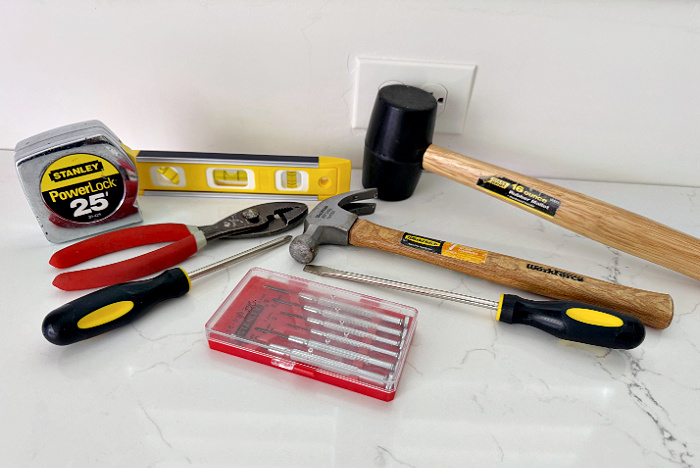
Here are 15 tools every family should have in their home. Owning a home, or even renting one, means that things will eventually break, shift, loosen, or need a little TLC. From a wobbly doorknob to a leaky faucet, the families who handle these everyday challenges with confidence are the ones who keep a solid set of tools on hand. A well-stocked home toolkit isn’t just about saving money on repair calls (though that’s a definite bonus). It’s about being prepared, staying safe, and teaching your kids the value of knowing how to care for your home.
Whether you’re a first-time homeowner, a growing family in a rental, or parents who want to model self-reliance for their children, having the right tools is one of the smartest investments you can make. The good news? You don’t need a garage full of equipment to handle most household jobs. You just need the right 15 tools and the know-how to use them.
Below, we’ve broken down the essential tools every family home should have, what they’re used for, and why they deserve a spot in your toolbox.
15 Tools Every Family Should Have In Their Home
1. Flathead Screwdriver
The flathead screwdriver is one of the oldest and most versatile tools in any home. Its flat, blade-like tip is designed to drive screws with a single horizontal slot, a style found throughout older homes on outlet plates, light switch covers, cabinet hinges, and furniture hardware.
Beyond screws, families will find the flathead useful for prying open paint can lids, popping off battery covers, scraping dried caulk, and even tightening loose hinges on eyeglasses, if you have one small enough. It’s a true multi-tasker and should be one of the first tools you grab when something needs a quick fix around the house. Keep at least one medium-sized flathead within easy reach; your family will reach for it more than almost any other tool. Flat Head Screwdriver
2. Phillips Screwdriver
Named after inventor Henry F. Phillips, the Phillips screwdriver features a cross-shaped tip that grips screws with a matching recess for better torque and control. Today, Phillips screws are the standard in most modern furniture, appliances, electronics, and home fixtures, making this one of the most frequently used tools in any household.
Families will use a Phillips screwdriver to assemble furniture, tighten loose door handles, install ceiling fan blades, secure cabinet hardware, and repair children’s toys. Having both a #1 (small) and a #2 (medium) size ensures you’re ready for most jobs. It’s the tool your kids will see you reach for most, and one of the first tools you’ll teach them to use when they’re old enough to help around the house. Phillips Screw Driver
3. Multi-Driver (Interchangeable Screwdriver Set)
A multi-driver takes the utility of both flathead and Phillips screwdrivers to the next level by offering a single handle with multiple interchangeable bits. Most multi-driver sets include flathead, Phillips, Torx, and square (Robertson) bit options, covering virtually every screw type you’ll encounter in a family home.
The real advantage for families is convenience. Rather than hunting for the right screwdriver in a cluttered drawer, you have one compact tool that handles it all. Many multi-drivers also feature a magnetic bit holder and a built-in storage compartment in the handle, making them perfect for everything from assembling holiday gifts to tackling weekend home improvement projects. If storage space is limited in your home, a quality multi-driver can replace several individual screwdrivers. Multi-Driver Interchangeable Set
4. Hammer
Few tools are more iconic, or more essential, than a good hammer. A standard 16-ounce claw hammer is the workhorse of any family toolkit, perfectly balanced for driving nails, hanging picture frames, assembling furniture, and a hundred other everyday tasks.
The claw end (the curved fork on the back of the head) is just as important as the striking face. It’s used for pulling nails out of walls, removing old baseboards, and disassembling pallets or wooden structures. A hammer is also the go-to tool when you need to tap something gently into place or break apart materials for disposal. When selecting a hammer for your family, look for one with a comfortable rubber grip that reduces vibration. Your hands will thank you after a day of hanging gallery walls or putting together furniture. 16 Ounce Claw hammer
5. Cordless Drill/Driver (18V–20V) with Assorted Bits
If there’s one power tool every family home should invest in, it’s a quality cordless drill/driver. An 18V to 20V model strikes the ideal balance between power and portability, strong enough to drill through wood, drywall, and light masonry, yet light enough to use comfortably for extended periods.
Paired with an assortment of drill and driver bits, a cordless drill becomes the single most versatile tool in your home. Use it to assemble flat-pack furniture, install curtain rods, mount shelving units, build raised garden beds, hang TV wall mounts, and much more. The variable-speed trigger and clutch settings allow for precision work, so you won’t strip screws or overdrill into delicate materials. Look for a model that comes with two batteries, so you always have a charged one ready when a project calls. Cordless Drill/Driver (18V–20V)
6. Stud Finder
Before you hang a heavy mirror, mount a flat-screen TV, or install floating shelves, you need to know where the studs are hiding inside your walls. Drywall alone can’t support significant weight; anchoring into a wall stud is what makes a mounted item truly secure and safe for your family.
A stud finder uses electronic sensors to detect changes in wall density, signaling the edges and center of studs as you slide it across the surface. Modern stud finders can also detect live electrical wiring and metal pipes, adding an extra layer of safety before you drill. This is a particularly important tool for families with children, where securely mounted bookshelves, dressers, and entertainment centers can prevent dangerous tip-over accidents. A stud finder pays for itself the first time it helps you avoid an expensive wall repair, or worse, a safety incident. Stud Finder
7. 25-Foot Tape Measure
“Measure twice, cut once” is one of the oldest rules in home improvement, and it starts with having a reliable tape measure. A 25-foot tape measure is the ideal length for most household tasks: long enough to measure room dimensions for furniture planning, and compact enough to carry in a pocket or tool bag.
Families use tape measures constantly, checking whether a new couch will fit through the front door, measuring window widths for curtains, laying out garden spaces, or ensuring picture frames are hung at the same height. Look for a tape with a wide, rigid blade that holds its shape when extended, a locking mechanism, and clear, easy-to-read markings in both inches and centimeters. A durable belt clip is a bonus for keeping it handy during bigger projects. 25 Foot Measuring Tape
8. Flashlight / Work Light
Power outages happen. Crawl spaces are dark. The space behind the refrigerator or beneath the bathroom sink is nearly impossible to see without the right light. A quality flashlight, or better yet, a dedicated LED work light, is an absolute must-have for every family home.
A hands-free work light with a magnetic base or hanging hook is especially useful for home repair tasks, allowing you to illuminate exactly where you’re working while keeping both hands free. For emergency preparedness, keep a dedicated flashlight in an easy-to-find location and check its batteries regularly. Many families opt for rechargeable LED models, which are brighter, longer-lasting, and more eco-friendly than traditional battery-powered lights. A good work light makes every repair job safer, faster, and less frustrating. Flashlight/Work Light
9. A Level
There’s nothing more frustrating than stepping back from a freshly hung picture or newly installed shelf only to realize it’s crooked. A level eliminates that frustration. By using a small bubble in a liquid-filled vial, a level tells you precisely whether a surface, frame, or fixture is perfectly horizontal (level) or vertical (plumb).
A standard 24-inch torpedo level is ideal for most family home needs. Use it to hang art galleries straight, level appliances, install cabinet doors evenly, check that new tile or wood flooring is laid flat, or set fence posts plumb. Digital levels are also available and offer even greater precision for more demanding projects. No matter which style you choose, a level ensures that every installation in your home looks professionally done — because your family deserves a home that reflects care and attention to detail. Level
10. A Saw
Not every cutting job requires a trip to the hardware store or a contractor. A good saw empowers your family to handle a wide range of cutting tasks at home, from trimming lumber for a DIY project to cutting PVC pipe under the sink.
For most families, a quality hand saw (for general wood cutting) and a hacksaw (for metal, plastic pipe, and hardware) will cover most needs. If you’re ready to invest in a power-tool upgrade, a circular saw or jigsaw can dramatically expand what you can accomplish. Common household uses include cutting shelving boards to size, trimming door frames, shortening curtain rods, building simple DIY furniture, and cutting landscape timbers. Always follow proper safety protocols when using any saw. We’ll cover safety gear in the next few sections. Hacksaw
11. Safety Gloves
No tool collection is complete without proper safety gear, and safety gloves are the first line of protection for your hands. Whether you’re handling sharp materials, using power tools, carrying heavy items, or applying chemical products such as sealants or paint strippers, a quality pair of work gloves can help prevent cuts, abrasions, chemical burns, and blisters.
For general home use, look for gloves that offer a balance of protection and dexterity — heavy enough to shield your hands, yet flexible enough to grip tools and feel what you’re working with. Many families keep two pairs: a lightweight, cut-resistant pair for general tasks and a thicker pair for heavy-duty work like hauling lumber or clearing brush. Teaching children from an early age to always put on their gloves before starting a project helps build lifelong safe-work habits. Safety Gloves
12. Safety Goggles
Your eyes are irreplaceable, and protecting them should always be a top priority during home improvement projects. Safety goggles shield your eyes from flying debris, dust, wood chips, metal shavings, chemical splashes, and other airborne hazards generated by common household tasks.
Whether you’re drilling into drywall, cutting lumber, mixing concrete, or using a caulk gun near your face, safety goggles are essential. Look for goggles that are ANSI Z87.1 certified, which means they’ve been tested to withstand impact. For family members who wear prescription eyeglasses, over-the-glasses (OTG) safety goggles are widely available and offer full protection without requiring contact lenses. Make it a household rule: no power tools, saws, or chemical products without goggles on, no exceptions, for adults and kids alike. Safety Goggles
13. Caulking Gun
A caulking gun is one of the most underrated tools in home maintenance, yet it quietly does some of the most important work in protecting your home. Caulking seals gaps and cracks around windows, doors, bathtubs, showers, sinks, and baseboards, preventing air leaks that raise energy bills, water intrusion that causes mold, and pest entry points that every family wants to avoid.
A standard ratchet-style caulking gun is affordable, easy to use, and compatible with the standard-sized tubes of silicone, latex, or polyurethane caulk sold at any home improvement store. For a smooth, professional bead, cut the caulk tube at a 45-degree angle, apply steady pressure on the trigger while moving at a consistent pace, and smooth the bead with a damp finger or caulk tool. Re-caulking around your tub and windows once a year is one of the simplest and most cost-effective ways to maintain your home’s condition, and it’s a task the whole family can learn to do together. Caulking Gun
14. Wrenches
Wrenches are the go-to tool for tightening and loosening nuts, bolts, and plumbing fittings — tasks that come up regularly in every family home. From fixing a dripping faucet to assembling a bicycle, replacing a showerhead, or tightening the legs on a wobbly table, a good set of wrenches handles jobs that screwdrivers simply can’t.
For most households, two types of wrenches are especially valuable: an adjustable wrench (sometimes called a Crescent wrench), which can be sized to fit a wide range of nuts and bolts with a simple dial adjustment, and a set of combination wrenches (open end on one side, box end on the other) for tasks where precision fit matters. A pipe wrench is a worthy addition for any family that handles its own plumbing basics. Investing in quality wrenches with chrome-vanadium steel construction means they’ll last through decades of family projects without rounding off or rusting. Wrenches
15. Utility Knife
Rounding out our list is the utility knife, a compact, retractable-blade tool that handles an enormous range of cutting tasks that would be awkward or impossible with scissors or saws. Every family home generates a constant need for a sharp, precise cutting tool, and a utility knife delivers exactly that.
Use it to open boxes and packaging, score drywall for clean breaks, cut carpet or vinyl flooring, trim weather stripping, strip electrical wire insulation, cut rope, or slice through roofing materials. The retractable blade keeps it safe when not in use, and replacement blades are inexpensive and easy to swap out. Always keep the blade retracted when carrying, and store it out of reach of young children. Like all sharp tools, the utility knife rewards respect and proper handling with years of reliable, injury-free service. Utility Knife
Emergency Items You Need After a Disaster
Building Your Family’s Home Toolkit
You don’t have to acquire all 15 of these tools at once. Start with the basics: a screwdriver set, a hammer, a tape measure, and safety gear, and add to your collection as projects arise. Buying quality tools from trusted brands means they’ll outlast trends, survive moves, and be passed down to your children when they start their own homes.
Final Word
More than the money saved on service calls, the real value of a family toolkit is what it represents: self-sufficiency, preparedness, and the confidence to care for the place where your family lives and grows. There’s a quiet pride in knowing that when something breaks, shifts, or needs attention in your home, you have exactly what you need to handle it. So find a sturdy toolbox, label it with your family’s name, and start building. Your home and your family will be better for it. If you’re struggling to find that perfect gift for your spouse, newlyweds, kids headed off to college, etc., consider one or more of these handy tools; those receiving the gift will be forever grateful. May God bless this world, Linda
The post 15 Tools Every Family Should Have In Their Home appeared first on Food Storage Moms.
from Food Storage Moms
No comments:
Post a Comment