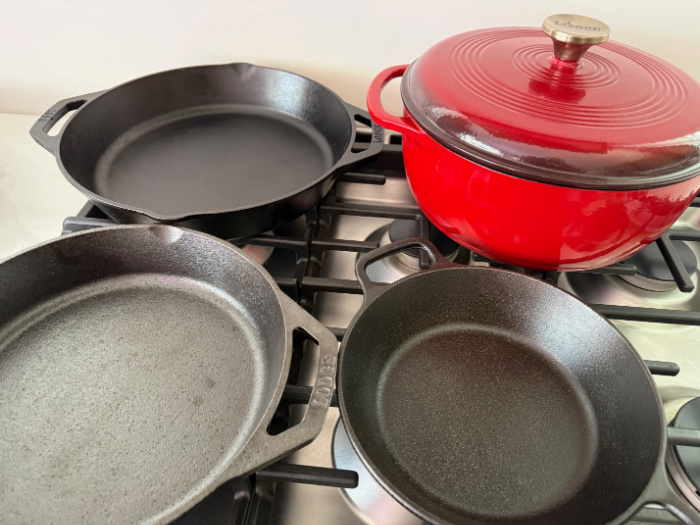
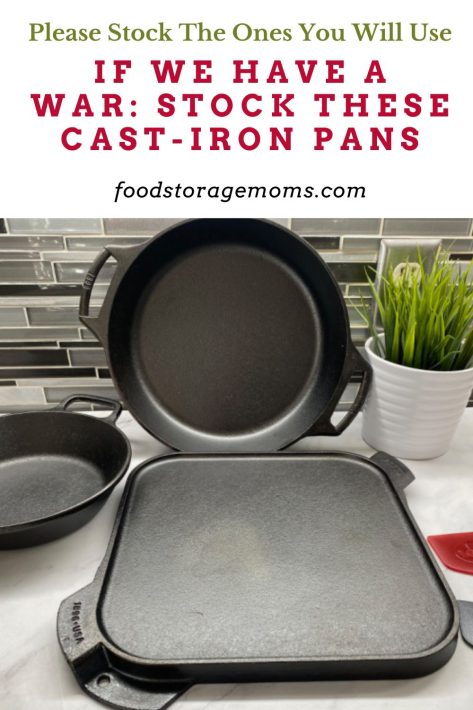
Please stock these cast-iron pans if and when you need to cook outside. When the grid goes down, the stores close, and the world outside your door becomes uncertain, what you cook with matters just as much as what you cook. Cast iron has fed armies, homesteaders, and survivors for centuries because it works with any heat source, never wears out, and requires nothing more than fire and food to do its job. If war comes, the people who stocked cast-iron cookware will eat. The people who didn’t will wish they had.
12-Inch Cast-Iron Skillet: The Workhorse of War-Time Cooking
The 12-inch cast-iron skillet is the single most important pan you can own in a survival situation. It is large enough to cook a full meal for a family of four, yet manageable enough to handle over an open fire without losing control. This is the pan you’ll reach for first every single day, and it’ll rarely let you down. 12-Inch Frying Pan
When it comes to protein, the 12-inch skillet handles everything. Fry a full pound of bacon in a single batch, render the fat, and save that grease in a jar because it becomes your cooking oil for days. Crack six to eight eggs at once and scramble them with whatever vegetables you have on hand. Sear thick cuts of wild game like venison, rabbit, or wild boar directly over hot coals and develop a crust that locks in moisture and flavor even without marinades or sauces.
Cornbread and skillet bread are two of the most important survival foods you can make in a 12-inch pan. A simple mixture of cornmeal, water, salt, and a little fat, pressed into a pan and cooked over moderate heat, produces a dense, calorie-rich bread that feeds a family without using an oven. The same pan can be used to make drop biscuits, fried bread, and flour tortillas when a tortilla press is unavailable.
Hash Meals For Survival
Hash meals are a staple of survival cooking, and the 12-inch skillet was made for them. Dice the potatoes, onions, and any canned or preserved meat you have, then press everything flat into the pan and let it cook undisturbed until a crust forms on the bottom. Flip it in sections and cook the other side. A single hash meal made this way can feed four people and requires almost no ingredients beyond root vegetables and a protein source.
The 12-inch pan also excels at one-pan stir-fries using long-shelf-life grains like rice or barley, combined with dried vegetables rehydrated in water. Heat the pan until it’s very hot, add fat, and cook everything quickly over high heat. The cast iron retains heat even when cold ingredients are added, which is what makes it perform like a proper wok in a field-cooking situation.
10-Inch Cast-Iron Skillet: The Everyday Survival Pan
The 10-inch cast-iron skillet is the pan you use when the 12-inch is too large, and the 8-inch is too small. It strikes a perfect balance between surface area and fuel efficiency, making it the ideal choice for daily cooking when you need to conserve resources. 10.25-Inch Cast Iron Skillet
For a family rationing food supplies, the 10-inch skillet is perfect for cooking controlled portions. Four eggs, two pieces of meat, or a single cup of dry grain cooked down into a full meal all fit comfortably without wasting pan space or burning unnecessary fuel to heat a larger surface area. Every bit of firewood or propane saved in a survival scenario extends your ability to cook and eat warm food.
Pan sauces and gravies come together beautifully in a 10-inch skillet. After searing the meat, deglaze the pan with a small amount of water or broth, scrape up the browned bits from the bottom, and reduce it to a thick, flavorful sauce that stretches a small amount of protein into a more satisfying meal. This technique works with any meat drippings and requires nothing more than water and the natural fond left behind in the pan.
Fried Rice Is Inexpensive To Make
Fried rice is one of the most fuel-efficient and calorie-dense meals you can produce in a 10-inch skillet. Pre-cooked rice, a small amount of fat, dried vegetables, and a single egg stirred together over high heat produce a complete meal in under ten minutes. Because cast iron retains heat so efficiently, you can bring the pan to temperature, add all your ingredients, and finish cooking even after pulling it partially off the heat source, saving fuel in the process.
Flatbreads of every kind work well in the 10-inch pan. From simple flour-and-water flatbread to hand-pressed corn tortillas, the 10-inch surface area is ideal for cooking two to three pieces at a time. Pancakes made from powdered milk, flour, and water cooked in this pan provide a high-calorie breakfast that keeps people moving through physically demanding days.
Foraging becomes a critical food source in extended survival situations, and the 10-inch skillet handles wild greens, mushrooms, and edible plants better than any other size. A small amount of rendered fat in the pan, a handful of foraged greens, and a pinch of salt produce a nutritious side dish that supplements whatever primary protein you have available.
8-Inch Cast-Iron Skillet: Small But Mighty in a Crisis
The 8-inch cast-iron skillet is the most underestimated pan in a survival kit. Most people overlook it in favor of larger sizes, but in a resource-scarce environment, it becomes one of the most valuable tools you own. It heats up faster than any other cast-iron piece, uses the least fuel, and handles single-serving cooking with precision. 8-Inch Cast Iron Skillet
When food supplies are limited and rationing is necessary, the 8-inch skillet naturally enforces portion control. Two eggs, a single piece of meat, or one serving of grain fit perfectly in this pan without the temptation to overfill that comes with larger cooking surfaces. Cooking individual portions also allows you to tailor meals to those who need more calories, which is particularly important when rationing food for children, older family members, or injured individuals.
Toasting Various Nuts/Seeds
Toasting is one of the 8-inch skillet’s most valuable functions that most people never consider. Dry toast nuts, seeds, and dried grains directly in the pan over moderate heat to dramatically improve flavor and digestibility. Toasted pine nuts, sunflower seeds, and pumpkin seeds, when added to other dishes, increase caloric density and provide fats and proteins that are hard to come by in a survival diet.
Rendering fat is a critical survival skill, and the 8-inch skillet is the perfect tool for it. Cut fatty pieces of meat into small chunks, place them in the cold pan, and heat slowly over a low flame. The fat renders out cleanly, the remaining cracklings become a high-calorie snack, and the liquid fat is strained into a jar for use as cooking oil. A single batch of rendered lard or tallow can provide cooking fat for days.
8-Inch Pan Is Awesome
The 8-inch pan handles egg cookery better than any other size when cooking for one or two people. A single fried egg, a two-egg omelette filled with rehydrated vegetables, or scrambled eggs with rendered meat cracklings all cook perfectly in this pan with minimal fat and minimal fuel. In a survival scenario where eggs from kept chickens or foraged bird eggs may be available in small quantities, the 8-inch skillet ensures nothing is wasted.
Mini cornbread cooked in an 8-inch skillet yields a small, dense loaf that serves 1 to 2 people. Mix cornmeal, water, salt, and a small amount of fat directly in the pan, smooth it out, cover with a lid or foil, and cook over moderate heat until set. The result is a portable, calorie-dense bread that can be eaten on the move or saved for later in the day.
17-Inch Cast-Iron Pan: Feeding Large Groups When It Counts
The 17-inch cast-iron pan is a community cooking tool. It isn’t designed for daily individual use but rather for moments when you are feeding a large group, cooking for an extended family, or preparing food in bulk to be preserved and eaten over multiple days. In a war or collapse scenario where communities band together for survival, this pan becomes essential. 17-Inch Skillet
Cooking Beans and Rice
Cooking beans and rice in large quantities is the foundation of group survival feeding, and the 17-inch pan handles both simultaneously when used correctly. Spread cooked rice across the entire surface, press it flat, and let it develop a crispy bottom crust while keeping the top layer soft and warm. This technique, common in Persian and Latin American cooking traditions, produces a large batch of rice with varied textures that feeds ten or more people from a single cooking session.
Large batch flatbread production is where the 17-inch pan truly earns its place in a survival kit. Mix a large batch of simple flour-and-water dough, divide it into portions, and cook multiple flatbreads back-to-back on the hot surface. Because the pan retains heat so effectively, each flatbread after the first cooks faster as the surface temperature stabilizes. A single hour of cooking over a sustained fire can produce enough flatbread to feed a group of ten to fifteen people for a full day.
The 17-Inch Pan Is Awesome
The 17-inch pan functions as a large camp griddle when placed over a fire grate or balanced across two large stones over an open fire. Lay out strips of meat, sliced root vegetables, and flatbread dough side by side and cook everything simultaneously. This simultaneous cooking approach reduces total fuel consumption dramatically compared to cooking each item separately in smaller pans.
Roasting root vegetables for a large group works exceptionally well on the 17-inch surface. Slice potatoes, sweet potatoes, turnips, and carrots into uniform pieces, toss them in rendered fat, and spread them in a single layer across the pan. Placed over coals or a moderate fire, the vegetables caramelize on the bottom and steam slightly from their own moisture, producing a sweet, tender result that efficiently provides carbohydrates and nutrients for a large number of people.
14-Inch Cast-Iron Pizza Pan: More Than Just Pizza in a Survival Scenario
The 14-inch cast-iron pizza pan is one of the most versatile pieces in a survival cast-iron collection, precisely because most people don’t recognize its full range of uses beyond its intended purpose. Its wide, flat surface, low sides, and even heat distribution make it an exceptional tool for baking and roasting in any off-grid cooking situation. 12-Inch Pizza Pan
Flatbread pizza made from a simple no-yeast dough is one of the most morale-boosting meals you can produce in a survival scenario. Mix flour, water, salt, and a small amount of fat into a stiff dough, press it flat across the pan, top it with whatever preserved or foraged ingredients are available, and cook, covered, over moderate heat until the dough is cooked through and the edges are crisp. Even without cheese or sauce, a flatbread topped with canned tomatoes, dried herbs, and preserved meat feels like a real meal rather than survival rations.
A Pizza Pan Is A Large Baking Sheet
Using the pizza pan as a large baking sheet opens up an enormous range of cooking possibilities. Biscuits, crackers, and hardtack all bake evenly across the wide, flat surface. Hardtack in particular, made from nothing more than flour, water, and salt pressed thin and baked until completely dry, is one of the most important survival foods you can produce in bulk. It stores for months without refrigeration and provides carbohydrates and calories during periods when fresh cooking is not possible.
Roasting Meat On The Pizza Pan
Roasting meat on the pizza pan over coals produces results similar to oven roasting. Place a whole chicken, a rack of ribs, or a large cut of game meat flat on the pan, surround it with root vegetables, cover loosely with foil or an inverted pan, and cook over moderate coals. The flat surface allows fat to drain away from the meat naturally, while the cast iron distributes heat evenly across the entire surface.
Dehydrating food on a 12-14-inch pizza pan is a survival technique that most people never consider. Place thin slices of fruit, strips of salted meat, or fresh herbs flat across the pan and set it over the lowest possible heat source for an extended period. The result is shelf-stable, dehydrated food that can be stored without refrigeration. Jerky made this way, over a very low fire or dying coals, can preserve a large quantity of meat that would otherwise spoil.
Tortilla Maker: Survival Bread You Can Make Anywhere
A cast-iron tortilla press paired with a cast-iron skillet or griddle is one of the most powerful combinations in a survival food system. Tortillas and flatbreads made from simple ingredients are among the most calorie-dense, versatile, and easy-to-produce foods available when conventional cooking options are unavailable. Tortilla Maker
Flour tortillas require nothing more than flour, water, salt, and a small amount of fat. Mix the ingredients into a soft dough, let it rest for 10 minutes, divide into balls, and press flat in the tortilla maker. Cook each tortilla on a dry, hot skillet for 60 to 90 seconds per side, until light brown spots appear and the surface puffs slightly. A single batch of dough made from two cups of flour produces eight to ten tortillas that can wrap any filling, serve as flatbread alongside a meal, or be eaten plain as a source of carbohydrates.
Corn Tortillas
Corn tortillas made from masa harina are nutritionally superior to flour tortillas in a survival context. Masa harina is dried corn that has been nixtamalized, a process that unlocks the niacin content of the corn and makes it fully bioavailable to the human body. A diet heavy in corn without nixtamalization leads to niacin deficiency over time, making masa harina a critical pantry staple rather than simply a cooking ingredient. Press corn tortillas thinner than flour tortillas and cook on a dry, hot surface until the edges begin to lift and the surface develops dry spots.
Wrapping survival meals in tortillas dramatically increases the caloric density and palatability of basic rations. A tortilla filled with beans and rice becomes a complete protein meal. A tortilla wrapped around canned fish, foraged greens, and a smear of rendered fat becomes a balanced meal with protein, carbohydrates, and fat in a single portable package that can be eaten without utensils.
Flatbread Traditions
Roti, chapati, and other global flatbread traditions all use the same basic technique as flour tortillas and can be produced with a cast-iron tortilla press and skillet. These traditions developed in cultures that relied on flatbread as a daily staple precisely because it requires minimal ingredients, no leavening agent, no oven, and can be produced quickly over any heat source. Knowing these traditions significantly expands your survival cooking repertoire.
Storing finished tortillas is simple and extends their usefulness across multiple meals. Stack cooked tortillas, wrap them in a clean cloth, and they will stay soft and pliable for several hours. For longer storage, allow them to cool completely and store them in an airtight container. Slightly dried tortillas can be toasted directly over a flame to restore texture or crumbled into soups and stews as a thickener and calorie booster.
Cast Iron Dutch Oven: The King of Long-Term Survival Cooking
The cast-iron Dutch oven is the most capable and important piece of cookware in any survival collection. No other single piece of equipment can bake, braise, fry, boil, steam, and slow cook with equal proficiency over an open fire. If you could stock only one piece of cast iron for long-term survival, the Dutch oven would be the right choice. Please remember that the ceramic colored units can’t be used outside over an open flame. 6 Quart Dutch oven
Slow cooking tough cuts of wild game is where the Dutch oven has no equal. Animals taken in a survival hunting or trapping scenario are almost always lean, tough, and require long, moist cooking to become palatable and digestible. Place tougher cuts like shoulder, neck, or leg meat in the Dutch oven with water, root vegetables, and salt, seal with the tight-fitting lid, and cook over low coals for three to four hours. The collagen in the connective tissue breaks down into gelatin, the meat becomes fork-tender, and the resulting liquid is a rich, nutritious broth that should never be discarded.
Baking Bread
Baking bread in a Dutch oven is one of the most important survival skills attached to this piece of cookware. A simple no-knead bread dough made from flour, water, salt, and a small amount of wild yeast starter or commercial yeast, placed in a preheated Dutch oven and baked over coals, with additional coals on the lid, produces a loaf of bread indistinguishable from oven-baked bread. The enclosed environment traps steam from the dough during the first phase of baking, producing a thin, crisp crust and an open, airy crumb that provides a psychological and nutritional boost far beyond what flatbread alone can offer.
Simmer Your Beans
Simmering large pots of beans and legumes is a daily function of the Dutch oven in a survival food system. Dried beans, lentils, split peas, and chickpeas are among the most calorie-dense and protein-rich foods available for long-term storage, and all of them require extended simmering in liquid to become edible. The Dutch oven handles this task better than any other pot because it maintains an even, gentle simmer over coals without scorching the bottom of the beans, as a thin metal pot would over an open flame.
Bone Broth
Bone broth made in a Dutch oven is a nutritional powerhouse that should be produced from every animal carcass in a survival scenario. Place bones, joints, feet, and any remaining meat scraps into the Dutch oven, cover with water, add a small amount of vinegar if available to help draw minerals from the bones, and simmer for six to twelve hours. The result is a deeply nutritious liquid rich in collagen, minerals, and amino acids that can be drunk as a warming beverage, used as a base for soups and stews, or used to cook grains for added nutritional value.
Deep Frying In Dutch Ovens
Deep frying in a Dutch oven is possible and practical in a survival scenario when oil or rendered fat is available in sufficient quantity. The tall sides of the Dutch oven contain splatter, the thick walls maintain oil temperature better than any other vessel, and the tight-fitting lid can be used to smother a grease fire if one occurs. Fried foods offer a significant caloric-density advantage over other cooking methods and can make tough or bland ingredients far more palatable.
One-Pot Stews
One-pot stews cooked in the Dutch oven represent the most efficient use of all available ingredients in a survival kitchen. Whatever protein, root vegetables, dried grains, and preserved foods are on hand go into the pot together with water and whatever seasonings are available. The long, slow cooking process melds flavors and produces a meal that is far more satisfying than the sum of its parts. One large batch of stew cooked in a 6-quart Dutch oven can feed a family of four for two full meals, significantly reducing total fuel consumption and cooking time.
Cast-Iron Griddle: The Flat Surface That Feeds Everyone
The cast-iron griddle is one of the most practical and hardworking pieces of cookware you can add to a survival kitchen. Its wide, flat surface and low or absent sides make it the go-to tool for cooking large quantities of food quickly and efficiently over any heat source. Whereas a skillet excels at sauces, braises, and deep-frying, the griddle excels at anything that benefits from direct contact with a broad, evenly heated flat surface. Cast Iron Griddle
Breakfast On A Griddle
Breakfast cooking on a cast-iron griddle is where this piece truly shines. Lay out strips of bacon across the entire surface and cook them all at once rather than in batches. The rendered bacon fat naturally bastes everything around it, and once the bacon is done, you have a perfectly seasoned, fat-coated surface ready for eggs, pancakes, or flatbread without adding any additional cooking fat. Feeding a group of six to eight people a hot breakfast simultaneously, rather than in rotation, saves fuel and time and keeps morale high.
Pancakes Are the Best
Pancakes made from a simple survival batter of flour, water, powdered milk, and a small amount of fat cook beautifully on a cast-iron griddle. The wide surface allows you to cook four to six pancakes at once, and because cast iron holds heat evenly across the entire surface, every pancake browns at the same rate without hot spots burning the center while the edges stay pale. In a survival scenario where sweeteners like sugar or honey are available for trade or storage, pancakes represent one of the most morale-boosting meals you can produce from basic pantry staples.
If We Have A War: Stock These Ten Foods Now
If We Have A War: 25 Personal Hygiene Products
If We Have a War: What Skills Will Homemakers Need?
Final Word
For a family of four preparing a survival cast-iron kit, a minimum recommended collection includes one 12-inch skillet, one 10-inch skillet, one 6-quart Dutch oven, one large griddle, and a tortilla press. Adding an 8-inch skillet for single portions and a 14-inch or 17-inch pan for large-group cooking rounds out a complete and versatile cast-iron arsenal that can handle virtually any cast-iron meal we’ll eat. The people who didn’t build a cast-iron cookware inventory will wish they had. May God bless this world, Linda
The post If We Have A War: Stock These Cast-Iron Pans appeared first on Food Storage Moms.
from Food Storage Moms
No comments:
Post a Comment