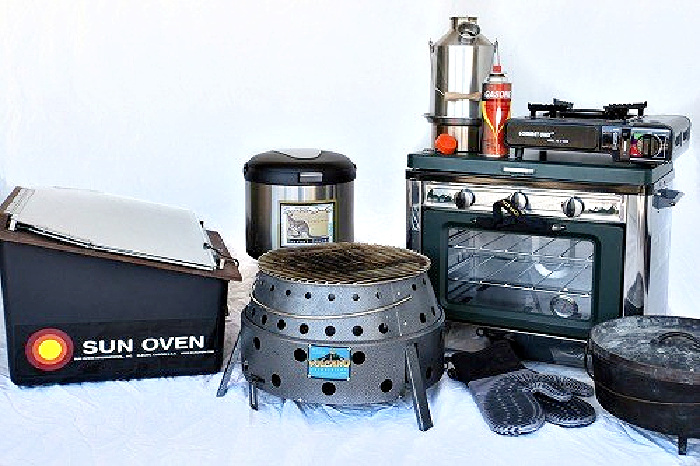
If We Have a War: 6 Outside Cooking Products Every Household Needs. War, whether it arrives on our shores or disrupts the fragile systems we depend on, has a way of reminding us how thin the line is between comfort and crisis. Fuel pipelines, electrical grids, and supply chains are all targets, and they have all failed before during times of conflict.
The single most urgent skill your household can develop right now is the ability to cook a hot, nourishing meal outside, without electricity, without natural gas, and without a trip to the grocery store. The good news is that the right outside cooking products make this not only possible but surprisingly straightforward. Below are six tools that belong in every serious family preparedness plan, each proven and capable of feeding your family when everything else breaks down.
If We Have A War: 6 Outside Cooking Products
1. The Sun Oven
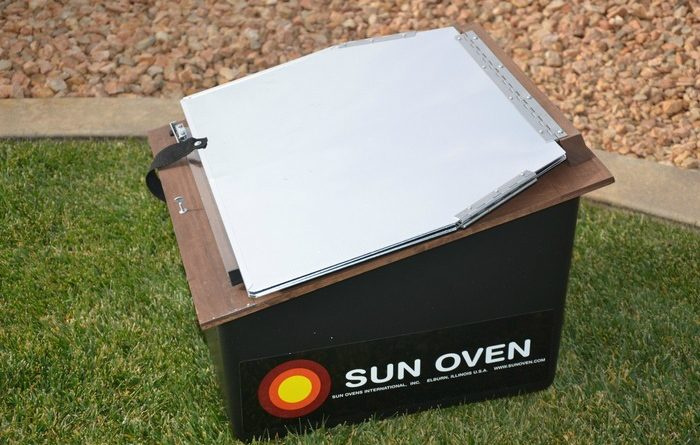
Of all the outside cooking products available to the preparedness-minded household, the Sun Oven stands alone in one critical respect: it requires no fuel whatsoever. Harnessing direct sunlight through a series of reflective panels, a quality Sun Oven, such as the flagship All American Sun Oven, reaches temperatures between 360°F and 400°F, hot enough to bake bread, roast meat, cook rice, and even pasteurize water. In a war scenario where fuel becomes scarce, rationed, or weaponized, the sun remains the one resource that no enemy can cut off. Please note that where I live, I can only get mine to reach 350°F.
The cooking process with a Sun Oven is slower than conventional methods, generally running about the same time as a conventional oven, but it requires little attention once positioned. You may have to adjust the unit’s position slightly as the sun moves across the sky, but that’s an easy step. You place your pot or baking dish inside the insulated cooking chamber, angle the reflectors toward the sun, and step away. The oven holds heat remarkably well, and because it uses no open flame, it produces no smoke — a meaningful tactical advantage if you need to avoid drawing attention to yourself or your location.
Sun Ovens are also extraordinarily durable. The All American model is built with a heavy-gauge anodized aluminum interior and a tempered glass door that can withstand years of outdoor use. For long-term outside cooking, particularly in sunny climates across the American West and South, this is the cornerstone tool around which the rest of your cooking kit can be built.
The prices got up to $750.00, and now you can’t even get one. Check garage sales, eBay, or Google the phrase “All American Sun Oven”. I asked people for years to get one; those who did are sleeping well at night, trust me, I know. Keep in mind that in some locations, this product doesn’t work due to limited sunshine, so you’ll have to go a different route. They may have gone out of business. It’s a real shame, it’s a great product.
2. The Dutch Oven
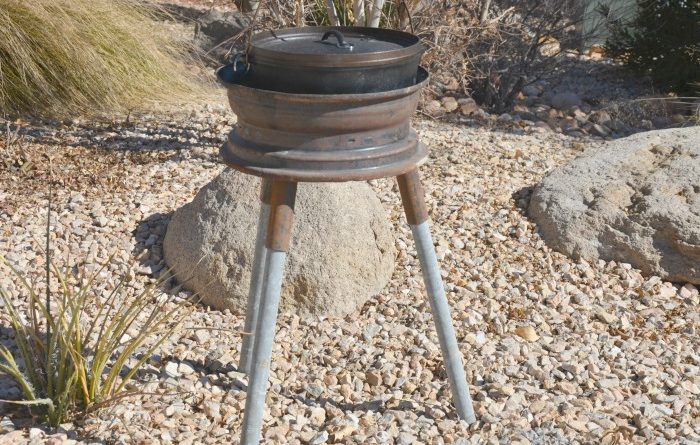
The cast-iron Dutch Oven is arguably one of the oldest and most battle-tested outside cooking products in human history. Armies, pioneers, and homesteaders have cooked with these heavy, lidded pots for decades, and for good reason: they are essentially indestructible, they distribute heat with extraordinary evenness, and they can do virtually anything; bake, braise, fry, simmer, boil, and roast, over any heat source available, including an open wood fire, charcoal, propane, or even coals dug directly from the ground.
The camp Dutch Oven differs slightly from its kitchen counterpart in one important way: it has legs. Those three short legs allow it to sit directly over a bed of coals, and the flanged lid, flat with a rim around the edge, lets you pile additional coals on top, effectively turning the pot into a two-zone oven capable of producing biscuits, cobblers, casseroles, and stews that would be at home on any restaurant table. A 12-inch Dutch Oven will comfortably feed a family of four to six people.
For emergency outside cooking, the Dutch Oven pairs beautifully with whatever fuel source you have available. It works with firewood you scavenge, charcoal briquettes stored in your garage, or the wood fire in a Volcano Stove. Its weight, typically 10 to 15 pounds, is its only real drawback, making it less suited to bugging out on foot, but for sheltering in place, there is no more versatile or reliable outside cooking vessel on this list.
I prefer the 6-quart cast-iron Dutch oven with the rim around the lid with legs. Great for stacking other Dutch ovens on top to cook at the same time outdoors. 6-Quart Dutch Oven
3. The Volcano Stove & Grill
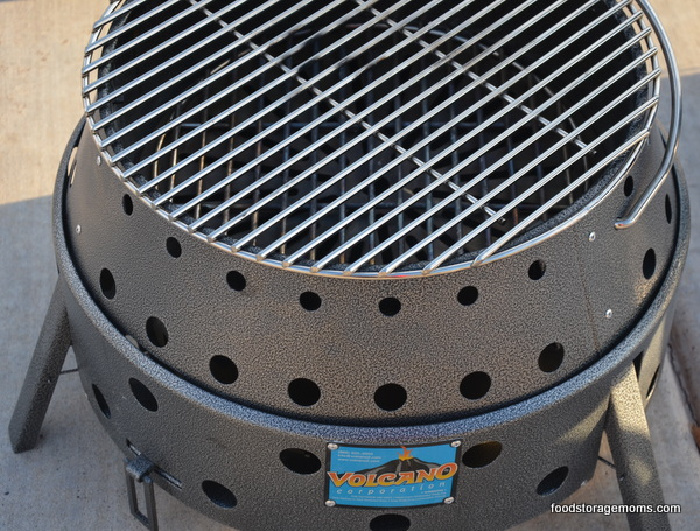
The Volcano Stove is one of those outside cooking products that, once you understand what it does, you wonder how you ever planned an emergency kit without it. It’s a collapsible, three-fuel cooking system that burns wood, charcoal, or propane interchangeably; switching between fuels takes only a few seconds and a simple adjustment to the fuel feed. In a wartime scenario where one fuel type may become unavailable at any given moment, that flexibility is worth more than almost any other single feature.
The stove itself is engineered as a truncated cone, hence the name, with an opening at the base for fuel and a grated cooking platform at the top. The conical shape creates a natural draft that draws air upward through the fire, producing a highly efficient burn that uses significantly less fuel than an open campfire while generating more concentrated, usable heat. This efficiency matters enormously when supplies are limited or when wood must be gathered by hand.
Beyond its triple-fuel design, the Volcano is remarkably versatile as an outside cooking platform. Its top grate accommodates a standard Dutch Oven, a cast-iron skillet, a stockpot, or a griddle plate, making it a true outdoor kitchen hub. A dedicated Volcano Grill attachment transforms it into a full BBQ grill capable of cooking everything from burgers to fish. The stove breaks down flat for storage and is made from heavy-gauge steel with a powder-coat finish that resists rust. For a family sheltering in place through an extended crisis, the Volcano Stove may be the single most important outside cooking purchase on this entire list.
The Volcano Stove is awesome. You can use charcoal, wood, and propane.
4. The Butane Stove
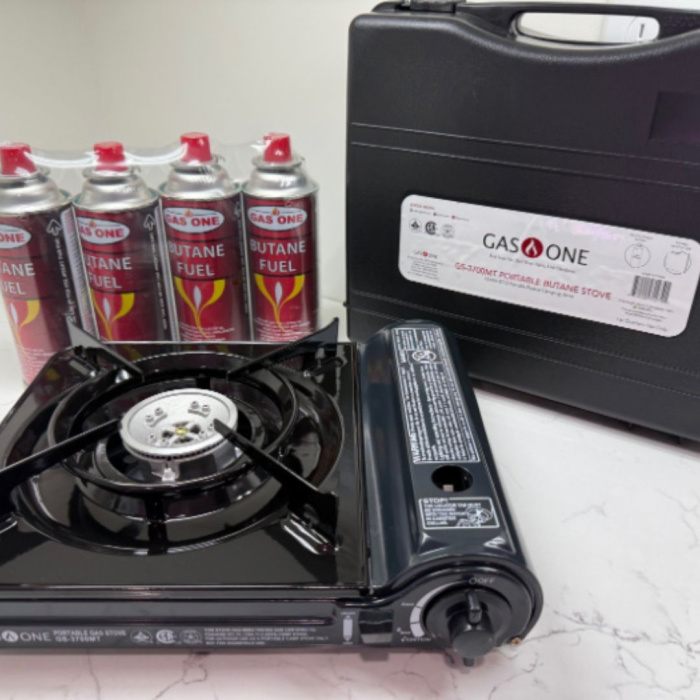
Speed, simplicity, and convenience are the hallmarks of the butane stove, and in an emergency outside cooking situation, those qualities have real value. When you need to boil water fast, heat up a meal for a sick family member, or cook something quickly before dusk, a butane stove delivers instant, controllable flame at the turn of a knob, no kindling, no lighter fluid, no waiting for coals to ash over. For outside cooking in the immediate aftermath of a crisis, butane stoves bridge the gap while longer-burning systems are set up.
A standard single-burner butane camp stove uses butane canisters that are inexpensive, widely available, and store for years without degrading. A single canister typically provides between 1 and 3 hours of cooking time, depending on the heat setting, so storing a case of 12 to 24 canisters gives you meaningful cooking capacity over an extended period. Butane performs best in mild temperatures; however, below 32°F, it begins to struggle, so in cold-weather emergencies or winter conflict scenarios, propane or multi-fuel options should take precedence.
The butane stove shines as a precision outdoor cooking tool for small meals and tasks that require precise heat control: sautéing vegetables, making sauces, simmering soups, or scrambling eggs. Some companies produce compact, wind-resistant models built for serious outdoor use that feel far more substantial than budget camp stoves sold in discount stores. Stock several spare burner heads along with your canisters, and include a butane stove in every outside cooking kit as the quick-response workhorse of your setup.
Every family needs a Butane Stove with Butane Fuel stocked.
5. The Thermal Cooker
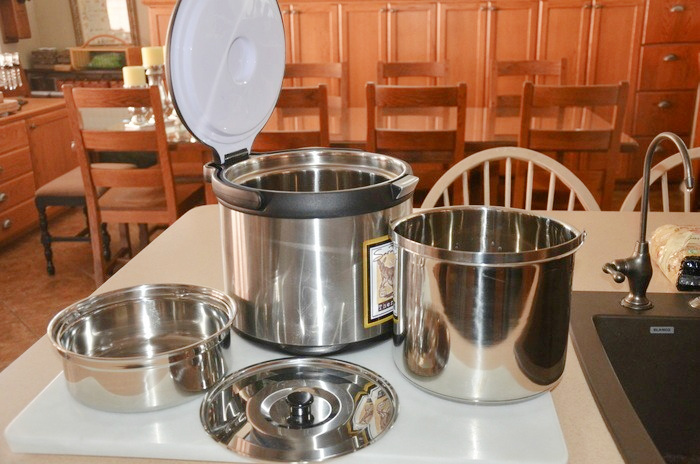
The thermal cooker, sometimes called a wonder cooker or fireless cooker, is perhaps the least well-known outside cooking product on this list, and that’s a genuine oversight in the preparedness community. The concept is simple and nearly magical: you bring your food to a boil or a vigorous simmer on any heat source, then transfer the cooking pot into a heavily insulated outer container that traps the heat inside. The food continues cooking entirely on retained thermal energy for the next two to eight hours, with no additional fuel required whatsoever.
In practice, this means you can prepare a pot of beans, stew, soup, or whole grains in the morning using your Volcano Stove or butane burner, seal it in the thermal cooker, and return to a fully cooked, piping-hot meal at lunchtime or dinner without spending a single additional BTU. For outside cooking in a fuel-scarce environment, that is a transformative capability. It effectively multiplies the productive output of every other fuel-burning stove in your kit.
High-quality thermal cookers are built with stainless steel inner pots that are dishwasher safe and designed for tens of thousands of cooking cycles. The outer insulated cases are typically hard-sided, with secure-latching lids that prevent heat loss and make the entire unit portable. A thermal cooker is also silent and produces no light, smoke, or detectable output after the initial cooking phase, another quiet tactical advantage for households that need to maintain a low profile during civil unrest. Every outside cooking system should include one.
Every family should have a Thermal Cooker, trust me, I use mine a lot.
6. The Kelly Kettle
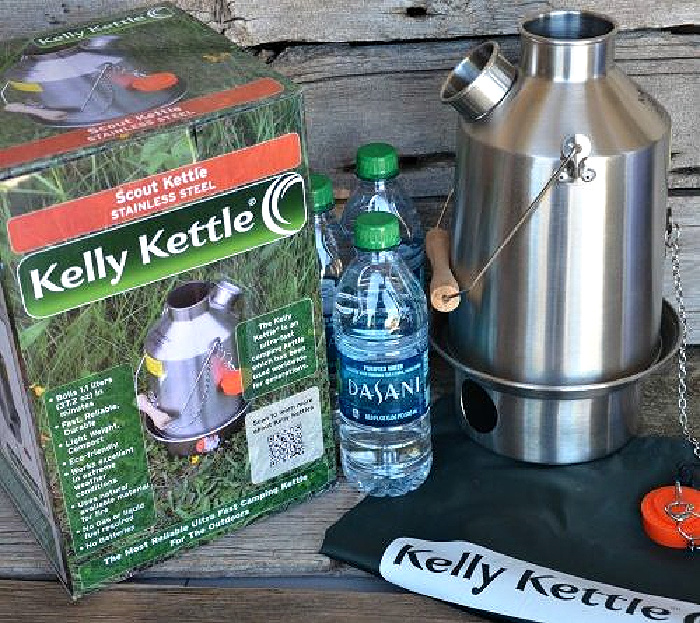
Hot water is the foundation of survival cooking. It makes instant meals safe to eat, rehydrates freeze-dried food storage, sterilizes wounds, purifies drinking water, and provides the psychological comfort of a hot cup of tea, hot chocolate, or coffee in genuinely miserable circumstances. The Kelly Kettle, an Irish-designed, chimney-style water boiler manufactured since the 1890s, is the fastest and most fuel-efficient outdoor cooking tool ever devised for the sole purpose of boiling water quickly from virtually any biomass fuel.
The design is a double-walled aluminum or stainless steel kettle with a hollow fire chamber running up through its center. You build a small fire in the base using twigs, pine cones, dry leaves, bark, or any small dry biomass you can gather, then place the kettle over it. The chimney effect draws air up through the hollow core at high velocity, intensifying the burn and directing heat directly into the water surrounding the chamber. The result is that a 1.6-liter Kelly Kettle boils water in three to five minutes using only a small handful of sticks, no purchased fuel required.
This matters in a wartime, outdoor cooking scenario because it means your hot water supply depends on nothing more than your ability to gather small, dry debris from your surroundings. Forests, parks, backyards, and rural properties provide a continuous supply of natural fuel at no cost. The Kelly Kettle also supports a small pot attachment for its chimney top, allowing you to cook a simple meal or warm food simultaneously while boiling water below, a true two-course capability from a device that weighs less than two pounds. It’s the outside cooking tool that should live in every bug-out bag, every shelter-in-place kit, and every vehicle emergency bin in your household.
A Kelly Kettle is awesome for boiling water or cooking a small pan of soup. It uses free fuel, such as dried leaves, pine cones, and dried small branches from bushes or small trees.
My Series On If We Have A War
If We Have A War: 30 OTC Medications To Stock
If We Have a War: What Skills Will Homemakers Need?
If We Have A War: Stock These Ten Foods Now
If We Have A War: 25 Personal Hygiene Products
If We Have A War: Stock These Cast-Iron Pans
If We Have A War: Stock Paper Products Now
The Bottom Line
War, grid failure, or societal disruption doesn’t announce itself with enough lead time to improvise. The households that’ll feed themselves and their neighbors during the next major crisis are the ones building their outside cooking capability today, stocking the Sun Oven, seasoning the Dutch Oven, staging the Volcano Stove, changing the butane canisters, filling the thermal cooker, and keeping the Kelly Kettle dry and ready to light.
Final Word
These six outside cooking products are not luxuries. At the wrong moment, they are the difference between eating and not eating. Start acquiring them now, learn to use each one before you need it, and rotate your fuel supplies regularly. The time to prepare is always before the emergency arrives. May God bless this world, Linda
The post If We Have A War: 6 Outside Cooking Products appeared first on Food Storage Moms.
from Food Storage Moms
No comments:
Post a Comment