Today, it’s all about how to turn off the gas and water to your house. A couple of years ago, I happened to go out to our attached garage to get a loaf of bread out of the freezer. Well, we had water running off the shelf that held our 8-year-old water heater. I mean, like a small river. I wrote this post many years ago and am updating it for my new readers.
I was surprised, and I’m sure most of you would be too. In some disasters, the issue may not be water rushing from the gas water heater; it may be gas due to a bent or broken gas line. So, I want to challenge everyone to find their water and gas turn-off valves today, just in case.
Here’s the deal: I have neighbors call ME to ask how to shut off the water line to their house. It’s been because their water heater has gone out, or they read where I suggested they consider turning off the water when they leave their home for a few days.
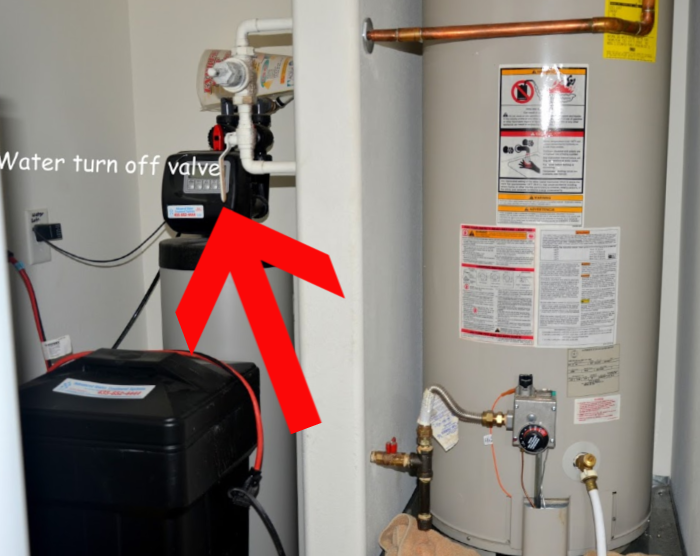
Let’s start with turning off your water. I hope this picture helps you. You turn the handle either horizontally or vertically, depending on the pipe’s direction. In the picture, the valve is running parallel to the pipe, so the water is still on.
How To Turn Off The Water To Your House
We all need to know how to turn the water off in our homes, as well as outside them. I had a cute neighbor who was a plumber by trade, and he once told me, “I wish people would turn the water lines off when they go out of town, even for 3 or 4 days.”
He said, “If people only knew how much damage water can do to their house if it springs a significant leak while they are gone. They would for sure turn off the water inside the house whenever leaving to go on a weekend or long vacation.”
He also mentioned that if nothing else, “they need to turn off their hot and cold water valves attached to their washing machine.” This isn’t as safe as turning off the whole-house valve, but it is an option to protect at least a section of the house if you are going to leave for an extended period.
I’m confident my neighbors would have called me if they had seen water running down the driveway from under the garage door when our water heater started leaking. I’m just glad I was home and not out of town. I used so many towels to mop up the water, as you can only imagine.
Learn Where To Turn Off Your Water Heater Valve
Since we knew where the water leak was, he also showed us how to turn off the water heater valve at the top of the water heater to STOP more water from entering the leaky water heater.
It made me think about what would happen if we had a disruption in our city’s water lines, and thus, no hot water. We at least had cold water for 48 hours. We can live with cold water for a few days. Boy, do we take these water heaters for granted!
The water valve shown above turns off the water to the whole house. My plumber told us we could shut off just the hot water by turning a valve on the top right water inlet pipe above the heater (not shown, but discussed above). Once the new heater was installed, he turned the valve back on.
We had already turned off the gas line to the water heater once we knew the heater was not functioning properly. You can see the red gas valve on the bottom left side of the heater in the picture above.
Yours may be somewhat different. I know many of you have electric water heaters, so the gas line issue doesn’t apply.
But if the heating element fails in that electric water heater, or if the unit starts leaking water from the bottom, as mine did, you’ll still need to turn off the water supply.
Be aware that most homes also have the main water valve outside their home so the water supplying the property, including the sprinkler system, can be shut off. Of course, the sprinklers have their own main valve, along with the valves controlling each section, so you can just turn those off separately.
But the main water valve shuts off the water supply to your property. It’s not too often this main valve needs to be shut off, but it’s good to know where it is and how to shut it down.
My water leak was related to the water heater. You may have to deal with leaks at other locations in your home, such as a toilet, a kitchen or bathroom sink, the laundry room, a shower or bathtub, or even a “wet bar” with a small sink area in a den or family room for serving drinks. Some people will also have a washtub facility in the garage to help clean up after a project.
With all these possible sources of water leaks, it sure pays to know how to shut off the water, either at the outside main, the inside main, or the plumbing fixture itself. A leak anywhere in the house can cause untold damage, with having to replace sheetrock, carpet, wood floors, furniture, or boxed items left on the floor.
Most of us get caught up in the notion that a major disaster is necessary to prompt us to take cautionary action, but as my water heater incident shows, leaks can happen anywhere in the home, at any time.
One other thing to consider. Usually, the property owner is responsible if the main water line from the street to the home breaks. This can happen when the ground settles, putting undue pressure on the line.
It can also happen during an earthquake. Check with your insurance group to see what it would cost to cover damage if the line breaks and affects your yard, home, or neighboring property.
Please take a minute today to find where to turn off the water to your house. Not tomorrow, today. Please be prepared for the unexpected.
How To Turn The Gas Off
Here’s a picture showing how to turn off the gas at your house. Be aware that your gas meter and its associated valve may look slightly different. You might be wondering why you’d ever have to shut off the gas in the first place.
Most homes in the US have natural gas, a large propane tank, or heating oil to operate a furnace, water heater, kitchen stove, or clothes dryer. Some homes have a mix of electric and gas-powered appliances, so it’s good to know how to shut off the gas if needed.
Just like the examples of water fixtures, most appliances are required by building codes to have a valve between the main gas line in the walls of the home and the appliance itself.
These valves are used if you need to repair or replace the appliance, if you smell gas in a room, or if you’ve been notified by authorities or the gas utility that it’s prudent to shut off all gas appliances due to a suspected gas leak in the neighborhood.
Of course, one solution would be to shut off the main valve, but that has some major ramifications that we’ll discuss below.
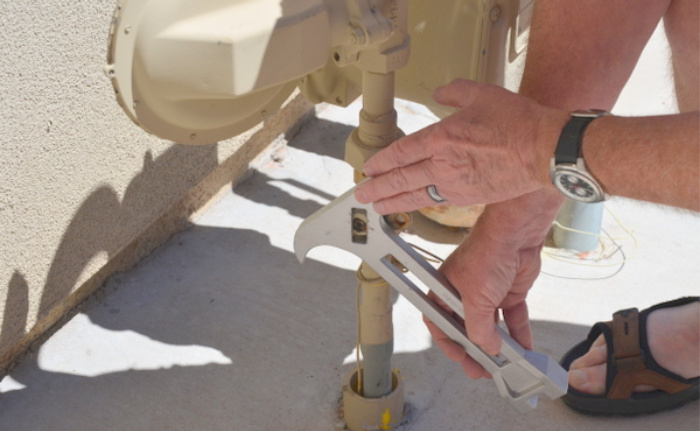
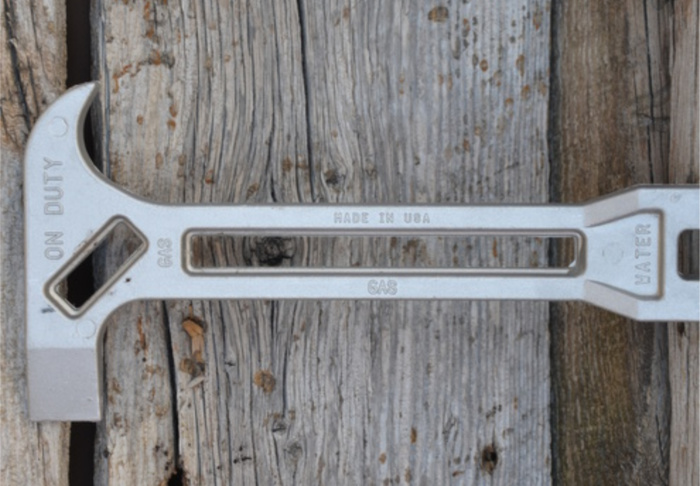
I consider myself to be somewhat “handy” when it comes to many home projects. We have a large tool chest with a variety of hand tools we can use to fix things. Some people tend to be intimidated when deciding which tool works best for a particular project. A crescent wrench could be used to turn off the gas valve, but there is another option I’d like to discuss.
Here is a tool every family should consider having to shut off their gas line. Please know, I am not telling you to turn off your gas line unless you feel you are in imminent danger and you can’t contact the gas company.
You can sometimes cause more problems if you turn off your gas and then have to have the gas company come turn it back on. I’m just asking you to be prepared with a tool you can use in an emergency.
Recommended Items for Home Safety
Carbon Monoxide/Propane/Natural Gas Detector
We are living in an area where more and more antiquated gas lines and electrical grids need to be replaced. In Utah, we had three families whose homes exploded and killed family members due to 48-year-old gas lines underground that leaked. They hadn’t been checked or replaced during that period. This is not acceptable. I want my tax dollars to be used to make everyone safe. Please teach your family to recognize the “rotten smell of eggs” as a possible gas leak.
One of my readers, Ted, issued the following warning to me in response to my suggestion that we may have to turn off our gas:
TED: Warning, Warning, Warning
Turning off the gas to your house on the street is important, but turning it back on again is a different thing. It is best to have an official technician from the gas company turn it back on.
The problem is that part of the gas meter system is a 4-inch disc-shaped object in the gas pipe near the meter. This disc contains a thin membrane that reduces the 30 pounds of gas pressure from the street to about 6 pounds in the house. If you turn the gas meter on in one fast turn, it is possible to rupture this membrane, and you get 30 pounds of gas pressure inside the house, which can have dire consequences.
There is a careful way to turn the gas back on just as the gas company technician would do it, but it is a slow process involving turning all of the gas valves off inside the house appliances and observing the second hand on the gas meter as you turn the valve on very slowly to make sure no gas is flowing inside the house. Then the membrane is not ruptured. Then turn on the gas for each appliance, including lighting the pilot light according to each appliance’s procedure.
How do I turn on the various appliances that were shut off?
When it comes time to get gas appliances up and running again, it can be a little tricky, depending on the appliance type, make, and model. If you still have the owner’s operation manual, it would be wise to refer to it when starting the appliance again.
Some gas appliances have a “pilot light” that needs to be lit. The newer models often have an electric “ignitor” that ignites the gas when the appliance is turned on.
Our gas water heater has a button you press while holding a match or other light source next to the gas line at the bottom of the heater. The key here is to follow the instructions in the manual or on the side of the appliance, or get professional help if you are having difficulty figuring things out. Gas is nothing to take lightly or fool with if you are not familiar with how a particular unit works. If in doubt, get some expert help.
Change Your Air Conditioning/Heater Filters
P.S. Please check your carbon monoxide and smoke alarms at least annually. We always put brand new batteries in ours on New Year’s Day; it’s just a tradition we’ve had for years. Change them out if they are too old, or replace their batteries if that’s all that’s needed.
Final Word
Here’s the deal: please show your family members how to turn off the water to your house. If they are older, show them where the gas line valves are. Let’s be prepared before we need to be. May God bless this world, Linda
The post How To Turn Off The Gas And Water To Your House appeared first on Food Storage Moms.
from Food Storage Moms
No comments:
Post a Comment