Submissions     Contact     Advertise     Donate     BlogRoll     Subscribe                         

Thursday, November 25, 2010

Warm hearted Hunter

This one was worth sending...brings tears to your eyes.

A hunter and his friend were sitting in a tall tower stand near Highway

7 early one cold December morning. Suddenly, a huge buck walked out over

the corn they had spread in the low shrubs. The buck was magnificent, a

once in a lifetime animal. His rack was huge. The hunter's hand shook as

his mind was already counting the Boone and Crockett points. Moving quickly,

the hunter carefully aimed the Leopold scope on his .30-06 at the

unsuspecting buck. As he was about to squeeze the trigger on this deer

of a lifetime, his friend alerted him to a funeral procession passing slowly

down Highway 7. The hunter pulled away from the gunstock, set the rifle

down, took off his hat, bowed his head and then closed his eyes in prayer.


His friend was stunned, "Wow,

that is the most thoughtful and touching thing I have ever seen you do.

You actually let that trophy deer go to pay respects to a passing funeral

procession. You are indeed the kindest man I have ever known, and I feel

lucky to call you a friend."

The hunter shrugged. "Yeah, well, we

were married for 37 years."

Utility Shut Off and Safety

Thank you Lee Lloyd for allowing me to post this on our blog (and thanks to Tonya for demonstrating this on Friday night!!)

WHAT IF DISASTER STRIKES?

In the event of a disaster, you may be instructed to shut off the utility service at your home.
Do you know how to turn off your main water valve? Your electricity? Your gas?

Attached is some information that will help you in a natural disaster or even a problem that could become a disaster in your home at anytime such as a leaky water heater, faucet, tripped circuit, gas leak and many other problems. Just become familiar with these 3 things (water, natural gas, electricity) to protect your home, yourself, pets, and/or your family. It only takes 5 minutes to learn where these things are and 5 seconds or less for a disaster to destroy everything.

*The pictures on the attached email are actual photo’s from my (Lee Lloyds) house. Most all of yours should look very similar.

Here is the 3 page PDF for you to print out and learn how to shut off your utilities!

Wednesday, November 24, 2010

Survival Debate: Which Dog is the King of Survival

Post image for Survival Debate: Which Dog is the King of Survival
A few months back we asked the question, Dog or No Dog?  The overwhelming response was to bring the dog for a variety of reasons, excellent early warning system, close quarters fighting advantage, threat deterrent, companionship, and your emergency “last resort” supply of food.
Now that most of us agree to bring the dog, the next question is what type of dog makes the best survival dog?  (Dogs are listed in random order)

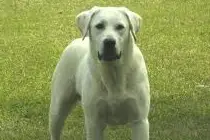
1.  Labrador Retriever:

(Also know as a “Lab”) a type of gun/hunting dog.  A breed characteristic is webbed paws which makes the Lab an excellent swimmer, useful for the breed’s original purpose which was the retrieval of fishing nets.  This and their subsequent use as legendary hunting companions, gave the Lab the name retriever.  The dogs of this breed are very loving, kind and compassionate to their master. The Labrador Retriever is the most popular breed of dog (by registered ownership) in the world.
Pro’s – excellent hunting dogs, all weather coat, excellent endurance, strong swimmers, highly trainable, intelligent, excellent hearing and sense of smell for early warning, strong work ethic, devoted to family.
Con’s – can overheat in extreme heat, can be loud and clumsy at times, questionable protection capability due to their lovable nature, high prey drive means they can sometimes run off, medium fear factor.

2.  Rottweiler:

(Also known as a Rott or Rottie) The Rottweiler is a large size breed of domestic dog that originated in Rottweil, Germany.  The dogs were known as “Rottweil butchers’ dogs” (For you Germans that would be: Rottweiler Metzgerhund) because they were used to herd domesticated livestock and pull carts full of butchered meat and other products to the local market.   Some records indicate that earlier Rottweilers may have also been used for hunting, although the modern Rottweiler has a very poor hunting instinct.  It is a hardy and very intelligent breed.  The breed is ancient, one whose history stretches back to the Roman Empire.  In those times, the Roman legion traveled with their meat on the hoof and required the assistance of working dogs like the Rottweiler to herd the cattle to keep the logistical train on pace with the legion.
Pro’s – for personal protection they are second to none, all weather coat, highly trainable, intelligent, strong neck, good hearing and sense of smell for early warning, strong work ethic, devoted to family, high fear factor.
Con’s – can overheat in extreme heat, questionable endurance, poor hunters compared to other dogs, due to their defensive nature they can be a liability.

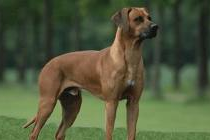
3.  Rhodesian Ridgeback:

The Ridgeback is a unique dog breed developed in Southern Africa where it was used to hunt lions and served as an overall homestead dog.  Due to the Ridgeback’s history of hunting lions, this dog is known for its bravery.   Its European forebears can be traced to the early pioneers of South Africa, who crossed their dogs with the semi-domesticated, ridged hunting dogs of the Khoikhoi.  Note: Excessively harsh training methods, that might be tolerated by a sporting or working dog, will likely backfire on a Ridgeback, this is not a dog you can hit or beat.
Pro’s – This dog is built for endurance and speed, excellent hunters on their own (no gun required), intelligent, excellent hearing and sense of smell for early warning, trainable, high fear factor, ability to go long periods without water, adaptable coat for most weather conditions (especially heat), devoted to family, can transverse almost any terrain due to athletic build.
Con’s – Due to high prey drive this dog can run off, questionable coat for extreme cold weather, medium to low protection ability, this dog can be stubborn.

4. German Shepherd Dog:

The German Shepard is a breed of large-sized dog that originated in Germany.  As part of the Herding group, the German Shepherd is a working dog developed originally for herding sheep in the hinterland.  Because of its strength, intelligence and abilities in obedience training it is often employed in police & military roles around the world.  Due to its loyal and protective nature, the German Shepherd is one of the most registered of breeds.
Pro’s – Good endurance, high fear factor, superior personal protection, highly trainable, good all weather coat, devoted to family, superior hearing and sense of smell for early warning, intelligent, strong work ethic.
Con’s – can overheat in extreme heat, due to inbreeding and it’s popularity they have a questionable health records.

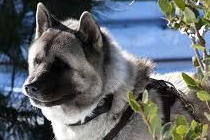
5.  Akita:

The Akita is a Japanese breed of large dog from the mountainous northern regions of Japan. This dog is a unique combination of dignity, courage, alertness, and devotion to its family.  It is extraordinarily affectionate and loyal with family and friends, territorial about its property, and can be down right nasty with strangers.  Because it is a large, powerful dog, the Akita is certainly not a breed for everyone.  Their background gives them a strong independent streak that can make Akitas unreliable off-lead and more challenging in obedience activities.  The Akita was never bred to live or work in groups like many dogs.  Instead, they lived and worked alone or in pairs, a preference reflected today.  Akitas tend to take a socially dominant role with other dogs, and thus caution must be used in situations when Akitas are likely to be around other dogs, especially unfamiliar ones.
If you are destine to walk the earth alone like The Hulk….this might the dog for you.
Pro’s – Good endurance, high fear factor, superior personal protection, trainable, superior cold weather coat, devoted to family, good hearing and sense of smell for early warning.
Con’s – Does not play well with others, sometimes spontaneous and unreliable, can easily overheat in extreme heat, stubborn and more difficult to train.

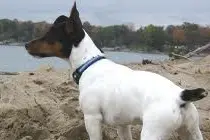
6. Jack Russell Terrier:

The Jack Russell terrier is a small terrier that has its origins in fox hunting.  Due to their working nature, Jack Russell terriers remain much as they were some 200 years ago.  They are sturdy, tough, and tenacious, measuring between 10–15 inches and weigh 14–18 pounds.   The Jack Russell is a high energy breed which relies on a high level of exercise and stimulation and does not have a great deal of serious health complaints.  Pound for pound, the Jack Russell is the toughest dog on this list of Survival Dogs.
Pro’s – Unbelievable endurance for its size, excellent hearing for early warning, tenacious barker at strangers, low health problems, decent all weather coat, easily transportable due to size and weight, low food consumption, excellent small game hunter, fearless,  they can fit into any shelter you have to hold up in.
Con’s – Low fear factor, low personal protection ability, high prey drive means this dog can run off, excessive barker can be noisy, will not travel well in deep snow,  questionable coat for cold weather.

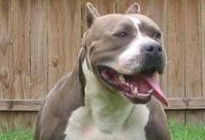
7.  Pitbull:

The American Pit Bull Terrier is a medium-sized dog.  It has a short coat and smooth, well-defined muscle structure.  The dog was bred first to bait bulls and bears.  When baiting bulls was deemed inhumane, ratting, a sport where a number of rats were placed in a pit for a specified time with the dog and dog fighting became more popular uses for the breed.  The Pit Bull is a breed that is loyal to friends and family, and is generally friendly towards strangers.  People have been known to be afraid of them because of their bad reputations.  They do exhibit a higher percentage of dog aggression than some other breeds, and a very high prey drive toward small animals (including small children) so socialization at an early age is a must.
Pro’s – Good endurance, devoted to owner, high fear factor, trainable, good warm climate coat, long life span and generally healthy dogs, medium protection ability, good small game hunters.
Con’s – Does not play well with others, questionable history around small children (including master’s family), sometimes spontaneous and unreliable, poor cold weather coat, beware of backyard breeders who often turn out ill tempered pit bulls.

8.  The Mastiff (English Mastiff)

Distinguishable by enormous size, massive head, and a limited range of colors, but always displaying a black mask, the Mastiff is noted for its gentle temperament. The lineage of modern dogs can be traced back to the early nineteenth century.   A typical male can weigh 150–250 pounds and a typical female can weigh 120–200 pounds, that’s big!!!  Though calm and affectionate to its master, it is capable of protection.  If an unfamiliar person approaches near the Mastiff’s perceived territory or its master, ideally, it will immediately position itself between its master and the stranger.  If the approaching person is perceived as a threat, the Mastiff may take immediate defensive action (or offensive action, it depends on how you look at it).  Mastiffs are normally good natured, calm, easygoing, and surprisingly gentle for their size. It is a well-mannered house pet, provided it gets daily exercise and activity. The Mastiff is typically an extremely loyal breed, exceptionally devoted to its family and good with children and small dogs.
Pro’s - High personal protection, all weather coat, highly trainable, intelligent, good hearing and sense of smell for early warning, strong work ethic, devoted to family, high fear factor.
Con’s – can overheat in hot climate, very questionable endurance, high food consumption

9.  The Mutt

The mutt can be any combination of the qualities you like most in a dog and hopefully, very few or none of the qualities you would prefer to do without.  With a mutt it is tough to know what you’re going to end up with but usually if you raise them from a puppy and train & treat them well, they will be more likely to be an asset than a liability.  Some of the best survival dogs we have been around have been mutts.
Pro’s – Could be the best qualities of any number of dogs mentioned above, tend to have lower health problems than pure breeds.
Con’s - Could be the worst qualities of the dogs mentioned above.

Let the debate begin!!!

Information on the breeds was gain from Wikipedia and AKC.org

How to Make Herbal Tinctures

If you don't know what a tincture is, don't be ashamed. I just learned last year. But, now that I do know, I am taking advantage of that knowledge and using in our home.

In my own words, a tincture is an alcohol or glycerin based concoction that has been infused with all the goodness from an herb.

Why would you use a tincture?
  • Like my definition says, it has all the essence (goodness) of the herb
  • They are more powerful and last longer than dried herbs
  • You get to control the quality of what is being made
  • It is inexpensive (if you make your own)
  • It is difficult to overdose on herbs
  • With herbs you don't get the same type of side effects you get with medication
  • It is a quick easy way to get the healing power of plants
How to make a tincture

You will need:
1 cup distilled water
1 cup glycerin
1/2 cup cut herb of your choice (you can even mix herbs to make your own blend)
1 mason jar with lid and ring
Hydrogen Peroxide in a spray bottle
Stainless steal strainer
Stainless steal bowl
Cheesecloth
2 weeks worth of patience

To start, you will want to make sure everything is clean, I wash all my materials, then I spray everything down with 3% hydrogen peroxide (the same stuff you should have in your Mother of All First Aid Kits)

To mix the tincture you will use 1 cup glycerin, 1 cup distilled water, and 1/2 cup herb. I like this amount because it fits nicely into a mason jar and it is an easy amount to work with. As long as you use the same proportions you could make gallons at a time if you would like. 

Mix your ingredients in your mason jar, put the lid on and give it a good shake. Easy, huh? Give it a good shake each day for 2 weeks.  


Why distilled water? Well, it has NOTHING else in it, so it is a hungry water, anxious to soak up all that goodness from the herb.

Why glycerin instead of alcohol? My children are going to be using these as well, and glycerin has a milder/sweeter taste, giving them more appeal than alcohol. I purchased my glycerin here.

After 2 weeks
Look at the difference in color from when it was first mixed and 2 weeks later.

We are ready to strain. Spray your bowl and strainer with hydrogen peroxide. 
I like to wipe up the extra with a paper towel.


Put the strainer over the bowl and cover the strainer with cheesecloth, let is sit and drain for a bit.


With clean hands squeeze out the rest.


You should be left with something that looks kind of like this.

You could store your tincture in the mason jar, but amber jars are going to be the best.
Make sure you label the tincture and include the date it was made.


I take about 1 ml, 20 drops, or about 1/2 tsp 3 times per day under my tongue. There have been times where I have craved more of a particular tincture, every time I crave it, I increase my dosage or the frequency for a couple days. I know that it is my body's way of telling me it needs the nutrients from that herb. 


If you have a child that doesn't like the taste of it, you could try adding it to water or juice.

~marisa

Tuesday, November 23, 2010

"Bugout Versus Hunker" Short Story by Christopher Young - Chapter 4

===CHAPTER FOUR===

Sunrise began about 7:15 AM. When the sun started to
shine in the window, Charles and his wife woke up. It
was after their usual wake up time, but they were fairly
sure work would not need them today. Both worked in
places that required power. The house was cold. Charles
got on his heavy bathrobe, and slippers. Went to the
cellar. Find that the fire had gone down to coals.
Charles blew on the fire, and the orange provided some
warmth. A couple sticks of kindling lit up, and then
some heavier wood. Soon, the heat was coming out of
the wood stove.

Charles wife had plugged in the coffee pot, and poured
a pot of water into the back of the pot. The coffee
grounds were in the filter in the basket. She was
looking at the power switch that usually glowed orange.
"Lectric is off, honey...." Charles said. "What to do?"
she replied. Charles turned the burner knob on the gas
range. The familiar hissing noise occured, but not the
tick, tick, tick of the electric igniter. Charles turned
off the gas, as the familiar mercaptan odor came into
the kitchen. Charles went to the cellar, and came back
with a new Aim N Flame, and opened the package. He turned
the knob on the gas range, and lit the burner with the
Aim N Flame. The warmth felt good, so he turned on a
second burner. From a kitchen cabinet, Charles brought
out a camping style coffee pot. He took the glass decanter
from theddrip coffee pot, and used it to fill the camping
coffee pot. Pulled the basket of grounds out, and poured
them into the basket for the camping coffee pot. "Looks
like we're camping in, for a while, dear."

Charles opened the freezer. The familiar fan blower was
silent. He removed a can of orange juice, and pulled the
plastic seal. Put the frozen OJ into a pitcher, and added
three cans of water. "We'd best to use up all the frozen,
first. Won't last long, with the power off." "How long you
figure the power off" his wife asked. "Dunno. But we better
figure for a long time."

Charles son came down the stairs, from the bathroom.
He pulled out a chair and sat at the table. "What's
going on?" he asked. Charles told him as much as he
knew from the radio. "No school, Dad?" the boy asked.
"No. At least not for a couple days." The boy started
to drink orange juice, and asked what was for breakfast.

Butch had decided that he'd have to get his family
as far out of the city as possible, gasoline or not.
He left the truck stop, and driven away from the city.
His wife asked at one point, should we head for home
instead? Butch gave her a look that was a bit too
cruel. She decided not to say anything more. They
had gone about 20 miles out the old logging road,
when the truck sputtered, and died. "Everyone out!"
Butch called back over his shoulder. Things would be
rough, but they would be sure to survive.

Butch opened the back door of the truck. He started
to load bags and equipment onto the ground, along
the road. Tent, bug out bags, cooking equipment, and
so on. Truly, they would be survivors. "My feet are
cold!" his daughter said. Butch looked down. Four
inches of fluffy white snow, along the side of the
road. There wasn't enough light from the stars, so
he took his six cell D Mag light, and pointed it at
her feet. Fuzzy pink slippers. The twins saw the
slippers, and started to giggle.

Butch realied she must have left her good boots in
the truck. He went and looked. The floor of the back
seat was empty. "Left em  home?" She nodded. Fortunately,
he had a spare pair of insullated boots in the back of
the truck. He got them out, and put them on the ground
for her to wear. "Why don't we just go home?" She asked.
He didn't have the time to explain that they were out of
gas. He just knew that they had to bug out to the hills
if they were to survive.

"Get all the gear you can. We might not be back for a
while." Butch's wife and three kids picked up their
bug out bags. Butch started for the tree line, which
was about 100 feet from the road. They would be safe,
now.

At Charles house, his wife figured they should at least
call work, and be sure that they could stay  home. The
battery radio was on the kitchen table.  The radio
reporters had  predictably said that all school
districts were closed. They read through the list of
school closings, which took several minutes. Charles
wife picked up the cordless phone, and pushed the
button. Waiting for the dial tone. "Honey...." Charles
said. "Won't work without power. Have to use the old
phone." She didn't quite understand phones, but the
cordless phone handset still had some power, but the
base wasn't working. She went to the living room, and
picked up the corded phone. Now, she had dial tone.
Called work, but the phone there just rang and rang.
Charles was thinking about the complicated phone
systems they had, and probably no backup battery. Well,
with most of the world shut down, they could be
excused from missing a day of work. The boy finished
his breakfast, and decided to go back to bed. The
girls decided this would be a good day to play in
the snow, in the back yard.

About this time, Butch's family was about 100 feet
into the woods. Butch had managed to get the tent
set up, and the entire family was crammed into a
four man tent. This turned out to be a good thing,
because they had forgotten to bring sleeping bags.
They had put the one sleeping pad in the bottom of
the tent, and had piled on. The several people
helped to keep the tent warmer than it would other-
wise have been. Butch had gone out in the middle of
the night to pee, and had dragged back some branches
that would make a good fire.