A fire steel is the quintessential bushcrafters tool for starting fires in the wilderness. If you’re looking to get into backcountry camping or just want one more way to start a fire then look no further.
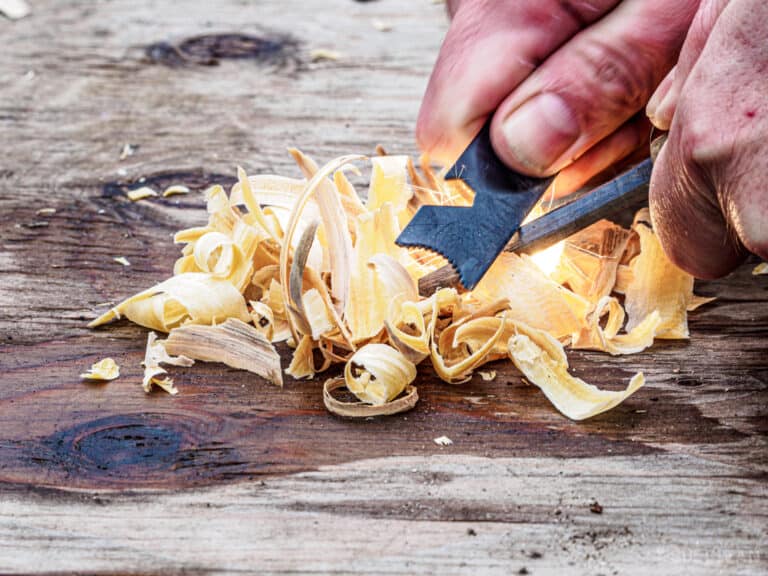
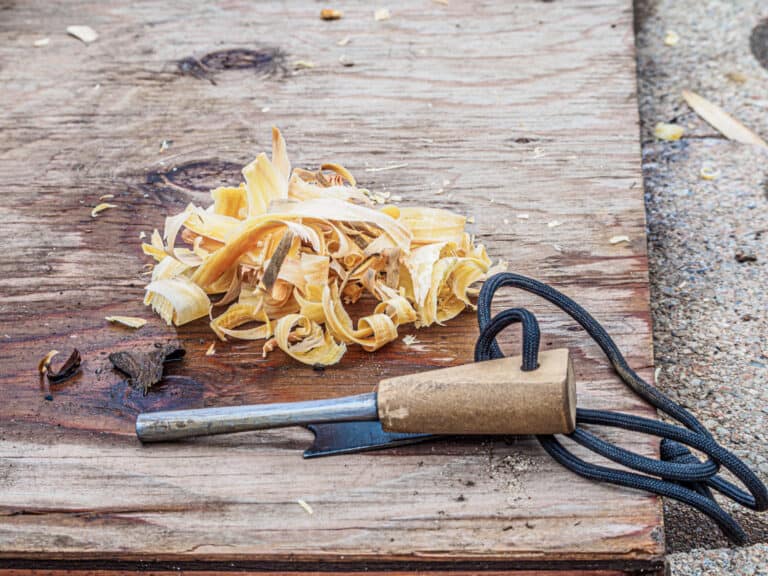
A fire steel is a traditional two-piece fire starting tool consisting of a metal rod and a striker. Unlike other starters, a fire steel doesn’t require fuel, is completely weatherproof, and can be used at any altitude.
There are quite a few reasons why a fire steel is a go-to piece of kit for any outdoors enthusiast and even more products to sift through. Keep reading to find out what to look for in a quality fire steel.
Bushcrafters and survivalists alike both consider tools like the flint and steel to be the ultimate fire-starting tool to have in the backcountry.
However, Ferro rods have grown in popularity in recent years as an excellent alternative to the classic fire starting tool.
If you are an avid camper or prepper, then you know the value of having one of these in your main kit as well as your backup kit.
Using a Ferro rod does require a bit of technique to master, but there is nothing quite like throwing a shower of sparks onto some dry tinder only to be greeted by the familiar crackle of the woodland material turning into a flame.
For many, myself included, it is a sense of accomplishment to turn a simple action of striking a Ferro rod into a roaring fire to keep you warm and safe.
This guide will give you some handy information on what a Ferro rod is, plus tips and tricks on how to use this tool to throw off massive sparks.
First, let’s look at what a Ferro rod is and how it differs from a traditional flint and steel.
I
love our readers, always asking interesting questions. Lately, a
reader asked about making DIY waterproof matches. I know I have a few
boxes packed in my camping gear, I also know I have a lighter and a fire
steel. A gal likes to have her options.
I had never thought about DIYing the matches though, and it’s a GREAT idea.
Start with some Strike Anywhere Matches.
Set up a work space. You need someplace out of wind, well ventilated,
with a way to dry the matches. I saw one set up that used some double
sided tape to hold the matches while they dry. I saw another set up that
used corrugated cardboard set on edge, with a match in each hole.
Dip the matches, head first into some shellac. Only cover about half
the match. Let the matches dry, heads down, on the sticky tape.
Voila! When dry you have waterproof matches. The shellac is much
nicer than the wax coating some people recommend. That wax coating can
melt, it can crumble, it’s generally just a mess. Shellac avoids a lot
of that. Clear nail polish works similarly to the shellac, if you happen
to have that on hand.
Don’t forget to make some NO FAIL TINDER while you’re DIYing your fire kit.
Grab some dryer lint, add some flammable liquid to it, either some
wax or paraffin. Let it dry into little ball and then pack them SAFELY
into your emergency kit.
No need to spend crazy money on this, but do get it done, fire is too
important to ignore. Exposure will kill you every time, especially up
here in cold country. :-D - Calamity Jane
Starting a fire is one of the most rudimentary basic activities that a survivalist/prepper must be able to do. Whether for cooking, warmth, light, or protection – building a fire is critically important.
One method of fire starting I have utilized over the past year is the fresnel lens. Basically a large magnifying glass – the fresnel lens can gather the suns light and focus it to a very small and intense spot - generating tremendous heat. No doubt many of you as kids used a magnifying glass to catch some leaves on fire – this lenses works much the same way.
Fresnel Lens
Why do I like the fresnel lens so much? Here are a few reasons:
cheap
durable and flexible
lightweight
simple to use
I have a couple of these in packs just shoved in behind something. So light and easy to carry. Of course – you need sun in order to use them.
For this post I took a few pictures on November 25th to show what they can do – click to enlarge:
A couple of my 7″ x 11″ lenses.
Prepared “dry stuff” to burn.
Showing “hot spot” from sun through fresnel lens on rock.
Hot Spot moved onto tinder – see the smoke?
We have fire!!!!!!
Super-flexible and durable.
The day I took the pictures the sun was shining bright and it was in the 60′s with a decent breeze. I had no issues at all get a roaring fire going. Obviously there are limitations to fresnel lenses – but they are certainly an option to consider in your preps.The lenses I like are sized 7″ x 11″ and are super cheap. Click HERE for more info. The are many other sizes available as well – even as small as credit cards.
Love sitting next to a hot fire on a chilly night -
Rourke
Having the means to make a fire in a moments notice is essential in a survival situation. An external heat source can help deflect hypothermia, or even cook a hot meal when you really need it. Carrying firestarters with you while you are away from home can be a great way to add a little survival insurance to whatever situation you happen to find yourself in.
To save a few dollars, I make my own fire starters out of household items that I would normally throw away. To be thorough in my preparedness endeavors, I have put them in each of my family’s 72 hour kit, in our vehicle emergency supplies, and in our camping gear. To make the fire starters, all you really need are 4 items:
- cardboard toilet paper roll or paper towel roll
- dryer lint or cotton balls
- worn down candle stubs or crayons
- natural twine
Instructions
1. Melt the crayons or candle wax down until liquefied. This makes the fire starter windproof.
2. Stuff the dryer lint into the cardboard roll and tie with a piece of natural twine. The twine will be used as a place to light the finished fire starter.
3. Dip the stuffed cardboard roll into the wax and roll it around until it is completely covered in wax.
4. Set dipped cardboard onto a paper towel or piece of paper to dry.
5. Once the fire starters are dry, I typically cut the cardboard rolls in half and vacuum seal them along with a few matches.
Change It Up If You Like
This recipe can be changed around to suit your needs. If you do not have cardboard rolls, use cardboard egg cartons or cut up an old cardboard box into strips to roll the dryer lint up in.
Another method is to not use the cardboard at all. Just roll the lint up into a ball formation and dip the dryer lint into the wax and allow it to dry.
If you do not have candle wax, try using melted crayons, old canning wax or use paraffin wax.
Another method of making good fire starters is by dipping cotton balls into petroleum jelly. This method is a good one, but I like to find ways to re-purpose the trash that I already have on hand.
How to Make a Good Fire with a Fire Starter
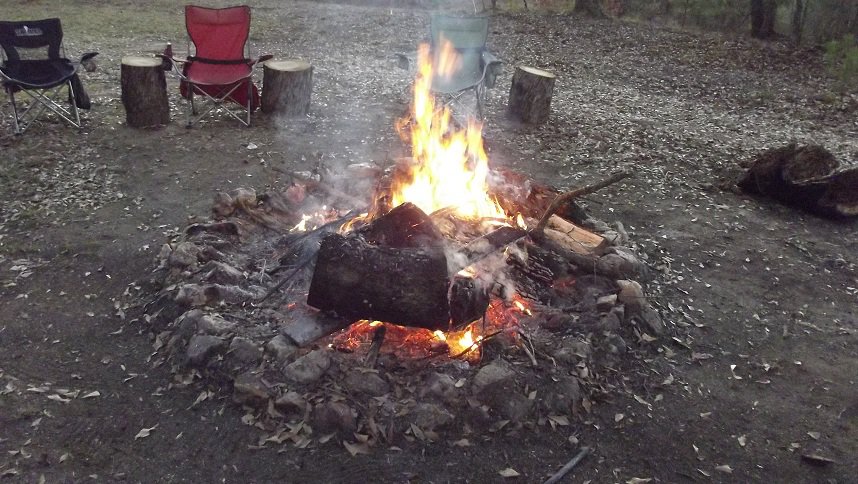
Once the firestarters are lit, they will burn effortlessly so that you can add moss, small twigs, leaves and dry kindling to help the fire grow larger. Depending on how well the fire starters are stuffed, they will typically burn for 5 minutes on their own. This should give you plenty of time to get a fire started.
This great post over at BFE inspired me to do a quick post on Bic lighters, which seem to get dumped on by a lot of people in survival communities. Yes, they do have their shortcomings, but they're also pretty awesome. Here's a few reasons why:
Bics are cheap; $1-$2 a piece
Bics last a long time. I have 5 year old Bics that are still working fine.
Bics are reliable. Most of the malfunctions you hear about with Bics (wet, cold) can be resolved. I recently dunked a Bic in water and left it submerged for 10 minutes. After about 30 seconds of effort to dry it (working water out of the mechanism), it lit and worked fine. I've also found old Bics, left outside in the elements for who knows how long, that worked fine.
Bics are source of flame. Flame is better than sparks, even hot ferro-rod sparks. You can't melt paracord, sterilize a needle and so on with a ferro rod. Starting a fire with a functioning Bic is easy stuff; starting a fire with a ferro rod requires good dry tinder. If you don't have any tinder and can't find any, you're SOL.
Bics are one-handed. You can operate a Bic with a busted arm. Ferro rods require two hands.
A Bic (or a pair of Bics) kept in a water-proof container (Ziplocs work fine) is a cheap and effective firestarter. Throw in some tinder and a ferro rod for backup and you've got a good little firestarting kit.
Today while reading some threads on a Bushcraft forum I came by a thread titled “Why Even Carry Matches?”.
In these type of forums you’ll often find lots of good info, but you quickly notice that sometimes nostalgia outweights practicality. This is something the person interested in practical survival cannot afford. Its understandable that there’s a certain allure in carrying a “tinder box”, a small leather bag made of bull’s scrotum with dried mushrooms and hitting flint and steel to start fire. Now, do these vintage fire starting tools have a place in your survival kit? Maybe in your home or car kit, or smaller every day carry emergency kit? Not really. You have better fire starting options than charcloth, and while firedrills work, during a real emergency you don’t care about looking like Bear Grylls, you just want a fire started as quick as possible. Yes, ferrocerium rods works (Swedish Firesteel), but a match or lighter is faster.
Emergencies are by definition inconvenient, unplanned, and potentially life threatening. You don’t have controlled, ideal conditions. You may be wet, cold, under shock, crying, bleeding, wounded. You may have dead or wounded loved ones around you, and you may be running out of time. Its just not the moment to play Man vs Wild.
Lighters, specially storm lighters that reach extremely high temperatures, are very effective but they are also more prone to breaking, running out of fuel, or not working when wet. Because of this you don’t want them to be your only option during an emergency.
Lighters and ferrocerium rods should be carried as well for redundancy, but don’t forget about matches for a real emergency kit!
While writing all this I can’t help but to remember the Pomar family. The Pomars weren’t lost in a deserted Island, they didn’t go trekking along Antartica, or venture into the Amazon rain forest. They simply had bad luck when visiting one of their relatives nearby.
After being missing for over two weeks and one of the largest manhunts I remember in this county, the Pomar family, husband, wife and two daughters were found dead not 20 miles away from their house, 20 yards away from the highway. While traveling to visit a relative in the next town, they had a car accident with bad enough luck that the car went flying off the road and crashed into a small grove of trees. Plantations and plains all around them as far as the eye can see, but they had bad enough luck to be thrown in there so the vehicles and choppers looking for them never saw them in the bush. It was later found that the wife survived the crash. Wounded and probably expecting help to arrive soon, she dragged herself next to her husband’s corpse, and survived there three days before dieing due to the wounds and exposure to the elements.
If you are wounded, barely able to move, and starting a quick fire could probably save your life like in this case, both for signaling and heat, a plastic case full of matches is your safest, easiest and quickest way to start a fire.
The case pictured is bombproof, has a rubber seal to keep it watertight and even includes a mirror and small piece of ferrocerium in the bottom.
The plastic case where the NATO stormproof matches come in isn’t nearly as study. The old film plastic cases pop open too easily. I tried the Marble’s metal match box but the plastic ones are better. The green one I own looks nice (Bushcrafty :-) ), but the orange ones are better because they are more visible if dropped in the ground. This one also includes a whistle and compass. The piece of ferrocerium is almost useless but at
In my match boxes I keep several stormproof maches and a few large, strike anywhere matches. I also keep a striking strip (cut out of an ordinary box of matches) and a piece of cotton to keep everything from moving and making noise. This could also be used in an emergency along with the little piece of ferrocerium.
Yes folks, matches do have a place even in the most basic kit. They don’t look nearly as cool as firesteel on camera but when needing to start a fire after falling in icy water, barely able to control your fingers, practicality beats cool by a long shot.
A few of weeks ago I had a comment which asked about fire-starting kits.
There are numerous ways to start a fire when needed – however there are a couple that I like and use. My favorite method is to ignite petroleum jelly covered cotton balls within a cardboard shroud. The ingredients for this simple tool is seen below: petroleum jelly, toilet paper cardboard rolls, cotton balls, a Ziploc bag, and matches.
Components for my fire starting kit
Making the kit is easy – just a few steps:
Cover cotton balls with the Vaseline and stuff them inside the toilet paper roll cardboard tube.
Do another one – just in case
Place both tubes inside the zip-loc bag.
Place the matches or Bic lighter inside the bag
Now – zip the bag up so that your kit will be very water resistant.
Cover the cotton balls with the petroleum jelly
Stuff the cotton balls inside the cardboard tube
Kit complete - 2 fire starting tubes
Now – to use your kit – simply remove a tube from the bag – tear open the tube and lay the tube & cotton balls wherever you want your fire to be. Cover with some dry tinder – and light the cotton balls.
One of the tubes is up under there
Can you say..............FIRE!!
This method really works pretty well. It is not uncommon for Mrs. Rourke to get out the cotton balls and Vaseline to start a fire in the fire pit.
Of course – lighter fluid works pretty well too.
Rourke



 , a bag of PJCBs,
  .
. , which seem to get dumped on by a lot of people in survival communities. Yes, they do have their shortcomings, but they're also pretty awesome. Here's a few reasons why:
 , sterilize a needle and so on with a

 ), but a match or lighter is faster.


 Cover the cotton balls with the petroleum jelly


