By The Survival Mom
Thursday, July 28, 2022
Wednesday, July 27, 2022
17 Lessons Learned From An 80 Year-Old Nurse

There is no doubt that the world of medicine has changed beyond recognition over the last fifty years. And yet, if the foundations of our technological society collapsed, would medicine still operate in the same way?
As doctors become increasingly specialized and increasingly dependent on the medical equipment, supplies and technology at their fingertips, it’s arguable that a 21st-century physician would find it hard to adapt to the world after SHTF.
But there are some people in our communities who hold a wealth of knowledge that would be applicable in this potential disaster scenario: our veteran nurses.
These professionals learned their skills before modern technology came on the scene, and learned the art of making do with what was available. We can learn valuable survival techniques from them.
Here are some lessons from a nurse who has lived through difficult times when a hospital is far away, there are no other resources available, or treatment is desperately needed during a war.
In an age of the “cure-all” antibiotic, some of these techniques have been all but lost, yet they are still valuable and effective.
Related: This 3500-Year-Old Powerful & Natural Cure Treats Many Diseases
Treating the Common Cold
1. Steam Inhalation
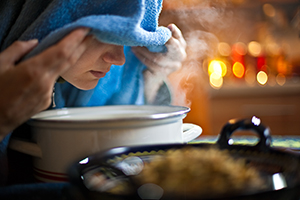
Inhaling warm, moist air has long been used as a remedy to soothe clogged sinuses.
It can help to relieve nasal irritation and swollen blood vessels, allowing you to breathe normally for a short period of time.
Prepare a large bowl of boiled water and a towel, then drape the towel over the back of your head and lean over the bowl of hot water. Breathe!
This is a good way to get relief from a common cold, flu, sinus infection, or nasal allergies without having to go to a clinic or resort to medicines. Because the water you use for steam inhalation is very hot, make sure the bowl is placed on a flat surface and can’t be tipped over.
2. Menthols
Menthol and eucalyptus oils help to open the airways and make it easier to breathe. You can use essential oils on a piece of cloth near your head.
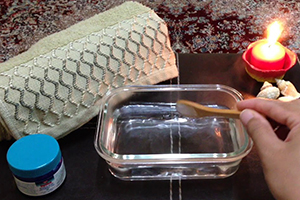
If you are doing steam inhalation, add some menthol crystals, Vicks VapoRub or some mint or eucalyptus essential oil to your hot water.
This can be more effective than just using steam, but be careful not to add too much – a drop or two is usually enough.
Adding too much may cause damage to your sinuses.
Treating Chest Infections
3. Postural Drainage for Lung Problems
Postural drainage has been used since around 400BC to get mucus out of your lungs. The idea is for the area of lungs that are affected to be higher than your upper chest and airways, so that the mucus can move by gravity towards the larger airways.

From there, your body’s natural cleansing mechanism will help remove the mucus.
The best position for you will depend on which part of your lungs is affected. If it’s your upper chest, then a sitting position may help.
If it’s your lower lungs, try a position such as lying on your side, or lying on your front with a pillow under your hips. Inhale through the nose and exhale through the mouth. The out-breath should be twice as long as the in-breath. Do this for a few minutes, then rest.
You can do each session for 30 minutes, three times daily. Allow at least an hour after eating before doing this treatment.
4. Chest Percussion
This is also used to relieve congestion when in a postural drainage position. By gently tapping the walls of the chest, you help physically dislodge mucus that is trapped in the small airways. A cupped hand traps air and makes it more comfortable. Practice on yourself first to get the pressure right.
You can use both hands, beating to a rhythm, turning the patient from their front, then onto their sides, then facing you so can loosen the top of the lungs by beating on their back. Do this for 15-30 minutes, according to how they are responding to the treatment.
Treating Sore Throats
5. Honey
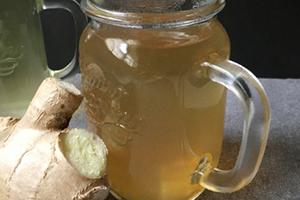 Honey is well-known for its sweet benefits, and it also has antibacterial properties.
Combining it with ginger and calamansi gives a perfect elixir for sore throats, coughs and colds. Boil some ginger root and let it cool slightly before adding your calamansi with honey and drinking it warm.
Calamansi is also known as Philippine Lime, and this can be replaced by lemon, or chamomile tea.
Related: The Antibiotic Honey That Shouldn’t Be Missing From Your Stockpile
6. Garlic
Add fresh garlic to your food when cooking. Its antimicrobial properties will help to treat the infection in your throat.
7. Homemade Gargle
Baking soda and salt dissolved in water makes a useful mouthwash or gargle for sore teeth, gums and throats.
The baking soda is anti-acidic, which reduces astringency in the mouth and limits growth of fungi and bacteria.
Treating Wounds
8. Poultices for Boils or Abscesses
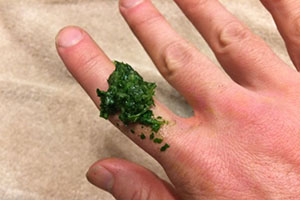 Poultices have been used as a home remedy for centuries. The moist heat from a poultice helps to draw out infection and shrink abscesses naturally.
Epsom salts are the most common poultice ingredient, as this helps to dry out the pus and drain the boil.
You can make specific poultices to treat your wounds, such as a herbal poultice for minor inflammation or abrasions, bread poultices for abscesses, cysts, or splinters, baking soda poultices for minor skin irritations like razor burn, and an activated charcoal poultice for bug bites or stings.
If your poultice mixture is a paste, you can apply it directly, otherwise place the mixture on a clean cloth and then apply it.
Don’t use this if the skin is badly infected. You should also patch test before you use a poultice to make sure you won’t have an allergic reaction.
Treating Sore Muscles
9. Oral Relief for Muscle Pain
If you have muscle pain, ginger may be able to help you, as it contains an active component found in aspirin.
If you want to add a tangy flavor to your drink, you can prepare ginger tea by boiling the slices of ginger and lemon. Allow it to simmer and rest for a few minutes before serving with honey.
10. Muscle Regeneration
To make sure your body has all the nutrients it needs to regenerate muscle after an injury or strain, turn to some natural products.
Beetroot juice, cherry juice, and tomato juice are all rich in muscle-building compounds.
Related: How To Make Bulletproof Body Armor Plate
Treating Diarrhea and Digestive Complaints
11. Stay Hydrated
Dehydration is the biggest risk when suffering a bout of diarrhea, especially for children. It’s not only fluid but also salt that is lost.
Make your own electrolyte solution by mixing one liter of water with half a teaspoon of salt and 6 teaspoons of sugar for oral rehydration. If you are eating anything, eat small meals of bland food, such as rice, bananas, and soups.
12. Activated Charcoal as an Antidote to Poisoning, and Digestive Complaints
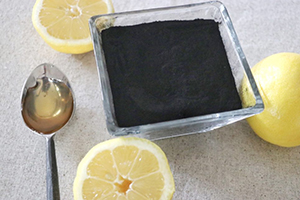 The benefits of activated charcoal have been known since ancient times. It’s called the “universal antidote”.
This is not charcoal from your barbeque, but a product made from carbon-rich materials such as wood or coconut shells, heated to very high temperatures.
There are many uses for activated charcoal, from whitening teeth, to skin care, or as a water purifier.
It is listed in the WHO’s list of essential medicines as a safe and effective medicine in a healthcare setting. To treat suspected food poisoning, you can take 1g up to four times daily.
13. Probiotics for Digestive Complaints
Although today’s understanding of probiotics was not available years ago, what was understood was that people who drank tea made from tropical fruit were less likely to catch cholera, which is an infection in the small intestine.

Saccharomyces boulardii is a yeast found in lychees and mangosteen and is available in food supplements. It can help with IBS, Chrone’s Disease, diarrhea and other digestive complaints.
Other probiotics that are helpful are fermented foods that contain live bacteria and yeast.
Treating a Fever
14. Physical Cooling
Use cool compresses on wrists, armpits, groin, back of the neck, and forehead. This will dissipate the heat.
Tepid baths can also provide relief and draw out the heat from your body. Don’t be tempted to jump in a cold bath as lowering body temperature too quickly can be dangerous.
Your body will try to heat the cooled areas and draw blood from vital organs.
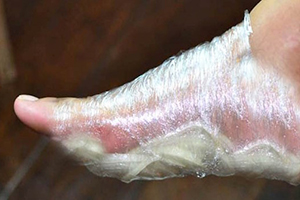
Another ancient remedy is the wet sock trick. Bathe your feet in warm water and then put on a pair of socks that have been soaked in cold water. This increases circulation around the body, helping to relieve fever symptoms.
15. Understand that Fever is Killing The Infection
Fever is the body’s way of fighting an infection. Your tissues become a hot and unwelcoming place, and the bacteria and viruses find it hard to replicate and live in your feverish body!
So bringing down your temperature isn’t always the best approach. Rest to allow your body to do its job. Hydrate by drinking as much fluid as you can. Suck ice cubes if drinking is making you nauseous.
16. Treat the Symptoms
If the symptoms of the fever get too much, use some gentle herbal remedies to relieve the symptoms. Linden tea, willow bark, and ginger are all drinks that can help bring relief.
17. Chicken Soup
This comfort food has often been a relied-on cure when feeling unwell. The combination of fluid, anti-inflammatory ingredients, vitamins, minerals, proteins and fats all combine to make it an essential ingredient on the path to recovery.
These are lessons I learned from my great-aunt, my grandmother’s sister. She was a nurse in Queen Alexandra’s Royal Naval Nursing Service during WW2, and continued to apply her practical skills and level-headedness to her career and family life in the decades to follow.
By the time I was in my teens, she was in her 80s and retired, but still retained that same passion for problem-solving and treating everyday illnesses. Her enthusiasm inspired me into the medical field, ultimately choosing a path in veterinary medicine.
Yet, however, advanced the technology we come to depend on, I find my aunt’s advice still relevant today: the simplest cure is often the most effective.
Tuesday, July 26, 2022
16+ Non-Traditional Containers For Your Bug Out Bag/Emergency Kit

When it comes to selecting a bag for an emergency kit, many of us veer in the direction of tactical-looking backpacks, or any type of backpack at all. And, it’s no wonder. A good backpack has multiple pockets and pouches to help organize your gear and supplies, and they can be carried on your back, leaving hands free. However, they aren’t always the right solution for every scenario. Here are some ideas for other types of containers for emergency kits.
Non-traditional Containers for Emergency Kits and Bug-out Bags
Sixteen suggestions for backpack alternatives, plus a bonus idea!
A rolling suitcase on wheels
Look for sturdy wheels because if one breaks off, you’ll be carrying that suitcase. Not fun! Some of these suitcases also have backpack straps.
A Rubbermaid container with a lid
You select whichever size suits your needs and space. These are a good choice because the bin itself can be used to hold water, kindling, and a lot more.
Under the bed storage container
Mine fits perfectly in the back of my Tahoe and the transparent plastic lets me see the contents.
Trash can on wheels
These hold a lot, are very sturdy, and have an attached lid. They will also be heavy and difficult to load into a truck. However, if a trailer is part of your bug out/evacuation plans, you could store a trash can, fully packed, in the trailer. Include a box of heavy-duty black trash bags to keep the interior of the trash can clean if you ever have to use it for actual trash!
Space Bags
Great for use with softer items, such as blankets, coats, jackets, and pillows.
5-gallon buckets with lid
Again, these buckets have multiple uses besides holding your emergency kit contents. A product like a Bucket Backpack would provide an alternative way to carry the bucket longer distances.
Multiple milk crates
My husband swears by these! They are extremely durable, stack easily, but do not have lids. They could also be free if you can find a grocery store that will give you one or more.
Military duffel bag
Soft-sided means you’ll be able to shove this bag behind and between things, and they come in several sizes. Their muted colors are also a plus.
Ziploc Flexible Tote
These are inexpensive, allow one to easily see inside the tote, and lightweight. They could be good for keeping things like blankets and seasonal clothing separate from other items. The downside is they’re not heavy-duty, so it’s not a good option if your evacuation includes trekking through the wilderness.
Diaper bag
The waterproof lining could be very helpful, especially if you have small kids and/or a baby.
Toolbox
Not necessarily lightweight depending on the style you choose but could be very useful for protecting fragile items. And they come in a variety of price points.
Metal bucket with lid
I have this one and it’s definitely a multi-purpose container.
Rubbermaid Action Packers
Heavy-duty, waterproof, and lockable. Keep in mind they don’t have wheels. They also don’t stack well as the lid is lightly domed to allow water run-off. However, if these cons weren’t an issue, this is a solid choice.
Heavy-duty black trash bags
Be sure to buy “contractor” bags. These are amazingly resilient, stretch a bit as you stuff more into them, and are very cheap. They would be useful for packing soft things like bedding, clothing, and sleeping bags.
A messenger bag with shoulder strap
Anything with a shoulder strap will leave both hands free and might be easier to carry than a backpack for someone with back problems.
Coolers
These are waterproof, hold a lot, and don’t automatically announce they’re containers for emergency kits. Get one on wheels so you can roll it if the need arises.
A fisherman or photo vest
Obviously, this won’t carry as much as these other containers, but with all the multiple pockets, you could keep the most essential items close at hand. Check out ScotteVest for more discreet options.
Features to Consider When Selecting Containers for Emergency Kits
When choosing your containers, keep in mind that they might be in for a pretty rugged future. Look for:
- Extremely durable fabrics
- Sturdy construction
- Heavy-duty zippers, snaps, or other closures
- Colors that blend in
- Non-tactical appearance. This may cause you to look too prepared and a potential target.
- Tight-fitting lids
My Recommendations for Dividing the Contents of Your Emergency Kit
When planning for an emergency evacuation, I recommend dividing the contents of your emergency kit into 2 or more different types of containers. For example, a 5-gallon bucket can hold food and cooking supplies and will provide an emergency toilet, a large water container, and a handy tote for firewood. Then use a Space Bag to hold sleeping bags and cold weather clothing and finally a large backpack for everything else. You’ll have 2 multi-purpose containers and a backpack large enough to hold all the essentials in case you have no choice but to continue your evacuation on foot and have to leave the bucket and Space Bag behind.
Also, keep in mind the different ages and physical capabilities of your family members. Even young kids can carry small backpacks, easing the load for parents and teens. Ideally, you’ll want one bag per person, although in each bag there should be a few supplies that are communal.
What kinds of non-traditional containers for emergency supplies have you used and recommended?
Subscribe to:
Posts (Atom)