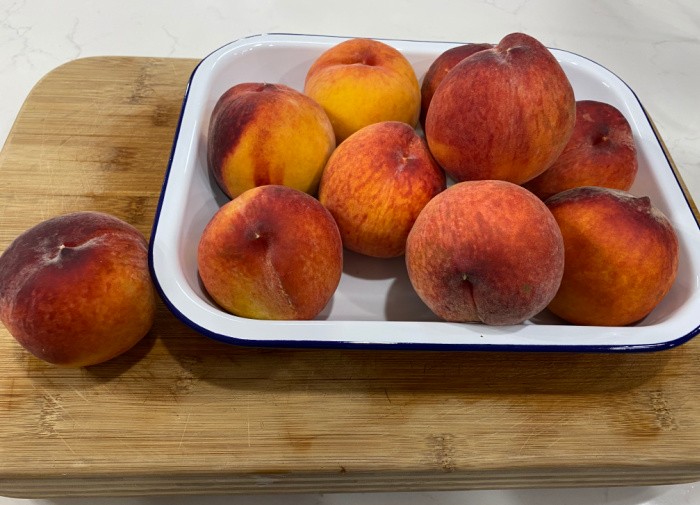
Peaches are a flavorful fruit from peach trees that are native to northwestern China. Although they were originally found growing in China, peaches are now readily available around the world. While you may know this fruit tastes good on its own or in smoothies and fruit bowls, there are many things you might not know about it. So if you want to learn more about peaches, you’re in the right spot!
There’s a town in Utah called Brigham City! My family used to go there and buy several bushels. We didn’t make the trip this year; they are winding down. A friend brought my daughter about 20 super-large, juicy, absolutely the best peaches anywhere. The bonus is these peach seeds slip right out when you cut them open.
This may not seem like a big deal, but I had had trouble getting grocery store peaches to ripen and remove the seed. The peaches would end up shriveled before they ripened, and I couldn’t remove the seed.
Kitchen Items You May Need:
In case you missed this post: How To Make An Easy Peach Glaze
Peach Facts To Know
How Many Varieties of Peaches Exist?
Most people don’t realize there are dozens of peach varieties! It’s the reason why some taste sweeter than others. Believe it or not, there are more than 2,000 varieties worldwide, with at least 30 available in the United States. These are a few popular varieties you might’ve tasted before.
Yellow Peaches
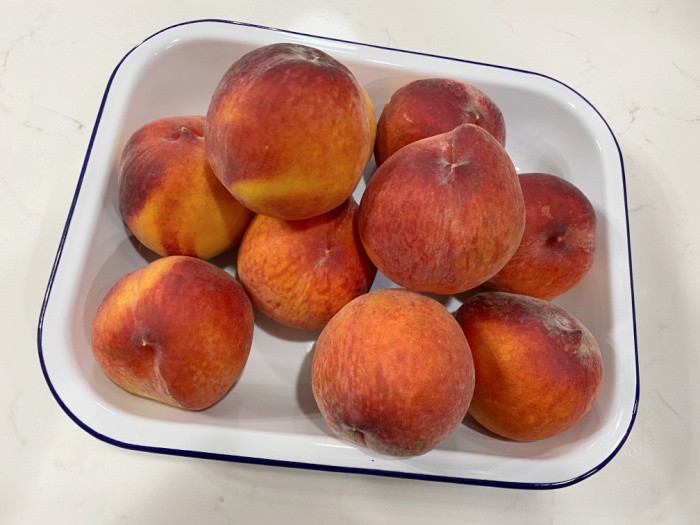
Yellow peaches are among the most popular peach varieties. The skin is thin and slightly fuzzy, but you can still eat it all and enjoy every bite. Although they’re known as yellow peaches, they can have light red, pink, and even orange hues. If you want to bite into a juicy peach, this is a great option.
Donut Peaches
Donut peaches get their name because of their flat appearance. Although they tend to look more like mini pumpkins because of their shape, they’re sweet and delicious. These peaches have a subtle almond flavor that pairs well with their naturally sweet taste. If you like to eat sweeter fruits, this variety is an excellent choice.
White Peaches
White peaches aren’t nearly as acidic as yellow peaches, but they still provide a great taste. In addition, they have a slightly sweet and slightly floral flavor that makes them a great addition to fruit salads with berries, chopped apples, and other fresh ingredients.
Please do not “can” white flesh peaches. I quote Penn State Extension, “White-fleshed peaches have a natural pH above 4.6, which makes them a low-acid food; therefore, water bath or atmospheric steam canning will not destroy harmful bacteria in white peaches. Freezing is the recommended method of preservation for white peaches. Jun 30, 2020″
Clingstone Peaches
The clingstone peach is tasty and perfect for eating on the spot. These peaches don’t do as well in baked goods, but they’re still worth buying. If you like to grab a peach on the go, this is the perfect kind.
Of course, plenty of other peaches are available and easy to find in different places, such as the grocery store and farmer’s markets. If you love the fruit, it’s good to know of these different varieties.
You can begin trying the different types of peaches and then make a list of your favorites. When you know which ones are your favorites, you can buy them from the store or grow them at home to make sure you don’t run out.
More Peach Facts
Which Peach Is the Sweetest?
Of all the peach varieties available, the donut peach is known for its sweetest taste. Some people might even consider such a sweet taste slightly sour, but that makes this fruit variety taste so great.
You can add it to smoothies with other ingredients, such as fresh spinach and mashed bananas. The peach’s sweetness will give your smoothie the perfect flavor. You wouldn’t need to add any extra sugar or other types of sweeteners to the beverage!
How Long Does It Take to Grow Peaches?
Once the flowers on a peach tree are pollinated, it takes at least three months to harvest the fruit. Three months is the minimum, and it can take up to five months before you can harvest peaches to eat. It’s normal for peaches to be ready for harvest in the warmer summer months. The average peach tree will continue to produce fruit for at least 10 years, with most producing peaches for up to 12 years.
Is It Challenging to Grow Peaches?
If peaches are your favorite fruit, you might wonder if it’s challenging to grow them at home. It’s a process that requires both effort and commitment. If you’re willing to put in the effort to water the tree, provide regular feedings, prune branches, and keep pests away, you can grow these peaches with no problem. However, if you don’t have the time to care for a peach tree, you should consider buying peaches at a grocery store or a farmer’s market.
How Do You Clean Peaches?
It’s a good idea to clean your peaches before eating them to remove any dirt, germs, or bacteria. The best way to clean peaches is to fill a large plastic bowl with two cups of cold water and a teaspoon of vinegar. Place the peaches in the bowl and let them soak in the vinegar-water mixture for 15 minutes. Next, remove the peaches from the bowl and hold them under the faucet, letting the cold water run over them while brushing off any debris you see. It’s that simple. Once you’ve washed the peaches, you can put them in your fridge to keep them cold and fresh, or place them on the countertop. It’s been my experience that they’ll last longer in the fridge. If you’re anxious to have them ripen faster, then the countertop might be your best option.
Things You Can Do With Peaches
While peaches are great for breakfast or a quick midday snack, you can do so much more with them. You can slice them, freeze them, and then add them to your blender to prepare smoothies. You might want to add fresh peach chunks to your oatmeal or cereal in the morning. Peaches are a great ingredient for baking a variety of foods. You can make peach pie, peach cobbler, and even a sweet peach loaf bread! Peach Cobbler
Mark loves peaches, and his favorite way is to slice them into a cereal bowl and pour milk over them. Depending on the peach variety, he may or may not feel the need to add a little sugar. He also loves fresh peach pie! He’s pretty easy to please.
Health Benefits of Peaches
Peaches are more than just a sweet summer treat. One medium peach has around 50 to 60 calories and no fat or cholesterol, so they make a smart snack when you want something naturally sweet without the guilt.
Peaches are a good source of vitamin C, which supports your immune system and helps your body fight off infections. They also provide vitamin A and the antioxidant beta-carotene, both of which are important for healthy eyes and skin.
You’ll also find potassium and fiber in peaches. Potassium helps regulate blood pressure and supports a healthy heart, while the fiber in peaches helps keep your digestion moving as it should.
Peaches also contain smaller amounts of magnesium, iron, and B vitamins. Magnesium can help your body relax and may even support better sleep. Iron plays a role in the formation of healthy red blood cells.
Since peaches are mostly water, they’re a great way to stay hydrated, especially during the hot summer months when they’re in season.
If you can eat the peach with the skin on, even better. Much of the fiber and many of the antioxidants are found in the skin, so a good rinse under the faucet and eating it whole gives you the most nutritional benefit.
How To Make An Easy Peach Glaze
Fruit Trees: The Ones You Need To Grow
Final Word
Now that you know more about peach facts, you may pay closer attention to the different varieties available at big-box stores, local grocery stores, and the farmers’ markets you like to visit. Beyond how good they taste, peaches offer real nutritional value, from vitamin C and fiber to potassium and hydration, making them an easy way to add a little extra goodness to your day. You can stock up on peaches or even plant a peach tree in your backyard if you have the time to maintain it. May God bless this world, Linda
The post Peach Facts: What You May Not Know appeared first on Food Storage Moms.
from Food Storage Moms
No comments:
Post a Comment