Corn: Should We Be Worried About A Shortage? If you’ve scrolled through farm news or grocery store chatter lately, you may have caught whispers about corn supplies tightening. It’s a fair question to ask, especially for those of us who like to stay a step ahead when it comes to feeding our families. So let’s dig into what’s actually happening with corn in 2026, why the picture is more complicated than a simple yes or no, and why corn matters so much more than just what shows up on your dinner plate.
Corn: Should We Be Worried About A Shortage?
The Short Answer
Right now, there’s no corn shortage in the United States. In fact, 2025 gave us one of the largest corn crops ever recorded, with farmers harvesting more than 17 billion bushels. That’s such a large amount that the country ended up with roughly 2 billion bushels sitting in surplus, the biggest leftover stockpile in a decade. So if anything, the corn story of the past year has been about too much corn, not too little.
But here’s where it gets interesting for 2026 and beyond. That surplus cushion is shrinking, and several forces are converging that have agriculture economists watching closely.
Why People Are Starting To Worry
A few real pressures are behind the growing concern. Fertilizer costs and availability took a hit this year. Conflict in the Middle East disrupted shipping through the Strait of Hormuz, a critical route for fertilizer exports, particularly nitrogen and phosphate. Corn is one of the most fertilizer-hungry crops grown in America, so when nitrogen and phosphate become harder to get or are more expensive, farmers have fewer options and thinner margins.
Farmers responded by planting less corn. For the 2026 growing season, planted acreage dropped to about 95.3 million acres, down from 98.8 million the year before. Fewer acres in the ground means less room for error if weather turns unfavorable during the growing season.
Demand has stayed strong even as supply growth slows. Corn used for animal feed, ethanol production, and exports all remain near record levels. USDA data shows corn used for feed and byproducts is expected to climb further, and ethanol use is projected to hold steady at around 5.6 billion bushels. When demand holds firm while acreage shrinks, the surplus cushion that once felt comfortable starts to shrink too.
Farm Economics
Farm economics have also been rough. Corn growers have now faced four straight years of negative returns on their crop, according to the National Corn Growers Association. When farmers lose money year after year, some scale back operations or shift acres to other crops, which can tighten supply over time even if this particular season looks fine.
Even with all of that said, the National Corn Growers Association has been direct about it. Their representatives have stated they don’t expect a near-term shortage of corn. The concern is less about running out tomorrow and more about resilience. The system has less flexibility to absorb another shock, whether that’s a drought, a trade disruption, or another fertilizer supply issue.
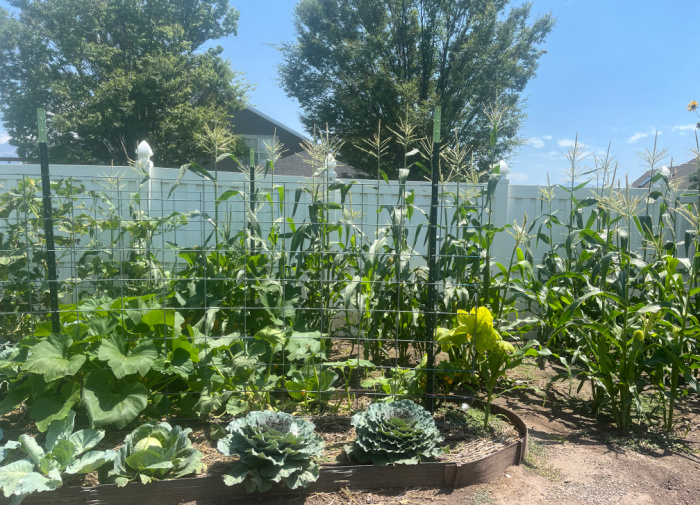
This garden below is a picture of my very close friend’s garden, who is a Master Gardener without the certificate. She’s taught herself to grow everything edible. When I sit in her backyard, it’s like a little piece of heaven; you would love it, I know. I get to enjoy her mini-farm I always wanted; it’s so peaceful and calm, it’s surreal. When I sit there, I smile and laugh the whole time; if you know me, I love to giggle. So there you go. Life is good when you grow your own food. Bonus: She donates to the Food Bank nearby. She’s a blessing to so many people.

Corn Isn’t Just Corn On The Cob
Here’s something that might surprise you. Only a small fraction of the corn grown in America each year is the sweet corn we eat straight off the cob or from a can. The vast majority of corn grown in the United States is field corn, sometimes called dent corn, and it goes into far more products than most people realize.
Livestock feed is the single largest use of corn in the country. Beef cattle, hogs, chickens, and dairy cows all rely heavily on corn as a primary feed source. This means a change in corn supply or price ripples straight through to the cost of beef, pork, chicken, milk, and eggs at your grocery store.
Ethanol Production
Ethanol production is another massive use. Corn-based ethanol is blended into most of the gasoline sold in America, and roughly a third of the entire domestic corn crop goes toward biofuel production each year. That’s one of the reasons corn prices are so closely tied to energy markets.
Exports matter enormously too. The United States is one of the largest corn exporters in the world, shipping over 3 billion bushels overseas most years. Countries around the globe depend on American corn for their own food and feed systems, which means international demand and global politics can influence what happens right here at home.
Corn also shows up in your pantry in forms you might not expect. Cornstarch thickens gravies, sauces, and puddings. High fructose corn syrup sweetens a huge portion of processed foods and beverages. Corn oil is used in cooking and packaged foods. Even the citric acid, xanthan gum, and dextrose listed on food labels often trace back to corn.
Beyond food, corn shows up in surprising everyday items. It’s used in the production of certain plastics, adhesives, cardboard and packaging materials, textiles, and even some pharmaceuticals and cosmetics. Some biodegradable packaging and disposable tableware are made from corn-based plastics called PLA. Corn starch is also used in the paper industry and in some building materials.
When you add it all up, corn touches an enormous share of the American economy and food system, which is exactly why any sign of tightening supply gets attention, even when the actual numbers aren’t alarming yet.
What This Means For Your Family
I always tell folks that preparedness isn’t about panic; it is about awareness. The corn situation right now is a good reminder that our food system runs on a delicate balance of weather, farm economics, energy policy, and global trade. None of those things are guaranteed to stay stable forever.
This doesn’t mean you need to run out and stockpile corn today. What it does mean is that this is a good time to take stock of your pantry staples that rely on corn, whether that’s cornmeal, corn starch, canned corn, popcorn, or the many packaged foods that contain corn-derived ingredients. Rotating a reasonable supply of these items into your food storage plan is simply good stewardship, the same way we plan ahead for any staple crop that our family depends on.
It’s also worth remembering that corn prices affect more than just corn itself. Because so much of our meat, dairy, and processed food supply depends on corn as an input, price swings in the corn market often show up later as price changes at the meat counter or on the shelf. Watching corn-related news is really watching an early indicator for a much wider slice of your grocery bill.
Corn: Everything You Need To Know
How To Grow Sweet Corn From Start To Finish
Final Word
Corn is one of those crops we tend to take for granted, tucked into everything from our dinner plates to our gas tanks without a second thought. Right now America has plenty of it, but the forces shaping next year’s crop-fertilizer costs, planting decisions, and steady demand, are worth watching. Staying informed about the crops that quietly support so much of our food system is just one more way we take care of our families before we ever need to. May God bless this world, Linda
The post Corn: Should We Be Worried About A Shortage? appeared first on Food Storage Moms.
from Food Storage Moms
No comments:
Post a Comment