We ran a poll in one of the largest prepper communities online, and the results caught us off guard. The question: What would you barter in a crisis?
The options covered the usual suspects – food and water, precious metals, ammunition, skills and knowledge, seeds and growing supplies, alcohol and tobacco. Over 500 people voted. And the answers that most prepper websites push as essential? They barely registered.
What dominated instead says a lot about how the experienced prepper community is actually thinking right now – and it’s not what you’d expect from reading the usual “top 10 barter items” articles. The comments were even more interesting than the votes.
People aren’t sitting around dreaming about trading silver coins for canned goods. They’re asking harder questions – about trust, about who they’d actually be willing to trade with, and about what happens when everyone’s food stockpile runs out at the same time.
Why Nobody Voted for Guns and Ammo
This was the most surprising result, and it tells you something important about how the prepper community has matured over the past decade. Guns and ammunition are obviously critical to personal security. Nobody in the thread disputed that. But as a barter item? Hardly anyone voted for it.
The reasoning is that trading ammunition to someone you don’t fully trust means arming a potential threat. That’s a trade-off that gets more dangerous the further into a collapse you go, because the social norms that make people predictable are the first things to erode. Trading a bag of rice to a stranger is low risk. Trading a box of .223 to a stranger is a fundamentally different calculation.
 Never (Ever!) Trade This Type of Gun
Several commenters also pointed out that ammunition is a one-use consumable with diminishing returns in a barter economy. Once the person you sold it to fires it, it’s gone. Meanwhile, seeds and knowledge are forever. Ammunition just goes bang once and turns into a brass casing. For personal use, it’s essential. For trade, it’s risky and finite.
Seeds Beat Precious Metals, and It Wasn’t Close
The number one barter asset, according to this poll, was seeds and growing supplies. Not food itself – the ability to grow food. That’s a meaningful distinction, and it reflects how experienced preppers think about time horizons differently than beginners.
A can of beans gets you through a day. A packet of heirloom tomato seeds gets you through a season. And because heirloom seeds produce plants that yield harvestable seeds for next year, they’re effectively a renewable resource. You can trade a handful of seeds today and still have a full garden tomorrow. You can’t say that about a bag of rice or a box of 9mm.
And seeds don’t stop at food. Several commenters brought up medicinal herb seeds as a separate barter category entirely – and for good reason. When pharmacies are closed and supply lines are cut, a garden that grows chamomile, calendula, echinacea, yarrow, and valerian fills a gap that no amount of stockpiled rice ever will.
A medicinal herb seed kit runs $15 to $30, includes 20 to 30 varieties, and stores just as long as vegetable seeds.
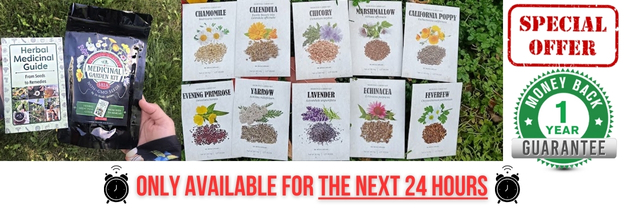
If you only add one thing to your stockpile after reading this article, make it that. And if you have the space, start growing a few of these now.
Skills Came in Right Behind – But Not the Skills You’d Expect
“Skills and knowledge” was the other dominant answer, and the comments made it clear that people aren’t thinking about the dramatic stuff when they say skills. Nobody mentioned combat tactics or wilderness tracking. The skills preppers actually want to trade are boring, practical, and immediately useful.
One commenter mentioned bread-making and soap-making from scratch but then added something honest that most prepper content rarely acknowledges: finding people who actually want those things is harder than you think.
She pointed out that a lot of people in her area “are afraid” of homemade soap, and plenty of folks already own bread machines. She’s now actively looking for a skill that will be in higher demand – something most preppers never think about until they try to trade and find no buyers.

That comment alone is worth more than a hundred listicles about barter items. Because it gets at the core problem with most barter planning: you’re not trading in a vacuum. You’re trading with specific people in your specific community, and if nobody around you wants what you’re offering, it doesn’t matter how useful it is in theory.
The skills that actually came up as high-demand in the comments were:
- Basic medical care – wound stitching, infection treatment, tooth extraction
- Mechanical repair – small engines, water pumps, generators
- Clothing and shoe repair – patching, sewing, resoling
- Animal husbandry – birthing, feeding, butchering
- Food preservation – smoking, curing, canning, fermenting
So, keeping this in mind, you should definitely join The Amish Way Academy – that’s how you will learn forgotten skills that will be truly useful when SHTF. From making soap, bread and canning to house heating and handling money like the Amish – this course is all you need (and it’s also made to be engaging and entertaining).
The throughline is that these skills are hard to fake, hard to learn in a crisis, and produce results that people can immediately verify. If you stitch a wound and it heals, word gets around. That reputation becomes your currency.
The Trust Problem Nobody Wants to Talk About
 One of the sharpest comments in the entire thread came from a commenter who broke the barter question into three tiers based on who you’re trading with.
For trustworthy neighbors, he’d trade food and supplies freely. For people in his broader community, he’d add ammunition to the table.
And for someone trying to start a new government? He said they could have his gold and silver in exchange for actual survival goods. That answer flips the entire gold-and-silver prepper narrative on its head. He’s not saying precious metals are worthless.
He’s saying they’re worth exactly as much as the person across from you believes they’re worth – and in a real collapse, that number might be zero. Or it might be high, but only to someone with ambitions that don’t align with yours. The value of gold depends entirely on whether society is stable enough to agree that gold has value. In the immediate aftermath of a collapse, that consensus doesn’t exist.
This tracks with real-world history. During the Great Depression, cigarettes functioned as the default currency for small trades because they were divisible, addictive, and immediately consumable. Precious metals traded at a fraction of their pre-war value because you couldn’t eat them and the people who had food to spare didn’t need them.
Gold only started regaining value weeks into the crisis, once some sense of a longer-term economy began to form – and even then, it traded at massive discounts compared to pre-war prices, sometimes losing 80% or more of its purchasing power relative to basic goods.
Venezuela’s collapse showed the same pattern. People weren’t trading gold for groceries. They were standing in line for flour and cooking oil. The people who fared best were the ones with tangible skills and tangible goods that addressed tangible problems, not abstract stores of value.
The Barter Myth the Prepper Internet Gets Wrong
 If you read most barter articles online, you’d think the move is to fill a closet with lighters, mini whiskey bottles, and cartons of cigarettes.
And sure, those things have some trade value. But the poll results paint a different picture. People who’ve been prepping for years aren’t building a post-apocalyptic convenience store in their garage.
They’re thinking about who they know, who they trust, and what they can do that nobody else on their street can do.
A box of Bic lighters gets you through one trade negotiation. Knowing how to build a clay oven that feeds an entire street? You’ve got a seat at the table for as long as the crisis lasts. Someone who can set a broken bone, deliver a calf, fix a water pump, or turn raw meat into jerky that lasts six months will never run out of people willing to trade with them. Can’t use that up. Can’t steal it out of a shed. Can’t fake it either.
And that’s what this poll is really saying. Your best barter asset isn’t sitting in a bucket somewhere. It’s in your hands and between your ears.
So What Should You Actually Do?
If this poll reflects how the broader prepper community is thinking, then here’s what the smart money is doing right now.
- Learn a real skill that solves a physical problem. Medical knowledge tops the list. If you can clean, stitch, and dress a wound, you’re more valuable than someone sitting on a hundred ounces of silver. Second tier: mechanical repair, small-scale food preservation (smoking, curing, fermenting, canning), water filtration and purification, and animal care. Pick one. Get genuinely good at it. Practice on real projects from this book or other similar resources, not just YouTube tutorials.
- Build a seed library. Buy heirloom seeds (not hybrid, not GMO) in varieties suited to your climate zone. Store them in sealed mylar bags with silica gel packets in a cool, dark place. Better yet, start gardening now so you actually know how to grow the seeds you’re storing. A seed vault means nothing if you’ve never put one in soil. Or better, try my favorite medicinal seed kit that are already packed in sturdy Mylar bags – it’s going to save you a lot of time.
- Map your community. Know your neighbors. Know what they can do, what they have, and what they’re likely to need. The commenter who broke bartering into trust tiers had it exactly right – who you’re trading with matters as much as what you’re trading. Build those relationships before you need them. Barter doesn’t start when the grid goes down. It starts with knowing the person across the table well enough to trust them.
In fact, the best thing you can bring to a trade is having skills. And where to learn those skills if not from the Amish, who’ve been through this for at least 200 years?
But as you might already know, the Amish don’t teach outsiders. Two hundred years of off-grid know-how – the food preservation, the remedies, the electricity-free builds – has stayed locked inside closed communities that nobody on the outside ever really gets into.
That’s what makes The Amish Ways Academy different: Eddie Swartzentruber was born into one of the strictest Amish settlements in America, left, and brought every skill his family taught him out with him – on camera, for the first time. It’s around 3 hours of HD video, 45+ skills broken into bite-sized lessons you can watch online at your own pace. No deadlines, you pay once, is yours for life.
So you’re not learning prepper theory from someone who read a book. You’re learning the real thing from someone who grew up doing it. Enroll here before that door closes again!
You may also like:
 Canning Mormon Beans For Long Term Preservation
7 Ways to Cool Your House Without Power (VIDEO)
Preppers’ Promised Land (Just Found)
How To Start A Prepper Group In Your Community
10 DIY Skills Worth Learning Before the Next Economic Downturn
The post We Asked 500 Preppers What They’d Barter When SHTF. Nobody Said Guns appeared first on Ask a Prepper.
from Ask a Prepper https://ift.tt/ZOM0t7y
No comments:
Post a Comment