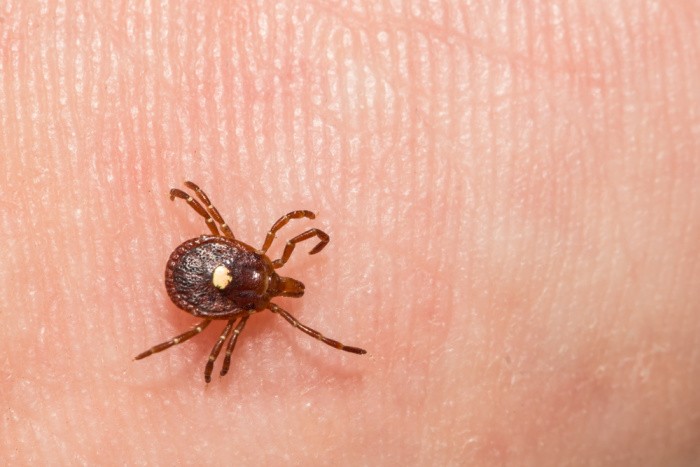
Whether you’re out on a camping trip or spent the day hiking, sometimes a tick will come along to try and put a damper on your day. After all, when you look down and see one that’s latched on for dear life, the first thought that may be going through your head is Lyme disease. But as much of a nuisance as they can be, and the fear of you catching a disease can certainly be unsettling, you don’t need to freak out. As long as you know the proper steps to remove one, you should be fine. I’d like to take a few moments to share with you which symptoms to watch for in Lyme disease, as well as how to remove a tick embedded in your skin the right way. Ticks on humans: what to do… Originally posted on June 7, 2023. I decided to repost in light of the hoopla surrounding Alpha-Gal Syndrome (AGS). Tick Removal Kit
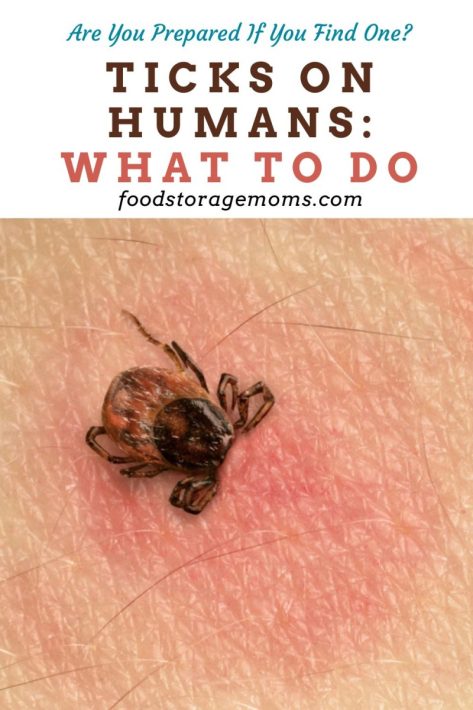
Ticks on Humans: What to Do if You Find a Tick
For those of you who have never had a tick on you, your day is probably coming. Do you know what proper steps to take when that happens? If your answer is no, I’d encourage you to stick around because this information could keep you or a loved one from getting very sick after a tick bite. Please note, I am not a doctor, nurse, or anyone in the medical field. Please consult with your health provider.
Don’t Panic!
Although Lyme disease is a growing concern, especially concerning tick bites, your chances of catching the disease are extremely low in the first 24 hours. So if you plan to camp or go hiking, be sure to check yourself immediately afterward rather than waiting. If you do happen to find one latched onto your skin, take a deep breath and try to stay calm. This will make the process a whole lot easier to properly remove it.
Have the Proper Tools
Don’t make the mistake of using your fingers to remove any unwanted tick. Doing it this way may remove the tick’s body, but the head may still be there, continuing to spread harmful pathogens into your body without you realizing it. Fine-tipped tweezers are the best tool for removing a tick. In the past, you may have seen someone use a lighter or a hot match tip to kill and remove a tick, but this is not a good idea because it can cause the tick to regurgitate pathogens that can lead to a serious infection. There’s also the chance you can burn yourself with that method.
Proper Method for Removing a Tick
- While using tweezers, get as close as possible to the base of the tick where it’s latched on, and gently apply pressure without squeezing for the best removal.
- Don’t twist or jerk the tweezers while you’re pulling upward. Doing so can cause the head or the mouth of the tick to remain behind underneath the skin even when you’ve removed its body. This can lead to a serious infection if it goes unnoticed.
- Should the head or parts of the mouth remain behind, continue to use the tweezers to remove it. If you are unable to remove everything beneath the skin, thoroughly clean the area with rubbing alcohol, then finish washing with soap and warm water. It’s important to try to remove tick parts that have been left behind. You should also consider applying a strong antiseptic to try to kill any “germs” left behind. Do your best for the overall best results!
- Look for any red discoloration of the skin or swelling in the area of the bite. If you see these signs, it’s better to be safe than sorry by going to a health professional for a check-up.
How to Dispose of a Tick
While that tick may have caused your anxiety level to kick up a few notches, don’t try to put it out of its misery by crushing it between your fingers. Doing so can cause the tick to release and expose you to whatever pathogen or disease it may have been carrying. Instead, you can choose to flush it down the toilet or drown it in rubbing alcohol before discarding it.
Symptoms of Lyme Disease
Although Lyme disease is hardly ever life-threatening, the symptoms can be much more severe when left untreated for too long. Do you know what to look out for? These are common symptoms of Lyme disease to watch out for.
- Fever
- Flu-like symptoms (vomiting, chills, nausea, headache, joint aches and joint pain, tiredness, muscle aches, and stiff neck)
- Rash
- Aching over your entire body
- Lack of energy
Symptoms of tick-borne illnesses aren’t always noticeable. Know the signs of the most common tick-borne diseases, so that you can stay protected. The type of tick matters, and the bite of infected adult ticks can change your life forever. If you’re worried about finding ticks on humans, then know these symptoms!
Pay Attention to the Bite Site
If you start to notice a bull’s-eye rash starting to develop in the region where the tick bit you, or a few weeks later, you’re getting symptoms that are common with Lyme disease, you need to head into your nearest urgent care to get evaluated. Getting an early diagnosis and the proper treatment can greatly improve the outcome. Your or a loved one’s health is extremely important, so don’t wait!
Stay Away From Tick-Infested Areas
Finally, another way to avoid those ticks is to stay away from the tick-infested areas. There are many different types of ticks, so make sure you do your research! Even if there is a rumor that there are tons of ticks in the wooded area, it’s best to steer clear as much as possible.
What kinds of ticks exist?
- Deer tick
- American dog tick
- Blacklegged tick
- Brown dog tick
- Rocky Mountain Wood Tick
- Lone star tick
- …and many more!
What diseases do ticks cause, and which ticks cause them?
If you visit the Centers for Disease Control and Prevention (CDC) website at www.cdc.gov/ticks/diseases, you’ll find a full summary of the various diseases, the most common ticks that transmit them, and the locations where those ticks are most often found. Here are a few:
- Anaplasmosis: blacklegged tick – northeastern and upper midwestern U.S.B
- Babesiosis: blacklegged tick – northeast and upper midwest
- Colorado tick fever: Rocky Mountain wood tick – Rocky Mountain states at elevations from 4,000 to 10,500 feet
- Heartland virus: Lone Star ticks – midwestern and southern states
- Lyme disease: blacklegged and western blacklegged ticks – northeastern U.S., upper midwest, and Pacific Coast
- Rocky Mountain spotted fever: American dog tick, Rocky Mountain wood tick, brown dog tick – More often in the Rocky Mountains region
Can my dog get sick from tick bites?
A number of the diseases listed above can also be contracted by dogs. Lyme disease is the most common tick-borne disease in the U.S. It is transmitted by blacklegged and deer ticks. Symptoms of Lyme disease found in dogs are fever, lameness, swollen joints and lymph nodes, and lethargy. The symptoms usually show up within 36-48 hours. Each time you go near grassy and wooded areas with your dog, be sure to check for and remove any ticks you find.
Follow Precautions for Tick Prevention and Disease Control
- The best way to avoid ticks is to wear insect repellent containing DEET and avoid heavily wooded areas.
- Wear light-colored clothing.
- Wear long-sleeved shirts.
- Always wear long pants, high-in-the-calf socks, and boots or high-top shoes.
- When checking for ticks, be sure to look closely in the groin and armpit areas of the body since the ticks like the warmth found there.
What Is Alpha-Gal Syndrome (AGS)
Alpha-Gal Syndrome (AGS) is a tick-transmitted allergy that causes the human immune system to react to a sugar molecule found in red meat and other mammal-derived products. Here is a thorough overview.
What It Is
“AGS is an IgE-mediated allergic reaction to a carbohydrate molecule called galactose-alpha-1,3-galactose, primarily linked to Lone Star tick bites in the United States. Unlike conventional food allergies, the allergen responsible is not a protein but rather an oligosaccharide, which is a type of sugar molecule”. ScienceDirectWiley Online Library
How It Is Transmitted
“The condition develops after a tick bite sensitizes the immune system to alpha-gal. In the US, the distribution of AGS cases closely resembles the distribution of the Lone Star tick, Amblyomma americanum. However, research has also documented cases linked to other tick species, including the deer tick”. PubMed Central
What Triggers a Reaction
“Alpha-gal is found not only in mammalian skeletal muscle but also in mammalian organs, smooth muscle, dairy products, gelatin processed from connective tissues, and even certain biological drugs and vaccines containing mammalian alpha-gal. This means reactions can be triggered by eating beef, pork, lamb, venison, or products derived from these animals”. Wiley Online Library
Symptoms
“Symptoms range from hives and gastrointestinal manifestations to delayed anaphylaxis following red meat consumption. A key feature that sets AGS apart from most food allergies is the timing. Symptoms present two to eight hours after consuming a product containing alpha-gal and can be life-threatening. This delay often makes it difficult for people and doctors to connect the reaction to food”. ScienceDirectPubMed Central
How Underdiagnosed It Is
“AGS is widely considered an underdiagnosed condition. A 2022 survey found that 42 percent of health care practitioners in the US had never heard of AGS, and an additional 35 percent were not too confident in their ability to diagnose it. It is estimated to impact up to 450,000 individuals in the US”. PubMed CentralPubMed Central
A Serious and Growing Concern
“In 2024, what is thought to be the first-ever fatal case of Alpha-Gal Syndrome was reported in the United States. The individual, a 47-year-old man from New Jersey with no known prior health issues, died suddenly in the summer of 2024. His death was initially classified as an unexplained sudden death before an allergy specialist ultimately linked it to AGS”. PA Tick Research Lab
Management
There is currently no cure. The primary approach is strict avoidance of red meat and, in many cases, other mammalian products. Some people with AGS can tolerate dairy while others cannot. Symptoms in some individuals diminish over time if they avoid further tick bites, though the allergy can persist for years.
Because of the delayed reaction window and the broad range of triggering foods and products, AGS is one of the more challenging food-related conditions to recognize and manage.
More Tips for Pests
Final Word
For those of you who have a love for the outdoors, the likelihood of you getting a tick bite is much higher, but don’t fret! You’ll have nothing to worry about when you follow the tips I mentioned above. Don’t take any chances with your health, especially when it comes to a tick on humans. Do you have any other helpful advice for those who may have come across a tick on them? I’d love to hear your thoughts in the comment section below. Don’t forget about your pets. Check out this first aid kit for pets! May God bless this world, Linda
Copyright Images: Tick Bite Depositphotos_53022467_S, Lone Star Tick Depositphotos_565635692_S
The post Ticks On Humans: What To Do appeared first on Food Storage Moms.
from Food Storage Moms
No comments:
Post a Comment