Estimated reading time: 6 minutes
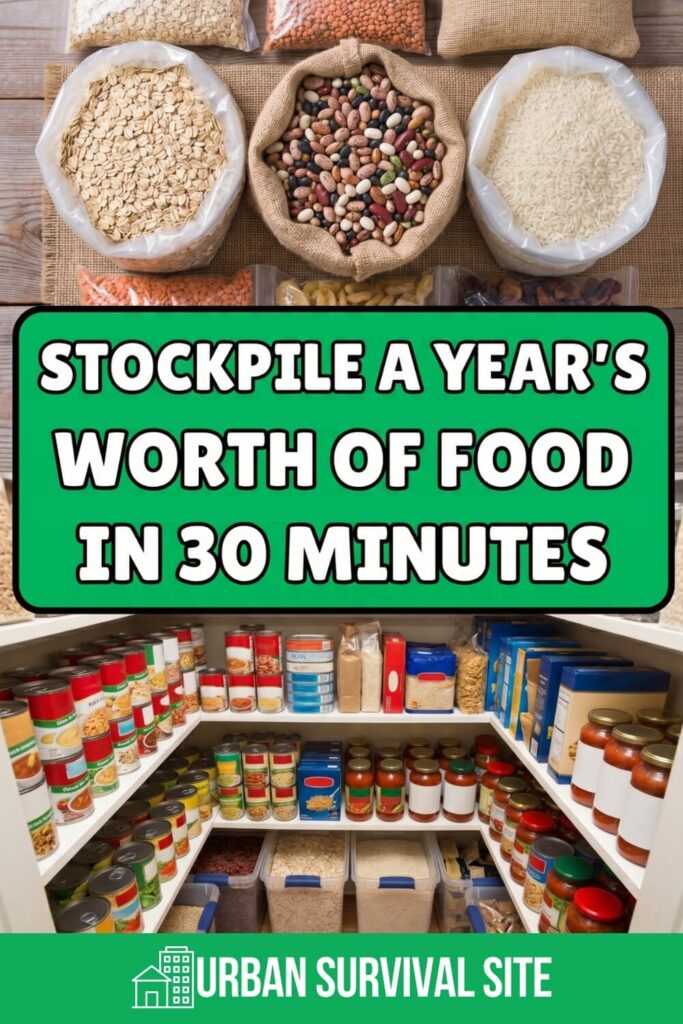
If you've been to a grocery store lately, you've noticed how expensive food have gotten. Eggs, meat, canned goods, bread, pretty much everything has gone up, and it's unlikely prices will go back down. It makes stocking up for emergencies that much more difficult. How are you supposed to stock up on months of food when just a single month of regular groceries is hard to manage?
Well, here's the thing, it depends on what kind of food you stock up on. With the right approach, you can stockpile a serious amount of shelf-stable food very quickly and very cheaply. This article is based on a video by Rouge Preparedness in which creator Morgan demonstrates exactly how she bagged up a year's worth of dry food staples for a family of five, using Mylar bags, for around $200, in just 30 minutes.
You can watch her video below:
Start with a Plan
Before you buy anything, you need to know how much food you actually need. Morgan uses her own free tool called the Ready Pantry Builder. You enter your family size and how many days you want to prepare for, and the tool spits out the number of pounds for each dry staple you'll need.
This can actually save you a lot of money. Without a plan, it's easy to overbuy in some areas and leave gaps in others. The Ready Pantry Builder takes the guesswork out of it and gives you a clear, actionable shopping list.
The Food List: Dry Staples Only
This approach focuses on dry goods, which are the long-storing, high-calorie foundation of any serious food storage plan. Here's what Morgan bought and why:
Rice is the cornerstone. The Ready Pantry Builder estimated 63 lbs for a family of five, and Morgan actually went a little over that, picking up 85 lbs total. She paid around $11 for a 25 lb bag at Costco, which is far cheaper per pound than buying smaller bags at Walmart. If you have access to a bulk supplier like Azure Standard or Costco, use it.
Dried beans (both black beans and pinto beans) round out the protein and fiber side of things. The tool recommended 36 lbs total, and Morgan came in above that. Again, bulk purchasing from Costco or Azure Standard beats the smaller retail bags at Walmart on price.
Oats are another staple worth storing in bulk. Morgan aimed for around 20 lbs but ended up a bit short at about 12 lbs. The recommendation was 29 lbs, so she noted she'd top that off later. Oats are great because they're cheap, filling, and versatile.
Pasta is a family favorite in Morgan's household, and she bought 20 lbs of it, though the tool recommended 44 lbs for a full year. She opened every box and poured it into Mylar bags, which takes a bit of time but is the right call for long-term storage. She plans to build this up over time.
Flour has a shelf life of up to 5 years in Mylar bags with an oxygen absorber, making it well worth storing. Morgan actually over-prepared here, buying 50 lbs against the recommended 22 lbs. She rotates through flour regularly, so she's comfortable having extra on hand.
Sugar doesn't need to be stored in huge quantities unless your family uses a lot of it. Morgan picked up one bag, enough for baking needs. Honey is a good alternative or supplement if you prefer.
Salt requires only about 4 lbs for a full year, and because it doesn't need an oxygen absorber, you can simply zip-seal the Mylar bag and heat-seal it. Easy.
Baking soda doesn't even need to go in a Mylar bag. Just leave it in its original sealed container. One less thing to deal with.
The Mylar Bag Method
Mylar bags with oxygen absorbers are the gold standard for long-term dry food storage. They block light, moisture, and oxygen, the three things that degrade shelf-stable food fastest. Most dry goods stored this way will last 25 years or more.
The process is straightforward:
- Pour your dry goods into the appropriate size Mylar bag.
- Add an oxygen absorber (not needed for salt or sugar).
- Zip-seal the bag if it has a zipper, then use a hair iron or heat sealer to create a permanent seal across the top.
- Label each bag with the contents and date.
That's it. Morgan knocked out an entire year's worth of food for five people in about 30 minutes using this method.
What This Approach Covers and What It Doesn't
To be clear, this is a foundation, not a complete pantry. Dry staples like rice, beans, oats, and flour give you caloric density and long shelf life, but a diet of only these things gets old quickly and misses some important nutrition.
Morgan is quick to point out that a follow-up video covers canned goods and other longer-storing pantry items like pasta sauce, peanut butter, honey, and cooking oils. Those items layer on top of this dry goods foundation to give you a more complete, livable food supply.
Think of the dry staples as your safety net. The baseline calories that ensure no one goes hungry, and the canned and jarred goods as the variety and nutrition layer on top.
The Bottom Line on Cost
The entire dry goods haul for a family of five came out to just over $200. That's not nothing, but it's also remarkably affordable for what you're getting: a year's worth of core food storage. The key to hitting that price point is buying in bulk wherever possible. Costco and Azure Standard both offer significantly lower per-pound prices than Walmart, especially on rice, beans, and oats.
If $200 all at once is too much, this is also a plan you can execute in stages. Pick up one or two items each week until you've built up the full supply. Food prices aren't going down anytime soon. Getting this foundation in place now, while the cost is still somewhat manageable, is one of the most practical preparedness moves you can make.
You May Also Like:
The post Stockpile a Year’s Worth of Food in 30 Minutes appeared first on Urban Survival Site.
from Urban Survival Site
No comments:
Post a Comment