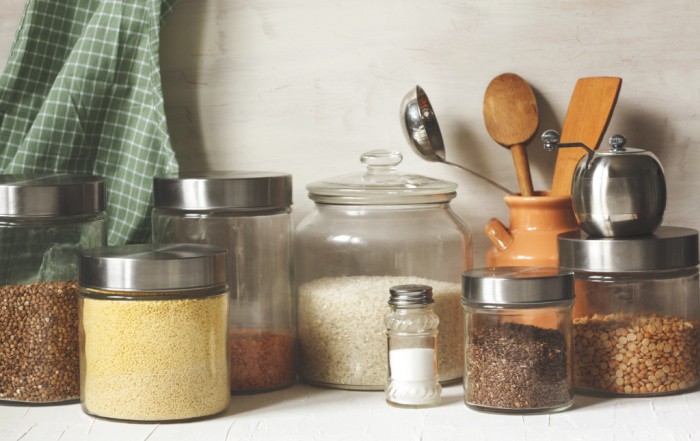
Not everyone has a pantry in their home or apartment. Some houses just weren’t built with one. Pantries are so convenient, especially if they are located in your kitchen pantry or very close by. It makes meal prep so much easier since you can see what’s there and don’t have to go to a basement or other storage area.
Most of my homes have had some sort of pantry, but I’ve always wished they were larger, given how much I cook. I would love to have a walk-in pantry for all my pantry items. Over the years, most of my kitchen storage areas were like a closet with open shelving from floor to ceiling, but they worked. Having a pantry helps eliminate or minimize clutter, such as small appliances on countertops, giving you more counter space for meal prep.
A dedicated pantry is nice, but not necessary in the prepping world. We’re capable of turning any space into a pantry-like usable storage area.
Consider Pantry Space Alternatives
To me, a pantry is almost any space you can store food that doesn’t need to be kept in a freezer or refrigerator. If you cook a lot, the staples we use for so many recipes should be stored as close as possible. The more efficiently we can store food at home, the less often we visit the grocery store. So, we still need our freezer stocked.
Please don’t plan pantry space to store perishable items, such as eggs (unless you know how to store freshly gathered eggs), cheese, yogurt, or sour cream. All of these should be kept in your fridge unless they’ve been freeze-dried or properly dehydrated, if applicable to the food product. I have tons of freeze-dried foods stored in #10 and pantry-sized cans, and I love them. But they are costly these days.
Because prepping is so important, I have devised 10 food storage ideas as pantry alternatives when you don’t have a pantry. Please keep more than one can opener in your home.
Small Can Opener, a Larger Can Opener for #10 cans, and an Electric Can Opener
11 Canned Meat Ideas I Recommend
10 Awesome Facts About Canned Foods
Food Storage Ideas When You Don’t Have a Pantry
If you don’t have a pantry for your food storage, don’t worry! Here are 10 ideas that will make storing your extra food a breeze!
1. Use an Old Bookshelf
An old bookshelf can become a great place to store some food. Even in a small kitchen, you can stick a bookcase along one of your walls. Load your shelves with dry goods, canned goods, and dehydrated produce.
I recommend getting a bookshelf from the thrift store or Facebook Marketplace if you don’t have one and want a cheaper option.
If you have an IKEA near you, they have inexpensive, sturdy bookcases for storing food. If you get the taller ones, please attach them to the wall for safety reasons.
2. Store it in the Walls
You can take out part of your wall between two beams and then place shelves there to store your food. This is a terrific option if you have a tiny kitchen and can’t fit anything else in.
The main challenge is how narrow the shelves would be. Additionally, you can add hanging doors, such as sliding barn doors, to hide what you have. This can be done reasonably quickly and with limited funds. Be sure to watch out for electrical wires in those walls.
This option wouldn’t apply if you’re renting, unless your landlord wants you to add some shelving in the small spaces created.
3. Pegboard Food Storage Ideas
If you don’t want to tear out some sheetrock from your wall, you can use the exterior to create your pantry. Securely attach a pegboard to your wall. Create a pantry with baskets and shelves that suit your food storage needs.
You can create shelves for your canned goods and hang small buckets or baskets on the pegs for your produce. You can also hang flexible cloth bags to store spaghetti noodles or cutting boards.
4. Repurpose Your Coat Closet
I had a friend who didn’t have a pantry, but she had two coat closets—one by the front door and one by the back door. Instead of using both closets for coats and things, she uses one closet as a pantry.
Add shelves in your closet designed to store products of different sizes. You can buy bare wood boards and create shelves to hold baskets, canned goods, spices, or anything you want in your makeshift pantry.
Many “pantries” in homes now are the same size as my friend’s closet. If you’re lucky, your home has high ceilings, including in your closets. Put some of the less-used items in your food supply on the upper shelves or on the floor.
5. Utilize an Enclosed Porch
You have to be careful what you put on the porch, especially if you can’t regulate temperatures in your porch area. However, you can put up storage shelves to store your extra canned goods, dry goods in airtight containers like pasta, grains, lentils, white rice, and beans, cleaning supplies, and items you frequently use, like paper towels or toilet paper.
You won’t want to keep things in the cold or super-hot temperatures, since the temperature can affect the nutrients in the food. When the temperature stays close to the inside room temperature, many items will have a decent shelf life. If you can keep it reasonably cool or warm year-round, this is an option for storing your extra stuff.
If you picture storing some kitchen items that take up space, like toasters, slow cookers, pressure cookers, etc., this could be a great storage option, especially if the porch is towards the rear of your home, where many kitchens are located.
6. Food Storage Ideas in the Basement
Using your basement for your extra food storage is a great idea. However, you’ll want to keep your food off the floor by placing it on 2″ x 4″ boards or pallets. Be sure you have a rotation plan in place so you don’t forget what’s downstairs.
One thing I’ve found about storing extra food in the basement is that sometimes you don’t feel like going down there to rotate your food, let alone making frequent trips to grab the ingredients for that next meal.
I’ve kept so many items on the basement shelves that I’ve bought them at the store during case-lot sales or canned them myself. Canned goods include various veggies like tomatoes, potatoes, peas, carrots, onions, corn, and green beans.
I’ve also stored many types of fruits, like apples in sauce, pears, berries, peaches, and citrus items like mandarin oranges, as well as canned meats like chicken, beef, pork, and tuna.
If you plan to store items like flour, oats, whole wheat, etc., use BPA-safe food storage containers with a tight seal and a date noted on the top or side.
I seldom keep flour for over a year, but rice, wheat, and pasta will last much longer, especially if they are commercially packaged. I will also store other commercial products, such as peanut butter, jams, jellies, salsa, and mushrooms.
This is a fabulous option if you can stay on top of what’s in your food storage inventory, even when it’s out of sight.
There are Several Ways You Can Store Food in Your Basement
- Build a pantry in your basement. You can build a room in your basement solely dedicated to food storage.
- Add bookshelves. You can create your pantry in your basement if you have extra bookshelves.
- Hang shelves. If you don’t want things on the floor, you can use the walls and create shelves in your basement.
- Unused bedroom. If you’re in a new phase and don’t need those basement bedrooms for kids, consider converting one or more.
- Long-term storage. The basement may be your best option for items you’re storing for the long haul or for items you don’t use as often.
Years ago, I had a basement; it was a great place for food storage and for extra coats, blankets, hygiene products, emergency preps, and more. Then, Mark and I downsized to a smaller home, and we didn’t have a basement. My dream would be to have a pantry that is 14 feet by 14 feet. It’s not going to happen, but I can dream, right? Such is life. My home is much smaller but easier to clean.
We have now downsized again, as I mentioned about 5 years ago. We have 1000 square feet with one wall designated for food storage. No pantry, just a wall, but I can see what we have, and that’s a blessing.
7. Hang Goods Under Your Cabinets
Screw mason jar lids into the bottom of your upper cabinets. Then, you can have instant storage for the things you use most often. I wouldn’t suggest doing a ton of stuff stored this way due to the weight.
But this is a good option for people with limited storage space. I’d suggest using wide-mouthed jars, but you might want to start with smaller/shorter pint jars before trying quarts.
8. Place Shelves Anywhere You Can
When it comes to prepping, you don’t have to figure out what to do with items in your kitchen. Your whole house can become a food storage haven! Hang shelves wherever you can to store extra food and prepping stuff. Here are some places you can hang extra shelves in your home:
- Build shelves on the sides of your cabinets.
- Narrow shelves can be placed along your backsplash between the cabinets and counter.
- You can add extra shelves in closets.
- Put up shelves above your toilet.
- Anywhere there is a wall, you can add a shelf for storage. Stay clear of hallways, which could be a safety hazard, particularly at night.
- We’ve had items stored behind our entertainment center in the master bedroom. Who would have thought?
- We have BlueCan boxes lined on a wall in our Master Bedroom. That’s how I roll.
9. Build Your Pantry
You can always build your own or several if you have somewhere to put them. If the outside is your only option, take the items you seldom use or those that aren’t as “weather/temperature” sensitive and put them in the outside enclosure.
You can call these sheds or pantries; they can serve a similar purpose if the items stored there are kept safe. My only concern is keeping the food cool enough; this would have to be your last resort to store your food outside. Families have built enclosed rooms in their garages and added ventilation and a small air conditioning unit.
Rather than use them for food items, consider using this space for pots and pans, utensils, small appliances, canning equipment, camp stoves, and other gear not subject to temperature issues.
10. Use Baskets and Containers
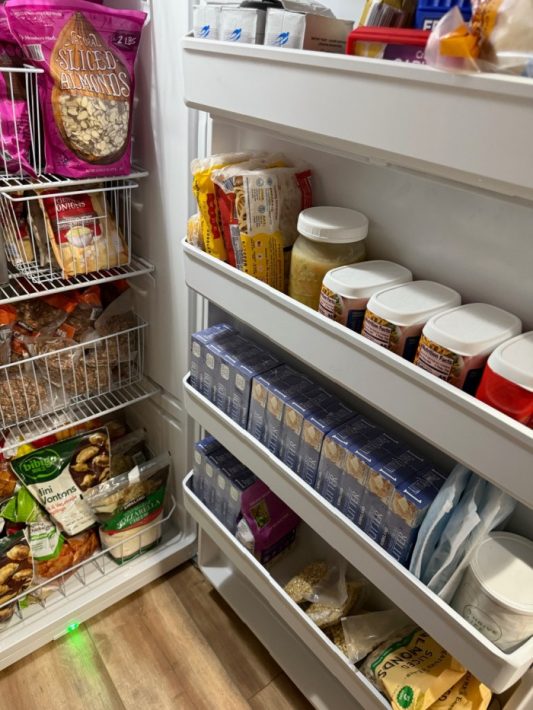
There are so many ways you can store extra food and essentials. Use baskets and plastic containers to store food in hard-to-reach cabinets, so you use all your space. You can even use plastic bins to scoot under the bed, couch, or shelves. Store it, stack it, and hide it however you can. I use baskets in my freezer as well.
What You Need In Your Pantry Cabinet
Foods with the Longest Shelf Life
Final Word
Finding all the right places to store your extra food can be challenging. Some of us live in tiny houses, some in apartments, and others have difficulty going up and downstairs.
When it comes to food storage, make it logical and efficient for you! If you need to build more shelves, do it. If you want to store it in an empty bedroom, do it. The best thing you can do is be creative as you figure out how to store it any way you can. May God bless this world, Linda
Copyright Images: Glass Jars AdobeStock_266580193 by Anjelika Gretskaia
The post 10 Food Storage Ideas When You Don’t Have a Pantry appeared first on Food Storage Moms.
from Food Storage Moms
No comments:
Post a Comment